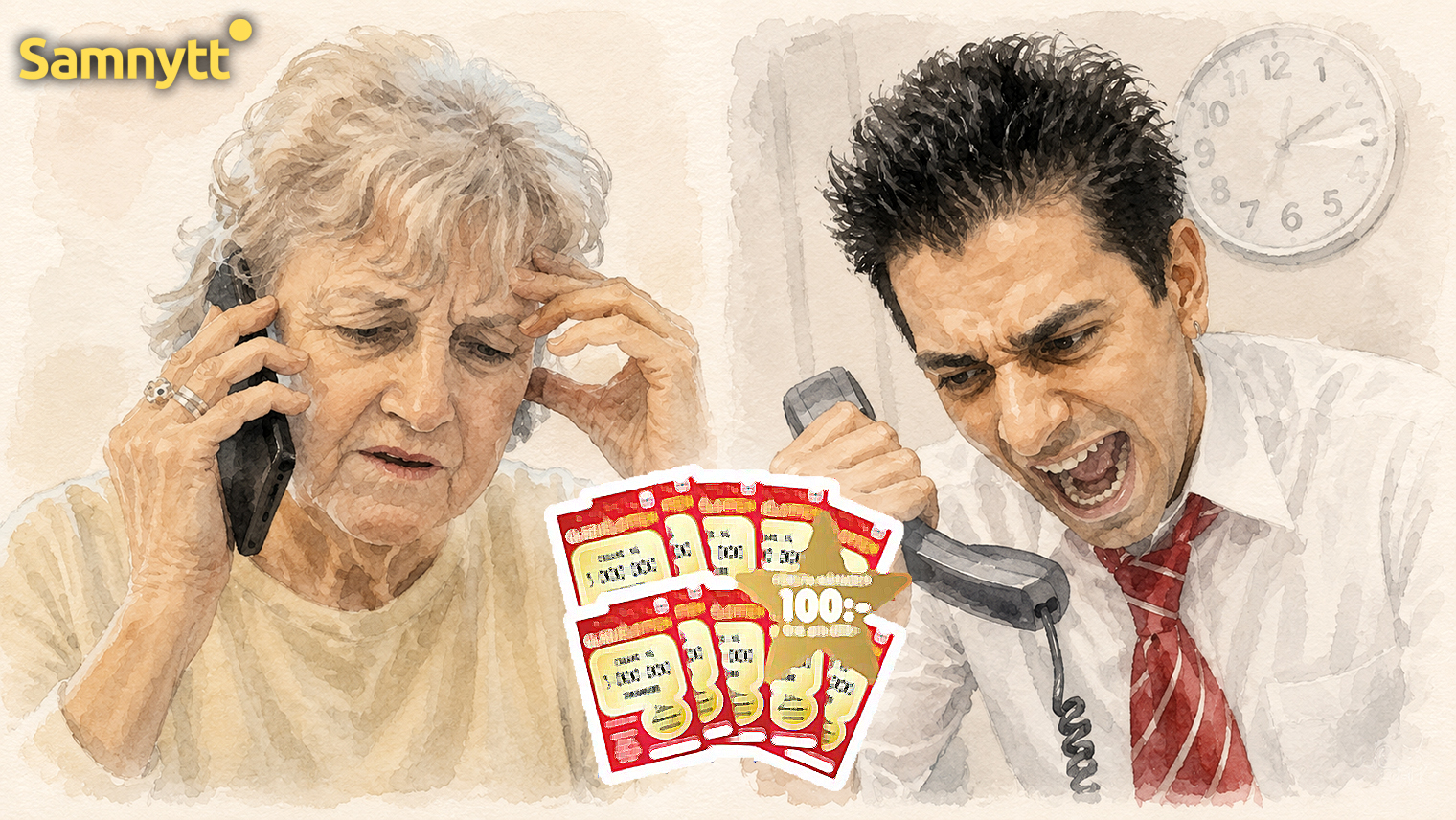
The revelations about the Social Democrats’ aggressive telemarketing tactics for selling lottery tickets to the elderly shed light on an industry that has long been controversial. Now the government is taking the next step by initiating an inquiry to investigate whether telemarketing should be significantly restricted—or completely banned.
When the Social Democrats’ lottery activities became the focus of political debate last year, strong criticism was leveled against the methods used to sell tickets, primarily to older people. Reports emerged of sales targeting confused pensioners, misleading sales calls, and a call center involving individuals with connections to serious organized crime.
At the same time, a broader discussion about the future of telemarketing in Sweden took shape. The government is now moving forward by commissioning a new inquiry to review the regulations and assess whether a total ban should be introduced.
Telemarketing Under Scrutiny
Civil Affairs Minister Erik Slottner (Christian Democrats) has tasked a special investigator to analyze current rules and propose changes. The background is the widespread problems that, according to the government, are associated with telemarketing.
According to surveys by the Swedish Consumer Agency, Swedes’ trust in unknown phone calls has collapsed. Ten years ago, it was relatively uncommon for people to ignore calls from unknown numbers. Today, a clear majority choose not to answer.
This development has had consequences far beyond the sales industry. Authorities, healthcare providers, and other essential societal functions report having more difficulty reaching people, as most automatically assume unknown calls are from sales reps.
Consumer Agency Proposed Ban
The new inquiry builds on work already done by the Swedish Consumer Agency. The agency concluded in its report that telemarketing in its current form creates significant problems for consumers.
One of the options highlighted is a total ban on telemarketing. Another is a so-called opt-in system, where companies may only call people who have explicitly agreed in advance to receive sales calls.
The Consumer Agency also pointed out that telemarketing, more than other sales forms, often leads to disputes over whether a purchase has actually been made at all. Especially vulnerable groups include the elderly, people with disabilities, and those with limited Swedish language skills.
The Lottery Scandal Brought New Attention to the Issue
This autumn, it was revealed that telemarketers selling Social Democrat lottery tickets used scripts with wording that critics called openly misleading. Elderly people were reportedly given the impression that the tickets were only valid for a limited period, despite actually being ongoing subscriptions.

At the same time, reports noted that sellers were instructed to exploit the hopes of elderly people for winnings and to use a familiar tone to persuade them to say yes. The criticism became so extensive that the party was forced to pause lottery telemarketing and implement changes to its operations.
Gang Criminals at the Hired Call Center
The debate escalated further when it was revealed that individuals with ties to serious organized crime had worked at the call center company used for lottery sales. Among the identified individuals were those featured in investigations into very serious violent crimes and drug offenses.
READ ALSO: Here Are the Gang Criminals at the Social Democrats’ Call Center
The most attention-grabbing revelation was that a man later sentenced to life in prison for the murder of 12-year-old Adriana Ostrowska Naghei had ties to the company. Although the call center had several large clients, these revelations further damaged trust in the telemarketing industry.
Near Universal Public Opposition
Consumer Agency research shows that support for unsolicited sales calls is extremely weak. Almost nine out of ten Swedes say they are negative toward being contacted by companies with whom they do not already have a customer relationship.
Industry representatives argue that the phone is still an important and cost-effective channel for many companies to reach customers, especially smaller actors with limited marketing budgets. They claim that the issues are primarily caused by unscrupulous firms—not the sales method itself.
However, the government is increasingly skeptical of that explanation. Erik Slottner has pointed out that many consumers experience aggressive telemarketing even from established and otherwise reputable companies.
Industry-Specific Bans Possible
The inquiry will report its conclusions early next year. In addition to a total ban, it will also investigate the possibility of introducing targeted restrictions in the industries where problems are judged to be the greatest.
If the government proceeds with the proposals, Sweden could see the biggest change in telemarketing rules in decades—a move accelerated by revelations of how elderly people have been targeted by aggressive marketing, and how operations with political connections have been thrust into the spotlight.