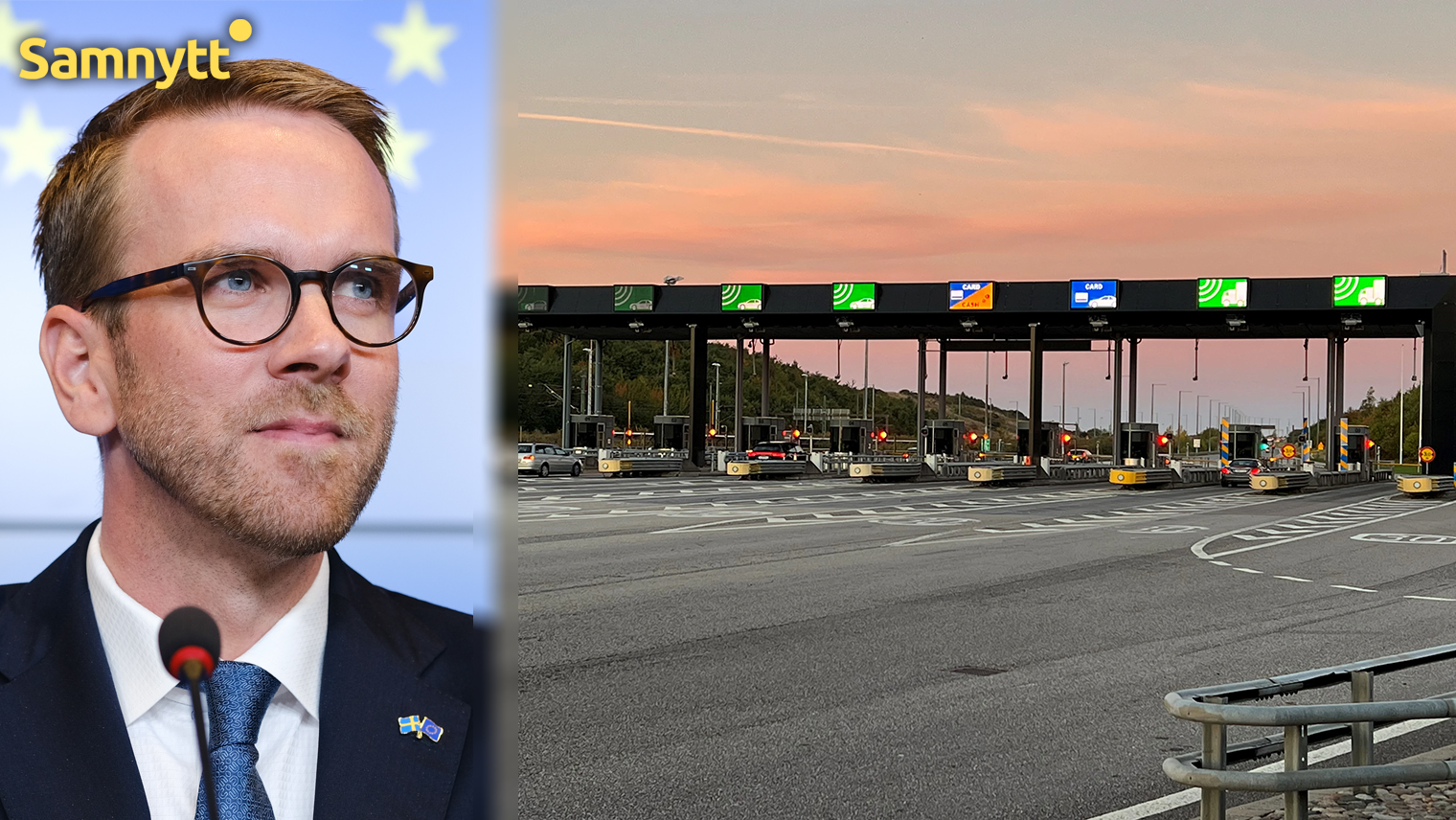
Despite the state allocating what it calls record sums to infrastructure, the money is not enough for the projects that need to be carried out. The solution now being introduced marks a clear system shift – private financiers and state-owned companies will be able to take over road construction from the Swedish Transport Administration, and motorists may be forced to pay directly through road tolls and fees to a greater extent. Meanwhile, during the current mandate period, the government has spent hundreds of billions on support to Ukraine, aid to the third world, and costs related to immigration at home.
Despite a national infrastructure plan amounting to SEK 1,171 billion for the coming twelve years, the government has already been forced to postpone several important projects. Minister for Infrastructure, Andreas Carlson (KD), notes that new forms of financing are needed to raise more money and carry out more projects.
In a comment to DN, he himself describes the change as a potential “system shift.” The main reason is decades of prioritizing other areas over infrastructure, a trend largely continuing even during this mandate period.
Opens Up for Road Tolls
A central part of the government’s line is allowing users to pay a larger share of the cost for new infrastructure. Carlson points to the Öresund Bridge as an example of how investments can be financed through fees from those who use the facility.
READ ALSO: Sweden Sends Another Billion to Ukraine – Despite the Giant Loan of 1,000 Billion
He does not rule out that future Swedish projects, such as the Eastern Connection in Stockholm, could be financed entirely or in part in the same way. Only those who pay will be able to use the road. For others, it means turning back.
Private Capital to Enter Road Construction
The government is now instructing the Swedish Transport Administration to prepare so-called PPP solutions – public-private partnerships – in which private actors finance, build, and operate infrastructure over a long period.
The argument is that projects can be built faster, with greater cost control, and parts of the risk are transferred from the state to private actors. Several road projects have already been identified as potential pilot projects.
State-Owned Company to Compete with the Swedish Transport Administration
In parallel, the government wants to change the law so that a specific state-owned company can be responsible for building and operating roads. Today, this task falls to the Swedish Transport Administration.

The intention is to create what the government calls “institutional competition” and thereby challenge the Swedish Transport Administration’s monopoly. The government refers to similar models in other countries, rather than to the underfunding at home.
Cost Overruns Used as Argument
The background is several major infrastructure projects that have faced large cost increases. The West Link in Gothenburg has required another SEK 7.6 billion from the state, while the government expects municipalities, regions, and motorists to contribute an equivalent amount.
READ ALSO: Dagerlind: When Aid Shrinks on Paper but Grows in Reality
The double track through Helsingborg has meanwhile increased from about SEK 5 billion to nearly SEK 15 billion and has been postponed. The government argues that alternative modes of financing and organizational forms can reduce the risk of similar cost overruns.
A Crossroads for Sweden
The core of the government’s message is that taxpayer funding is no longer seen as sufficient to support all infrastructure investments. That is why the door is now being opened to road tolls, private capital, and new state-owned companies.
The minister himself sums up the change with the words: “Call it a system shift if you will.”