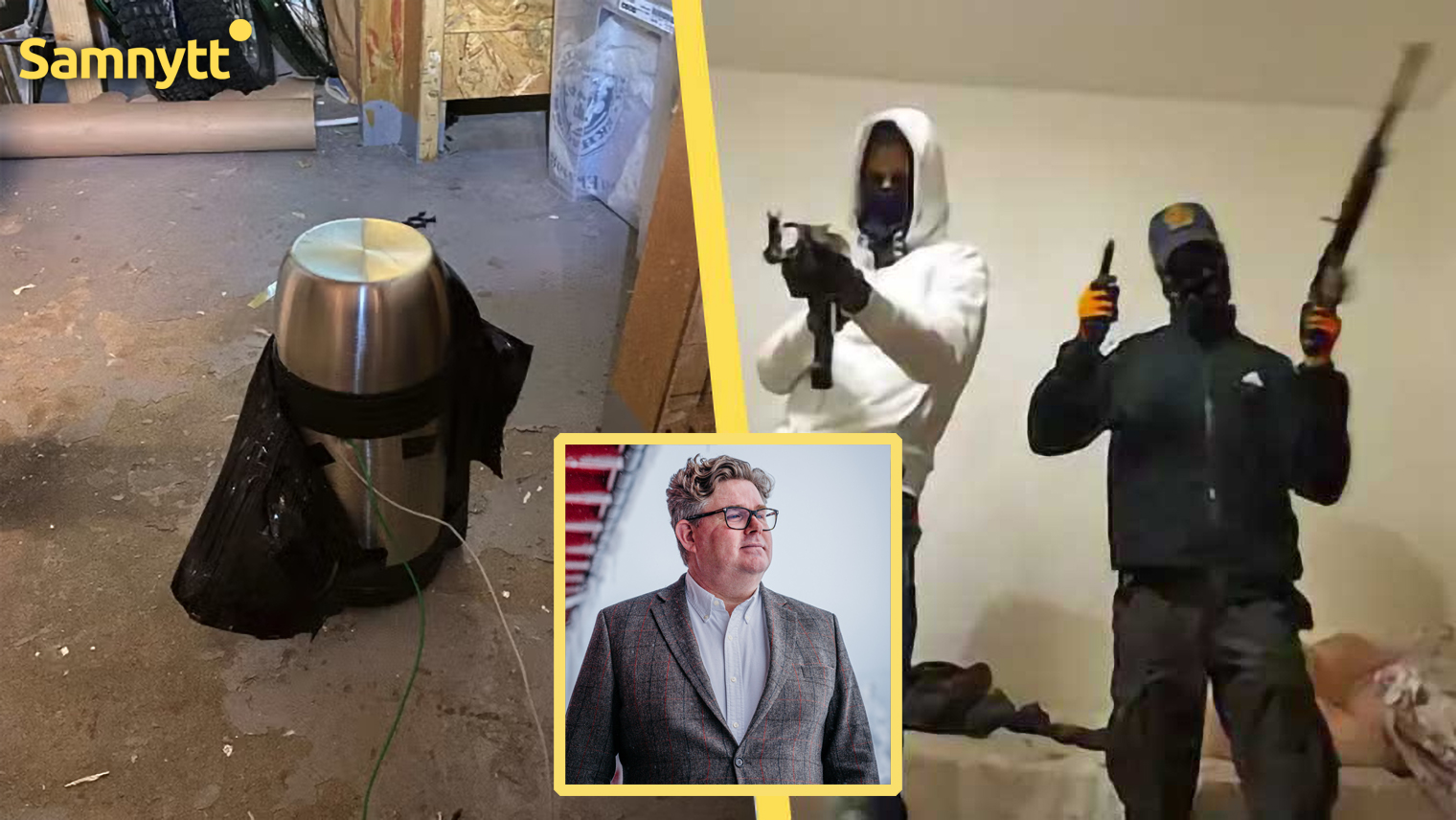
The number of fatal shootings in Sweden during the first six months of the year has dropped to its lowest level since the police began keeping statistics in 2017. According to the police, this development is not primarily due to their own initiatives. Instead, the public’s increased willingness to report suspicious behavior is highlighted as a key factor in stopping planned acts of violence at an early stage. The arrest of more gang criminals abroad has also had a cooling effect.
During the first half of the year, eight people were shot dead in Sweden, according to statistics reported by Sveriges Radio. This is the lowest figure for the first six months of a year since measurements began.
The police’s national operational department points to several reasons behind the decline. One of the most important, according to police intelligence chief Alexander Wallenius, is that people in society have become more vigilant and quicker to alert the authorities when they see something unusual. Decades of violent crime have led to a vigilance that did not exist before.
– Perhaps staff on a train react to someone behaving oddly, with many different actors informing police about behavior or something they find unusual, which enables the police to follow up and intervene, Wallenius told Sveriges Radio.
When asked if the public has become better at assisting police, Wallenius answers affirmatively.
– Yes, I would say society is much more aware of what the problem looks like, and much more willing to inform the police and perceive it as a responsibility shared by all—by all social functions.
Police Highlight Public’s Contribution
The statements echo previous comments from National Police Commissioner Petra Lundh that the fight against organized crime cannot be won by police alone but requires efforts from all citizens across society.
According to Wallenius, the police’s ability to intervene in crimes at the planning stage has improved through a combination of tips from the public, increased awareness among various societal actors, as well as access to covert means authorized by the Tidö government.
– It’s very much a societal collective effort that forms the basis for why we do this to a greater extent today than we have historically. Of course, access to phones, access to secret coercive measures, and similar tools also play a role, he says.
Fewer Gang Wars Is Another Explanation
The police also point to changes within the criminal environment as an important reason for the decrease in fatal shootings. Above all, by arresting angry rivals, the police have allowed the notorious Foxtrot network, led by Rawa “the Kurdish Fox” Majid, who now manages the criminal activities from abroad, to continue.
According to Wallenius, the rival networks Rumba and Dalen have been weakened after key leaders were arrested and detained. The only major network with what the police describe as “national impact” left is essentially the Foxtrot network, which can now operate undisturbed and does not need to allocate time or resources to gang wars.
– The high levels of violence often occur when several networks, each with autonomous access to highly violent systems, come into conflict with one another. We are not in that situation now, says Wallenius.
This reasoning means that part of the decrease can be explained by reduced conflicts among major networks rather than a disappearance of organized crime itself. The police assess that the networks’ operational capacity has changed as competing groups have been weakened.
More Gang Criminals Arrested Abroad
The police also report that more and more people connected to Swedish gang crime are being arrested outside of Sweden. According to the Police Authority, around 700 people have been identified as being abroad but are still influencing organized crime in Sweden.
ALSO READ: After Tidö Government’s Visit to Tunisia – SR Rapper Mohamed Arrested and to Be Extradited
During the first six months of the year, 124 internationally wanted persons have been arrested abroad, compared to 86 during the same period last year. According to Deputy National Police Commissioner Stefan Hector, this development is a result of criminals increasingly moving their operations to other countries as pressure from Swedish authorities grows.

This is at the initiative of the Tidö government in general and Justice Minister Gunnar Strömmer in particular. He, in turn, has been pressured by the Sweden Democrats.
– As we have developed and changed our working methods, criminals have moved to other countries. Initially, this was to other European countries, but more frequently now to countries outside Europe and the Schengen area, says Hector.
ALSO READ: “Jordgubben” Arrested in Turkey
As a result, the police have intensified international cooperation and deepened contacts with countries such as Turkey, Iraq, the United Arab Emirates, and the US to locate and prosecute individuals who direct or participate in criminal activity against Sweden from abroad.
The authority also participates in a joint European initiative against the digital recruitment of youths into serious crime. As part of the Europol-led operation OTF Grimm, Swedish police cooperate with several other countries to combat so-called “violence-as-a-service”, where murders, explosions, and other violent assignments are brokered via digital platforms in a way resembling ordinary job advertisements.
ALSO READ: Here the Swedish Gang Leader “the Greek” is Arrested in Mexico
Bomb Attacks Remain at High Levels
While shootings have declined, the trend for bomb attacks has not followed suit. Police describe that what is referred to as “strategic violence” has increasingly shifted from firearms to explosive devices. The purpose, according to the authorities, is often to intimidate, exert pressure, or demonstrate power, rather than to kill. Thus, it’s more a redistribution of violence than a decrease.
– Historically we saw that strategic violence—that is, violence aimed less at killing and more at intimidating, extorting, or exerting power—was often gun-related, for example through door shootings. That is much less common today and in many cases has been replaced by explosive violence aimed at doors or houses, says Wallenius.

This development means that the decrease in fatal shootings does not necessarily imply that the overall capacity for violence within organized crime has fallen correspondingly.
Previously Criticized Methods Downplayed
In the debate, earlier crime-prevention initiatives have also been sidelined. The “Sluta skjut” (“Cease Fire”) method, previously promoted as a successful tool against gang violence, has faced harsh criticism.
Professor Emeritus Johannes Knutsson has described the project as a “governmental fiasco” and questioned claims that the effort had measurable effects on violence trends. The criticism has mainly centered on the fact that evaluations could not demonstrate statistically significant results.
ALSO READ: “Vegetarian Wraps” to Make Gang Criminals Stop Shooting
Repeatedly grim statistics also show that a large proportion of gang criminals who participated in these projects have relapsed into serious crime. There have also been reports of pizza nights organized by police being used as meeting points to plan new crimes.
Meanwhile, the police today choose instead to emphasize other factors behind the decline in fatal shootings—including increased public vigilance, more submitted tips, and changes in the structure of criminal networks.
When the police themselves describe the reasons for this year’s historically low levels of fatal shootings, it is therefore not their own efforts that are highlighted. Instead, they point to a combination of social engagement, intelligence work, and shifting power relationships within the criminal environment.