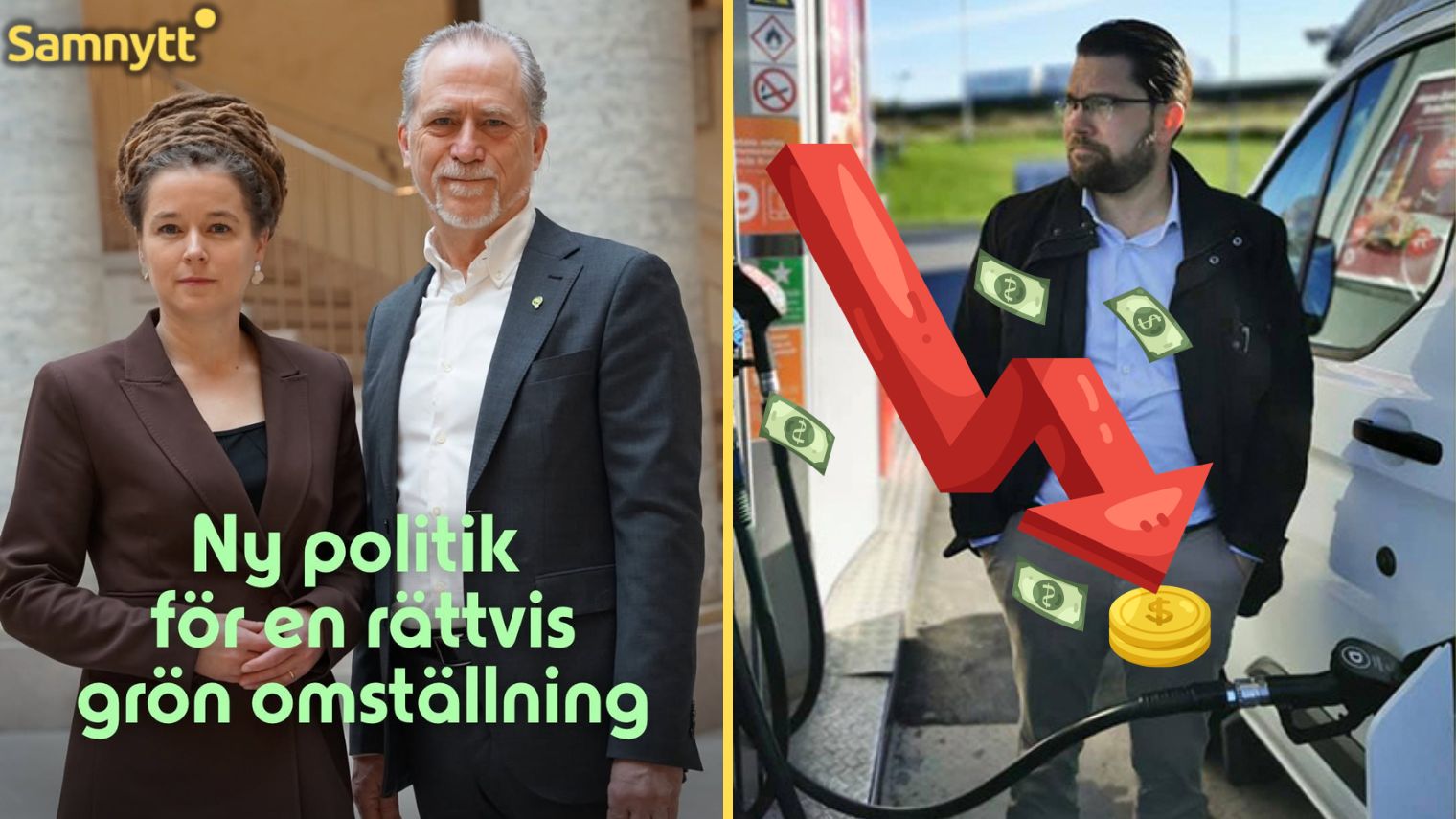
Starting today, July 1, 2026, the tax on gasoline and diesel will be temporarily reduced. The reduction applies until November 30 and corresponds to a decrease of SEK 2.40 per liter in the carbon dioxide tax—or SEK 3 per liter including VAT if the full price cut is passed on to motorists.
This measure is part of the government’s and the Sweden Democrats’ crisis package to address the high fuel prices, which have been pushed up by international energy uncertainties.
The Ministry of Finance has previously stated that the reduction in fuel taxes is expected to cost the state around SEK 7.7 billion during the year.
READ ALSO: Green Party: We Must Raise Fuel Prices
The effect for motorists is expected to be felt immediately at the pump. If the reduction is fully passed on, it means a three kronor lower price per liter for both gasoline and diesel. This means that Sweden could quickly go from having high fuel prices to becoming one of the cheapest countries in Europe to fill up your tank.
Second Lowest
According to estimates, after the tax cut Sweden could have Europe’s second lowest gasoline price. Drivkraft Sverige expects a significant increase in demand at Swedish gas stations—especially from Norwegians who may be tempted to cross the border for cheaper fuel. The organization has even warned that some stations could temporarily run out of gasoline if pressure is high.
The reduction has been welcomed by many households dependent on cars. On Swedish Radio, commuters have expressed relief at the news and hope to be able to spend more money on things other than fuel as prices fall.
At the same time, the reduction is temporary. If no new decision is made, the tax will return to previous levels after November 30, which means motorists might again face higher prices at the pump as winter approaches.
A Change in Power Could Make It More Expensive
The Sweden Democrats have made lowering fuel prices a key issue and have described the tax cuts as a central part of the party’s influence over the government’s economic policy.
READ ALSO: The Green Party if the Red-Green Bloc Takes Power: Then We Will Raise Fuel Prices
The temporary reduction that takes effect on July 1 is valid until November 30, but from the Sweden Democrats’ side the position has been that motorists, commuters, and rural residents need long-term lower costs for refueling.
With the upcoming autumn election, fuel prices are expected to become a clear dividing line. While the Tidö parties and the Sweden Democrats have cut the tax on gasoline and diesel, the Social Democrats and the red-green parties have historically pursued policies with higher fuel taxes, reduction obligations, and climate regulations that make fossil fuels more expensive. A shift in power could therefore mean that today’s lower prices are short-lived and that pump prices will rise again.
READ ALSO: Here, Fuel Prices Always Remain at the Same Low Level