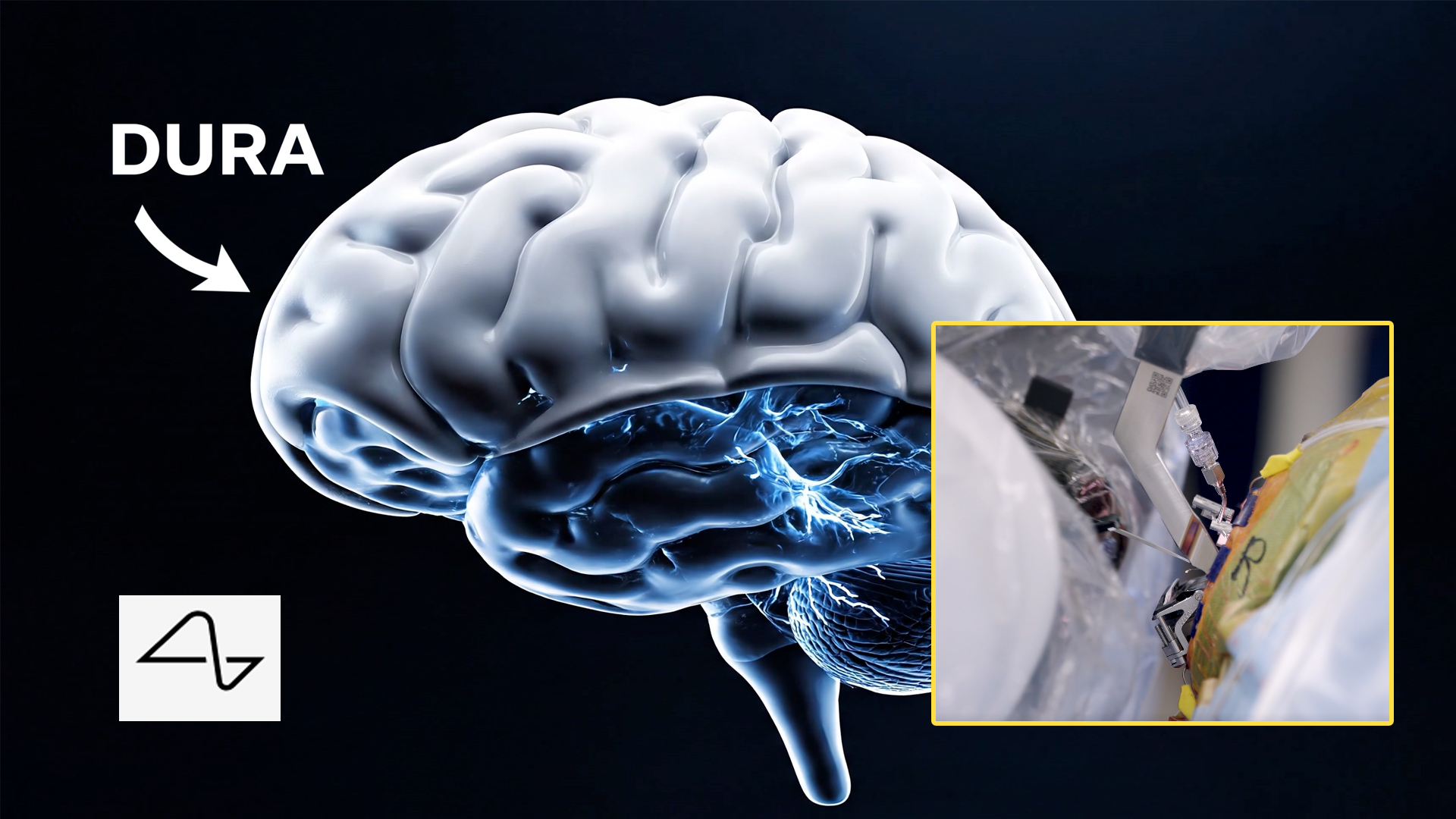
Neuralink, Elon Musk’s pioneering brain-computer interface company, has made a significant leap forward in its clinical trials. For the first time, the company has successfully inserted the implant’s electrode threads directly through the dura—the brain’s tough protective membrane—without removing it, which is traditionally required in such surgery.
The dura acts as the brain’s natural armor and is much thicker than the ultra-thin electrode threads, which are finer than a human hair. The brain also moves continuously, and the membrane hides blood vessels that surgeons must avoid. Despite these challenges, Neuralink has developed advanced transdural imaging technology and insertion methods that enable micron-level precision.
The company emphasizes that this removes one of the most delicate manual steps in the procedure—a so-called durectomy. This could lead to safer, more reproducible surgeries and opens the door to scaling up the technique for more patients who could benefit from the technology.
Can Provide Autonomy
The operation took place at Toronto Western Hospital (UHN) in Canada, as part of ongoing clinical studies. The participant was able to control a cursor with their thoughts within an hour after the operation, and recovery is proceeding as expected.
In a video published by Neuralink, the process is shown and the implant’s function is explained. The technology has the potential to increase autonomy for people with spinal cord injuries, ALS, and other neurological conditions.
Neuralink stresses that the devices are still experimental and not approved by the FDA or other authorities. This is a voluntary clinical trial with participants sharing their experiences.
This milestone follows previous achievements where patients were already able to control computers, play games, and even regain some motor function using only the power of thought.
“Jesus-Miracle-Level”
On X, Musk unsurprisingly celebrates the progress at his own company. “Among other things, @Neuralink will enable people with paralysis in all four limbs to use their hands and walk again, and for the completely blind to see. Miracles at Jesus-level,” he writes on X.
Peter Hague, who on X describes himself as a PhD in astrophysics and scientific software developer, writes that Musk’s Neuralink is underestimated and that “people still don’t quite understand what this company is planning” and that “a large-scale launch of brain-machine interfaces will have enormous medical consequences, and may even affect our lifestyles.”