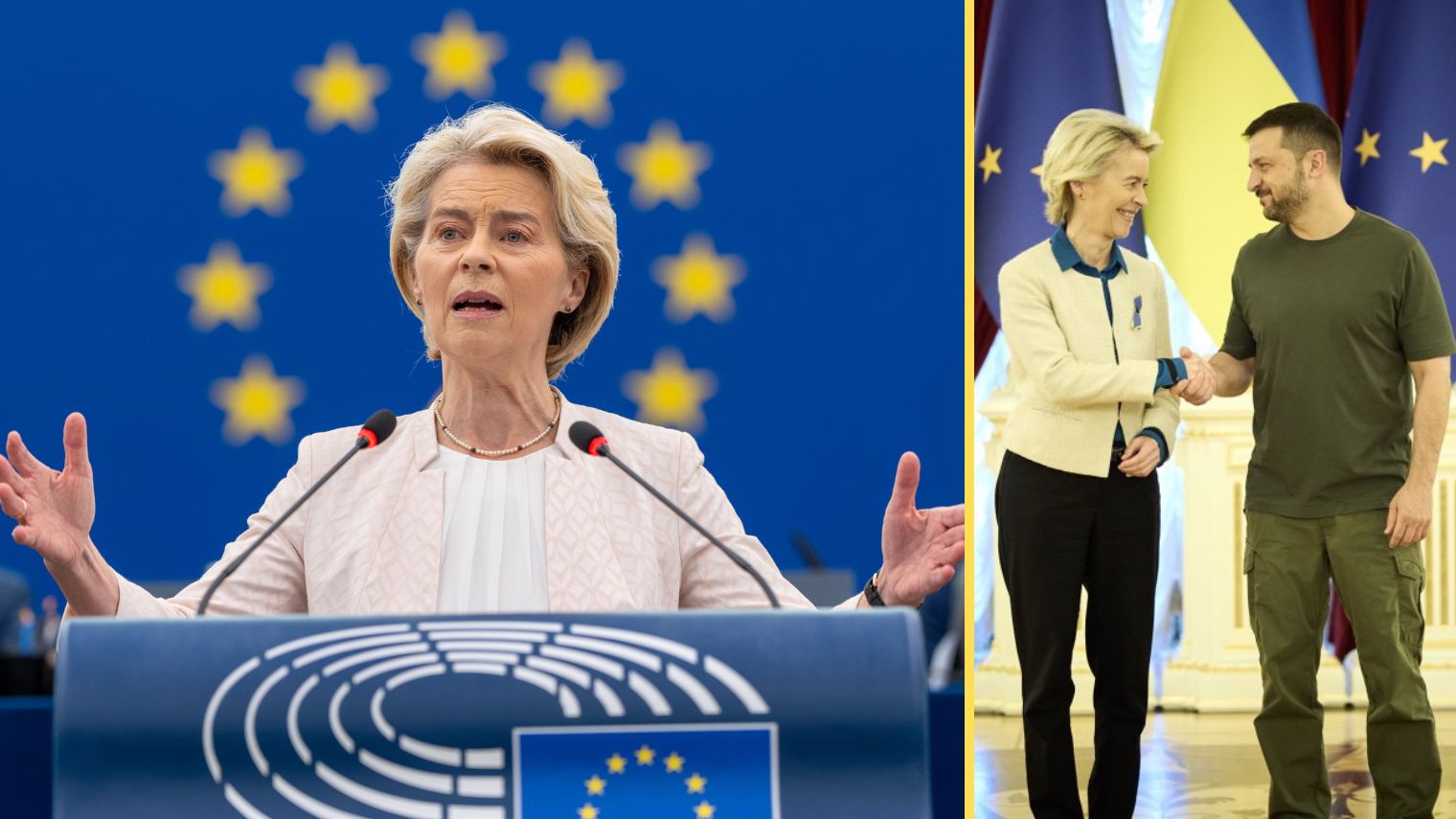
The European Commission is working on special roadmaps to give four of the union’s most advanced candidate countries a clearer path to membership. This concerns Ukraine, despite the ongoing war, as well as Moldova, Montenegro, and Albania. The countries will receive concrete goals for continued reform efforts and approximate time frames for when different parts of the membership negotiations may be completed. At the same time, several other countries, including Turkey, are still waiting for future EU membership.
The proposal is an attempt to accelerate a process that, for several of the candidate countries, has been ongoing for many years without any clear timetable for when membership might actually become a reality.
Two senior officials in the European Commission, who are working on the planned roadmaps, state that the four countries will get a more detailed overview of the reforms that remain and the steps needed to advance negotiations.
The officials have spoken anonymously as the work is not yet complete. The roadmaps will clarify, among other things, the requirements for each country and when different groups of reforms are expected to be implemented. This was reported by Politico on Sunday.
READ ALSO: EU: Ukrainian Membership as Soon as Possible
EU accession negotiations are divided into six negotiation areas covering different policy fields, and the new plans are expected to include approximate deadlines for when these parts of the process can be completed.
This does not mean that the countries automatically gain membership on a fixed date. Instead, they are intended to create a clearer and more predictable path forward, provided the candidate countries carry out the reforms the EU requires.
Ukraine to Join
Montenegro has advanced furthest in the process among the four identified countries. In July, the country had opened all 33 negotiation chapters and had provisionally closed 18 of them. Albania has also opened all chapters, with three provisionally closed at the same time.
According to the EU, Ukraine and Moldova have made progress in membership negotiations during the year. In June, Ukraine opened the first negotiation area, and in July, both Ukraine and Moldova began talks on foreign relations. This is happening as the war in Ukraine continues and it remains unclear when and how the conflict will end.
European Commission President Ursula von der Leyen has previously said the union needs to give special support to those candidate countries that have made the most progress. The Commission has also confirmed that the new roadmaps will include priorities, timelines, and concrete goals for the most advanced candidate countries.
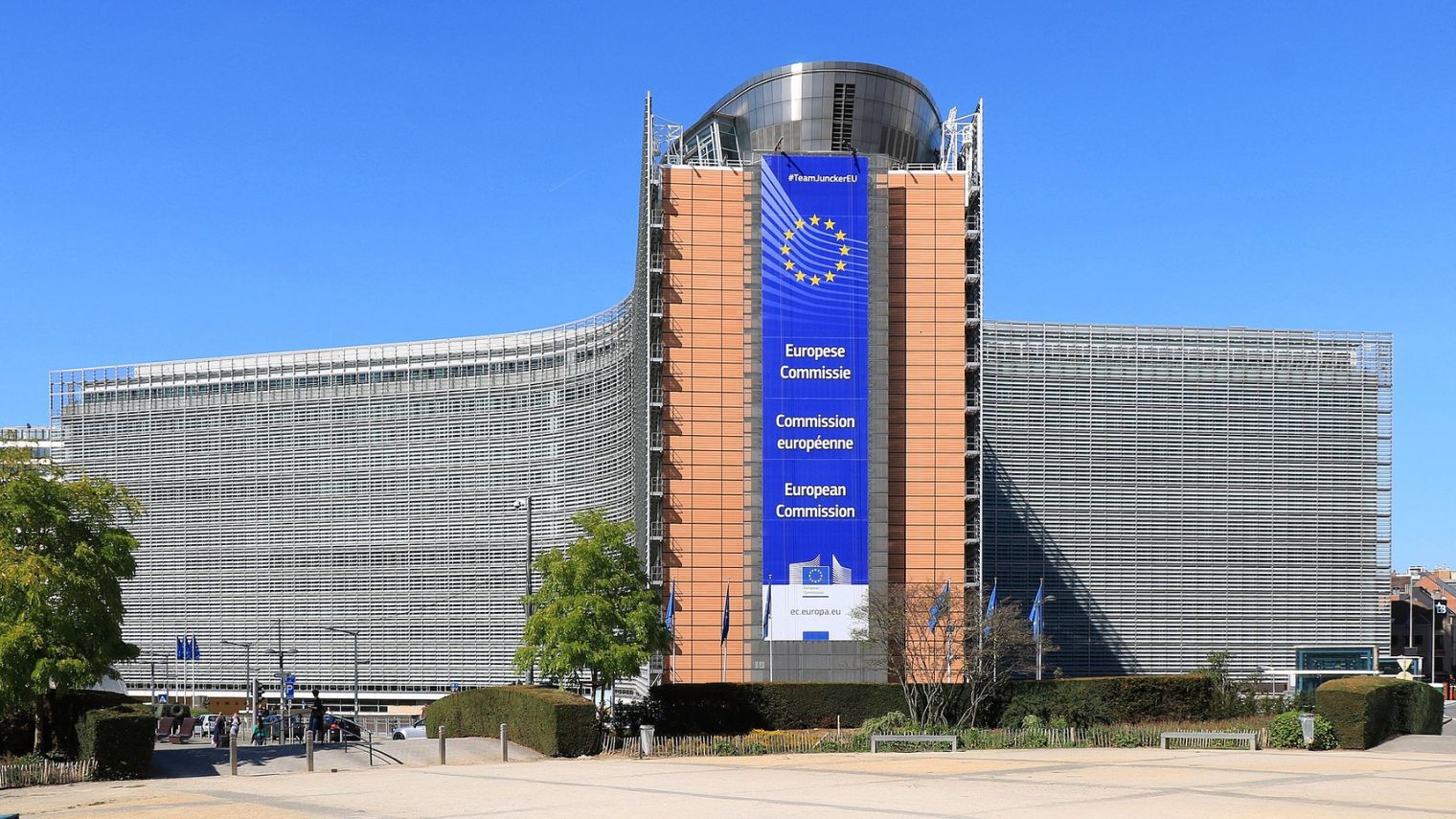
Several Countries in the Queue
The initiative does not include all countries negotiating or hoping for future EU membership. Kosovo, North Macedonia, and Bosnia and Herzegovina will not be covered by the roadmaps at this stage. The same applies to Georgia, Turkey, and Serbia, where the membership processes exist but have stalled in recent years.
For Georgia, Turkey, and Serbia, the EU has, among other things, expressed concerns about the development with regards to democratic institutions, the rule of law, and political reforms. This means they are not at the same stage in the accession process as Montenegro, Ukraine, Moldova, and Albania.
The EU is also working on a broader change in policy towards candidate countries before possible membership. The idea is for countries to gradually come closer to the union even before becoming full members. This can happen, for example, through increased access to the EU’s economic partnerships and joint projects, where progress in reforms can bring concrete benefits even during the accession process itself.
READ ALSO: EU Wants Fast Track for Ukrainian Membership – Germany Says No
A separate review of this so-called pre-accession policy is to be presented to EU leadership on October 6. The work is led by Alexandre Adam, a close adviser to Ursula von der Leyen. A draft document argues that EU enlargement is of great geopolitical significance, but the actual membership process takes time. During the waiting period, the EU wants to use the process to both prepare the union for more member countries and draw candidate countries closer to the EU.
At the same time, there is caution among several EU member states regarding a future enlargement. A new member country does not just get access to the union’s economic and political systems, but also a say in EU shared decisions.
According to Politico, experiences with Hungary have contributed to the discussion in Brussels about which guarantees need to be in place when new countries are admitted. Hungary’s government, led by Prime Minister Viktor Orbán, has been accused by the EU of undermining rule-of-law principles, while at several times using its influence to block or delay joint EU decisions.

READ ALSO: EU’s New Foreign Minister Ready to “Do Whatever It Takes” for Ukrainian Victory
The fact that member states can oppose joint EU decisions has in recent years created significant irritation, not least due to Hungary’s repeated use of its veto in matters concerning EU sanctions against Russia and support for Ukraine. Against this background, the EU is working on new mechanisms to be able to handle situations where a member state fails to meet its obligations to the union.
Brussels is therefore very concerned about how new member states may vote and what stance they may take within the union, so several safeguard mechanisms are being considered. As part of this, the European Commission is discussing transitional periods and special safeguards that could be used in a future enlargement.
The purpose is to ensure that new member states cannot immediately block or change central parts of EU policies by fully exploiting the rights that come with membership.
The issue of EU enlargement is also said to be part of Brussels’ ambition to strengthen ties with countries considered democratic and trade-oriented in the union’s neighborhood. This comes as relations with the USA have become more complicated, China is challenging the EU economically, and Russia’s war in Ukraine and increasingly confrontational security policy are putting further pressure on the union.
Was Completely Red-Flagged Last Year
EU Enlargement Commissioner Marta Kos has expressed hope that the new initiatives will lead to a more intensive period for the enlargement issue this autumn. EU heads of state and government are expected to discuss both enlargement and the need for internal changes within the union at a summit in Brussels on October 15.
Alexander Soros, son of businessman George Soros and chairman of the Open Society Foundations, posted last year a photo on social media showing the EU’s assessment of candidate countries’ progress toward membership. Ukraine had a red mark in all categories of membership requirements, while several other candidate countries had yellow or green marks.
READ ALSO: Orbán: Will Do Everything to Stop Ukraine’s EU Membership
It is still unclear whether the red marks are due to Ukraine not actually meeting EU membership requirements or if they instead result from the ongoing war. Regardless of the reason, former Hungarian Prime Minister Viktor Orbán warned last year that an expedited Ukrainian EU membership during ongoing war would pose significant risks for the union’s member states.