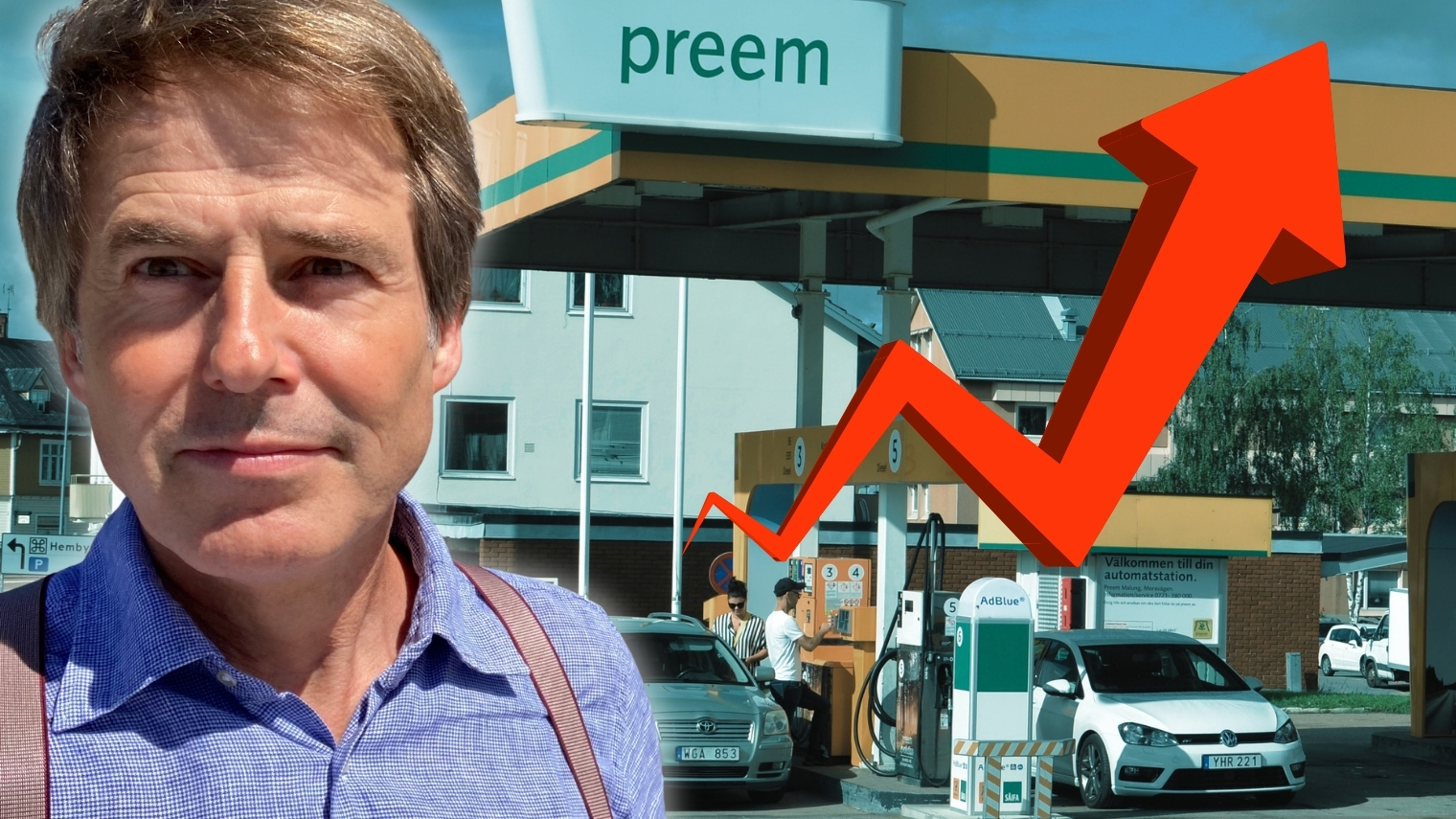
The gasoline price may be on its way up sharply. Next week, a previous tax reduction expires, while the developments around the Strait of Hormuz risk pushing prices even higher. For many car-owning households, this could mean several hundred kronor in higher costs per month before the end of the year.
Claes Hemberg, energy economist at Nibe, warns that household finances may be significantly affected when the gasoline price rises. According to his assessment, the price could increase by about one krona per liter already next week.
“We get everything at once. Gasoline will jump by a krona as early as next week,” says Claes Hemberg, energy economist at Nibe, to Aftonbladet.
The tax hike is part of the changes awaiting at the pump. Hemberg points out that over the past four years, the government has lowered the gasoline tax by a total of eight kronor, but that half of this reduction has been temporary.
READ ALSO: EU’s energy crisis – now the union will tax away the problems they’ve created themselves
This means that further increases are expected later in the year. Hemberg estimates that the monthly cost for gasoline for some households may have risen by about 500 kronor in December compared to previous levels.
At the same time, the development of the gasoline market is also affected by the situation around the Strait of Hormuz, a key transport route for global oil trade. According to Hemberg, a solution to the crisis could help push prices back down.
READ ALSO: New EU fees could push fuel prices to 40 kronor per liter
However, he does not believe in a rapid return to the very low gasoline prices seen during the summer. Households should also not expect the state to step in with new support measures anytime soon to ease the effects.
“We will see households hit hard by rising gasoline prices. The gasoline price will be around 22 kronor in December. Ten percent of households will face very tough circumstances,” Hemberg estimates.
READ ALSO: Car organization warns of fuel prices rising by 6 kronor