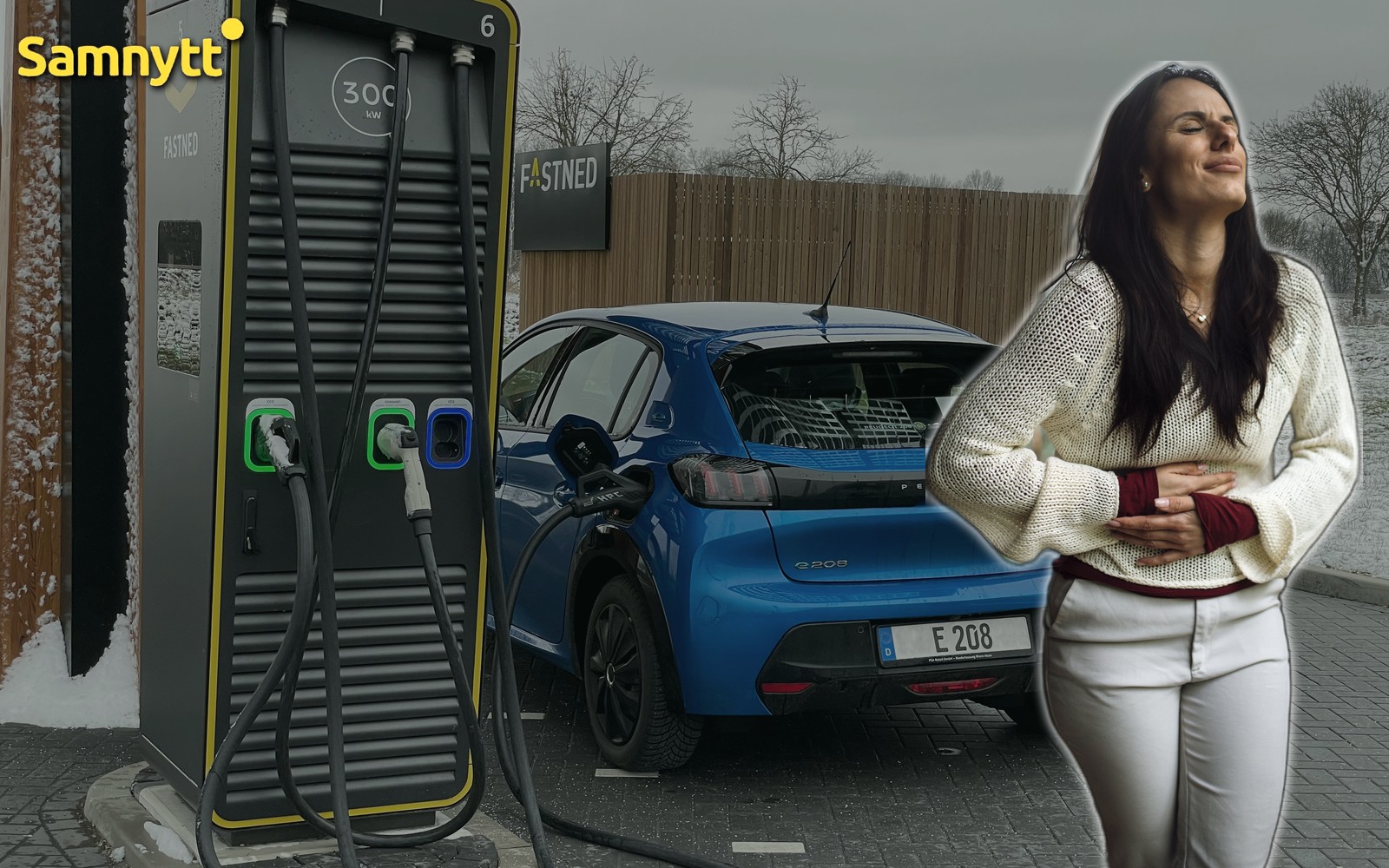
The nausea is not an isolated event. Passengers, parents, and doctors describe how motion sickness becomes worse specifically in electric cars, and the research available points in the same direction, even though the evidence is still sparse. It has to do with how the cars are built. They are quiet, they accelerate faster than a regular car, and they brake as soon as the driver releases the accelerator.
Lola Baird, 24, from north London, asked her boyfriend to stop during a car trip. After forty minutes in the electric car, her nausea was so intense that she couldn’t help herself. She vomited on the ground next to the car.
She had never experienced motion sickness before he bought the electric car two years ago. Since then, in her own words, she feels very nauseous during longer trips. It’s gotten to the point where she has asked her boyfriend to switch cars. The same thing happens when she takes an electric taxi.
But she is not alone. Others report that they, or their children, get more motion sick as passengers in an electric car than in a car with a conventional engine. That’s according to a report by the BBC.
Irene Di Giulio, who researches motion sickness at King’s College in London, says that the research published so far suggests that some people have worse symptoms in electric cars than in combustion-engine vehicles.
SEE ALSO: Electric car exploded in Sundsvall parking lot – toxic smoke in the air
Bill Yates at the University of Pittsburgh, who also studies motion sickness, still calls the evidence quite shaky. There are anecdotes, he says, but not yet many large and thorough studies.
The Body Gets Conflicting Signals
Neurologist Nicholas Hac in Chicago treats patients with dizziness and vertigo. About two patients a month mention themselves that they get motion sickness in electric cars.
– They simply notice that they get motion sick much easier, he tells BBC and continues:
– I have heard this many, many, many times.
Hac explains that motion sickness arises when the senses report different things. The body relies on three clues that we are moving: what the eyes see, what the balance organs in the inner ear feel, and what muscles and joints register.
When one input conflicts with the others, such as when you look down at your phone instead of out the window, nausea can occur. In the electric car, something else is added.
People have become used to associating sounds with speed. Di Giulio points out that electric cars lack the engine noise and vibrations that indicate the car is accelerating. Without those signals, motion sickness can be triggered.
Another reason is that electric cars brake by regenerating energy. When the driver releases the accelerator, the engine acts as a generator. The resistance slows the car and at the same time charges the battery. If you release the accelerator too suddenly, the deceleration can be harsh.
– It makes you feel like you’re rocking back and forth in that brief moment when the speed suddenly changes, Hac tells BBC.
Another thing is that electric cars can both accelerate and decelerate much faster than a regular car. That too can trigger motion sickness.

Children and Women Are Affected More Often
Mark Quigg in Lincolnshire chose an electric car last year because it’s cheaper to run. He himself finds the car wonderful to drive. The problem is his nine-year-old daughter. Previously, she only got motion sick on trips to France, about 970 kilometers away. Now just a half-hour trip to the nearest town is enough.
On a recent trip, she vomited—something that had never happened before. Quigg describes the electric car as quieter, and this very silence is part of what researchers point to.
Neurologist Nicholas Hac says that genetics weighs heaviest for who gets motion sick and that women and children are more vulnerable. John Golding has researched motion sickness at the University of Westminster and for the British Navy and Air Force.
He says the symptoms are often at their worst between the ages of eight and ten, but that you generally get used to it the more you travel.
How to Relieve Motion Sickness in an Electric Car
SEE ALSO: Electric cars in a large range test – how far the best and worst brands went