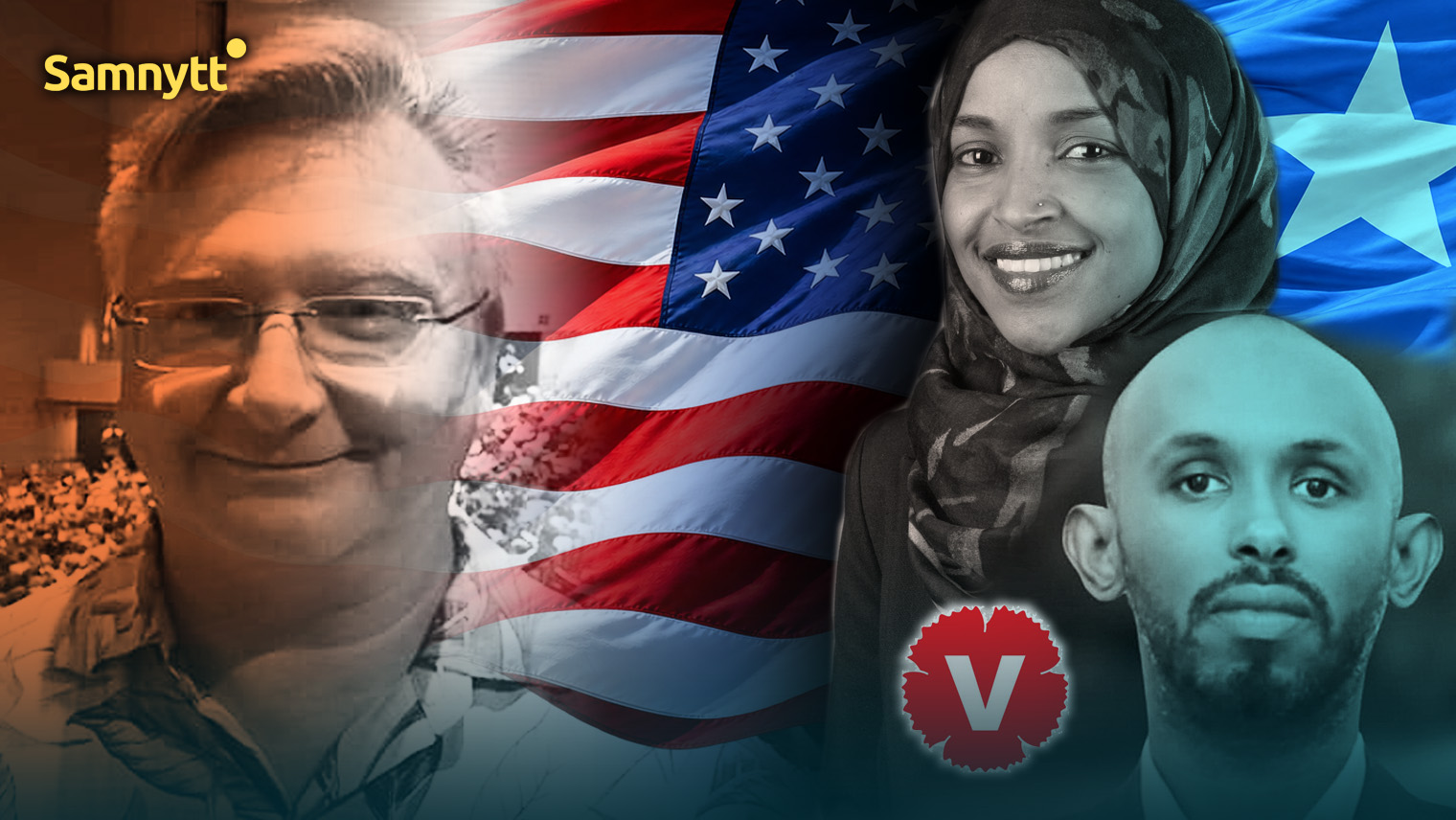
Sweden is still stuck in the Social Democratic worldview of the 1970s even as the country undergoes demographic and political change, according to Swedish-American political scientist and historian Anders W. Edwardsson. In an interview with Samnytt, he draws parallels between Somali political mobilization in Sweden and the US, criticizes Swedish media’s reporting on Donald Trump, and warns that Europe’s future could be decided within just a few generations.
Anders W. Edwardsson has lived in the US for many years but continues to follow Swedish political developments closely. He is a political scientist, historian, author, and political analyst, allowing him to observe developments in both Sweden and the US from both sides of the Atlantic.
When Samnytt meets him shortly after the Swedish parliamentary election, his first reflection is that Sweden, in a strange way, seems stuck in its political history.
When you look at the Swedish election from the US—what do you think it really says about where Sweden is heading politically?
– What it says to me is that Sweden has been standing still for a long time. Sweden, I don’t know, it’s as if it’s forever something like 1974 in Sweden.
Edwardsson nonetheless observes that Sweden is, in practice, a completely different country than it was half a century ago.
– It isn’t 1974 anymore. Sweden is completely different today than it was then. Both for better and worse. Much has improved.
But according to him, the old Social Democratic self-image still persists.
– You can’t leave Social Democracy behind.
He points to Magdalena Andersson’s actions after the election and says the Social Democrats still act as if their historic dominance remains.
– It’s still as if the Social Democrats themselves had 45, 46, 47 percent and expect everyone to dance to their tune.
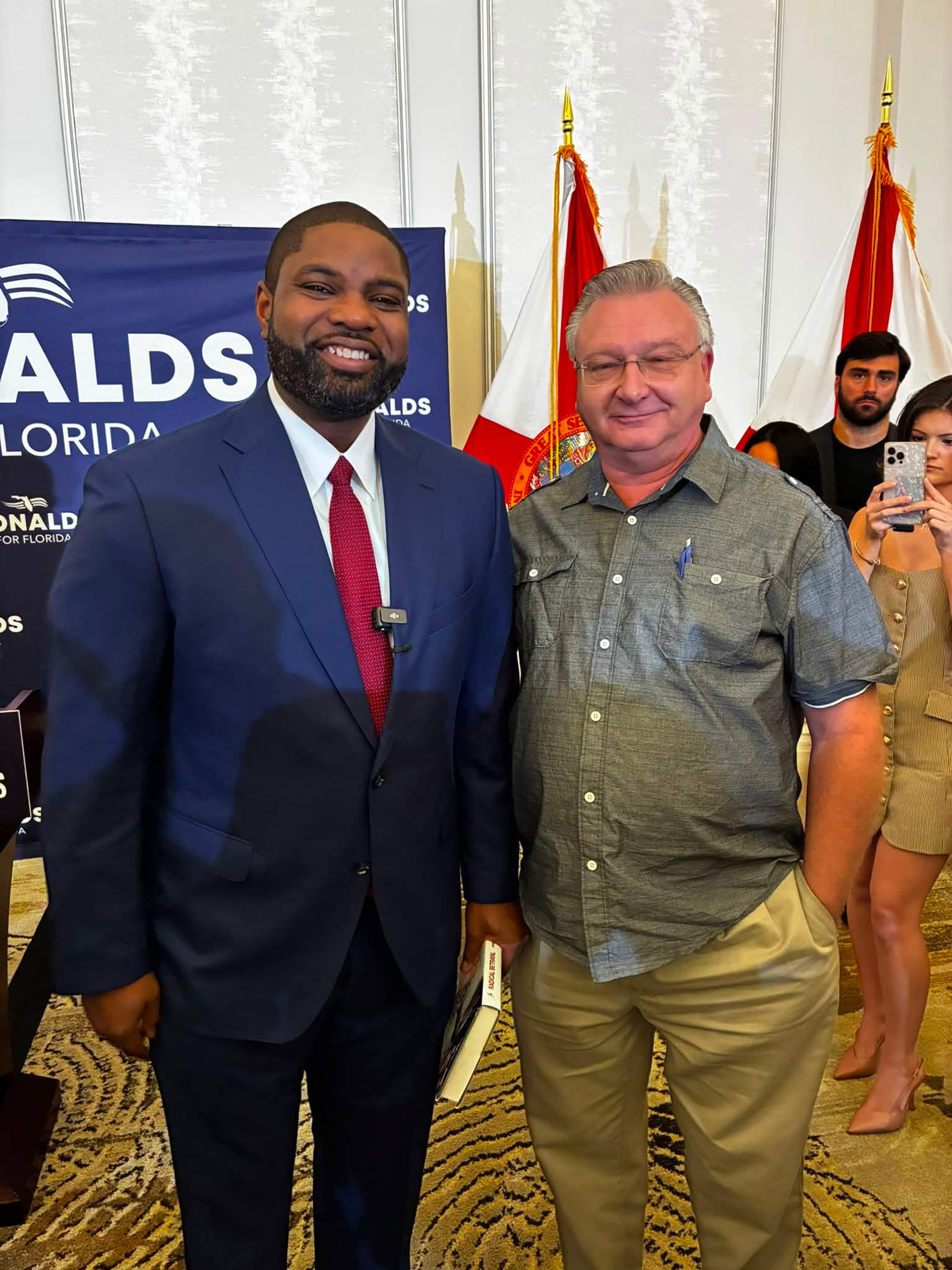
“We Could Have Told You”
But Edwardsson reacts not only to the Social Democrats. The Left Party’s success and discussions about ethnic mobilization and clan voting lead him to draw direct parallels to the US.
He especially points to developments within parts of the Somali diaspora in Minnesota.
What do you say about the Left Party’s success and the debate on clan voting?
– It’s exactly what one could expect. Here in the US, we could have told you that this would happen.
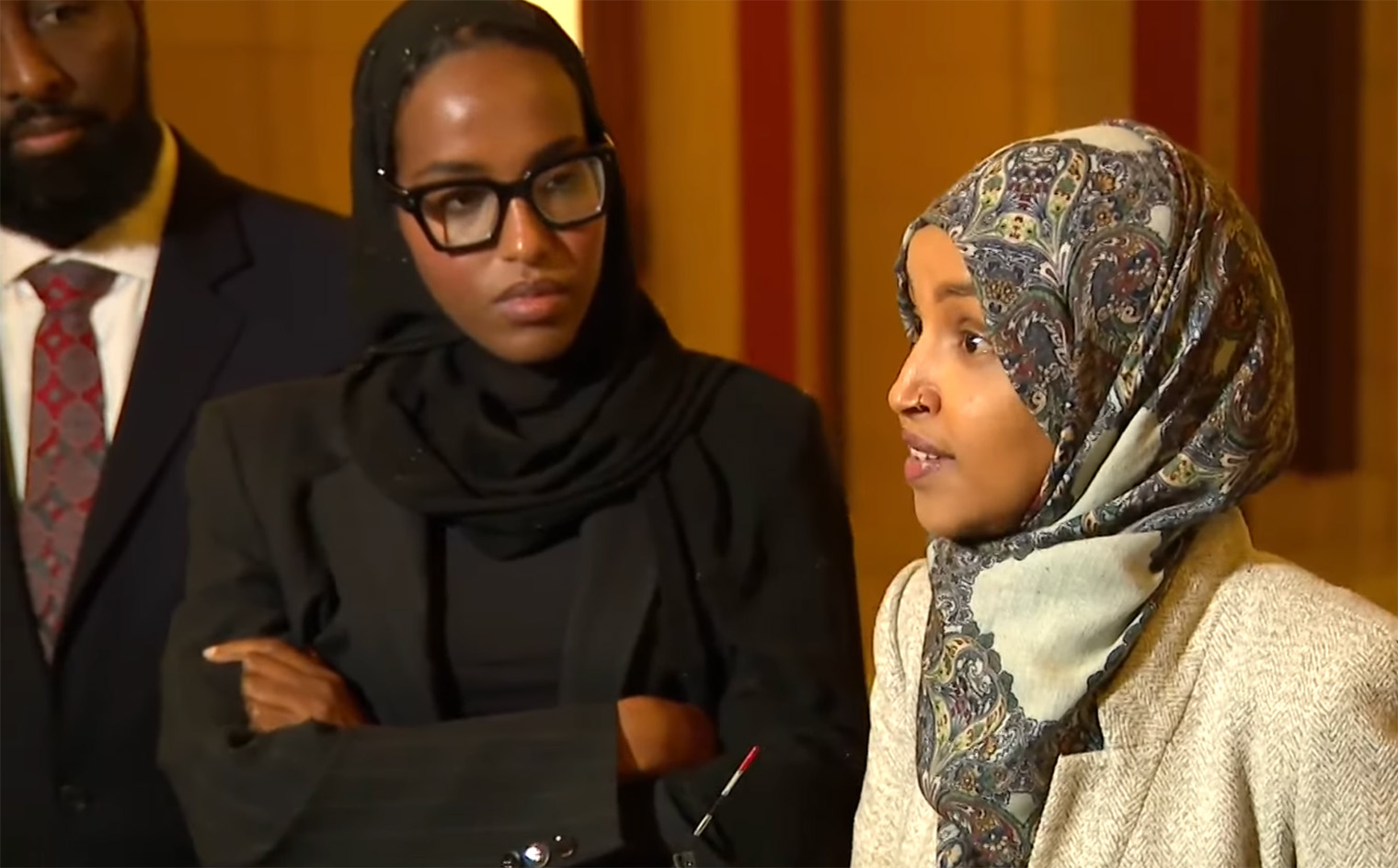
Edwardsson refers among other things to Somali-American congresswoman Ilhan Omar and asserts that what is now being discussed in Sweden has clear counterparts in American politics.
– We have our own areas up in Minnesota with these Somalis, Ilhan Omar, and the like. It’s exactly the same thing.
Edwardsson then uses a far more controversial word to describe what he believes happens when large migrant groups do not assimilate.
– It’s actually not wrong to call these people colonizers on some level. Because they come, they move from their countries, arrive in other countries and absolutely refuse to adapt. And then they start to worm their way in, and when they become numerous enough, they begin to take over various institutions and parties.
READ ALSO: Mona Walter on the Minnesota scandal, Somali culture, and why Sweden is particularly vulnerable
“You Don’t Represent Somalia”
Edwardsson believes the central issue is political loyalty. He reacts against what he perceives as the self-evidence some politicians show in representing voters in their new homeland while tied to the interests of the old.
– They see it as completely natural to sit in the Swedish parliament and represent Somalia.
If I were elected to the US Congress and sat there saying that now I will advocate for Sweden and Swedes here—I mean, it’s completely insane.
Anders W. Edwardsson, political scientist, historian, and political analyst
He offers a thought experiment: If an American moved to Sweden, became a Swedish citizen, and was then placed on the Moderates’ or Sweden Democrats’ party list—only to declare that his task was to represent the US—Edwardsson says the reaction would be furious.
– There would be an uproar.
In the interview, Samnytt brings up newly elected Left Party MP Mohamed Abdukadir Ali from Borlänge and reports about his meetings with representatives of the Somali government.
READ ALSO: The welfare crimes in Minnesota that governor Tim Walz deliberately ignored
We have found that Mohamed Ali, who was elected to the Swedish parliament for the Left Party, has also had meetings with the Somali government. Does this suggest a pattern?
– As I said, you don’t have to be a conspiracy theorist, because it’s completely open.
For Edwardsson, the principle is simple:
– You should be in the US Congress and represent your American state. And you should be in the Swedish parliament to represent the Swedes—of all backgrounds of course—from your electoral district. You don’t represent Somalia or anything else. You represent your constituency and everyone who lives there.
Had to Renounce His Old Loyalty
Here Edwardsson uses his own story as an example. When he became an American citizen, he had to take the US citizenship oath. He describes how he publicly had to renounce loyalty to other states—with the archaic phrase about faithfulness to foreign “princes.”
– If I were elected to the US Congress and sat there saying that now I will advocate for Sweden and Swedes here—I mean, it’s completely insane.
Edwardsson says the discussion in Sweden therefore should not be seen as some unexpected phenomenon.
– I’m not surprised, since they’ve done exactly the same thing here with the Somalis in Minnesota. And it’s precisely the same predictable reaction.
This Is Why Sweden Hates Trump
The conversation shifts to Donald Trump and the Swedish view of the American president.
You know both the US and Sweden. Why do you think Donald Trump provokes such exceptionally strong resistance, particularly in Sweden?
– It’s because he’s so hyper-American. He’s even too American for half the population here. The Democrats hate him.
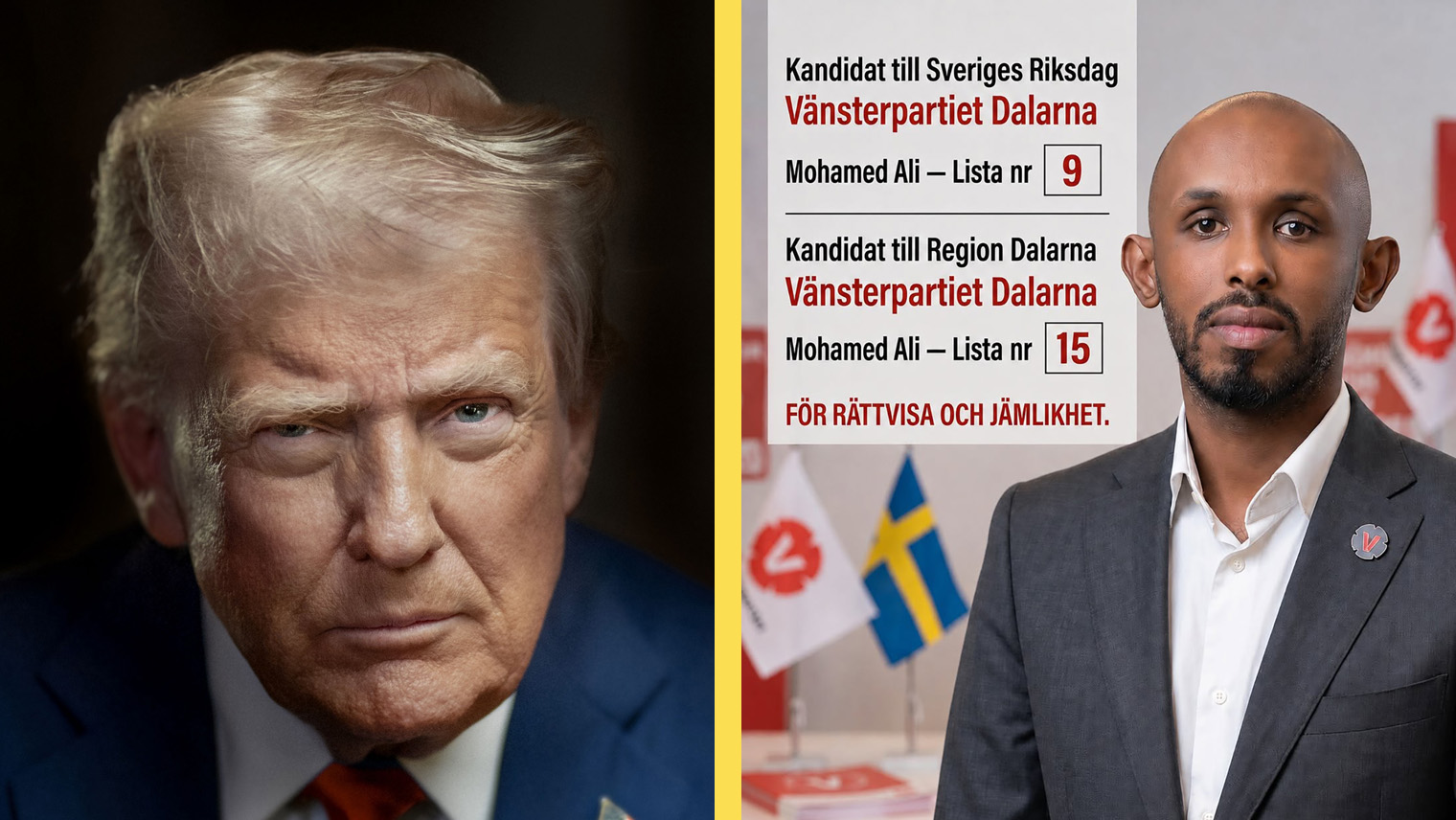
Edwardsson sees Trump as close to the antithesis of Swedish political culture. Where Swedes like to see the Swedish social model as the norm, Trump views the world from an explicitly American perspective.
Edwardsson describes it as a collision between two forms of exceptionalism.
– It’s Swedish exceptionalism. Saying Sweden is different and first in everything. This man is running in the totally opposite direction.
“On a Scale From One to Ten—Minus Three”
Edwardsson is even harsher about Swedish media’s reporting from the US.
How accurately do you think Swedish media describes today’s USA and the movement that brought Trump to the White House?
– On a scale from one to ten—minus three.
READ ALSO: Former TT-reporter: Trump’s wife is a “stupid whore”
Edwardsson says that after many years in the US, he simply doesn’t recognize the country described in Swedish media.
– The country described in Sweden—especially by SVT and SR, but even in the largest dailies, Aftonbladet and Expressen—is not the country I live in.
Go to London and look around. Go to Paris and look around. Go to Malmö and look around. And you’ll see what all of Europe will look like in a few generations, just for demographic reasons.
Anders W. Edwardsson, political scientist, historian, and political analyst

According to him, reporting is too much shaped by the perspectives of America’s most Democratic-dominated big cities.
– There’s zero understanding and absolutely no knowledge of what the US outside New York and Los Angeles looks like and how it works.
He believes that the problem goes deeper than party politics.
– Everything should be like Sweden, look like Sweden, function like Sweden.
READ ALSO: Trump administration fires dozens – wants to purge the deep state
Warns of Europe’s Demographic Future
When the conversation turns to Europe’s demographic development, Edwardsson’s outlook darkens considerably. He says that no complicated theories are needed to see the change.
– You don’t have to be a conspiracy theorist either. Just look around you.
He then lists three examples:
– Go to London and look around. Go to Paris and look around. Go to Malmö and look around.

Edwardsson argues that the combination of long-term immigration, the age structure among immigrants, and differences in birth rates will fundamentally change Europe’s population if the development continues.
– And you will see how all of Europe will look in a couple, three, four generations for purely demographic reasons.
READ ALSO: Demography researcher to parliament: “Only remigration can save Sweden”
His own prognosis is stark:
– In 20–30 years, what we call Europeans today—except possibly in Eastern Europe—will be a minority in their own continent. If this just continues without anyone doing anything.
READ ALSO: Ekeroth’s warning about demography gets unexpected support from leftist researcher
Remigration: “Unfortunately, She’s Right”
Samnytt also asks about the growing European movement for so-called remigration.
When Samnytt previously interviewed Dutch commentator Eva Vlaardingerbroek, she described remigration as the last peaceful tool for reversing the demographic development.
What do you think about that?
– Unfortunately, she’s right.
READ ALSO: Eva Vlaardingerbroek to Samnytt: “Remigration is Europe’s last peaceful chance”
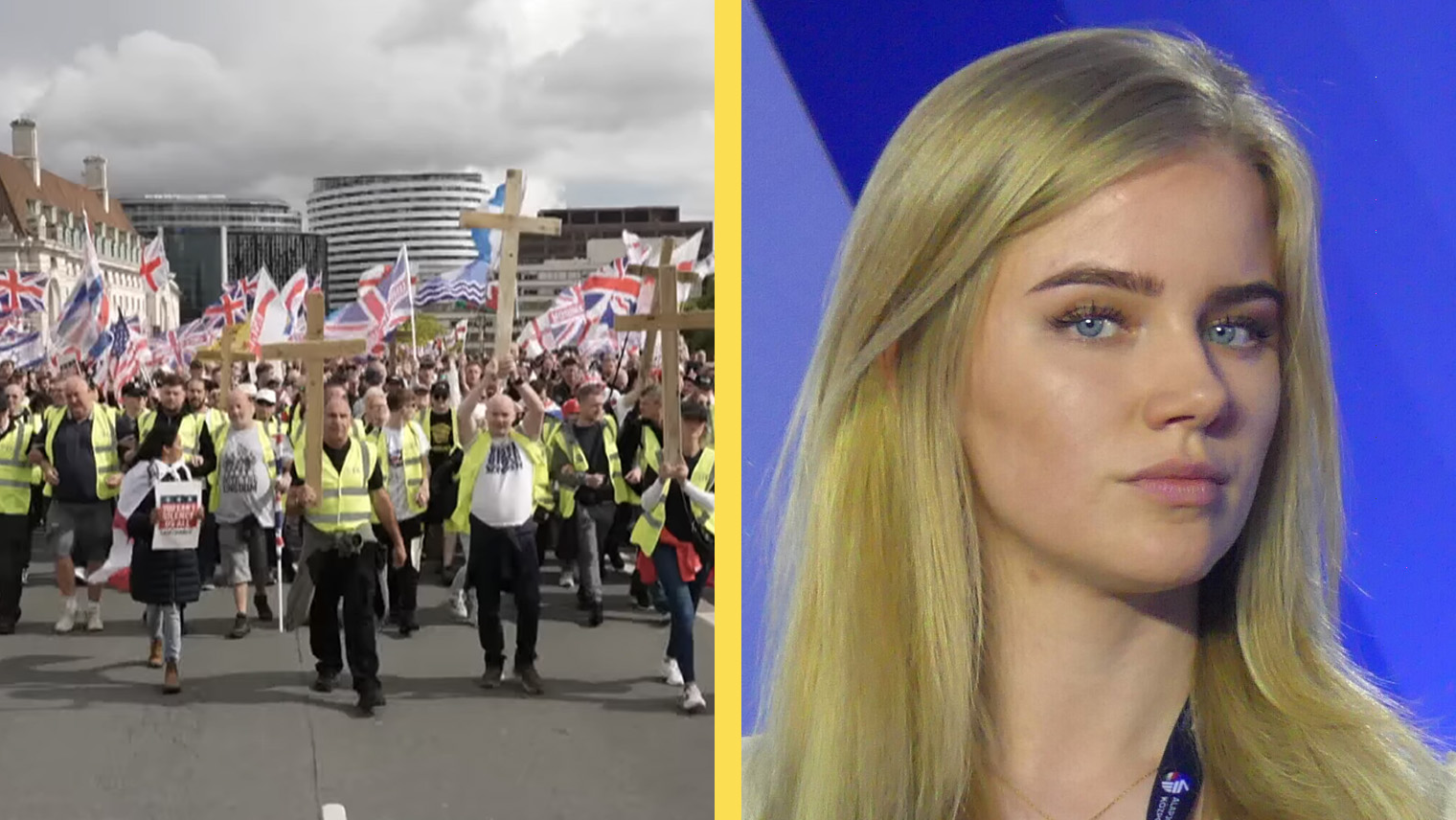
Edwardsson warns that the alternative in the long run may be far more serious tensions between different population groups. He likens the situation to two rival groups where a minor incident can trigger a larger conflict and points to riots in Britain.
– It only takes one or two minor incidents from one side or the other for everything… He continues:
– If you continue immigration without requirements for assimilation and so on, there isn’t a single example in world history where mass immigration like this has, in the long run, led to anything positive.
READ ALSO: The Remigration Institute chief warns Sweden: “You have a time window of five to ten years”
Edwardsson refers to historical examples and sums up his view with an American phrase:
– Ask the Indians and you’ll see. Ask the Romans what they think about Goths and such.
“It Can Be Changed”
Despite the grim forecast, Edwardsson believes that the development can still be influenced politically. He uses the Trump administration’s stricter migration policy as an example.
What can Sweden learn from Trump’s US regarding integration and assimilation?
– That you can put your foot down.
But he also highlights the other side of such policies. People affected by migration measures are not necessarily criminals.
– After all, we are talking about people. Many of these have never committed any crime beyond being here illegally, so to speak.
Transatlantic harmony will be decided in Europe. // If there are more Magdalena Andersson governments and the like, then it will continue to sour.
Anders W. Edwardsson, political scientist, historian, and political analyst
Edwardsson says that a thorough change will therefore inevitably also have consequences for individual people.
– Everything costs. You can’t reverse such a trend without it hurting. Without some people getting caught up in it.
READ ALSO: Andersson: “Time to mobilize for the next demographic destiny question”
This is also a reason why he believes that a similar policy shift would be politically much harder in Sweden.
– Just imagine SVT and SR and Aftonbladet and Expressen. The endless weeping there would be about this sort of thing.
Europe’s Path Could Decide Relations with the US
Finally, the conversation arrives at the growing political rift between the US and Europe—and whether, in the long run, this could also affect NATO and joint institutions.
Could the transatlantic political rift eventually become a problem also for NATO?
– It already is, to some extent.
But Edwardsson emphasizes that Trump won’t be president forever and that the US political direction can also change again. Therefore, he believes developments in Europe over the next few years will be decisive.
He points to Italy and Denmark, the former Swedish Tidö government, and political forces around Nigel Farage in the UK and Alice Weidel in Germany as possible examples of a European course correction.
– Transatlantic harmony will be decided in Europe.
READ ALSO: Meloni bans Muslim garments in Italian schools
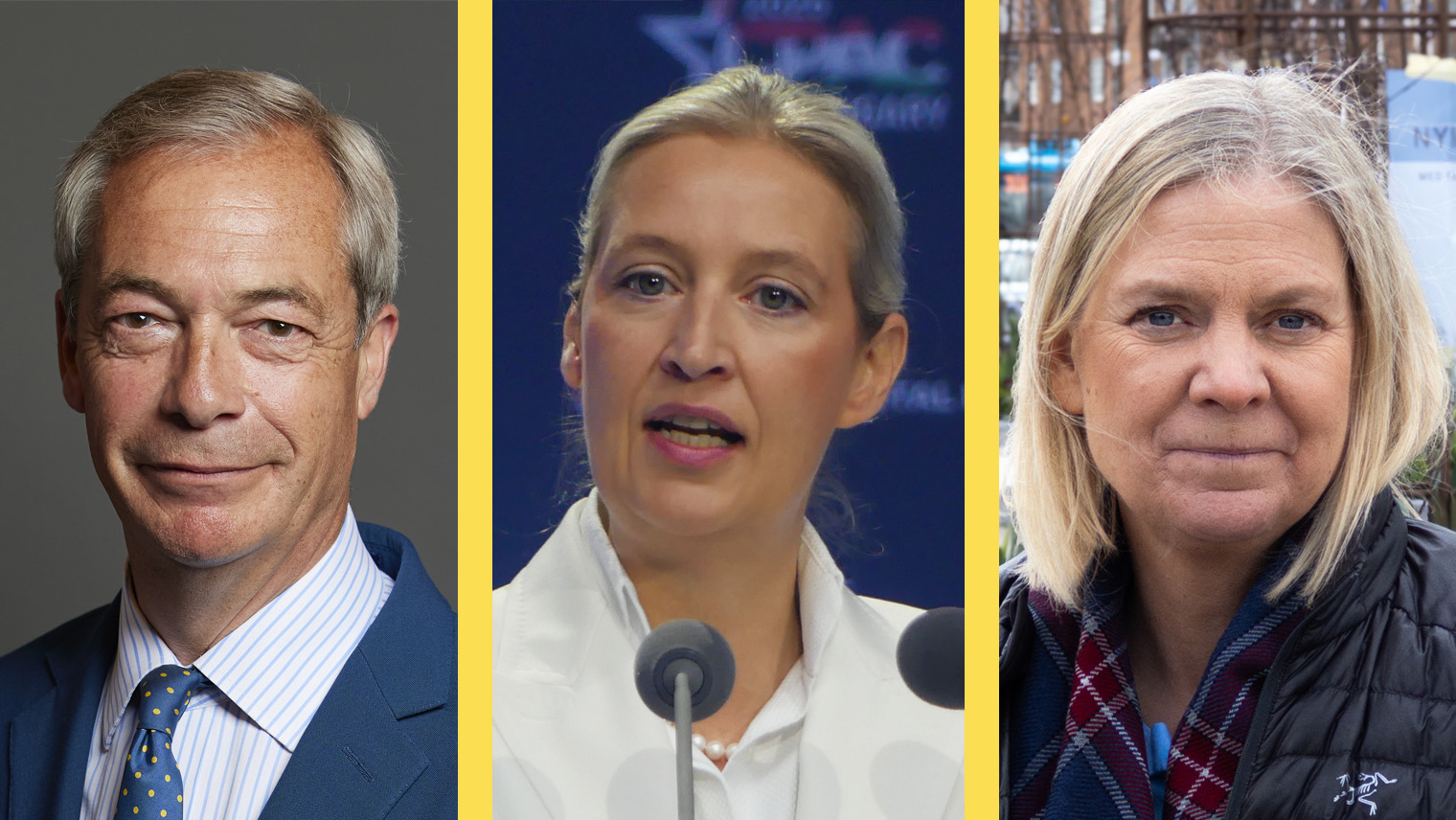
Edwardsson thus does not see the conflict between the US and Europe solely as a question of Donald Trump. The real question is what political direction Europe chooses when Trump is no longer around.
READ ALSO: Alice Weidel: AfD is going to take power—here are the reforms the party leader wants to implement
And if Europe instead goes in the opposite direction, he believes the transatlantic distance will continue to grow.
– If there are more Magdalena Andersson governments and similar, then it will continue to sour.