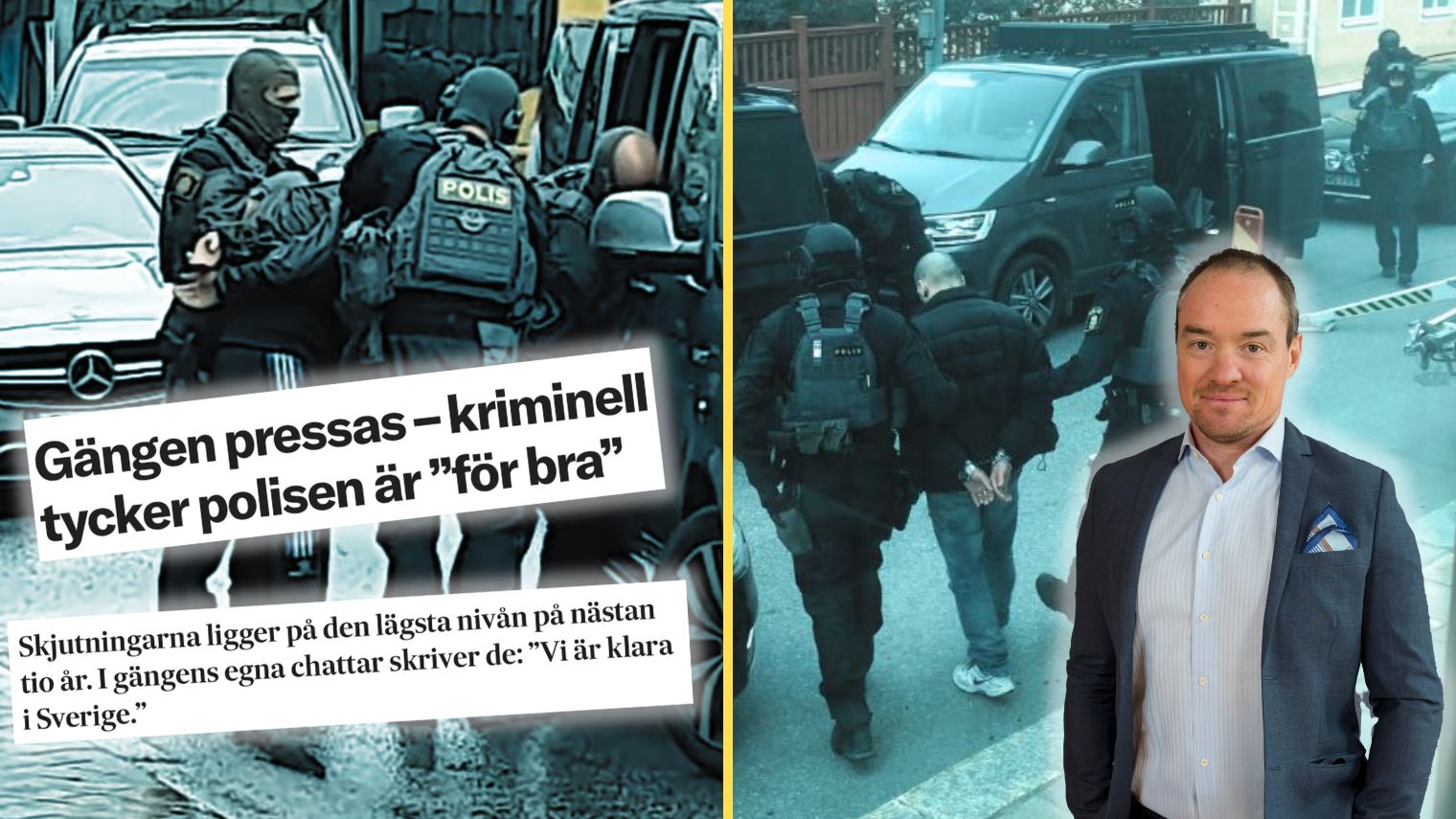
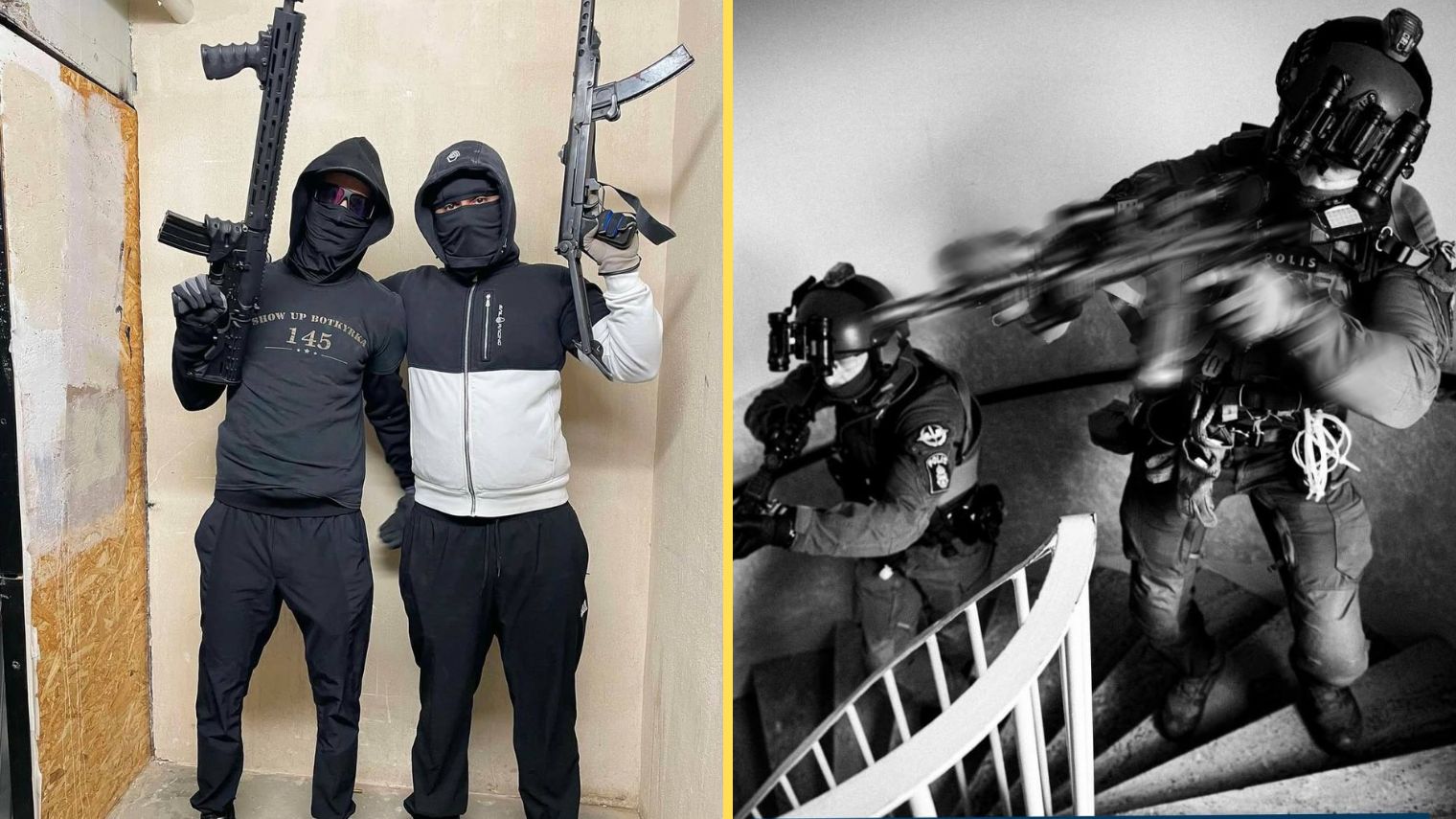
When gang criminals themselves write that they are “done in Sweden,” even the most hardened political deniers should be forced to pause. The shootings have not decreased thanks to more youth clubs, juice and buns, or new dialogue projects. They are decreasing because Sweden has finally started to make life harder for criminals. Politics makes a difference.
For decades, Swedes were told that the situation could not be influenced. The shootings were “complex.” Gang violence had “many causes.” Criminals were to be met with preventive measures, social projects, and even more understanding.
Meanwhile, parallel societies grew, murders became more frequent, children were recruited as hitmen, and gang leaders could direct Swedish death squads from sun loungers in Turkey.
Now comes the news that the left would rather do without: shootings are plummeting. According to the National Police’s half-year statistics, only 39 shootings occurred in the first half of 2026. This can be compared with 86 during the same period in 2025 and 205 in the first half of 2022, when the Social Democrats were in power. The level is the lowest since the police began keeping record in 2017.
At the same time, police statistics show that an increasing number of gang criminals active in Sweden are being apprehended abroad. During the first part of this year, 172 people linked to Swedish criminal networks have been detained in other countries—a rise of about 20 percent compared to the same period last year.
In an article in Svenska Dagbladet, police officers share that gang chats now include messages like:
We are done in Sweden now.
Not because the criminals have suddenly acquired better values or attended a municipal “values course,” but because it’s become too hard to be a criminal in Sweden.
Increased Hunt Mentality
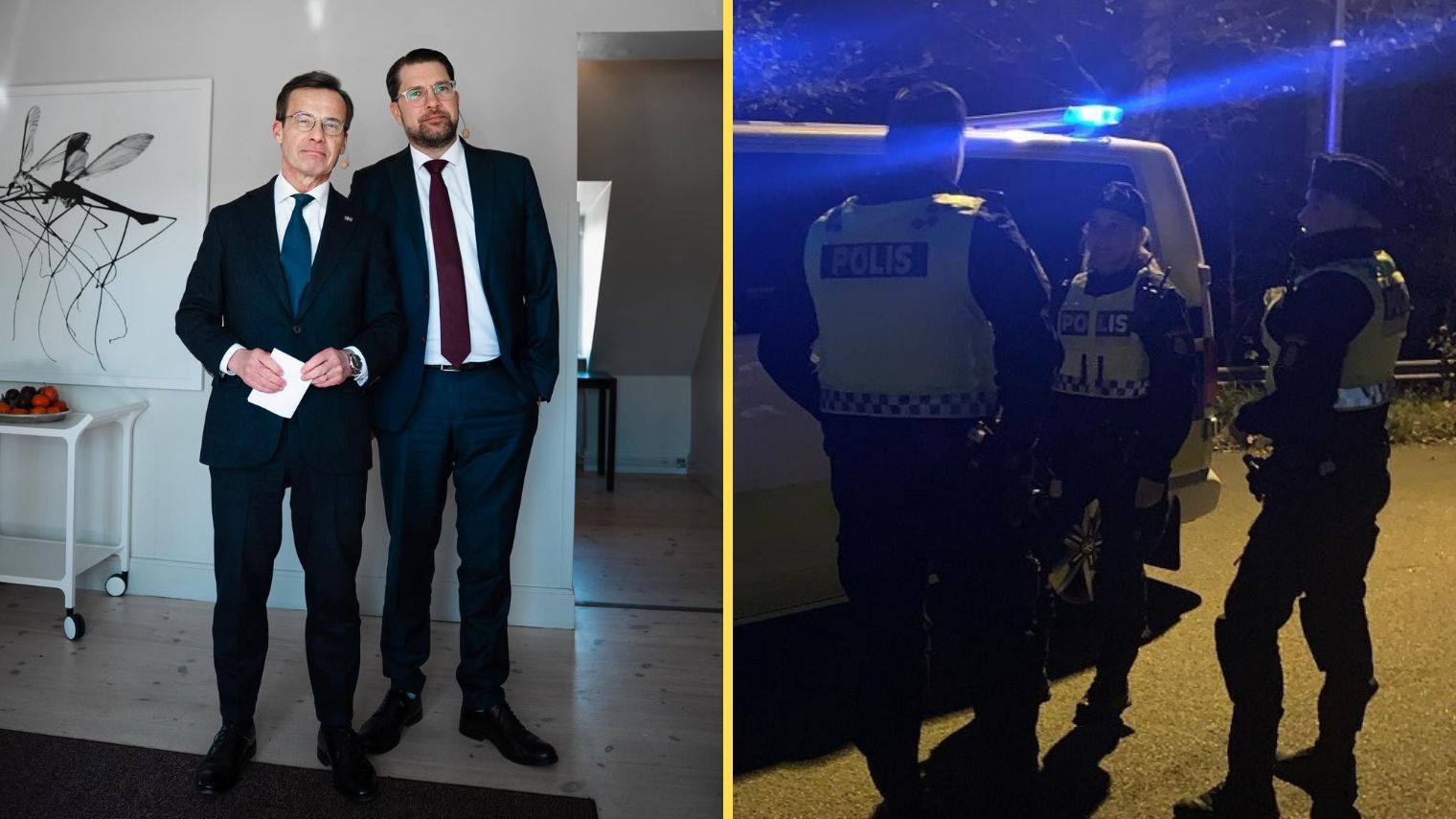
Police area chief Max Åkerwall says that the police’s “hunting instinct” has intensified. Dan Windt at the Police National Operations Center notes that Sweden has become less attractive to criminals. International gangs are said to be reasoning the same way: they are quickly apprehended, deported, and banned from reentry. According to SvD, the clearance rate for deadly gang violence has increased from about 20–30 percent to approximately 60 percent.
Of course, this is primarily the result of tough and professional police work. Swedish police have developed their methods, strengthened international cooperation, and improved their digital and preventive work. But the police do not operate in a political vacuum.
Police can only use the powers given to them by legislators. Prosecutors can only bring charges under the laws passed by parliament. Courts can only sentence within the penalty frameworks decided by politicians. When the police themselves talk about more tools, modernized legislation, arrests in the preparatory stage, and the ability to prevent crimes before shots are fired, it is also about politics.
It is not a single law that has reversed the trend. It is the cumulative effect of more police officers, better intelligence, international cooperation, tougher sentences, new means of coercion, and the confiscation of criminals’ assets.
The Political Will
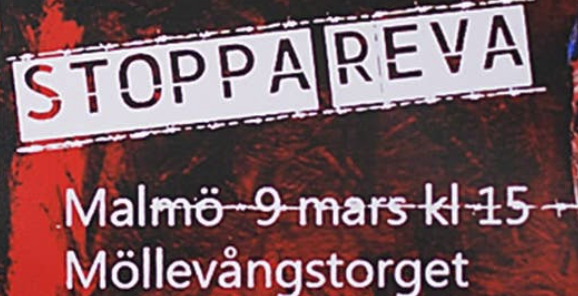
But almost as important is that the “political will” is now present. We may all remember the REVA debate over ten years ago. It was about the police project between 2009–2014 to carry out deportations—which was, and is, part of the police’s assignment.
But during the debate that arose, called the REVA debate, we saw what happens when politicians leave the police out to dry. Södermalm police officer Viktor Adolphson later recounted that officers fulfilled the task they had received, but that “there was not the slightest political will to stand up for it” when the media storm broke out.
REVA was portrayed as a police initiative, even though the police only implemented the laws and decisions that the politicians themselves had adopted. The result was that internal alien controls were discredited and became harder to perform.
Politics made a difference then too—but in the wrong direction. Today, with the Sweden Democrats and Tidö, things are different. We pursue a policy that, for the first time in earnest, has decided that society must win.
SD Has Forced the Paradigm Shift
Let’s be clear: Without the Sweden Democrats, this shift would never have taken place.
The Moderates have often spoken about law and order but simultaneously participated in governments dependent on Liberal parties and unable to implement the systemic change Sweden needed. Under Fredrik Reinfeldt, mass immigration was combined with a criminal policy still focused on rehabilitating, understanding, and reintegrating perpetrators.
The Social Democrats then governed for eight years as shootings increased, humiliating robberies spread, and criminal clans advanced their positions. Year after year, press conferences were held. Year after year, new coordinators were appointed. Year after year, the problems grew worse.
It was only when voters made the Sweden Democrats Sweden’s second-largest party and gave the Tidö parties a parliamentary majority that real change could begin. The Tidö agreement meant that the policies the SD had called for over many years finally became government policy.
Imagine If the Left Had Governed
Compare this with the alternative. We all likely remember Morgan Johansson’s (S) infamous 2002 remark that Sweden would be drug-free in ten years:
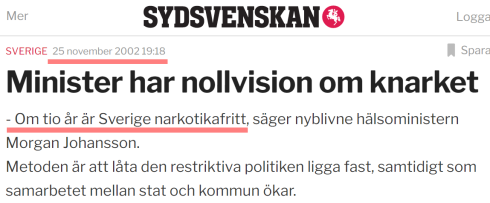
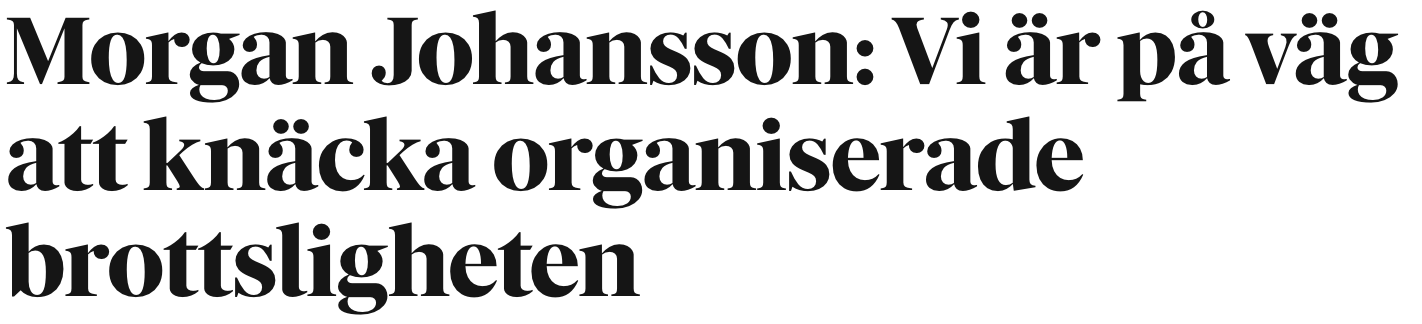
Or his statement in 2017 that Sweden was “on the way to cracking organized crime.” Both times, the outcome was precisely the opposite.
A government led by Magdalena Andersson would be dependent on the Left Party, the Green Party, and the Centre Party. Morgan Johansson, or possibly Theresa Carlvaho, would likely end up in the Ministry of Justice, perhaps after yet another solemn assurance that the government is “monitoring the situation closely.”
The Left Party would demand shorter sentences, lighter treatment for young serious offenders, and more funding for social projects. The Green Party would warn about breaches of privacy every time the police requested a new tool. The Centre Party would continue to pretend that mass immigration and imported clan criminality have nothing to do with Sweden’s development.
And the Social Democrats would do what they always do: first condemn the SD’s proposals as extreme, racist, or legally dubious, then copy a watered-down and ineffective version a few years later and finally try to claim credit for it. We know this because we’ve seen it before.
When SD warned that uncontrolled immigration would create segregation, clans, and crime, we were called xenophobic. When we called for stop-and-search zones, anonymous witnesses, deportation of foreign criminals, and tougher sentences, we were accused of threatening the rule of law. Now the policies are being implemented—and they are working.
Enormous Difference
This is why the political alternative before the election must be described without euphemisms. It’s not a choice between two similar coalition bases. It’s a choice between continued change and a political reset.
On the one side, there is the Tidö cooperation, with the Sweden Democrats as the driving force for stricter migration policy, tougher sentences, more deportations, and a stronger police force. On the other side is Magdalena Andersson and Morgan Johansson, chained to the Left and Green parties and dependent on a Centre Party that still dreams of the old immigration-liberal order.
Anyone can work out what happens if the latter team retakes power.
Investigations end up in drawers. Toughening of laws is delayed. Privacy activists regain the initiative. Criminals’ rights return to the fore while victims are forgotten. Migration increases and deportations decrease. Police tools start to be described as “problematic.”
And after a few years, the same politicians stand in front of the cameras, wondering why shootings are once again on the rise.
The Victory Is Not Yet Won
At the same time, it would be a mistake to think that the work is complete. The police still estimate that about 17,500 people are active in criminal networks. Murders are still ordered from abroad. Children are still being recruited as shooters and bomb carriers. In 2025, shootings decreased sharply, but the number of explosions rose from 136 to 189.
Foxtrot and other networks are weakened but not eliminated. Rawa Majid is not yet apprehended. Beyond the most visible gangs, there is also a broader organized crime sector that has infiltrated companies, municipalities, associations, and the welfare system.
That is why the next term must be used to complete the turnaround.
The Tidö parties have already presented or are preparing several comprehensive reforms, many inspired by my old legislative proposals from my time in the Justice Committee. About fifty penalty frameworks will be toughened. The current “bulk discount” system will be abolished. Repeat offenses will be punished more harshly. Security custody will be used against dangerous repeat offenders. Conditional release will be tightened and allowed only after at least three-quarters of the sentence.
Youth prisons will replace today’s failed closed youth care system. Youth discounts will be reduced, and the ability to use coercive measures against children committing very serious crimes will be extended.
The government has also commissioned an inquiry into special gang legislation with targeted measures against criminal organizations and persons, companies, and organizations with gang connections. I called this DIKO when I presented the proposal in 2012. So, much has been done. Much remains.
So when the gangs themselves write that they are “done in Sweden,” the answer is not to rest on our laurels. The answer is to increase the pressure, and that requires continued Tidö cooperation.
But above all, it requires a strong Sweden Democrats. For without the SD there is no guarantee that the Moderates will stay the course, no force to prevent a return to mass immigration, and no majority for the real system shift that Sweden needs.
The choice is therefore between continuing to make Sweden a bad country for criminals—or handing back the keys to Morgan Johansson, Magdalena Andersson, the Left, Green, and Centre parties.
That choice should be simple.
Tidö Improvements
The police and prosecutors have been given expanded opportunities to use covert and preventive means of coercion. Instead of waiting until a child lies dead on the ground, authorities can now surveil, map, and intervene while murder plans are still in the preparatory stage in more cases.
The police have been granted the right to implement security zones where people and vehicles can be checked to find weapons and explosives before they are used.
Sweden has introduced the possibility of anonymous witnesses to break the gangs’ code of silence. The Social Democrats, Left Party, Centre Party, and Green Party all lodged objections during the parliamentary process.
It is worth remembering the next time Magdalena Andersson poses solemnly in front of a police car.
The Tidö government has also introduced new independent forfeiture legislation making it possible to seize criminals’ cars, watches, cash, and other assets even when the property cannot be linked to a specific crime. A former gang criminal summed up the development well in SvD: First the police took their money, then their weapons, and finally their leaders.
The confidentiality walls between authorities have been torn down. Municipalities, regions, schools, and government agencies have been given a greater obligation to provide information to law enforcement. The old Swedish system, where one authority could know that a person was seriously criminal while another continued to pay out benefits or grant permits, is finally being dismantled.
Penalties for crimes within criminal networks have been made tougher. Minimum sentences have been raised for several crimes that enable shootings and bombings, including serious weapons offenses and handling of explosives. Involving minors in crime has been criminalized, and the government has pushed further to toughen the penalties against those who recruit children as tools for murder.
Camera surveillance has been expanded and simplified. The police now have better opportunities to use technology to track criminals, secure evidence, and map the sequence of events.
Sweden has also strengthened international police cooperation. In 2025, hundreds of people were arrested abroad after Swedish warrants. Gang leaders should no longer be able to order murders in Sweden while living protected behind pool walls in Turkey, Iraq, or Spain.