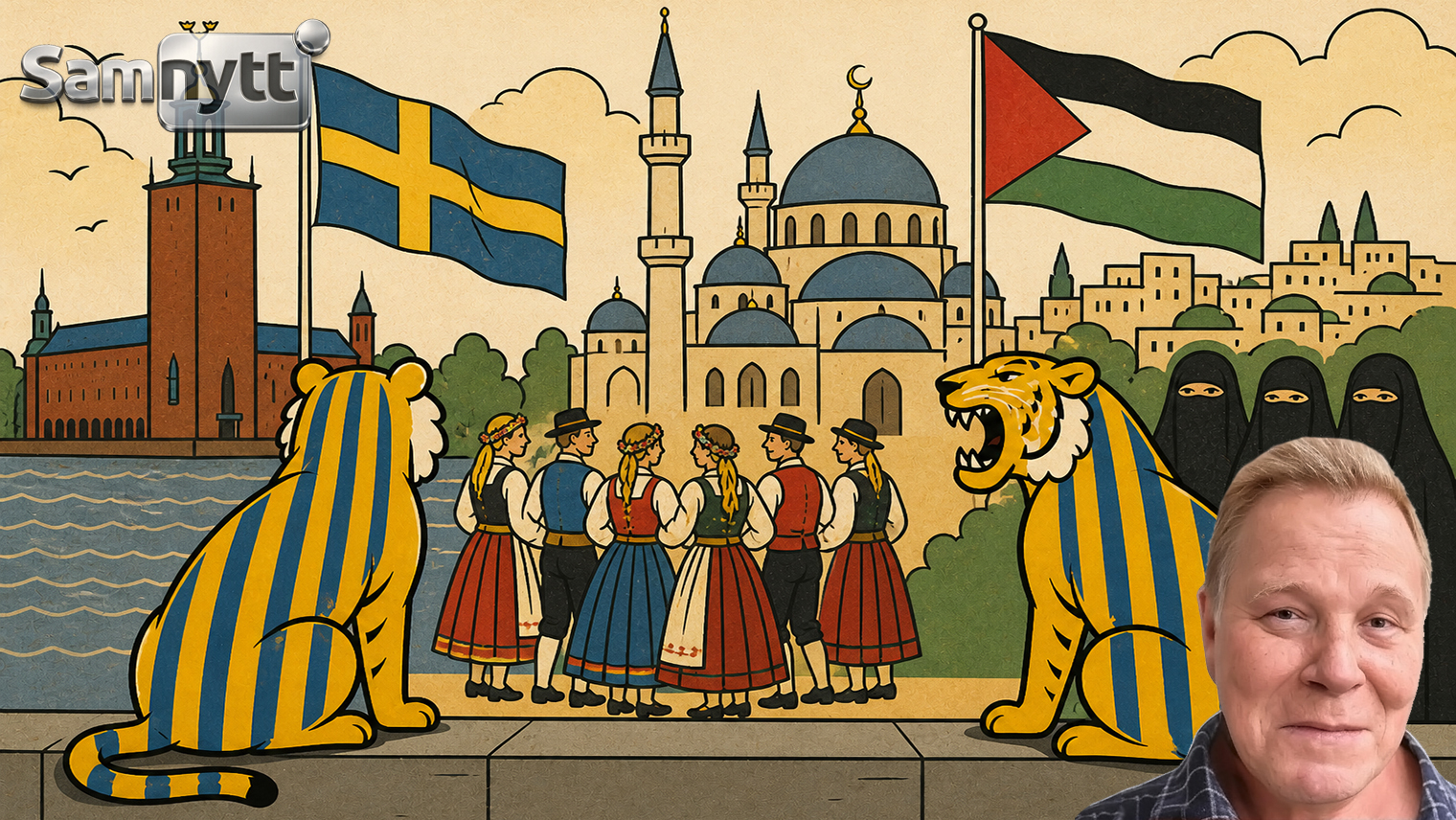
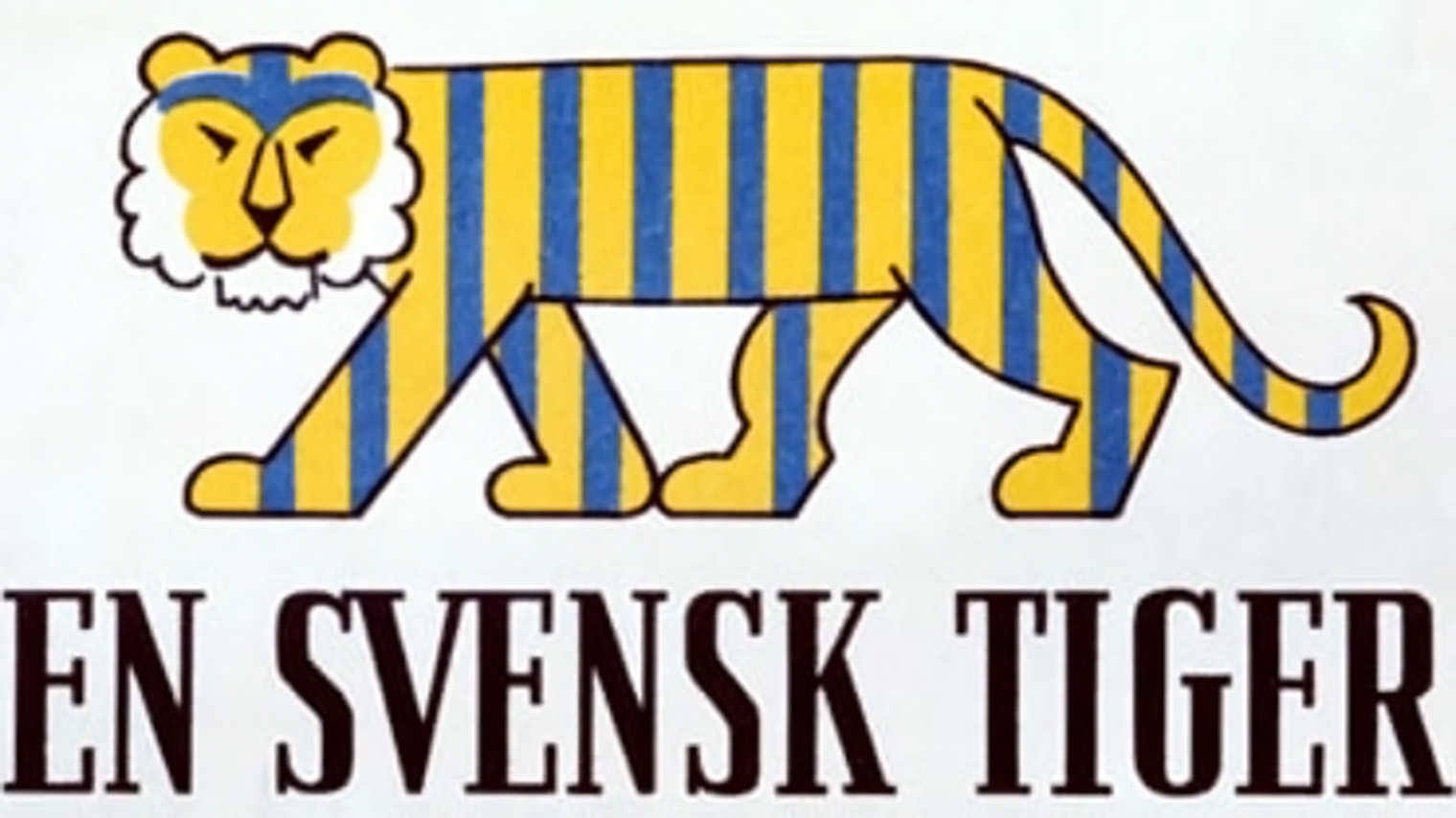
LEADER • There was a time when Sweden was summed up by a poster. “A Swedish tiger.” During the war, it meant vigilance and reticence. Hold back anything that might harm the country. But over time, the phrase has come to be associated with something else – the Swede’s tendency to remain silent, swallow it, adapt, clench their fist in their pocket and move on, even in an age when this is what harms the country.
We became a people who stood in line without pushing, grumbled at home but smiled outside, avoided quarrels with the neighbor, let things slide for the sake of peace. Conflict avoidance, say the critics. Civilization, say the defenders.
But something is changing. Swedish society has been redrawn over a few decades. Migration with segregation instead of integration, :censored:6:cdd6bbaa89:ization, and religious pluralism have created a new landscape with cultural clashes, polarization, and a harsher tone in the public debate.
In the new Sweden, people with completely different norms concerning gender, religion, authority, respect, and conflict meet. The Swede no longer mostly encounters their own reflection, but the world. Many feel the country is being damaged by a new kind of invasion – one that is not best met by being someone who stays silent, but a tiger who roars.
The Public Discourse – For the Few, Not the Many
The public discourse is all well and good, but the vast majority of us do not live in it, do not have access to the platforms where it takes place, do not feel we have a voice that can be heard there. We are consigned to the concrete reality of our everyday lives, what we confront when we step outside our doors. It is there we can do our small part to defend the good society. And we find ourselves needing to do so more often.
And perhaps this is reinforced by the fact that people who have come here are often more direct, more expressive, less afraid of friction, more accustomed to asserting themselves on the spot and in the moment. The old Swedish disposition – subdued and conflict-averse – is regarded in other cultures as a weakness, and an asymmetry develops in Swedish society if one side always steps back whenever the other steps forward.

After all, we have had it impressed upon us that integration should go both ways – that we Swedes also have much to learn from immigrants, not just the other way around. If we want to be the grown-up in the room, maybe we shouldn’t take that advice so far that we react just as strongly when a Bible is burned as an immigrant does when a Quran is set alight, nor go all-in for antisocial dominance behavior – but we should start asserting ourselves more in civil society, in everyday life.
In a way, this is a loss of something that has served Swedish society well. But turning the other cheek like Jesus does not always work when encountering the war prophet Mohammed.
A Domesticated Tiger
There is a reason restraint has long been a virtue. A civilized society like Sweden’s is not built on every emotion being expressed at once. It’s based on people having impulse control and refraining from telling every stranger they meet exactly what they think. We pass each other peacefully in public because we keep our reptilian brains in check.
We don’t tell someone we think he or she is wearing ugly clothes. But not all clothes are just clothes. A police or military uniform comes with a message and an authority. A black suit at a funeral signals respect, while a worn-out t-shirt and torn jeans do not.
The Muslim Veil – a Provocation
The Muslim veil cannot be separated from the patriarchy, honor culture, and religious conservatism it originates from. The hijab, and even more so the niqab and the burka, are not garments or pieces of fabric like any other, but attributes for what is today the world’s worst structural oppression of women.
It is a tremendous provocation to have to encounter such things in our egalitarian society, whether it’s women we understand to be living in an honor context in cultural enclaves in Sweden, or it’s converts flaunting Muslim attributes at the same time as women in Iran and elsewhere are whipped and even murdered if they do not wear the veil and otherwise submit to the medieval, religiously ideological patriarchal order demanded of them.
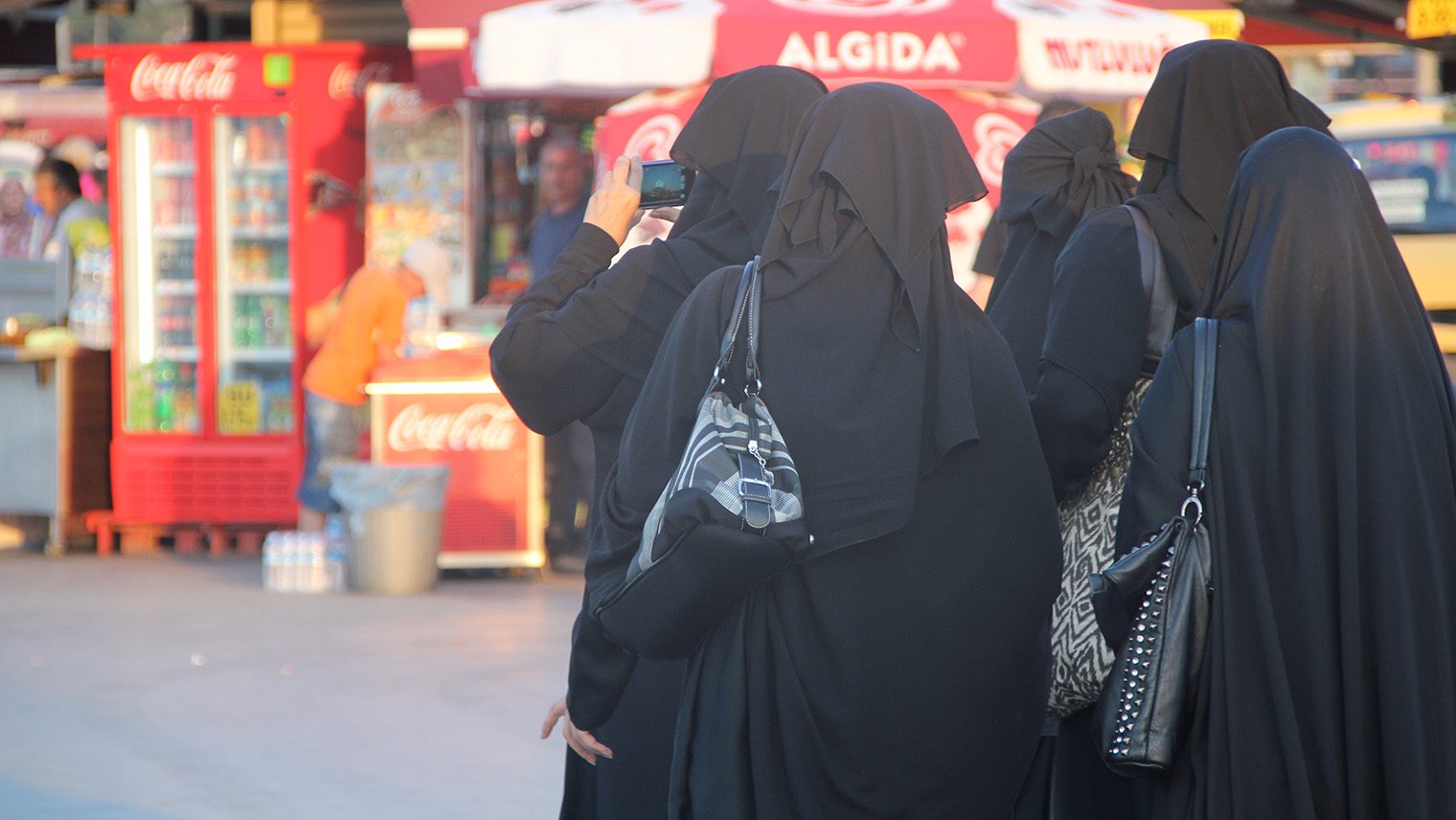
Just as it is wrong to do as immigrants and stage riots if a Bible is burned, it is wrong to rip off a woman’s veil on the street. But perhaps we still have the right to react, to say what we think, to ask questions about how the veiled woman reasons. To show that a tolerant society like Sweden is not the same as tolerance of the intolerant. Silent acceptance is one thing when confronted by something unpleasant that is an exception, but becomes something else when it applies at ten such meetings each day.
A Head-on Clash in Fabric
In addition to the oppression of women, the Muslim veil signals much else that head-on collides with Swedish and Western values. In Iran, where headscarves are mandatory, homosexuals are also hanged from cranes. Throughout the Muslim world, Jew-hatred is absorbed with mother’s milk, and in recent years it has flourished like never before with Hamas-supporting demonstrations in streets and squares across Sweden.
It is not entirely unreasonable to suspect that the veiled woman you meet on the street embraces such values as well. This adds to the provocation and further legitimizes a counterreaction, for us Swedes to signal back that this is not something we want in our country, does not belong here. It can even be seen as a moral imperative.
No Knowledge Without Questions
I hear the objections about not making an individual a recipient of society’s frustration and turning the person into a symbol. We don’t know whether we should feel sorry for the veiled woman rather than get angry – whether she is a victim of what we dislike or an agent for it. But perhaps we should find out.

Regardless, it is a symptom of a serious problem that needs to be addressed. The woman who wears the veil in Sweden under honor-based coercion may need to feel support from the Swedish (still) majority society to break free. Today, she meets the Swedes’ betrayal in anxiety, cowardice, and politically correct value nihilism. And the woman who preaches this incompatible religious ideology and challenges the foundations of Swedish society may have to accept that she will meet open resistance, a reaction there and then.
Everyday Life – the Only Forum of the Banished
The Swedish impulse to remain silent has been a moral technique. Direct criticism at institutions, ideas, and those in power, not in interactions with individuals – write the article, take the debate, vote, organize, demand from politicians, defend secularism, equality and freedom of speech, but let strangers in everyday life be.
But the new struggle for Sweden is what is often called the culture war. And in that, one side – the broad popular side – has been banished and stigmatized from all traditional democratic fora and even from the new social media. Democracy is branded as everything from populism to right-wing extremism and racism when the opinions expressed aren’t inside the narrow corridor of acceptable opinion enforced by the self-styled elite.
The Insidious Argument for Silence
Those who believe silence is golden have also advanced the insidious argument that it is strategically wiser than speaking. That criticism only plays into the hands of forces who thrive on division and polarization, so they claim. If we state our opinions on Islam’s views on democracy, freedom of speech, Jews, homosexuals, women, and so forth, it’s said we’re aiding the radical Islamist factions that don the “victim” burka and complain about Western Islamophobia.
But that is, of course, nonsense. Playing the hurt feelings card to silence one’s opponent does not belong in political debate. Without religious criticism, Sweden wouldn’t have a secular, democratic society today, based on enlightenment and science.
We shouldn’t maintain a less critical and more accommodating stance towards Islam than we’ve had towards Christianity. Especially since Islam in many respects is a far more problematic religious ideology, still stuck in the Middle Ages, devoid of anything resembling reformation or adaptation to the liberal values which every worldview – spiritual or secular – must undergo in order to coexist with a modern Western society.
By, in the context of immigration debates, deceitfully assuming the role of victim, oppressed, discriminated, insulted, and made the object of a “phobia,” a “jedi mind trick” has been played on the feeble-minded left-liberal establishment, securing a maneuvering space, special rights, and exemptions that no other political, religious, or combined worldview comes close to achieving.
No Minority
Muslims are not a tiny minority group. Left-liberals, who otherwise are so keen on seeing us as part of a :censored:6:cdd6bbaa89: community, “forget” when playing the Marxist red minority card that Islam counts almost 2 billion adherents and is increasing – from 1.6 billion just in the last decade and a half.
In Sweden, Muslims number at least half a million. And I’ve been generous by subtracting two or three hundred thousand who may only be culturally Muslim, the same way most Swedes are culturally Christian.

The number of Swedes who are practicing and professing Christians at the same level as the absolute majority of Muslims is also around half a million but decreasing. Perhaps that’s a bit sloppy, since among deeply religious Christians it’s extremely rare to go out and kill someone in God’s name or commit a mass murder.
Violence-prone Christianity doesn’t exist in the same way as violence-prone Islam. To find like-minded people, you have to turn to communists and Nazis. “Like attracts like,” goes the saying – and sure enough, Islam has had and still has links to communism and Nazism.
Islam and Nazism
During the war, Adolf Hitler and the Grand Mufti of Jerusalem, Haj Amin al-Husseini, were united in burning Jew-hatred. Some claim it was even Husseini who convinced Hitler to carry out the Holocaust and the “final solution to the Jewish problem,” i.e. extermination rather than expulsion. True, in any case, is that Muslims hated Jews for at least 1,300 years before Hitler joined the idea.
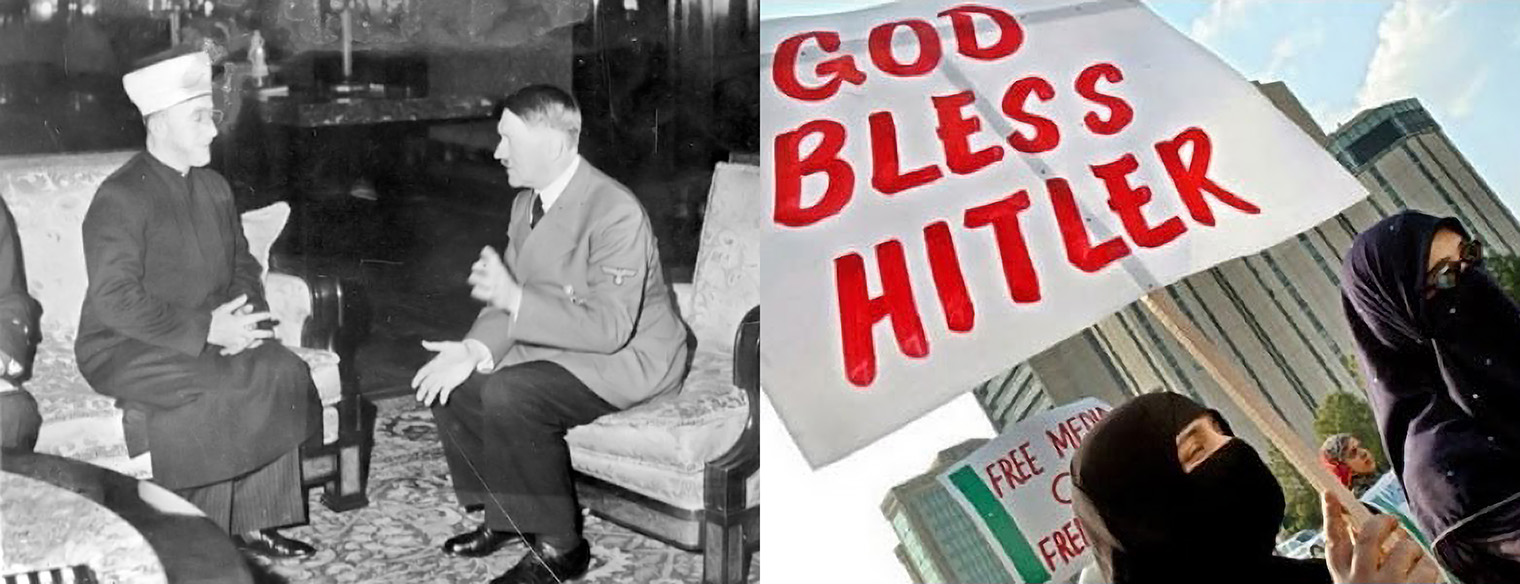
Swastikas are today still popular symbols in the Middle East, especially in Palestinian Gaza where Hamas rule and its million-strong supporters are bitterly envious of the German Führer’s official track record of six million Jews, while they have managed to massacre only a few thousand.
But if they succeed in their master plan to wipe out Israel, where an estimated seven million Jews live, they would push Adolf down to second place on the podium. Provided the IDF doesn’t sabotage Iran’s nuclear program and ruin it all.
Islam and Communism
You can always count on support from the Swedish left, who now link arms with the thousands of Hamas supporters in the diaspora who take to the streets weekly here in the north to condemn the “genocide” that Israeli Jews practice when they retaliate for the October 7 massacre against their young sisters, brothers, and children.
That support has always been there for Islamist Jew-haters. After Haj Amin al-Husseini came Yasser Arafat and the PLO. Nazism remained in the depths of the Palestinian people, but outwardly it was now revolutionary Marxism and communism that prevailed.
In this way, they received help from the Western left to legitimize all acts of terror – including bombing and hijacking passenger planes, guerrilla warfare and massacres at Olympic villages – as parts of a legitimate Palestinian liberation struggle, with the official aim of wiping out the Jewish state of Israel. With the hammer and sickle it was easier than with the swastika to get prestigious international status.
Crescent, Swastika, Hammer and Sickle
In much of the Middle East, Hitler’s Mein Kampf is still number two on the bestseller lists, only beaten by the Quran. The Western left is in bed with the worst Jew-haters the world has seen, in a hodgepodge of Islamism, communism and Nazism. It’s the same religious ideology that veiled women in our part of the world signal they adhere to.
Anti-Semitism and the unprecedented oppression of women within Islam should be reason enough to ban not only the veil, but this entire worldview in our part of the world. But if you need more reasons, there are plenty: hatred of gays, hatred of free speech, hatred of democracy… the list goes on.
It’s reasonable to expect that anyone who so brazenly provokes their environment in the public space – with a veil, a Palestinian flag or other attribute – should accept reactions. It’s reasonable to assume such a person is tough and well-informed enough to withstand verbal confrontation on the street. Freedom of speech and freedom of opinion are enshrined in Sweden’s constitution and apply to everyone, everywhere in society.
Their Dominance Behavior – Our Deference
There’s plenty of other dominance behaviors Swedes face daily at the hands of people rooted in the Muslim and other distant cultures. We are crowded out virtually everywhere in the public space due to our considerate deference, which always loses out to the immigrant’s total lack of such qualities.
When, as a retiree, you walk your dog and confront a gang of Somalis selling drugs in the square, it can be life-threatening. Likewise, as a Swedish family, it may be reckless to reprimand the Afghan horde of youths who’ve taken over the swimming area or public pool as they deserve.
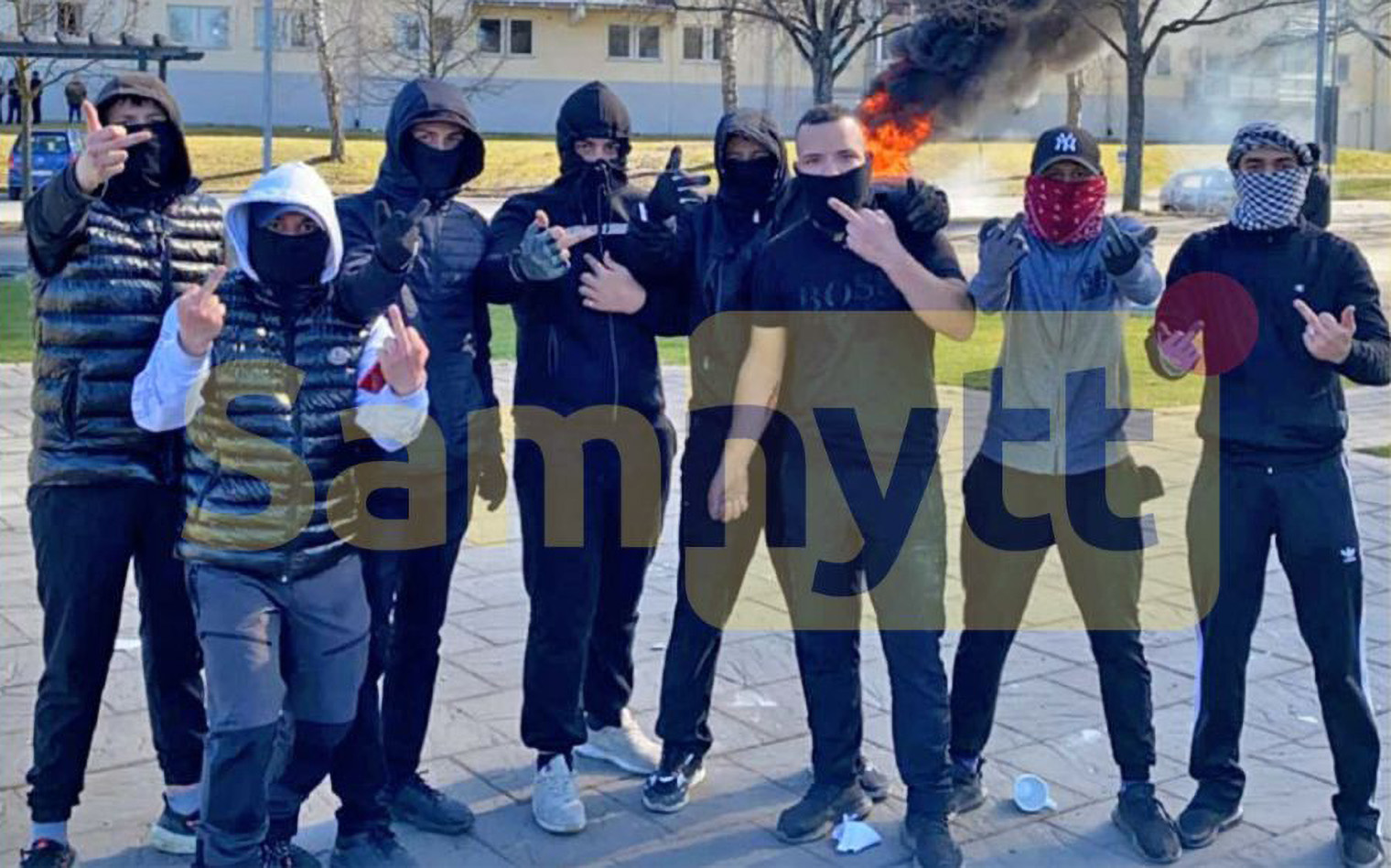
But keeping silent is neither a duty nor a virtue. Generally, the obligation and the honorable thing is to speak up. How will the immigrant ever integrate into Swedish society if we do not teach him or her what applies here? Coexistence cannot function if one side always withdraws, living in constant frustration while the other continually crosses the boundaries of what is socially acceptable in our part of the world.
Right to Be Proud, Right to Demand Gratitude
Our silence has a dark side that tends to grow larger and larger. Swedes have every right to walk tall and be proud of the country they have built, in contrast to the monumental failures that characterize the “shithole countries” that most incoming migrants come from. The oikophobia foisted on us from the left is completely misplaced.
We also have the right to demand gratitude from those who come here instead of only more demands and accusations of racism. The expectations we place are not unreasonably high. On the contrary, they are often too low in relation to the immense quality of life we offer. If our politicians do not make that clear, no one can blame us for doing so ourselves in daily encounters with migrants where it is called for.
When Swedes, year after year, decade after decade, experience problems being denied, authorities speaking in euphemisms, every objection being branded as intolerance – then the risk increases that the clenched fist leaves the pocket. In a democracy, the pen is mightier than the sword, but also the spoken word should be valued as mightier than fists. Demands for silence threaten that order.
Reasons to Have Had Enough, Reasons to Speak Out
There are reasons why people reach their limit. When citizens see society changing without their consent, old norms declining, new demands being made and traditional loyalties and values being ridiculed, it is natural to want to speak out. Not through proxies in seminar rooms or on editorial pages to which one has no access, but in everyday life where one’s own life unfolds – in the square, on the bus, in line, on the street.
Many feel that public debate has long been characterized by, at best, anxious caution, and at worst, outright dishonesty. Problems have been downplayed. Conflicts have been smoothed over with language. Citizens have been urged to be tolerant of the new and those who bring it. When we get intolerance in return, we’re supposed to tolerate that, too.
We’re Not the Racists
High demands on Swedes. Low or no demands on immigrants, justified by trite phrases that they are victims, oppressed, discriminated against, socioeconomically disadvantaged. Behind the fine words, it boils down to something uglier – the racism of low expectations.
We who make the same demands on others as on ourselves are not the ones abandoning the principle of equal value for all; it is those who use different yardsticks for people based on skin color and origin who are the real racists. This applies to Swedish elites as well as many immigrant cultures where various forms of racism are deeply rooted.
Forced to Take Matters Into Their Own Hands
When institutions evade and betray, people look for other outlets. If the state abdicates its responsibility to educate the immigrant into an integrated and assimilated member of society, we ordinary citizens must take matters into our own hands – start where we stand.
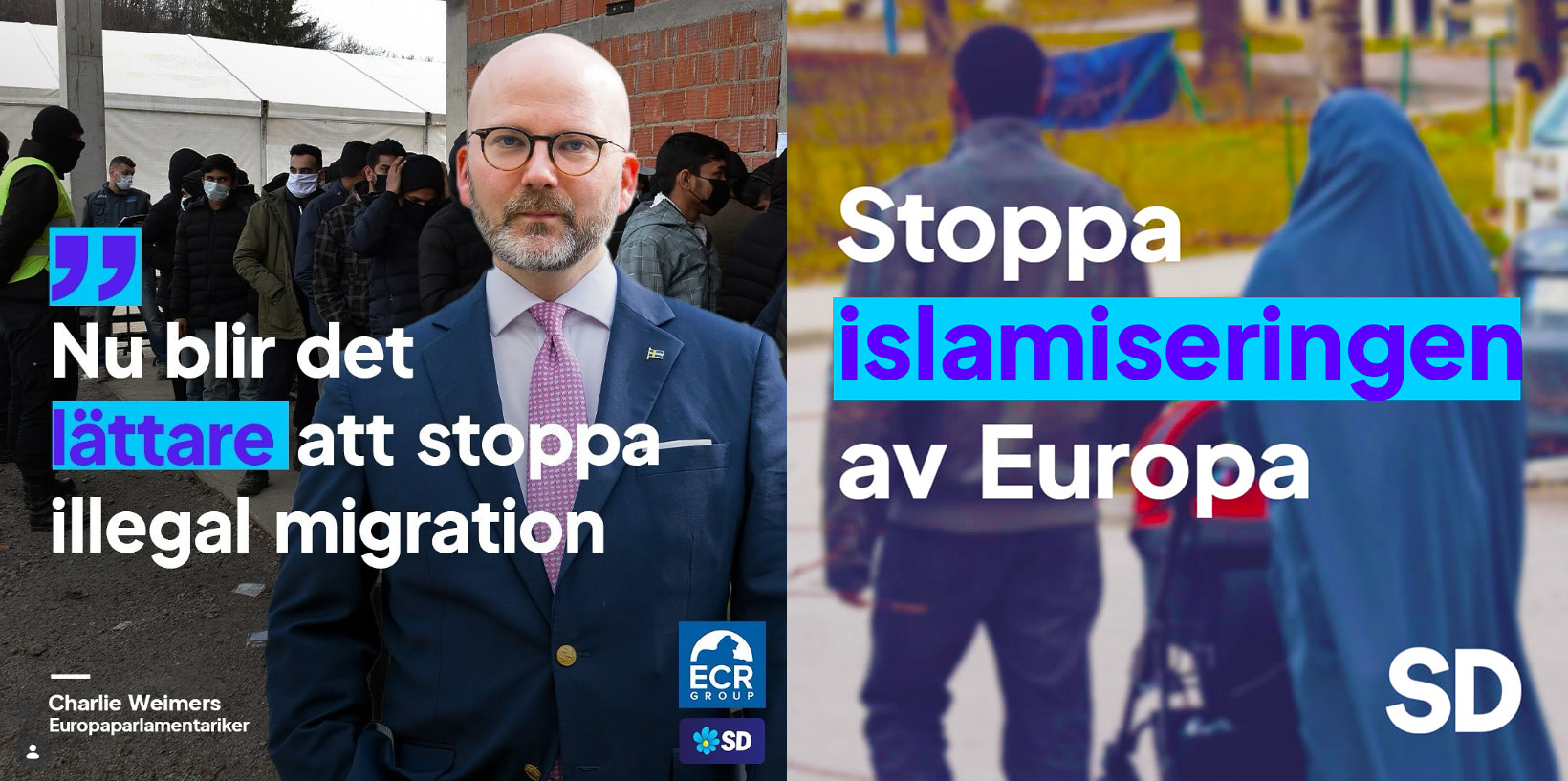
If every day we encounter behaviors and symbols that reasonably do not belong in Swedish society, from people who obviously misunderstand what is required in return for the privilege of coming here, why should we not meet it with words?
Why shouldn’t we ask questions, raise objections, make our stance clear? Why should we have to pretend that everything is neutral – that the values that have wrecked Somalia into the failed state it is today are just as good as the values that built Sweden into one of the world’s most developed countries?
Speaking Up Is a Constitutional Right
In a democracy, anyone who thinks something also has the right to say it, especially when it matters. Good manners mean not expressing every negative thought you have about people you meet, but there is also a duty to say what you think when you encounter threats to Swedish society.
Roaring is more democratic than staying silent. It reminds us that public life doesn’t just consist of the platforms of the powerful. It also consists of ordinary people who speak without permission. There is something healthy in Swedes becoming less afraid of conflict, particularly when an ever-growing portion of the population consists of arrivals who are the opposite of conflict-averse.
A society not only freezes up, but is also damaged when no one dares speak uncomfortable truths. That’s what freedom of speech is for – to protect the right to say controversial things, not to safeguard the anodyne. At the same time, it shouldn’t feel uncomfortable or controversial to say what was once self-evident, nor should criticism have to be veiled just because what deserves it comes disguised as a religion called Islam.
Hold the Line
Swedes should not have to show consideration beyond the point of self-effacement – and definitely not to those who themselves can’t even spell the word consideration. Neither, though, should we cross the other line: giving the merchants of the culture of silence more ammunition. Nor should we stoop to the same level as those we criticize – those who always roar risk becoming like the brutality they claim to fight. Always be the adult in the room.
Frustration often seeks the nearest target, which isn’t always the right one. The veiled woman with the moon face on the sidewalk risks becoming a stand-in for the politician, the imam, the failure of integration, or world trends. Even on the street, democratic conversation should be characterized by substance and self-control, not degenerate into venting. There’s a difference between having the courage to speak and simply venting your bad mood in public.
Between Silence and Roaring
A Swede doesn’t stay silent so long that the truth rots his teeth in his mouth. But neither does he roar so uncontrollably that he and society lose their dignity, debase our Swedishness, the thing that sets us apart from the barbarism of the rest of the world, that gives us the moral high ground. We need less Swedish cowardice. But we shouldn’t replace it with something just as bad.
We need citizens who dare to speak plainly about migration, honor culture, religious extremism, segregation, and tolerance without demands. The old motto that “a Swedish tiger is not always a virtue”. A Swede roars when needed, where needed. There’s a difference between being a tiger and someone who keeps silent.