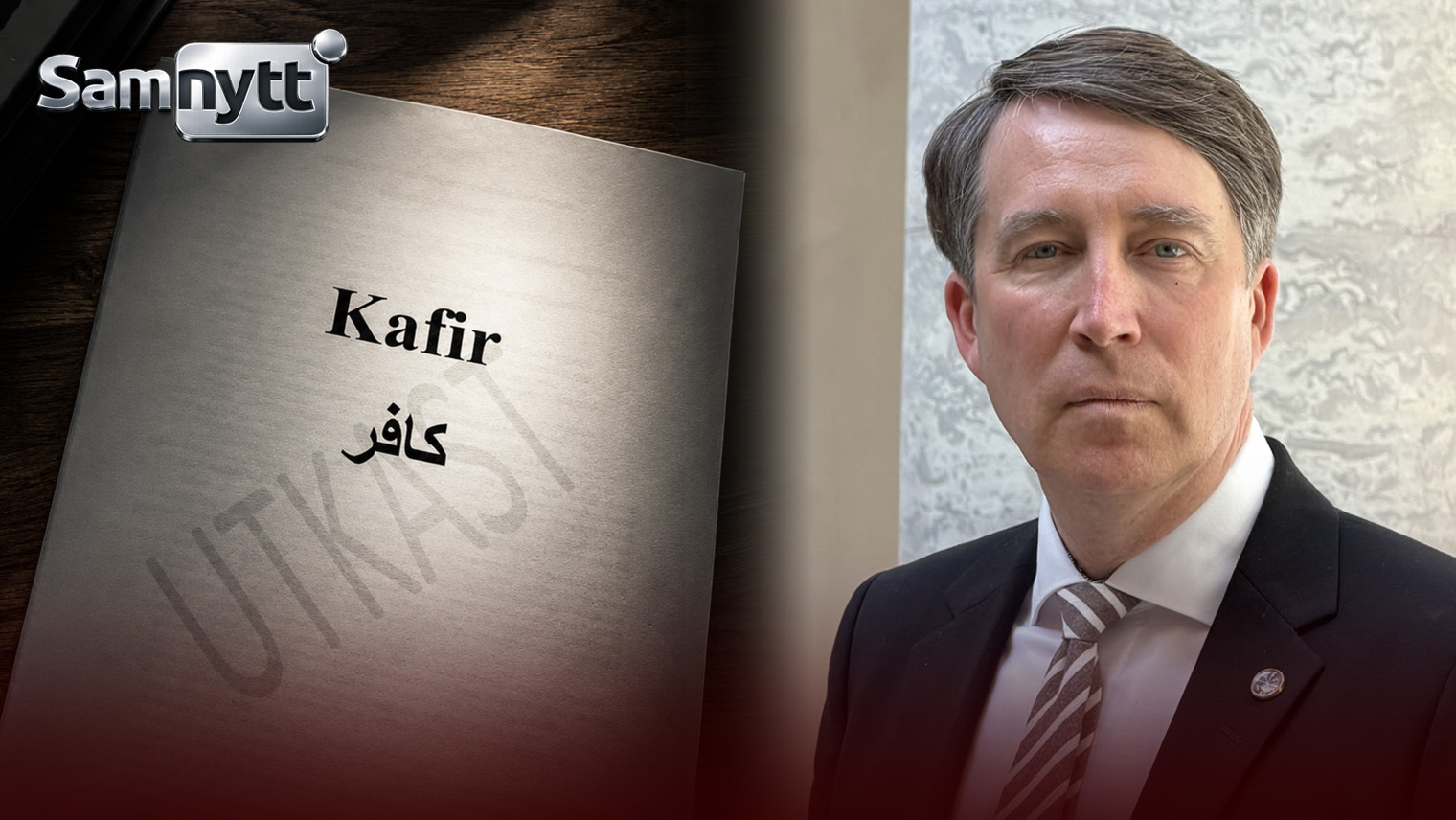
Richard Jomshof has for many years been one of the Sweden Democrats’ most high-profile critics of Islam. Now he is collecting his criticism in book form. In an exclusive interview with Samnytt, he describes the work on the book, why he believes that Islamism cannot be separated from Islam – and why he views mass immigration in Sweden and Europe as an existential threat to Western democracy.
Richard Jomshof says the idea of writing a book has been there for a long time. For many years, he has written motions, interpellations, and opinion pieces on the subject, but he felt there was a lack of a Swedish book that comprehensively covers Islam, Islamism, and the problems that he believes stem from the religion’s sources.
– There is a vast amount of English-language literature that highlights the problems with Islam and Islamism. But nothing in Sweden. So I have long felt that someone should do it in Sweden, he tells Samnytt.
READ ALSO: Jomshof (SD) warns against Swedish naivety towards Islam
He highlights, among others, the American author Robert Spencer, whom he has met and been inspired by, as well as the British author, debater, and critic of Islam Douglas Murray.
It was during the pandemic that the work gained momentum. When parliamentary work changed during the pandemic and more time was spent at home, Jomshof began reviewing previous texts and expanding them into a book manuscript.
People often say the problem is not Islam, but Islamism. But Islamism is Islam. When you really look into what Muslims think about democracy, leaving Islam, freedom of religion, freedom of opinion, and views on violence, you realize that it’s not a minority that holds problematic views.
Richard Jomshof (SD)
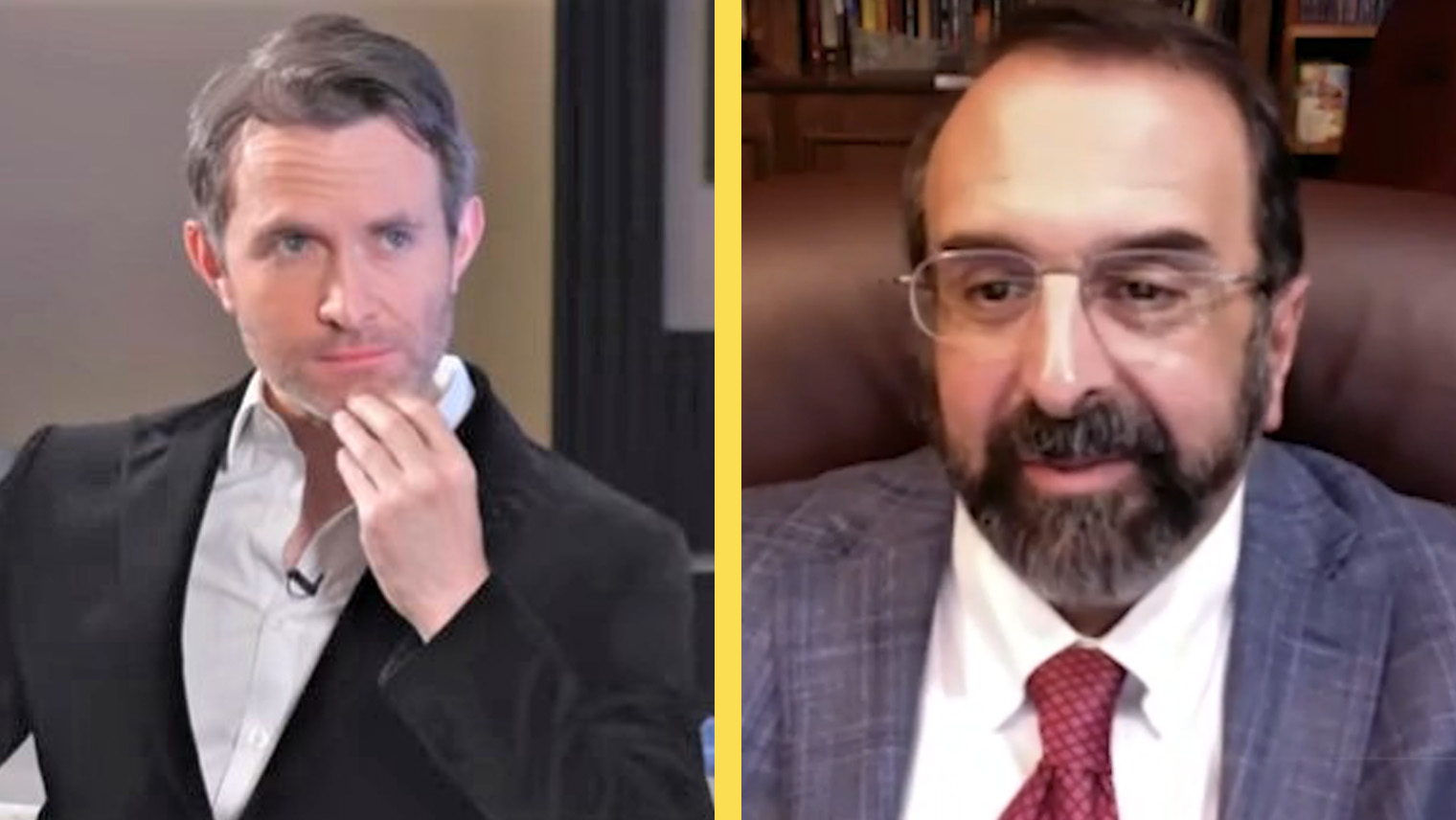
– I have spent the past five or six years writing, but above all reading. I’ve read the Quran, parts of the New Testament, hundreds of Hadiths, numerous biographies, university literature, and tried to compile it in an educational way. He continues:
– I felt the time was right, more and more people are starting to wake up.
Muslim Slavery, Jihadism, and the Concept of Islamophobia
According to Jomshof, the book will be the first of at least two. The first part primarily deals with Muhammad, the first caliphates, the origins of Islam, and what he believes the sources say about the world of ideas within the religion.
– This book will be more about Muhammad and the first caliphates, Islam’s beginning and origin. What we find in the sources, the problems in the sources, and how it has affected history.
He says the book also touches on Muslim slavery, jihadism, and the concept of Islamophobia.
Have there been parts of working on the book where you’ve reconsidered something – that maybe it wasn’t as bad as you thought?
– No, on the contrary. I’ve realized that it’s actually worse than you might think. Especially what’s actually written in the Quran, the sources of Islam, and in these hadiths.
READ ALSO: Shocking numbers: 4200% more mosques in Sweden – in less than 25 years
The SD leader explains and says that he has also reviewed opinion polls among Muslims in Europe and the Muslim world on issues like democracy, freedom of religion, attitudes towards violence, and the right to leave Islam.
– People often say the problem is not Islam, but Islamism. But Islamism is Islam. When you really look into what Muslims think about democracy, leaving Islam, freedom of religion, freedom of opinion, and views on violence, you realize that it’s not a minority that holds problematic views.
Jomshof describes Islamism as a threat that differs from previous totalitarian ideologies.
– This is an existential threat to us. I usually say it is the greatest threat the Western democratic world has ever faced.
READ ALSO: Social Democrat visited Tensta: “Of course, we need to build more mosques”
“Demolition of Mosques with Islamist Connections”
He compares with Nazism, which he describes as an external enemy that could be defeated militarily. He sees Islamism as harder to handle, as it already exists within the borders of the Western world, according to him.
– What do we do now, when there are millions of people within our borders, many of whom hold problematic opinions, and they receive taxpayer money and have contacts with Islamist countries and terrorist organizations? How do we deal with that threat?
I turn the question back to you: how do we deal with it?
– I try to explain at the end of the book, as openly and clearly as I can, how we should act. But it is also things we’ve previously raised. No more mosques, closing or demolishing mosques with Islamist connections, expelling imams and Islamists who preach misogyny, anti-Semitism and messages against our democracy—they should go. He continues:
READ ALSO: Voices from a Changed Sweden: “It’s a relief not to stay much longer”
– No more taxpayer money to these organizations. That’s something we’ve partially managed to stop via the Tidö Agreement. But it still exists. We can do so much more. I describe a clear approach in the book.
Jomshof repeatedly returns to the difference between people and ideology. He says he is often accused of generalizing about all Muslims, but argues that this is not what he does.
– Many Muslims can’t help where they were born. If you and I had been born in Pakistan, Saudi Arabia, or Afghanistan, of course we would have been shaped by our upbringing.
At the same time, he says it cannot be ignored that, according to him, many Muslims hold values based on Islam.
Instead of saying that I or someone else is an Islamophobe, now they say we are racists. I don’t know if that’s better.
Richard Jomshof (SD)
– Many Muslims who appear in the statistics are just ordinary people who probably have perfectly reasonable views. But a lot of Muslims don’t. And the question is – where do these opinions come from? Well, they come from Islam. He continues:
– If I look at opinion surveys conducted in the Muslim world and, say, 75 percent in a certain country think it’s justified to execute someone who leaves Islam, then I must be able to say that Muslims as a whole, in fact, are a problem. He elaborates:
– The problem we have now with the law against incitement to hatred against groups is that you can’t say that, because you could actually be convicted. Which I find strange, since there’s no problem saying that Nazis as a group are bad—which I think they are.
Racist to Criticize an Ideology
Jomshof is also critical of the concept of Islamophobia. He says the government, in its action plan against racism, has said it wants to abandon the term, but claims it still lives on in practice.
The government has said it will stop using the term “Islamophobia.” What are your thoughts on that?
– I had an interpellation debate about this recently. Already in 2024, they said they would stop using the term and replace it with “anti-Muslim racism.” But in March this year, 2026, the Foreign Ministry noted the International Day Against Islamophobia. I find that odd if you simultaneously say you’ve abandoned the term.
READ ALSO: Government adopts SD’s line – scraps the term “Islamophobia”
He also sees replacing Islamophobia with “anti-Muslim racism” as problematic.
– Instead of saying that I or someone else is an Islamophobe, now they say we are racists. I don’t know if that’s better.
READ ALSO: When language becomes ideology: The bogus concept of Islamophobia and Western self-censorship
Are you a racist if you criticize a person with Swedish heritage who converted to Islam?
– Apparently they think so and I find that very strange, which is why the concept is odd. Sure, there are probably problems with racism being directed at Muslims who look a certain way. But the problem with the action plan is, for example, that it does not mention anti-Swedish hatred, which I claim is much bigger. Jomshof continues:
– I can guarantee it. If you look into the statistics, Swedish youth, boys and girls, have endured more racism than young Muslims. Who are the ones getting robbed and subjected to humiliation robberies? Who are victims of sexual crime? He continues:
– It’s not Muslim girls, but Swedish girls. That makes the action plan not credible.
Richard Jomshof (SD) also mentions how wrong it is when we talk about Christianity.
– Nowhere do we talk about anti-Christian racism, even though Christians are the most persecuted religious group in the world.
READ ALSO: INTERVIEW: Mona Walter’s warning to Sweden
He also brings up Iran, saying that the Western world should support the resistance against the Islamic regime and that he stands behind the US and Israel’s campaign.
I don’t think we’ll get a revolution like in Iran. But it will probably happen more gradually. And we are already in that process now, everyone thinks democracy will always be here. No, I am not sure of that. If it gets really bad, a generation will look back at this period as a parenthesis in our history.
Richard Jomshof (SD)
– Iran is a rogue state that finances Hamas, Hezbollah, has funded the Taliban, the Houthi movement. They’re everywhere, even in Sweden.
At the same time, he argues that Iran differs from many other countries in the region, as criticism of Islam is, according to him, more widespread there.
READ ALSO: Social Democrats pointed out in report on European Islamization
– I think Iran can be democratized. Iran seems to be an exception in the region. Criticism of Islam is so widespread. They have not succeeded in Islamizing Iran in the same way as neighboring countries.
Islamism Arm-in-Arm with the Swedish Left
Jomshof also criticizes the left, which he believes has long walked hand in hand with Islamist movements. And he says parts of the right understand the problem but do not dare challenge the left’s interpretive supremacy.
– It’s also so clear that the left and Islamism go hand in hand. It was they who took power in the revolution in Iran, and we see these forces cooperating here as well.
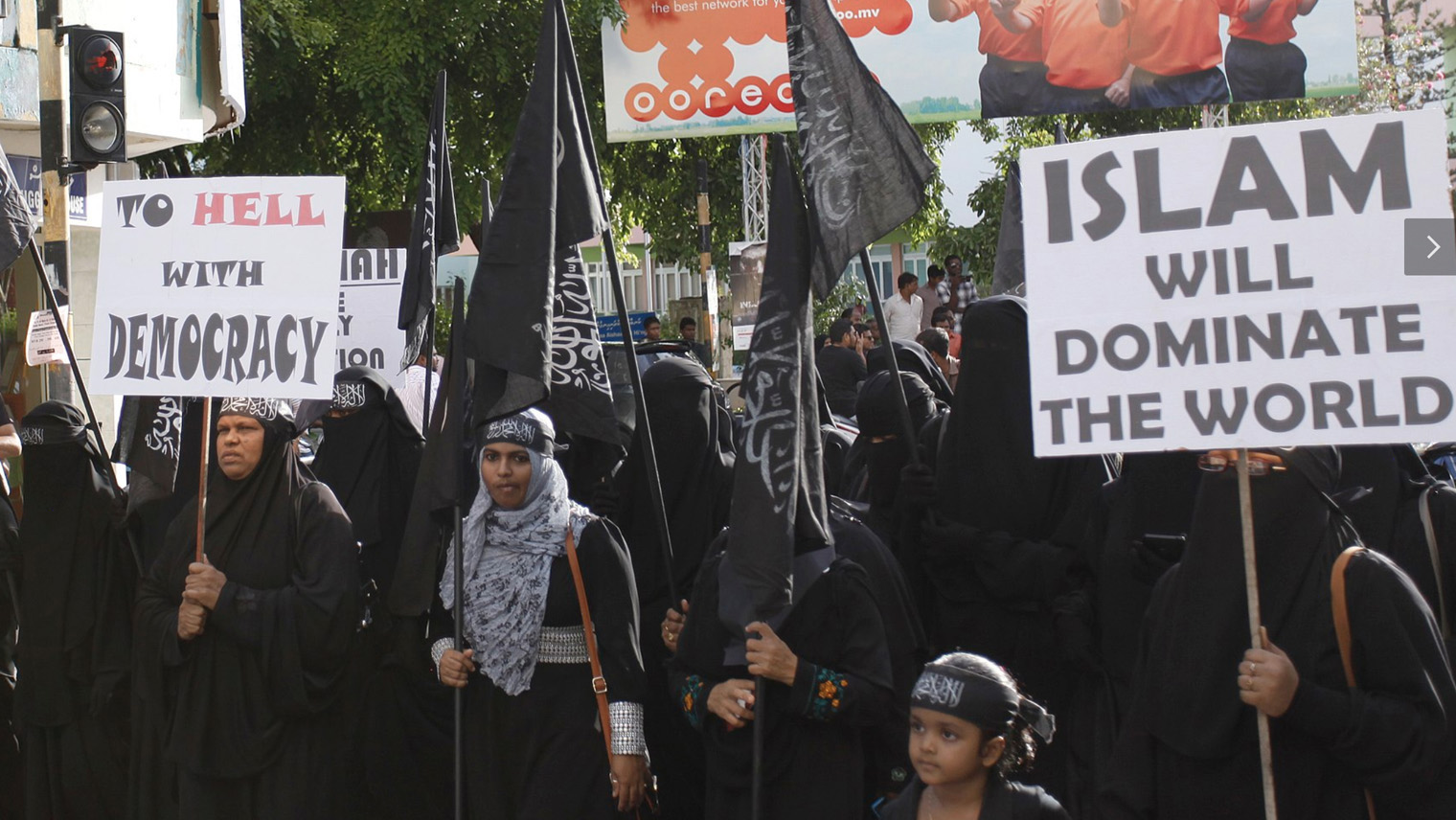
He describes developments in Sweden and Europe as a gradual Islamization, where democracy risks being eroded step by step rather than through an open revolution.
READ ALSO: Police: Islamization of Sweden has been ongoing for 30 years
– I don’t think we’ll get a revolution like in Iran. But it will probably happen more gradually. And we are already in that process now, I think. He continues:
– Everyone thinks democracy will always be here. No, I’m not certain of that. If it gets really bad, a generation will look back at this time as a parenthesis in our history.
The upcoming book doesn’t have its final cover yet, but Jomshof says it will probably be titled Kafir – a word he describes as a derogatory term for non-Muslims.
– In English, you say “infidel.” That’s what they call us non-Muslims.
READ ALSO: Social change nobody voted for – the concrete traces of Islamization in Sweden
In the book, he also discusses the concept of dhimmi, which he describes as a historical status for Jews and Christians under Islamic rule.
– You become a kind of second-class citizen. You pay a sort of tax to the Muslims and can, for instance, still be Christian. But you are subordinate to Muslims.
READ ALSO: “We already live as dhimmis” – Mona Walter on Islamism’s silent war against Sweden
For Jomshof, the book project is not just a historical or theological review, but a political statement on an issue he believes Sweden has long avoided.
– I want a discussion. I want a debate. I want to try to wake people up – what is happening?
When asked if he is pessimistic, Jomshof doesn’t hesitate with his answer. Developments after the 2015 migration crisis, Islamization of European cities, and what he describes as growing passivity in the West leaves him feeling bleak.
At the same time, he argues there is still time to reverse developments – if people react.