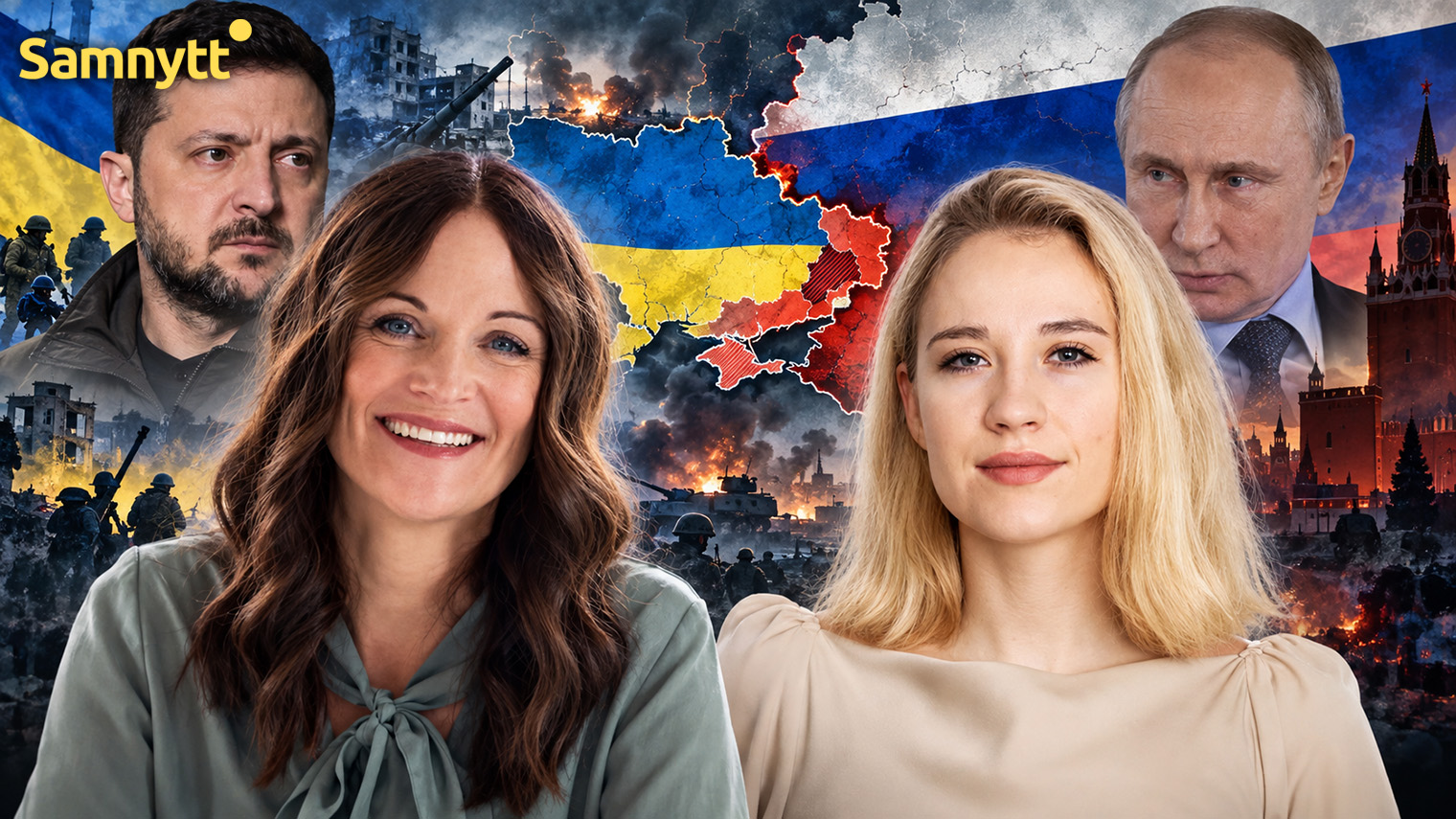
This spring, two Nordic conflict researchers challenged the optimistic narrative that Ukraine was on the verge of winning the war against Russia. More than six months later, they observe certain changes. Ukraine has made military progress and media coverage has grown less one-sidedly optimistic. However, neither of them foresees a decisive victory – and real peace could still be several years away.
When Samnytt reviewed coverage of the war in Ukraine in March, four years had passed since Russia launched its large-scale invasion. Despite a continued war of attrition with heavy losses on both sides, political leaders continued to convey the message that Ukraine was moving towards victory.
One of those who commented at the time was President Alexander Stubb of Finland. On the anniversary of the invasion, he argued that Russia’s casualty figures were unsustainable and stated that “Ukraine is on its way to winning the war.”
Conflict researcher Tyyne Karjalainen at the Finnish Institute of International Affairs offered a different assessment.
– As a researcher, my job is to present an up-to-date picture of the situation, and for me, that was that Ukraine was currently losing, she said at the time.
Conflict researcher Therese Pettersson at Uppsala University was also critical of the prevailing narrative. She pointed to the uncertainty regarding casualty figures and to the fact that information from the warring parties and various intelligence services was often presented as fact, despite being difficult to verify.
ALSO READ: Researcher: Swedish media and politicians mislead with propaganda about the Ukraine war
Now, Samnytt has once again spoken with both researchers about what has happened since – and whether they view the war differently today.
Pettersson: “No one is winning the war”
Therese Pettersson believes the basic situation is largely the same as in the spring. Russia continues to lose more soldiers at the front than Ukraine, but also has a much larger population from which to recruit.
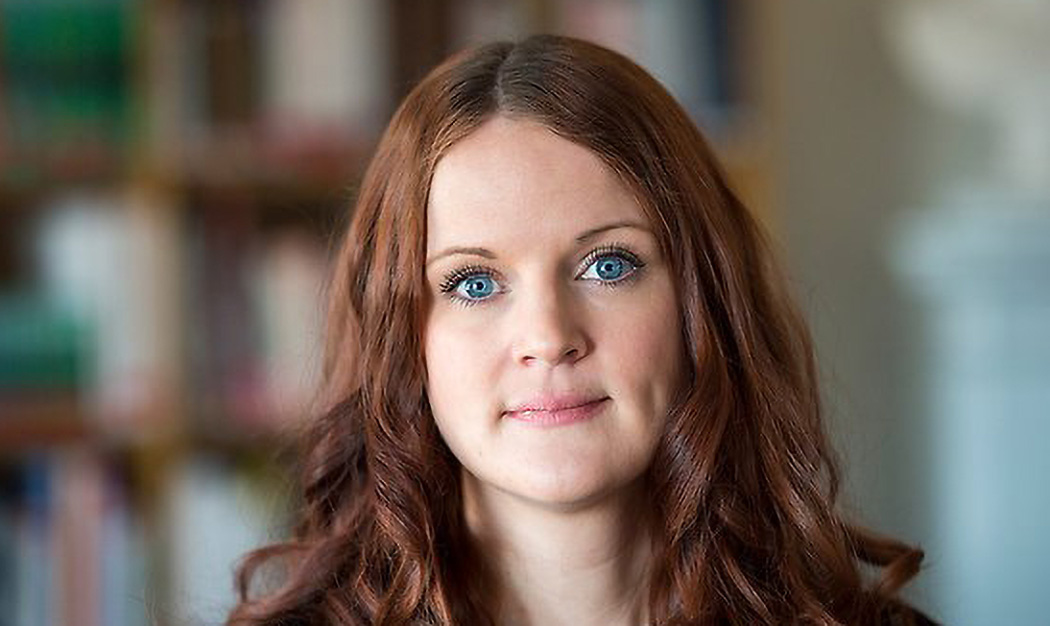
Western arms deliveries remain critically important for Ukraine, she emphasizes, but the country has also rapidly built up its own defense industry. Above all, this concerns drones, which have become an increasingly dominant part of the warfare.
Has the situation on the battlefield changed in any decisive way since we last spoke this spring?
– I would say that when it comes to how things are going, it’s essentially the same situation. No one is winning the war. There are still very small territorial changes and heavy losses in terms of soldiers.
Ukraine has also demonstrated a growing ability to carry out attacks deep inside Russian territory, targeting energy and other economically significant infrastructure.
Pettersson notes that this brings the war closer to Russians far from the border areas, possibly making residents of Moscow and Saint Petersburg feel less protected. However, she believes it is a long way from such attacks forcing any change in Russian war policy.
– It’s quite a long way, I think, before we could say these attacks would put such pressure on Russia that it would lead to real change.
Less triumphant reporting
One change since March, according to Pettersson, is the media’s tone. The previous image of a victorious Ukraine is not as dominant; coverage now also includes Ukraine’s problems, such as personnel shortages, desertion, and forced recruitment.
Do you still think the media’s narrative is more optimistic than the situation on the battlefield warrants?
– I don’t think that image is painted as strongly in the media today, though that may depend on which outlet you read. But, from what I see, it isn’t portrayed as strongly as when those earlier remarks were made. That Ukraine was about to win the war. That is not the case.
Pettersson notes that optimistic narratives of Ukrainian successes still appear and points out that they may also be used to motivate ongoing military and economic support from the West.
Ukraine has become a leader in drone warfare
A factor that has transformed the war is the rapid development of drones. According to Pettersson, Ukraine has become so advanced in this field that the roles have partly reversed. It is no longer only Ukraine learning drone warfare from the West.
– Now, it’s more like we travel there to study and learn from Ukraine, because developments in the drone industry have moved incredibly fast.
This development also affects the issue of Ukraine’s supply of soldiers. Reports of forced conscription, desertion, and recruitment challenges have grown more common, but Pettersson does not see an immediate situation in which Ukraine runs out of personnel.
Drones have made large concentrations of soldiers much more vulnerable and have allowed parts of the warfare to be conducted with far fewer troops than before.
Could Ukraine lose because their soldiers run out before Russia’s?
– In the near future, it doesn’t look like there will be a shortage of people. But, obviously, soldiers keep dying at a high rate, so eventually, it will run out somewhere.
A particular problem, according to Pettersson, is the loss of experienced and well-trained personnel, who cannot quickly be replaced with new recruits.
Sanctions “more of a signal”
Another recurring element of the West’s strategy has been extensive economic sanctions against Russia. Here, Pettersson is skeptical of how much can actually be achieved.
Russia has found other markets, especially China, while trade in Russian energy resources with the West has continued in various forms according to older, unsanctioned contracts.
Have sanctions become an effective way to pressure Russia to change its policy?
– Sanctions are a difficult tool to use. They are very rarely clearly effective. It’s hard to target them so that they land where intended.
She describes them more as a way for the West to signal political disapproval.
– It is almost more a signal, a marker that we are against this, rather than causing significant economic consequences. People find ways to handle or circumvent them in various ways.
Casualty numbers remain uncertain
The question of how many have actually been killed in the war remains hard to answer. Pettersson refers to projects that collect the names of fallen soldiers through obituaries, public registers, and other open sources. On the Russian side, Mediazona; on the Ukrainian side, UA Losses.
In the spring, UA Losses had identified about 80,000 named Ukrainian fatalities according to Pettersson. For Russia, she estimates Mediazona’s comparable figure now at just over 250,000. But these numbers are a minimum.
– It’s incredibly difficult. The information has been tightly controlled throughout the war. But there is a kind of minimum loss on both sides.
The Uppsala Conflict Data Program’s data included, up to 2025, about 370,000 registered deaths in the war, according to Pettersson. The majority were combatants. She warns that very high casualty figures debated publicly do not always refer only to the dead.
– Many of the figures mix killed and seriously wounded – those taken out of action and unable to continue fighting.
Even the verified death tolls are conservative. Missing persons may later be identified, for example, by DNA, while others may be in captivity.
“A war that will grind on”
Pettersson sees no clear way out of the conflict. For Ukraine, the war is about the country’s survival as a sovereign state. Meanwhile, the Russian leadership is committed to portraying the occupied territories as part of Russia, making compromise politically very difficult for either side.
When and how do you think the war might end?
– It is hard to see an end to this war in the coming years, at least. Neither party can really give in.
One plausible scenario, according to Pettersson, is that the front line will over time become frozen.
– The most likely is a continued stalemate, a fairly static front line. Ukraine is unlikely to surrender Donbass, for example, but at the same time will not have control over the territory. Unfortunately, this looks like a war that will grind on.
Karjalainen: Ukraine Has Shifted the Momentum
Today, Tyyne Karjalainen makes a somewhat more optimistic assessment of Ukraine’s military development than when Samnytt noted her critique of President Alexander Stubb in the spring. But her overall conclusion has not changed.
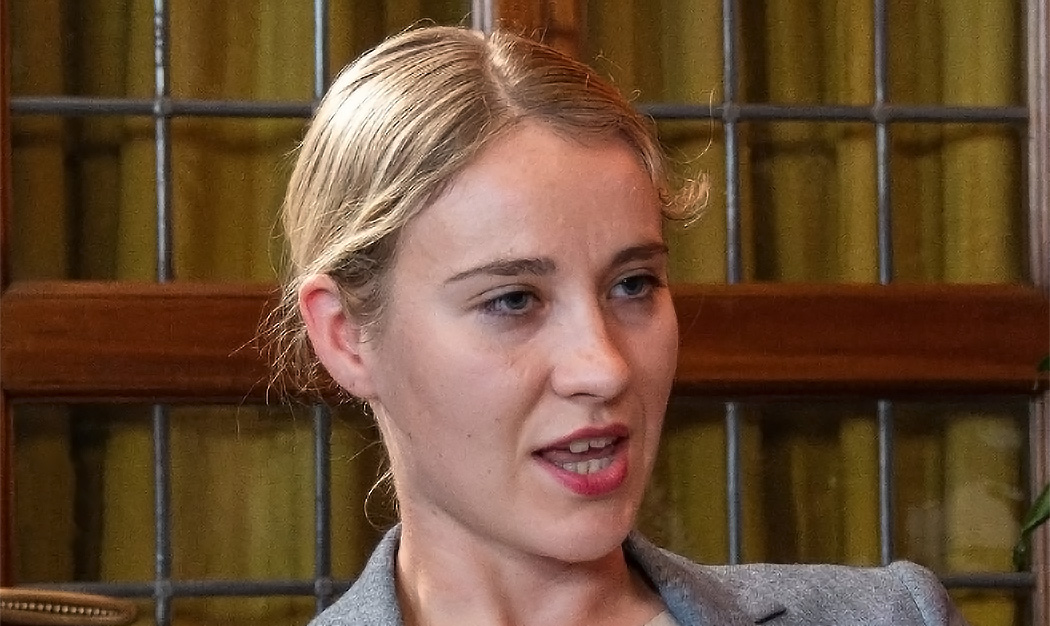
In February, you said Ukraine was losing. How do you view the situation today?
– The overall picture remains the same. Nothing has prevented Russia from continuing the war. As long as the war can continue, that in itself serves Russia’s goals.
At the same time, she emphasizes that Ukraine has achieved significant military successes over the past six months.
– During the past six months, Ukraine’s successes have been remarkable. I do believe the country has managed to shift the momentum of the war in its favor.
She particularly points to Ukrainian long-distance attacks on Russian energy infrastructure, which in her view demonstrate both increased military effectiveness and rapid technological innovation. At the same time, the situation has become more dangerous in Ukrainian cities, partly due to a lack of air defense and systems to shoot down Russian missiles and drones.
“Enough to continue – not enough to end it”
Karjalainen returns repeatedly to a paradox in Western support. Her springtime criticism, she said, was not that western aid to Ukraine was too large – but rather the opposite.
– We support Ukraine enough to keep the war going, but not enough for Ukraine to end it and create incentives for Russia to actually enter peace negotiations.
ALSO READ: Ukraine requests tens of billions more – causing irritation in the EU
That does not mean, Karjalainen says, that she believes Ukraine could, with sufficient Western support, drive Russia from all occupied territories.
– Russia is still a nuclear state, and there are limits to what can be achieved.
However, she believes that greater Ukrainian military capability could increase pressure on Moscow sufficiently to at least enable a pause in fighting or negotiations.
She also sees investment in Ukraine’s defense industry as something now in Europe’s own interest. The country has become a center for technological innovation from which European militaries themselves may benefit.
Warns of democratic backsliding
At the same time, Karjalainen distinguishes between acute military aid and more long-term economic support. The latter, she says, should continue to be tied to clear requirements for reforms, as the war brings risks of democratic backsliding and concentration of power in Ukraine.
This becomes particularly clear when it comes to President Volodymyr Zelensky’s position and postponed elections. Corruption scandals have also occurred repeatedly within the president’s inner circle. Karjalainen calls the situation a genuine dilemma.
Does Ukraine need to hold elections to restore democratic legitimacy – or would elections in wartime risk weakening the country?
– It is clear that Zelensky’s government is centralizing power and is not governing transparently, and should be held accountable. A democratic process is needed to ensure the country stays on a democratic path.
But holding presidential elections during the war entails major risks. Karjalainen notes that previous Ukrainian presidential elections have often been tough and turbulent, plagued by serious accusations of corruption and treason. Triggering such a political struggle amid an ongoing war could destabilize the country.
– There is a real need for elections, but at the same time, it is very risky to hold them.
One compromise discussed among Ukrainian researchers, according to Karjalainen, is to begin with local or regional elections, or possibly parliamentary elections, but postpone the presidential vote.
Does not believe Ukraine will regain all territory
The question of what territorial concessions may be necessary to eventually end the war is even more complicated. Karjalainen assesses it as very unlikely, given Russia’s current leadership and the international situation, that Ukraine will regain control over all the territories taken by Russia.
Could a future peace mean Crimea and parts of eastern Ukraine in practice remain under Russian control?
– In the current situation, with Russia’s current leadership and the international political climate, it is highly unlikely that Ukraine would regain control of all its territories. Here, Karjalainen makes an important distinction between actual and legal control.
– There is already a kind of acceptance that these regions, Donbass and Crimea, will remain under Russian control.
However, this does not mean that Ukrainians would accept the regions becoming Russian in a legal sense.
– Zelensky cannot sign an agreement legally transferring these territories to Russia, as it would cause mass protests. Ukrainian citizens would not accept it.
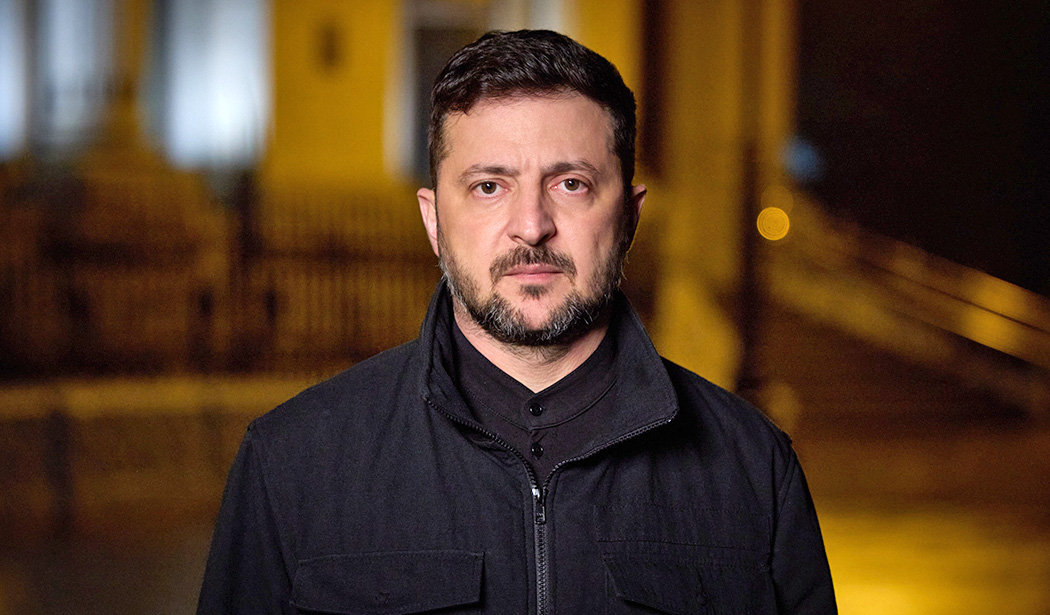
Karjalainen believes that Ukraine’s most acute problem today is not the territories themselves, but the fact that the country is locked into a war that is blocking economic development, democratization, and integration with the West.
– The main goal right now is not to regain these territories, but to somehow end the war, as it is so damaging to society and the entire state has to be rescued from the war’s grip.
Concession does not solve the problem
At the same time, Karjalainen warns against concluding that the war could simply be solved by Ukraine yielding territory.
– The main problem is not the territories. The main problem is that even if these territories were ceded to Russia now, the war could continue from new positions.
She thus calls for more international pressure on Moscow.
– The problem is that there is not enough pressure on Russia to actually end the war. That is the main problem.
Sees a “frozen conflict” ahead
The most likely ending, according to Karjalainen, is therefore not a classic peace settlement resolving all territorial and political issues. Instead, she foresees a ceasefire or an incomplete peace agreement, leaving many aspects of the conflict unresolved.
What might such a peace look like?
– The most likely scenario I see is some sort of agreement, either a peace treaty or a ceasefire, which will be fragile and incomplete. It will not be full peace.
The result could be something like a frozen conflict, with small-scale attacks and incidents continuing while large-scale fighting temporarily halts. But this in turn would create new problems.
ALSO READ: EU: Four new countries to join – one of them at war
If the border remains unresolved and Crimea and Donbass stay under Russian control, the question, according to Karjalainen, is whether Ukraine can continue its integration with the West and develop into a stable constitutional state and democracy. Instead, the risk is the country becomes stuck in a permanent state somewhere between war and peace.
– If the peace is so fragile that Ukraine remains between war and peace, it can still prevent the country from holding elections, achieving governmental transparency, developing economically, and integrating with the West.
“It will likely take years”
Nor does Karjalainen believe there will be a quick end to the war. We should expect it to last for several more years.
If you had to estimate the time – are we talking one, two, or five years before peace?
– I would probably say it is likely to take years.
A more extensive ceasefire could, in her opinion, come sooner if Europe and the United States succeed in putting enough pressure on Russia. But she does not see any complete and lasting peace in the foreseeable future.
More than half a year after the two researchers challenged the more triumphant narrative of the war, some things have changed. Ukraine has developed its military capability and achieved successes Karjalainen describes as remarkable. Pettersson, meanwhile, finds the media’s reporting less unilaterally optimistic.
The bigger picture remains much more static. The front line moves slowly, hundreds of thousands have died, neither side seems able to accept terms for giving up – and the peace the researchers foresee looks less like a definitive end to the war than a prolonged and fragile state somewhere between war and peace.
investigations?
Appreciate Samnytt? Show it through a subscription or donation.
DONATE VIA SWISH
123 083 33 50