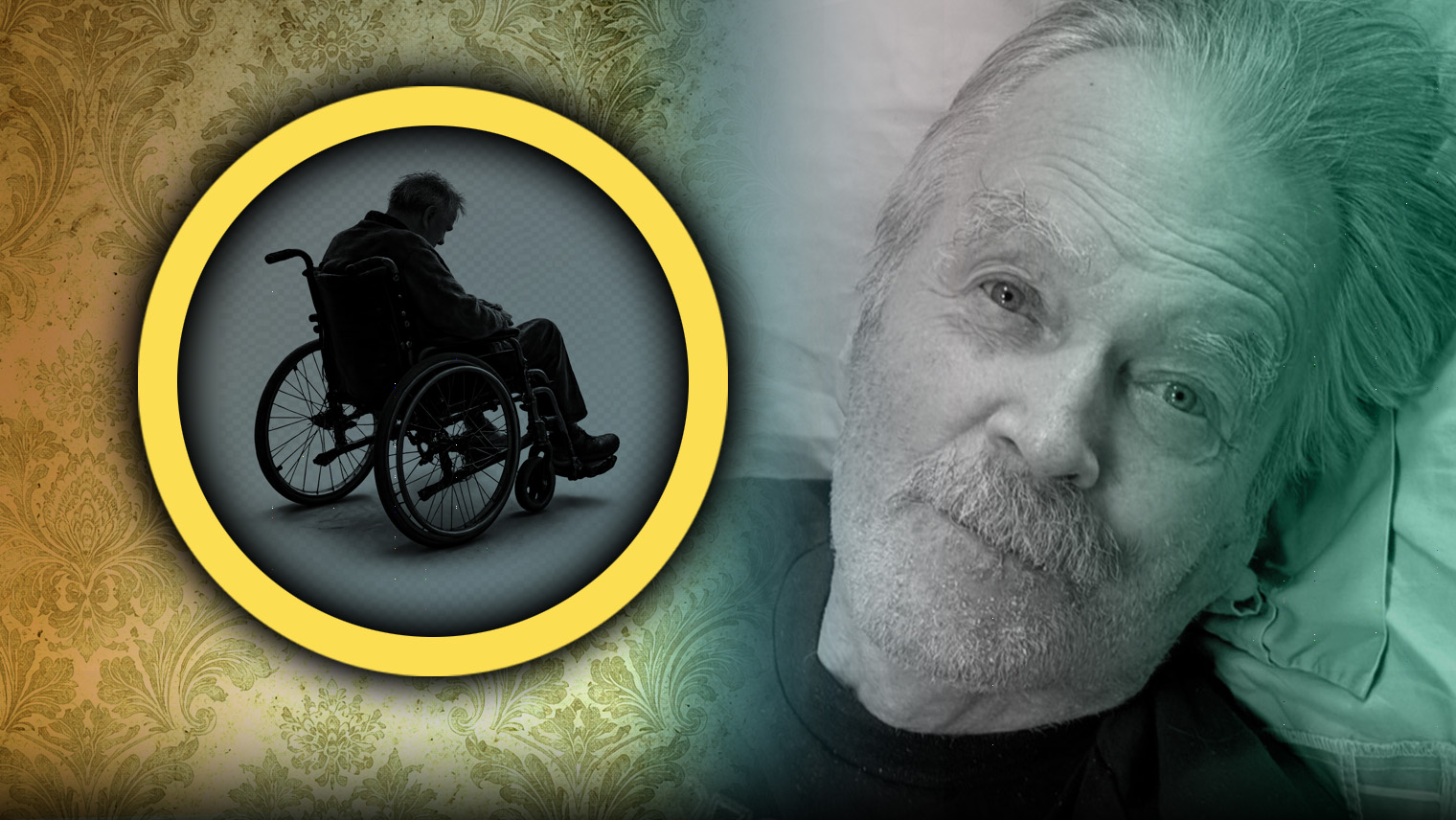
After a long working life as a decorator and advertising illustrator, Christer, 76, had expected a secure old age. Today he sits in a wheelchair with chronic pain and describes an everyday life marked by loneliness, time pressure, and difficulty making himself understood. His experiences closely resemble the picture of elderly care previously reported by Samnytt, where staff shortages, language barriers, and insecurity are recurring themes in testimonies from both residents and staff.
Over the past year, Samnytt has published a series of articles about growing concern within Swedish elderly care—about lack of oversight, language difficulties, solitary work behind closed doors, sexual assaults, and increasing insecurity among the elderly.
Testimonies from staff, family members, and residents have pointed to a sector where Swedish is barely spoken—and where time pressure and high staff turnover affect both quality and safety.
READ ALSO: Home care Syrian in Vänersborg ‘drilled’ finger into 80-year-old woman’s genitals
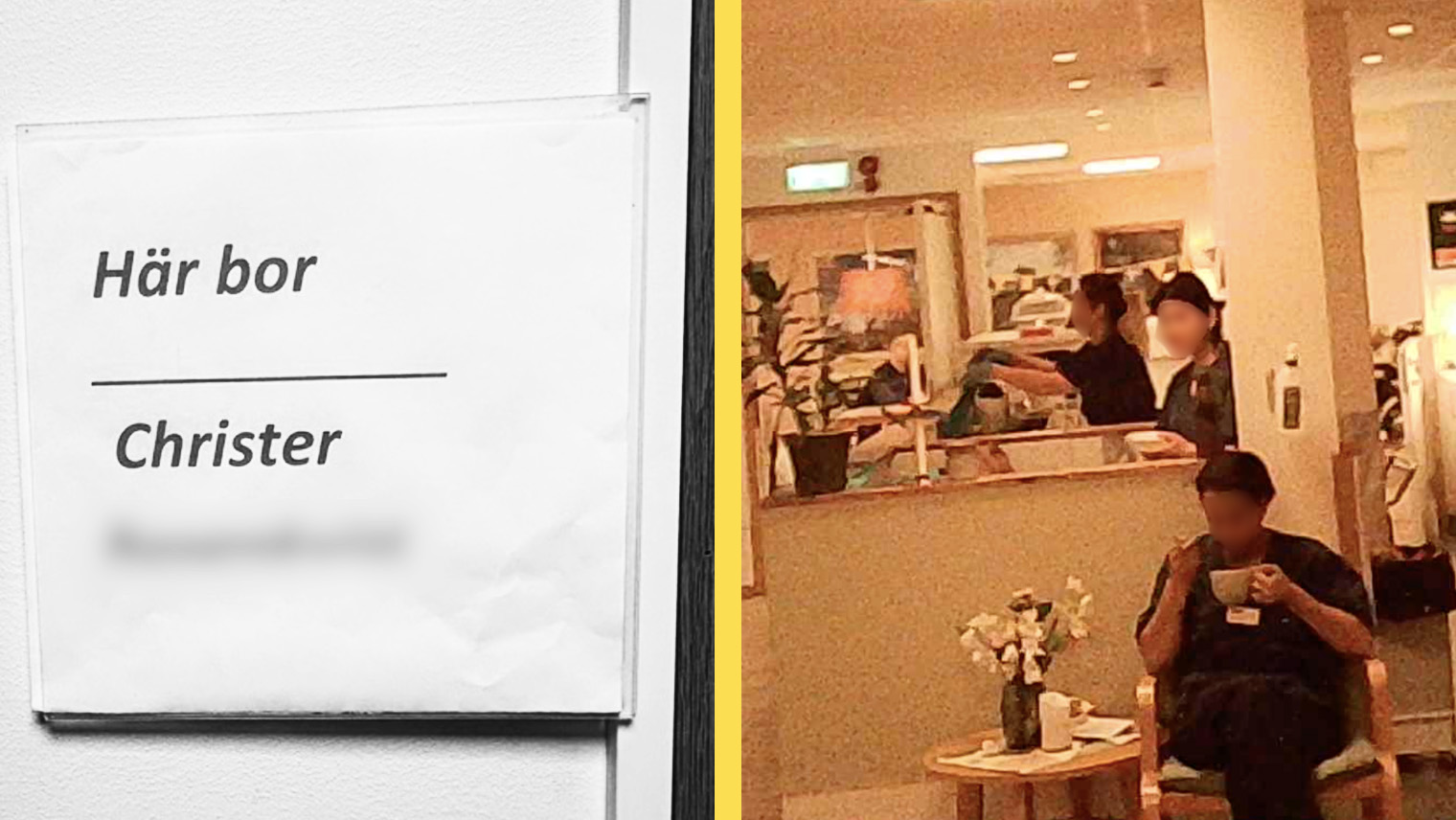
Samnytt meets Christer, 76, at a nursing home on Lidingö. We sit at one of the dining tables next to the kitchen. He asks for help positioning his arm correctly on the armrest, so the pain won’t be too strong when he moves his hand to use the spoon.
– If you tuck your elbow a little toward your side, it hurts less, he says.
After a short pause, he adds:
– There’s no one here who understands what you say in Swedish, so I take the opportunity now that you’re here.
Christer has had a long career as a decorator and advertising illustrator. During his last years in his own apartment, he received help from home care. In conjunction with being moved, he was dropped from a lifting device—an incident he describes as decisive for his current condition.
Sometimes it feels like they don’t understand what I need. Then it doesn’t get done. It’s hard to make yourself understood sometimes, and then there are misunderstandings.
Christer, 76, to Samnytt.
After the accident, he has experienced lasting complications. Despite examinations showing no fractures, he now lives with severe pain in his arms and legs and depends on a wheelchair. He feels he never received a clear explanation of what actually happened in his body or how the accident could have occurred.
READ ALSO: Home care staff pushed food into 85-year-old Rolf’s face – he didn’t eat quickly enough
The move to the nursing home was a consequence of his injuries and increased need for assistance. The pain still affects his mobility and makes even simple daily tasks difficult to manage on his own.
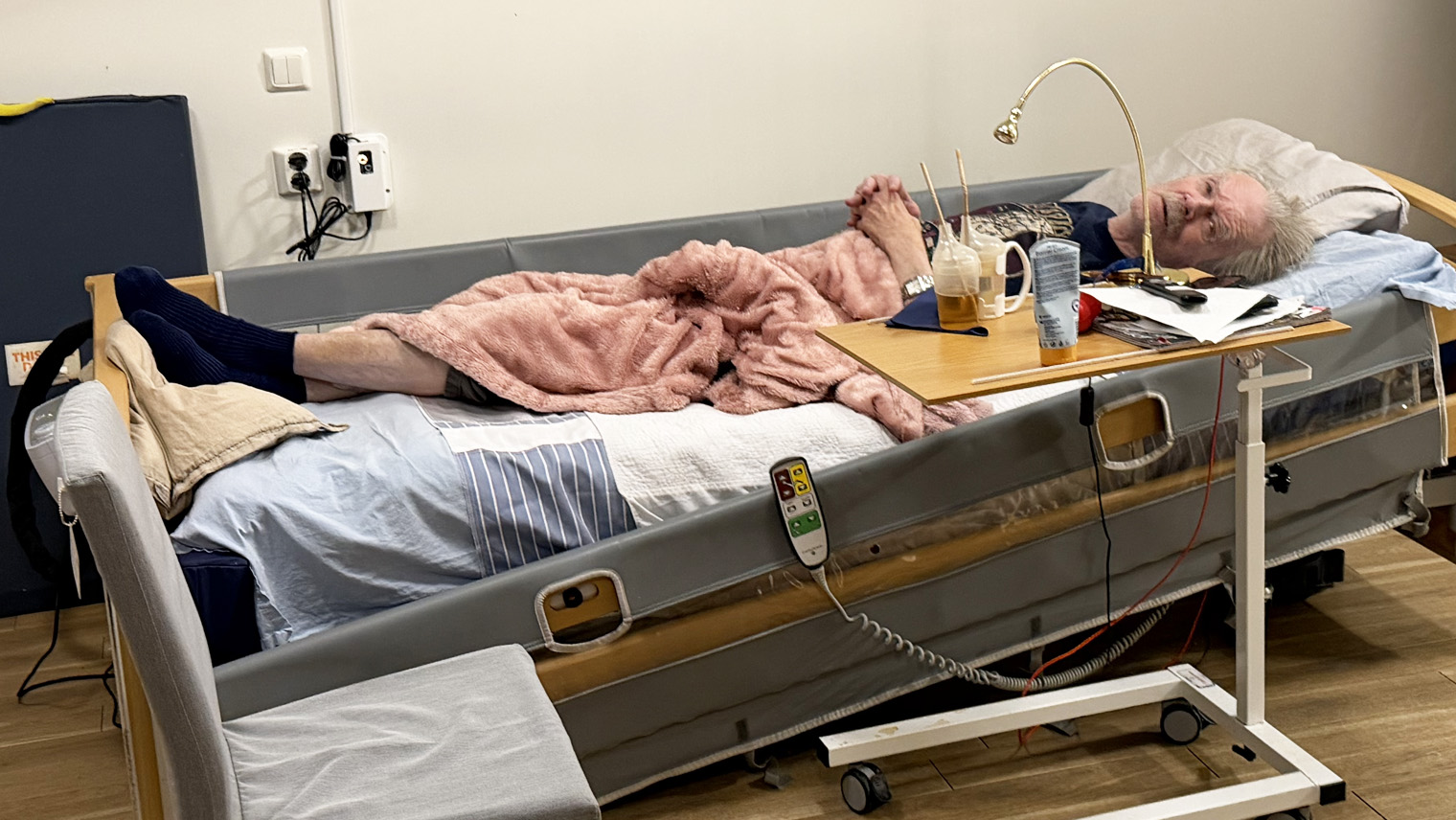
He has lived at his current facility, run by Vardaga, for just under a year. His mind is clear and he asks if we want any fruit.
How do you like it here at the nursing home—what works well and what works less well?
– You feel exposed sometimes. It’s a tough existence. You never really know what will happen from day to day.
He describes the accident at home with home care, the lasting pain, and his frustration at not having been told how it happened and why it hurts so much.
– Sometimes it feels like they don’t believe you, that you’re exaggerating when you say you’re in pain.
READ ALSO: Here, 81-year-old is humiliated by home care in Värmland
At the facility, he feels practical matters often function, but the time devoted to each individual is usually limited.
– There is staff, but they are in a hurry. They say they don’t have time now and have to come back later. You hear that all the time.
Language as an obstacle
The time pressure mentioned here has recurred in several of Samnytt’s previous interviews with assistant nurses, describing work where schedules are tight and each task is strictly timed.
Another recurring issue in the reporting is language and communication. Christer recognizes this as well.
Do you always understand what the staff say to you and do you feel they understand what you need?
– No. Sometimes it feels like they don’t understand what I need. Then it doesn’t get done.
READ ALSO: 89-year-old Yrjö’s meager Christmas table stirs emotions on social media
He explains that it might concern medical issues or other needs that are hard to explain.
– It’s hard to make yourself understood sometimes, and then there are misunderstandings.
If you criticize anything about this, you’re called xenophobic. But that’s not what it’s about.
Christer, 76
Several assistant nurses who have previously spoken with Samnytt have pointed out communication as crucial for both safety and security in working with the elderly. They also report that Swedish assistant nurses feel excluded in the work environment, as languages other than Swedish are spoken among coworkers.
Do you feel lonely?
– Yes, quite often. I had two guys here I used to spend time with. One day, they had moved them to another table in the dining room without asking me.
Anxiety after reports of assaults
The conversation turns to the rapes that have come to light in home care and elderly care in recent times. We talk about the 25-year-old Iraqi who was convicted of raping a 100-year-old woman and whose case was covered by Samnytt. Christer shakes his head:
– I don’t understand anything. How can it happen? No one checks who they hire from abroad, he says.
READ ALSO: PRO dodges awkward question: No opinion on deportations after 100-year-old raped
He goes on to say that he personally has not felt exposed in that way or heard of anyone in his ward suffering sexual assault.
Has there been anyone here with a Swedish background?
– No, not since I have been here.
When Christer retired, Sweden had about eight million inhabitants. Since then, the population has increased by more than two million, largely due to mass immigration from the Middle East and Africa.
At the same time, elderly care has been highlighted as a sector where newcomers are to be established in the labor market.
READ ALSO: Home care Syrian strangled 80-year-old and took her money—gets to stay in Sweden
“You can’t say that”
Through various forms of subsidized employment, the state often covers part of the wage cost in elderly care. According to critics, this affects recruitment and contributes to few Swedish-born being hired.
At the same time, it is often claimed that the lack of Swedish staff is mainly because few want to work in these professions—a claim questioned by alternative explanations.
For Christer, as for many others Samnytt has spoken to, there’s also a cultural dimension. In old age, security is not just about understanding the language, but being surrounded by people whose norms, values, and traditions are familiar and shared. To avoid the feeling of being a stranger in your own everyday life.
– But you can’t say that because then you become a hater, he says, and adds:
– If you criticize anything about this, you’re called xenophobic. But that’s not what it’s about.
When we ask him what it’s really about, Christer says it’s fundamentally about respect.
– We want to have respect for our lives and our situation. Just as they want the same. But they can’t just come here and expect everything to be handed to them.
READ ALSO: This is what the end station looks like for those who built Sweden
Do you think we Swedes are too kind?
– Maybe we are, a little bit.
When Samnytt asks what he wants to say to politicians and those responsible, he returns to the same thing many other elderly have expressed in previous interviews—the lack of understanding of what everyday life actually looks like.
– They should put themselves in my situation and try to understand how it feels.
Christer’s story is not unique. In interviews with both staff and residents, Samnytt has repeatedly encountered a picture of elderly care where some things function—but where time pressure, exclusion, language problems, and lack of continuity simultaneously impact the security and quality of life for those most dependent on the system.
READ ALSO: Sweden’s disgrace: The welfare country that abandoned its old people
Less than 1% of our readers support us
Hundreds of thousands read Samnytt, but only 1 in 100 contribute. Help us grow and continue delivering in-depth reports and reviews.
Without your support, Samnytt wouldn’t exist.
No advertisers. No state support. Only our readers. Thanks to you, Samnytt has published over 33,000 articles that challenge the sanitized image of Sweden.
123 083 33 50
Swish any amount
Thank you for reading and supporting Samnytt