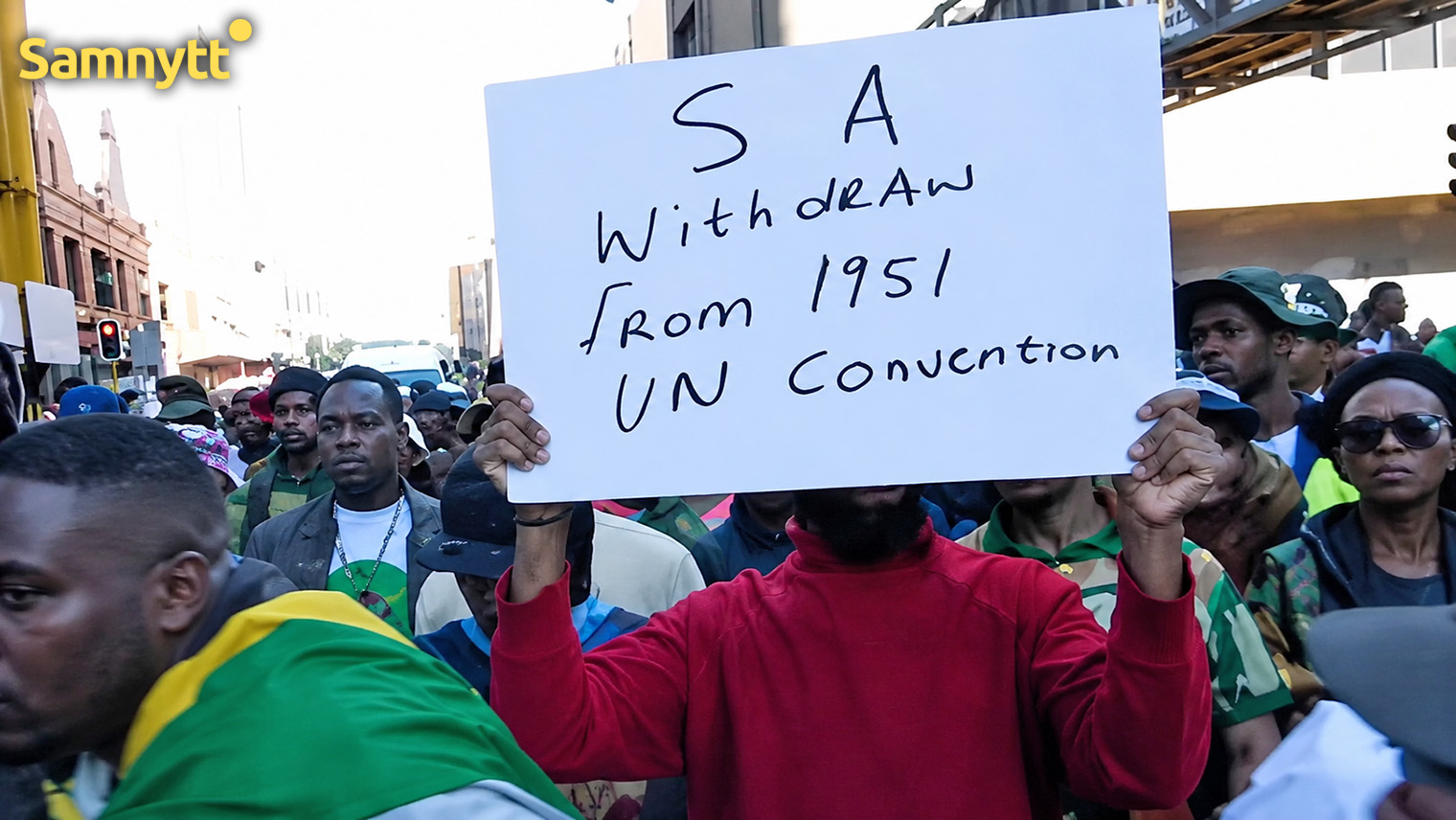
While the Swedish debate revolves around the duty to inform and accusations of “snitching,” South Africa has found itself at the center of a far more confrontational conflict over illegal immigration. The black activist group March & March has set a deadline for undocumented migrants to leave the country—promising that if they do not, they will be “helped” to do so. Behind the protests lies deep frustration over unemployment, crime, corruption, and an immigration system that many South Africans believe has slipped out of control.
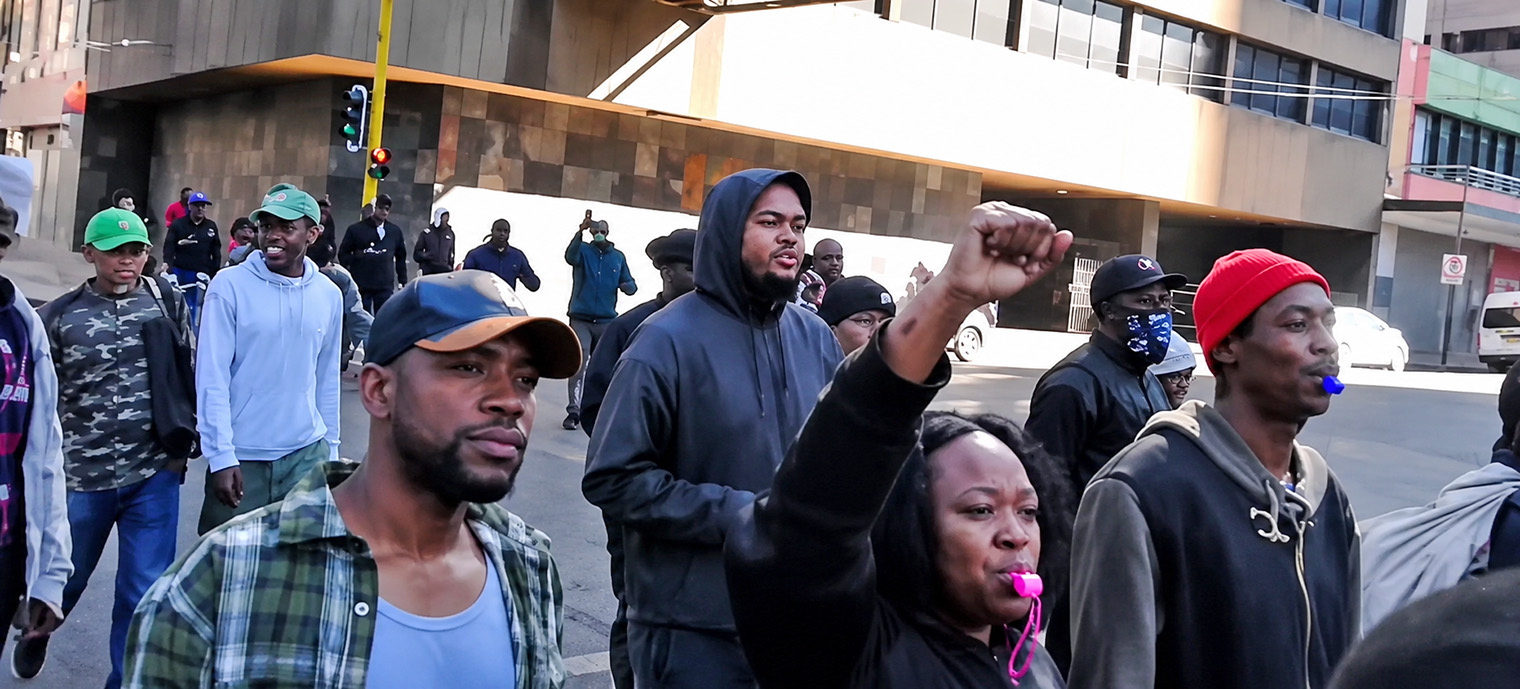
On Monday and Tuesday, thousands of demonstrators gathered in Johannesburg, Durban, and several other South African cities. The protests were organized by March & March, among others, and the already well-known black civic movement Operation Dudula.
The activists demand that the government significantly tighten border controls and carry out mass expulsions of those residing in the country without permission. When the deadline set by the movement passed, police presence was significantly increased, and in some areas, the military was also put on standby.
According to South African police, the protests have been mostly peaceful, but incidents and clashes have been reported in Johannesburg and Durban among other places. In some areas, demonstrators have gone door-to-door, demanding residents show identification—a practice criticized by authorities.
READ ALSO: South Africans have had enough of illegal immigrants
March & March leader Jacinta Ngobese-Zuma has declared that the movement will continue to demonstrate every week until the government acts against illegal immigration.
The demand for South Africa to withdraw from the 1951 UN Convention Relating to the Status of Refugees—which appears on protest signs—refers to a controversial political proposal to temporarily exit the convention. The slogan has become common among groups advocating for stricter border controls and immediate expulsions of those illegally in the country.
Not Boer Activists – But Black South Africans
What makes the current protest wave especially notable is that it is not being led by white nationalist groups or representatives of the Afrikaans-speaking Boer population, who are often identified as proponents of xenophobic attitudes in South Africa.
Instead, it is mainly black South Africans from working-class and low-income areas who are behind the mobilization. Many of them argue that competition for jobs, housing, and public services has become unsustainable in a country with one of the world’s highest unemployment rates.
Official unemployment stands at about 33 percent. When including people who have given up hope of finding work, the so-called expanded unemployment rate rises to over 40 percent.
The situation is especially dire among young black South Africans. Millions are excluded from both the labor market and education.
Dissatisfaction with ANC Governance
The protests are taking place as discontent grows against the ruling ANC party, which has governed South Africa since the fall of the apartheid system in 1994. Corruption, weak public services, slow economic growth, and recurring scandals have long undermined trust in the state.
Even the ANC has acknowledged in internal documents that the party has suffered from corruption, poor governance, and a lack of service delivery. Several analysts argue that dissatisfaction with migrants partly reflects broader frustration with economic and political failures beyond migration itself.
Dispute Over Number of Illegal Migrants
How many foreigners are residing illegally in South Africa is disputed. According to official statistics, there are only about up to 3 million foreign-born people in the country, many of whom are said to have the legal right to be there.
The protest groups, however, dismiss these figures as gross underestimates. Jacinta Ngobese-Zuma has claimed that the number of illegal migrants could be as high as between 15 and 30 million. No independent figures have been presented, but these estimates have spread widely among anti-immigration black movements and on social media.
READ ALSO: Socialist ‘kill whites’ party on the rise in South Africa
Police meanwhile report that about 50,000 people have been arrested for suspected immigration offenses since the turn of the year and that around 25,000 migrants have already left or been repatriated from the country during the recent campaign. The protest movement’s ultimatum has had an effect.
Ramaphosa: The Problems Are Real – But the Law Must Prevail
President Cyril Ramaphosa has tried to balance understanding for public opinion with a defense of the rule of law. In a statement ahead of the protests, he wrote that South Africans’ concerns about illegal immigration, border control, pressure on public services, and organized crime are “real” and deserve to be taken seriously.
At the same time, he stressed that no one has the right to threaten, intimidate, or resort to violence against others. Ramaphosa also claimed that the government is already working on comprehensive reforms of the immigration system, tighter border security, and measures against corruption that, according to the government, has weakened immigration control.
He also warned that private individuals cannot take over police responsibilities: “Taking the law into one’s own hands is vigilantism and has no place in our constitutional democracy,” wrote the president.
Mass Immigration Even During Apartheid
Migration to South Africa is not a new phenomenon. During the apartheid era, the country’s strong economy already attracted labor from neighboring countries such as Zimbabwe, Malawi, Mozambique, and Zambia.
Despite intense international criticism at the time for being racist, South Africa appeared to many black people in the region as a place with greater economic opportunities than the newly independent states nearby, where blacks had gained self-rule after colonialism. Since the ANC took power in 1994, immigration has continued while South Africa has struggled with declining growth, surging poverty, and skyrocketing unemployment.
READ ALSO: Trump confronted South Africa’s president about genocide and persecution of whites
The current protest wave is described by critics as xenophobic, while its supporters present it as patriotic or nation-friendly—arguing that the state must regain control of the borders. Regardless of the label, the development shows how migration has become one of the most charged political conflicts in contemporary South Africa.
With demonstrators now promising to continue their actions weekly, the government faces a difficult balancing act—addressing growing public frustration over migration without letting it spiral into harassment, violence, or vigilante justice.