A court case about rape within home care services has brought attention to a reality that is rarely seen outside of courtrooms and elderly care facilities. The verdict concerns an assault against a 100-year-old woman, committed by a man with Iraqi citizenship who was responsible for her care and, despite being convicted, will not be deported. However, reactions to the decision also address something bigger. In conversations with Samnytt, a lay judge describes how the sentence led to threats and personal fear, while staff and elderly individuals testify about language difficulties, lack of supervision, and a daily life where very old women are often completely dependent on staff they can barely communicate with.
Throughout the autumn and winter, Samnytt has extensively reported on the case where a home care employee with Iraqi citizenship was prosecuted for raping a 100-year-old woman in her home. The man had access to the woman’s home through his job in home care and was alone with her when the assault occurred. According to the verdict, he exploited both his professional role and the woman’s extreme vulnerability, advanced age, and inability to defend herself. Despite a conviction and a sentence corresponding to imprisonment, the district court rejected the prosecutor’s request for deportation.
During the legal proceedings, the convicted man submitted details about his ties to Sweden, employment, and duration of stay in the country—circumstances the court considered in its so-called proportionality assessment. Samnytt’s previous reporting has pointed out how jobs in home care and elder care provide access to very old and defenseless people in their homes, often without oversight. The rape of the 100-year-old has thus become one of the most high-profile examples of the risks that arise when caregiving work is combined with deficient controls, integration ambitions, and a high degree of dependency.
One of the lay judges in the case, Pran Malhotra, describes the verdict as deeply taxing—particularly on a personal level.
– This is a terrible case. A one-hundred-year-old, totally defenseless woman, he says in an interview with Samnytt.
Pran Malhotra, who was born in India and has lived in Sweden for 45 years, says that after the verdict he has felt anxious and that the court’s security unit has been in contact with him.
In the interview, Malhotra himself raises the fact that both the man convicted of the crime and the presiding judge Mohamed Ali are Muslims. He says, in his own opinion, that this has affected how the verdict has been received and contributed to his sense of concern.
– This is the first time in my life as a lay judge that I have felt threatened, he says.
ALSO READ: Government’s New Judge Mohamed Blocks Deportation of Home Care Iraqi Who Raped 100-Year-Old
He describes how the attention around the case has also affected him privately and that he has not yet talked to his daughters about the situation.
– When I speak now, I do so as a private individual. The verdict was reached jointly and according to the law, he says.
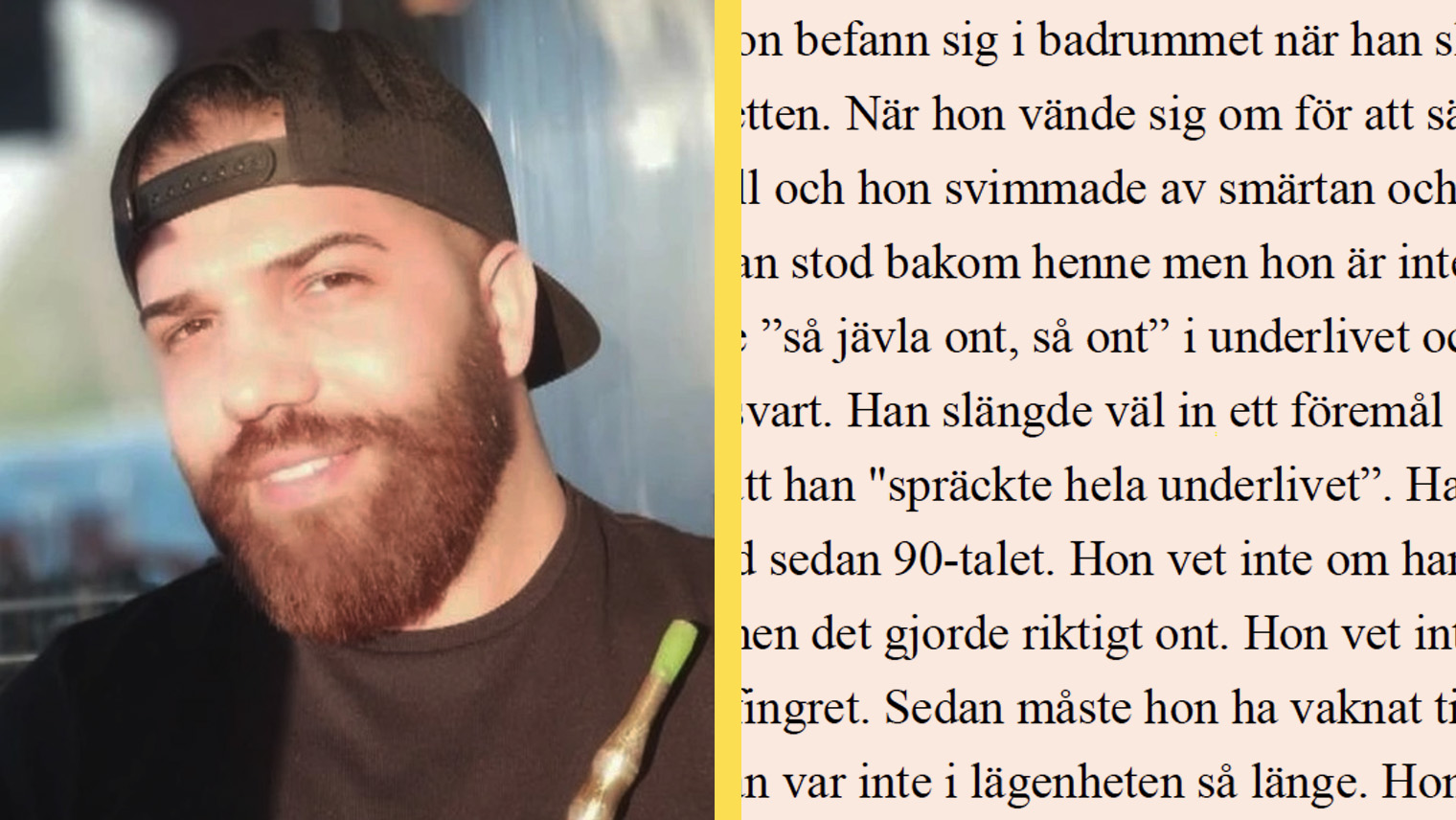
Even though he describes the crime as one of the most serious he has faced, Malhotra participated in the ruling where the prosecutor’s request for deportation was denied. This raises questions about how those with authority in the justice system act in their roles as judges and lay judges—and how they later go public and express regret over the sentences imposed.
ALSO READ: S Judge from India Wanted to Deport Iraqi Home Care Rapist
“Communication Is Everything”
In parallel with the court proceedings, work continues in elder care. A male assistant nurse, who has worked at several care homes and wishes to remain anonymous, describes to Samnytt a daily life where language difficulties have had significant impact. We first ask why he wants to remain anonymous.
– It is dangerous to go public in this situation now.
He believes it could otherwise ruin his career in healthcare.
It is the lack of respect for the elderly. Some are really good, but that doesn’t help when half are not good. Communication problems also sometimes lead to the wrong medication, so it’s serious.
Assistant nurse on what the public doesn’t get to know about elder care
We then quickly move on to the importance of the Swedish language for the elderly. He recounts that in a privately run care home, many of the staff had limited knowledge of Swedish, which affected both the working environment and contact with residents.
– Many elderly have a need to talk. When communication is impossible, there is no real contact, he says, clarifying:
– Communication is everything in elderly care. There are constant misunderstandings. The middle managers at one of the places I interned could barely say a word in Swedish. I reacted strongly to that. He continues:
– That also made me uncomfortable, as the only Swede on the staff, since I could hardly communicate with the other employees. They spoke Arabic with each other and you just didn’t fit into their team, or gang, so to speak. It wasn’t fun.
ALSO READ: Police Planned PR Campaign – Discovered Unexpectedly Many Rapes within Home Care
Language Deficiencies, Loneliness, and Fear Behind Closed Doors
The assistant nurse describes how colleagues often spoke languages other than Swedish, even in the presence of the elderly—a practice he found problematic.
– The elderly didn’t understand what was said and could feel excluded, he says. Neither I nor the elderly had any idea what they were talking about.
Many relatives are now employed in elder care. They are cousins to each other. It has become a kind of clan culture, with a middle manager who comes in and then hires her own relatives.
Assistant nurse to Samnytt
At the same time, he describes a working environment where criticism and questioning were not always well received.
– It was sensitive to bring up problems. You didn’t want to stand out, he tells Samnytt.
From the perspective of a 90- or 100-year-old, if you try to imagine what it’s like to describe a problem or a more serious incident, like the one now revealed, what is the result if you don’t speak the same language?
– Yes, there’s simply no communication at all. There are many elderly people who have a need to talk, who want a conversation. As it is now, so many don’t feel seen at all.
Have you seen elderly people stop speaking up if they are not understood?
– Yes, exactly. They just give up in the end.
How often does staff work completely alone with elderly women who are physically and mentally defenseless?
– You are often assigned as a contact person for three clients, as it’s called. And you’re responsible for their toilet needs, hygiene, bathing, food, washing linens, and so on. So yes, it happens often.
Could there be a culture among the companies running these homes, like Vardaga for example, to cover up and stay quiet about abuses?
– That may be so. They often scrimped on things, and sometimes staff took supplies for themselves, like fruit, which should have gone to the elderly. And in their company descriptions they write that they cook all food themselves. That’s not true. The food was frozen and just reheated.
Lack of Respect for the Elderly
What do you see as the most important thing the public doesn’t know about the care of our elderly?
– It’s the lack of respect for the elderly. Some are very good, but that doesn’t help when half are not. Communication problems also sometimes lead to the wrong medication, so it’s serious. He elaborates:
– Speaking over the heads of the elderly in another language makes them feel completely left out.
ALSO READ: Home Care Syrian Convicted of Serious Terror Crimes – Cannot Be Deported
The assistant nurse also says that things often work excellently with staff from Asian countries, including the Philippines and China.
– They often do a fantastic job and are sweet—and have a completely different human attitude. They also have much more drive when it comes to mastering the Swedish language.
It has in practice become a tool for integration rather than a care profession. For three years I’ve worked in home care and haven’t met a single person of Swedish origin.
Britt Marie Nordvall, 83, on elder care
He ends the interview by saying that clan-based networks have also entered the care sector.
– Many relatives are now being employed in elder care. They are cousins to each other. It has become a kind of clan culture, with a middle manager who then brings in her own relatives.
ALSO READ: Gang Criminal Says: I Got a Job at a Care Home
A Tool for Integration Rather Than a Care Profession
Samnytt talks to 83-year-old Britt Marie Nordvall from Lidingö about what has surfaced within home care. She says that she has been in close contact with home care over the past three years in connection with caring for her husband with dementia.
– I am an 83-year-old woman and I am terrified of getting old. Of ending up in the hands of rapists, she tells Samnytt.
How would you describe your experience of home care and elder care facilities?
– It has in practice become a tool for integration rather than a care profession. For three years I’ve dealt with home care and haven’t met a single person of Swedish origin. She continues:
– I think I speak for many elderly people today, especially women. I’ve heard it from many others too, how vulnerable you feel. We have new people in our country who come from completely different backgrounds and they simply don’t think as we do.
We get on to the importance of language in care situations, and Nordvall says spontaneously:
– I have been admitted to Danderyd Hospital and Sabbatsberg, and the healthcare staff barely understood what was being said. In healthcare and home care, it is almost exclusively foreign-born staff.
ALSO READ: Ivo Criticizes Elder Care Facilities for Poor Language Skills
After the Verdict: Same Care, Same Risks
The verdict from Södertörn District Court has now been delivered and the legal process is over. The man convicted of raping a 100-year-old woman is serving his sentence in Sweden, without deportation. At the same time, home care and elder care continue to operate as before.
The stories from the lay judge, the assistant nurse, and the elderly women interviewed by Samnytt point to recurring problems: lack of language skills, limited oversight, and daily life where very old people are often entirely dependent on staff they struggle to communicate with. Together they paint a picture of a system where serious crimes can happen in silence—and where the consequences only become visible when they reach the courtroom.
Less than 1% of our readers support us
Hundreds of thousands read Samnytt, but only 1 in 100 contribute. Help us grow and continue to deliver in-depth reporting and investigations.
Without your support, Samnytt does not exist.
No advertisers. No government funding. Only our readers. Thanks to you, Samnytt has published over 31,000 articles challenging the mainstream narrative in Sweden.
123 083 33 50
Swish any amount
Thank you for reading and supporting Samnytt