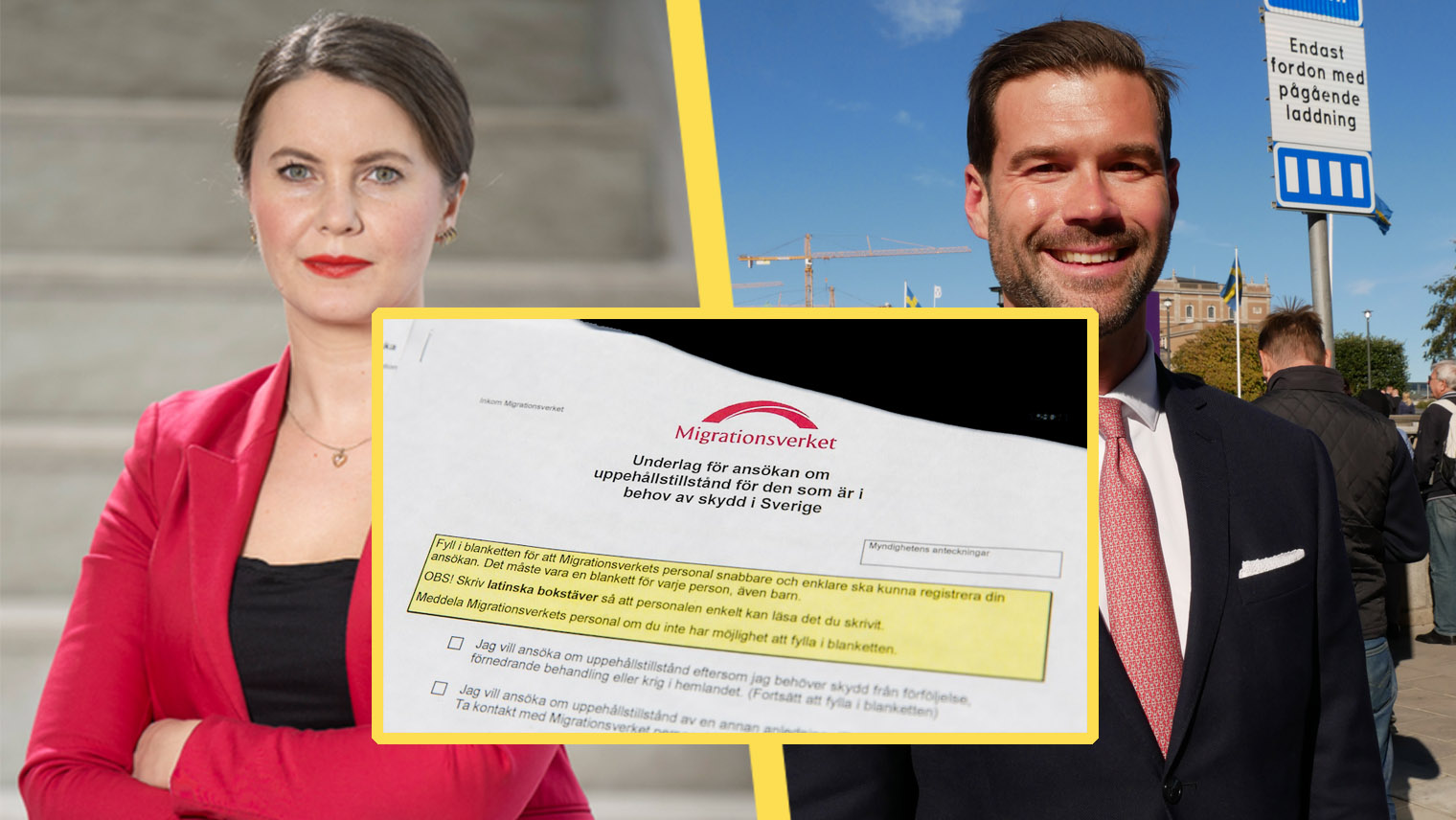
The government and the Sweden Democrats (SD) want to make temporary residence permits the norm and increase the pressure to obtain citizenship, but the Social Democrats are saying a flat no. In doing so, they are blocking a central part of the Tidö parties’ overhaul of migration policy—a reform aimed at long-term integration, legal certainty, and clearer accountability from those who wish to remain in Sweden.
The Social Democrats reject the government’s proposal to be able to review permanent residence permits and instead make them temporary, with the possibility of extension or citizenship for those who meet the requirements. The party argues that the proposal is both fundamentally wrong and legally questionable.
– The question is whether the proposal is even legal, says the party’s migration policy spokesperson Ida Karkiainen (S) to DN.
She warns that a retroactive review process would affect people who have held permanent residence permits for a long time and risks undermining trust in the state.
– This is an unreasonable arrangement and we do not do this in Sweden. We don’t go back and revoke already made decisions based on which government is in power, she says.
A central part of the Tidö Agreement’s migration shift
The proposal is a direct result of the Tidö Agreement, where the government, together with the Sweden Democrats, decided that temporary residence permits should be the main rule in Swedish migration policy. Permanent permits, according to this approach, should primarily be replaced by either citizenship or return to the home country, depending on whether protection needs and integration requirements remain.
The government inquiry presented earlier this year emphasized that the current system, where permanent residence permits have in practice often become the end goal, has contributed to weaker incentives for language acquisition, self-sufficiency, and societal integration. The investigation also points out that Sweden deviates from several comparable EU countries where temporary permits are combined with clear and monitorable requirements.
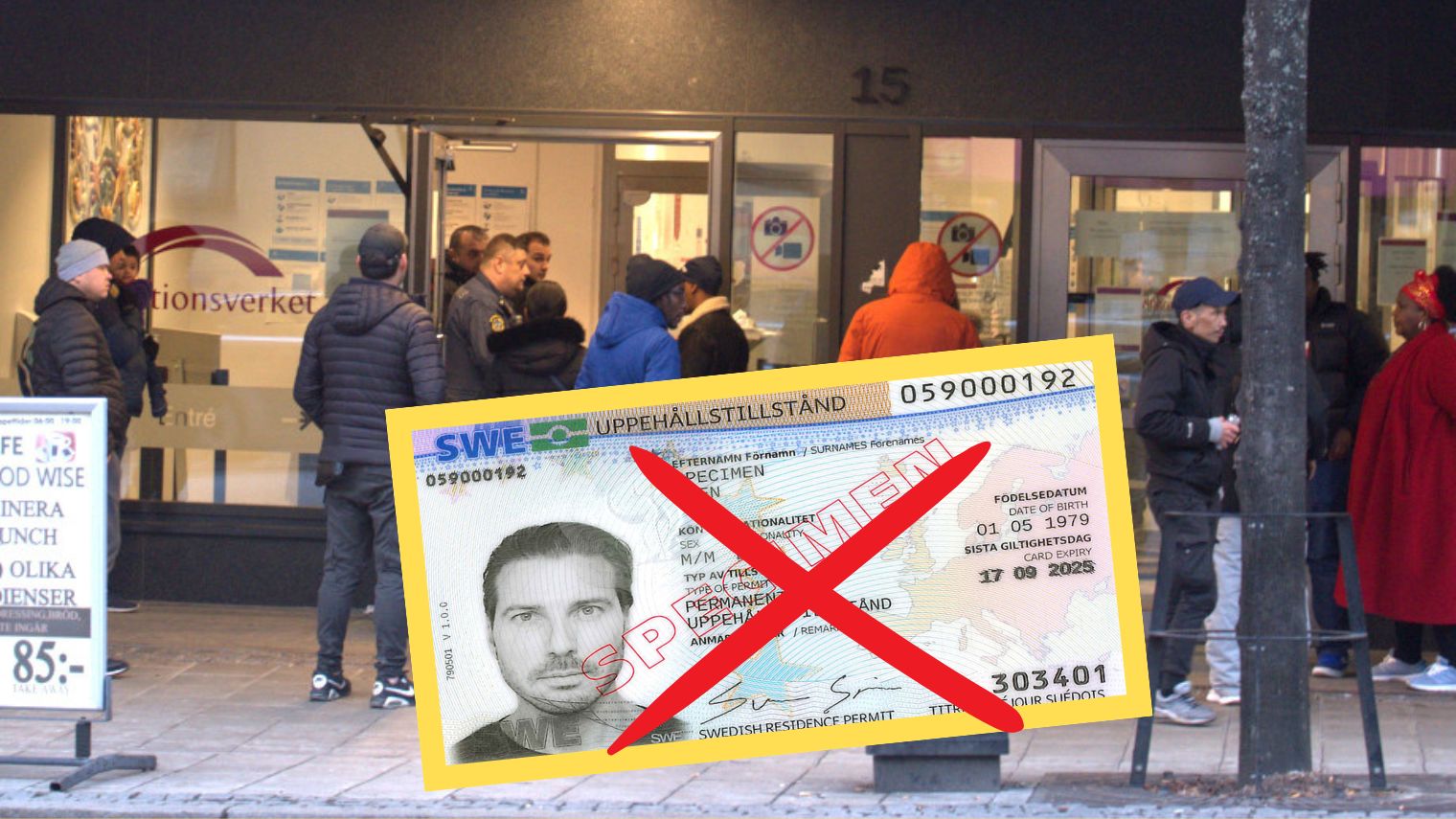
The government and SD’s approach is highlighted as a more coherent system, where protection is time-limited and permanent settlement requires an active decision in the form of citizenship, which creates greater clarity both for the individual and for society.
Government: About responsibility and long-term integration
Minister for Migration Johan Forssell (M) has admitted that the question is legally and politically complex, but emphasizes that the aim is not arbitrariness but structure. According to the government and SD, the proposal is about moving from a passive to an active system, where those who want to stay in Sweden are also expected to take steps to become part of Swedish society.
– The idea is that you either have temporary protection here in Sweden or you should become a citizen, Forssell tells DN.
READ ALSO: Permanent residence permits are being revoked—made temporary
In the government’s reasoning, including in bill texts and the Tidö Agreement, it is emphasized that citizenship should be strengthened as an institution and regain its role as the endpoint of an integration process—not something that can be postponed indefinitely while permanent rights remain.
S: Current rules are sufficient
The Social Democrats argue that the Swedish Migration Agency already today has the possibility to revoke permanent residence permits, but admit that it is limited to certain situations.
– For instance, it concerns cases where someone has provided false information when applying for their residence permit and received it, or if someone has lost their ties to Sweden,” says Ida Karkiainen.
The party still believes that the government, through its proposal, is attempting to solve a problem that is already handled in legislation—and that the consequences of wider review risk outweighing the benefits.
A crucial migration policy crossroads
The consultation period runs until December 19. After that, the government will decide whether to move forward with legislation.
Regardless of the outcome, the Social Democrats’ ‘no’ marks a clear crossroads: between continuing to let permanent residence permits form the basis for staying in Sweden without a time limit—and the government’s ambition to make citizenship the main guarantee of lasting belonging in Sweden.