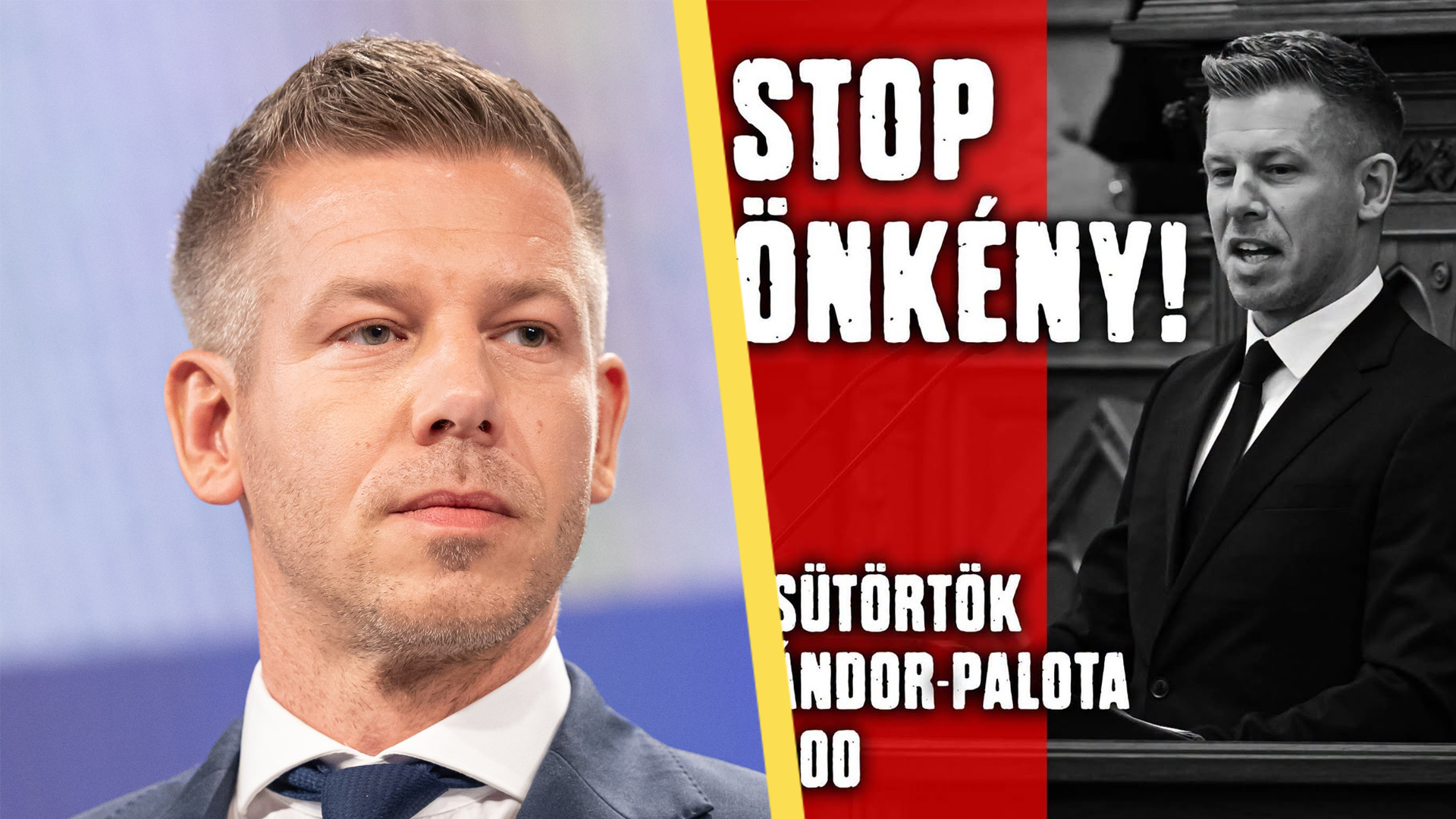
It has been less than three months since the parliamentary elections in Hungary, yet the country is already facing a serious constitutional crisis. The new government led by Péter Magyar’s Tisza party, which has positioned itself as pro-EU, now stands accused of systematically violating the rule of law and democratic norms to consolidate its power.
On Monday, July 6, Fidesz leader and former Prime Minister Viktor Orbán announced that the party was mobilizing for protest:
“Tisza is crossing every boundary – human, moral, and legal. Hungarian voters did not give a mandate for this. Let us not allow it! Demonstration Thursday at 6 PM in front of the Presidential Palace.”
The demonstration is aimed at a series of swiftly drafted constitutional amendments put forward by the Tisza government to parliament, according to European Conservative. The proposals include forcibly removing and replacing the Republic’s President Tamás Sulyok, the president of the Constitutional Court, as well as several judges—before their terms have ended. The amendments also introduce retroactive restrictions on parliamentary terms, limiting MPs to a maximum of three terms or twelve years. According to critics, the aim is to eliminate about half of the parliamentary seats held by the right-wing opposition in one swoop.
SEE ALSO: First week with Hungary’s new government: Opening up for immigration
Fidesz’s parliamentary group leader Gergely Gulyás called the proposals scandalous:
“This is the tenth parliamentary term since the system change in 1989. The government has had a two-thirds majority on six occasions, but never before has anyone abused power in this way to amend the constitution.”
Gulyás particularly emphasized that the proposal constitutes a humiliation of the presidential office and that the demonstration would therefore be held at the Sándor Palace.
Criticism is not only coming from the conservative opposition. Several left-leaning civil society organizations have also reacted. Amnesty International warns that the removal of the President undermines the right to a fair trial, while the Hungarian human rights organization TASZ argues that the retroactive term limits violate both the right to stand for election and the voters’ rights to freely choose their representatives.
SEE ALSO: Orbán’s warning: Hungary’s achievements built on EU resistance may be lost after the election
Europe’s leading authority on constitutional law, the Venice Commission, has also decided to review the proposals through an expedited procedure. However, it remains uncertain whether the Tisza government will respect any opinion—Prime Minister Magyar initially refused even to meet with the Commission’s delegation.
Silence from Brussels and the Left
What stands out is the total silence from EU institutions or left-leaning media. Neither the European Commission nor the European Parliament has commented on the obvious rule-of-law problems now being pointed out. Nor has this been noted in Swedish media. This stands in stark contrast to how harshly the same institutions criticized and sanctioned the previous conservative government under Orbán for far less controversial issues. The European Parliament even refused to allow a debate in plenary on the Tisza government’s constitutional amendments, writes EC.
In parallel with the constitutional changes, there is a systematic dismantling of the conservative opposition’s ideological infrastructure. Among the most notable measures is the decision to shut down Mathias Corvinus Collegium (MCC)—one of Europe’s largest private networks for higher education and research. MCC has awarded scholarships and offered talent development to thousands of students, and funded several prominent think tanks, including MCC Brussels.
Balázs Orbán, the former head of MCC, commented on the closure:
“What’s the point of closing 30 locations, sending 8,000 students home, firing hundreds of teachers, stopping research, tearing down institutes, dissolving debate groups, pulling international scholarships, removing student housing, and canceling both domestic and international camps?”
He describes the actions as “senseless destruction, devastation, and revenge”—where the victims are not politicians, but ordinary young people, parents, and teachers.
Developments in Hungary raise questions about how quickly a new government can reshape the country’s institutions and what double standards from Brussels apply when a change in power goes in a direction it desires. The Fidesz protest march on Thursday, July 9, will be the first test of how Hungarian citizens respond to the new political order.
SEE ALSO: Report: Poland’s new prime minister strives for absolute power