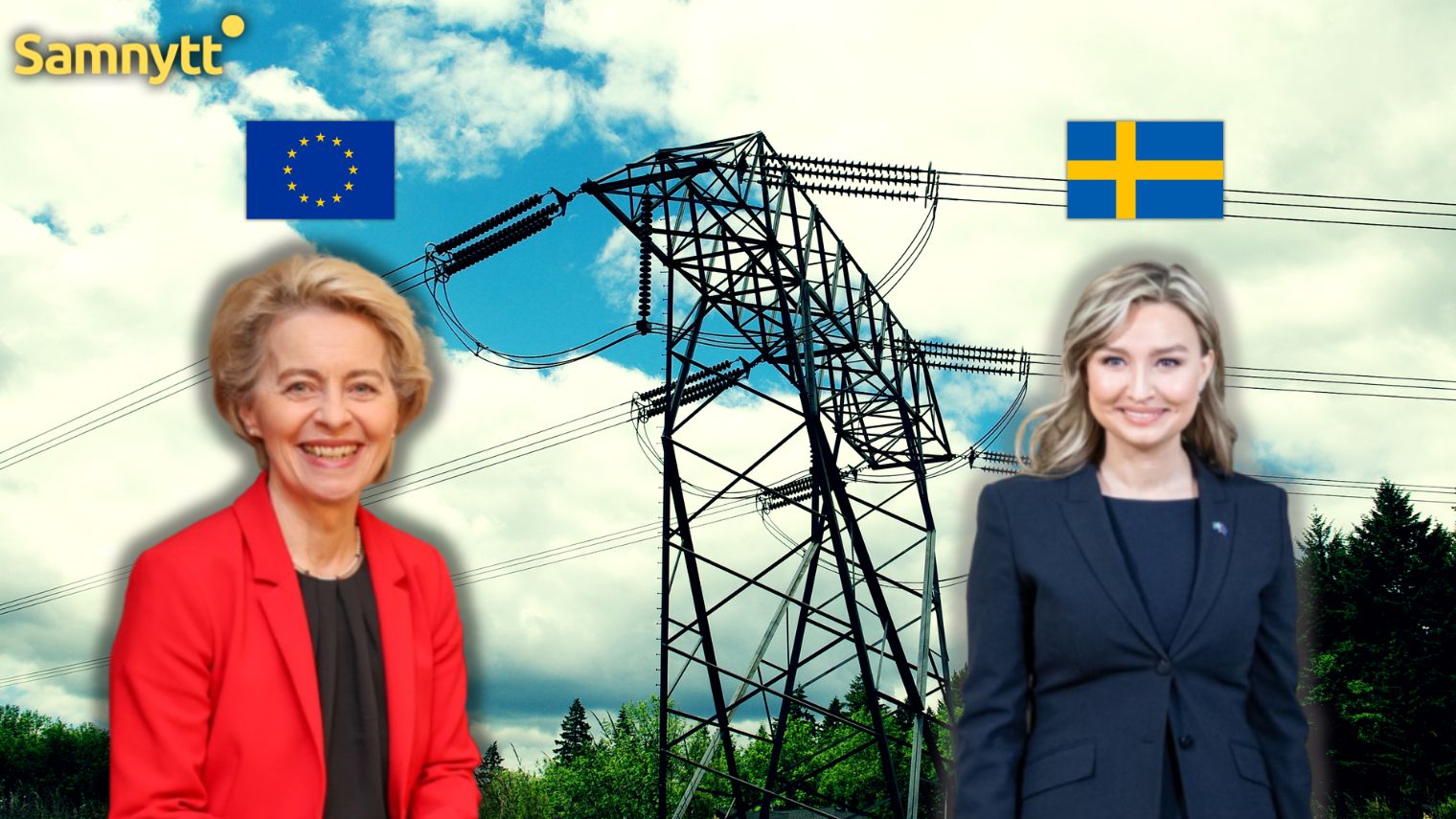
The EU’s controversial plan for how billions from Swedish electricity customers should be used has taken another step forward. EU energy ministers have now approved the updated network package – despite ongoing Swedish criticism that Brussels wants to gain more influence over the so-called congestion revenues.
Congestion revenues arise when electricity prices differ between various electricity areas and are intended to be used for expanding and strengthening power grids. In Sweden, these fees have led to Svenska kraftnät amassing tens of billions of kronor, money ultimately paid by Swedish electricity consumers.
When the EU Commission earlier this year presented its network package, it sparked strong reactions. The original proposal meant that up to 25 percent of member states’ unused congestion revenues could be directed to joint European grid projects. Since Sweden is one of the few countries with substantial internal congestion revenues, we risked becoming one of the largest financiers.
READ ALSO: EU proposal could be costly for Sweden
The criticism did not just come from the government but also from the business community. The argument was that the fees are levied on Swedish households and companies to solve capacity problems in the Swedish grid – not to finance infrastructure in other member states.
After negotiations, the proposal has been partially rewritten. The previous model with a direct requirement of 25 percent has been replaced with a gradual phase-in starting at ten percent, and certain domestic congestion revenues are exempted. However, critics argue that the fundamental principle remains: the EU still wants greater influence over how national funds are used.

Better, but Not Good
The government describes the changes as an improvement compared to the Commission’s original proposal but at the same time emphasizes that Sweden still opposes the EU regulating the use of the money.
Minister for Energy Ebba Busch (KD) has previously stated that the congestion revenues belong to Swedish electricity customers and that decisions on their use should be made nationally, not in Brussels.
The Swedish parliament has also raised objections to the Commission’s position and believes that the proposal contravenes the subsidiarity principle – the idea that decisions should be made as close to the citizens as possible. According to the parliament, congestion revenues should be used according to Sweden’s needs and priorities, not increasingly directed toward joint EU projects.
Sent Onward
The decision in the Council of Ministers does not mean the issue is settled. The package will now be handled by the European Parliament before final negotiations between the Parliament, the Council of Ministers, and the EU Commission can be concluded.
For Sweden, the battle therefore remains over how much influence Brussels will have over the billions paid by Swedish electricity customers via their electricity bills.
READ ALSO: SD: Sweden must fight the EU to stop supranational taxation