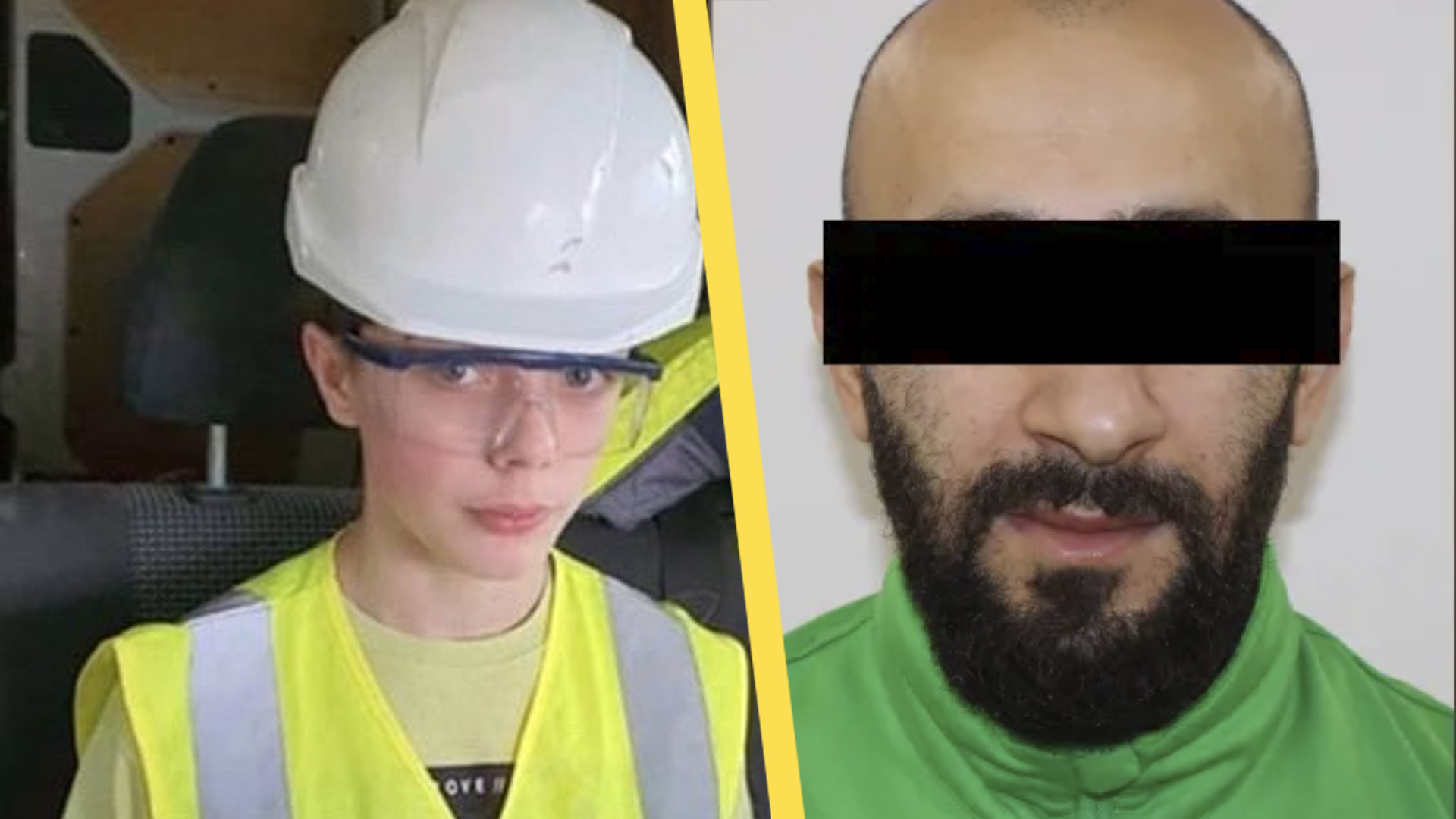
A 14-year-old boy has been found dead in Memmingen, Bavaria. The suspected perpetrator, Qais Saleh, was an asylum seeker with a deportation decision who was later shot dead during a police operation. The case has sparked renewed debate in Germany about shortcomings in the asylum system and the problems of carrying out deportations.
The 14-year-old German boy, Jermaine B., was murdered in what is described as an act in which he was nearly decapitated by a Palestinian asylum seeker earlier in May.
The German boy disappeared on May 2 and his body was found three days later in an abandoned building near Memmingen train station, reports Focus.
The suspected perpetrator was found hiding in a closet in the same building, reports the newspaper Bild.
When discovered, he attacked the police officers with a knife, fled, and was later confronted outside an indoor swimming pool. He again lunged at the police with a knife, and the officers shot him several times. He died in hospital.
Was a Palestinian
Qais Saleh is said to have been born in Judea/Samaria (the West Bank, editor’s note) and entered Europe via Greece in August 2017. According to regulations, Greece should have been responsible for his asylum process. The country also granted him protected status, but Saleh continued to travel through Europe.
The Arab man then applied for asylum in the Netherlands and Belgium. Both countries rejected his application, likely on the grounds that they did not consider themselves responsible for the case. In December 2020, he traveled on to Germany.
Even in Germany, it was soon clear that Saleh should actually have received protection in Greece. In such cases, asylum seekers can be returned to the EU country responsible for the case.
But Greece refused to accept him, pointing out that the so-called Dublin rules did not apply in his case. As a result, Germany was forced to handle the asylum process.
Deported but not deported
After the German migration office reviewed Saleh’s case, his asylum application was rejected in October 2022. After an appeal, the administrative court in Augsburg confirmed the decision. As of September 28, 2023, Saleh was required to leave the country.
Although Bavaria tried to have him deported, the authorities were unable to enforce the decision. The reason was that Saleh lacked a passport. Even though his background was considered known, his nationality could not be definitively established.
ALSO READ: Ukrainian girl fled the war – was murdered by illegal immigrant in Germany
In such cases, the alleged country of origin may refuse to take the person back. An official source tells Focus that refugees are aware that lacking a passport makes deportation more difficult and that identity documents therefore often “disappear.”
As a result, the deportation ultimately failed because Saleh did not have a passport. Instead, he was repeatedly granted temporary stays of deportation. The most recent extension was granted on February 18 for three months.
Deportations declining
The case has also highlighted the issue of how slowly deportations are progressing in Germany. According to Focus, the number of enforced deportations has clearly decreased. In the first quarter of 2025, 6,151 people were deported. In the corresponding period this year, the number was 4,807.
Saleh’s case does not seem to have been a top priority for the authorities. He had indeed been convicted of vandalism and of remaining in the country without a passport, but prior to the suspected murder in Memmingen, he was not regarded as a serious criminal.
After the incident, representatives of the government parties CDU/CSU have called for tougher measures. Alexander Throm, the union group’s spokesperson on domestic policy, points to the EU’s plans for so-called “return hubs” – centers where rejected asylum seekers are to await deportation.
– The EU is working on establishing return hubs, which should be able to be used in this kind of case, Throm tells Focus.
He also warns that deportations are always dependent on cooperation with countries of origin.
– All development aid or other support should be conditional on these countries taking back their own citizens, he says.
”Deeply shocking”
Marcel Emmerich, the Green Party’s spokesperson on domestic policy, is also calling for the “deeply shocking” case to be investigated. He wants answers as to why a return was not possible and whether the authorities had sufficient tools when identity or citizenship could not be determined.
However, he does not specify what concrete proposals the Greens have to solve the problems.
The case is now being highlighted as an example of how EU countries try to shift responsibility for asylum seekers. The upcoming European asylum reform is intended to create greater solidarity between member states, but it is unclear how well it will work in practice.
Another problem is court decisions that limit the possibilities for returns. As early as 2010, the European Court of Human Rights ruled that Greece had systematic deficiencies in its reception of refugees, which halted deportations to that country. In October 2024, the court reaffirmed its position in another case.
Even though the German Federal Administrative Court last year ruled that such deportations could be allowed, German authorities risked coming into conflict with European legal practice if they had tried to return Saleh to Greece.
Nothing is yet known about the background or a possible motive.
ALSO READ: Fled the war in Ukraine – murdered by a Syrian in Germany