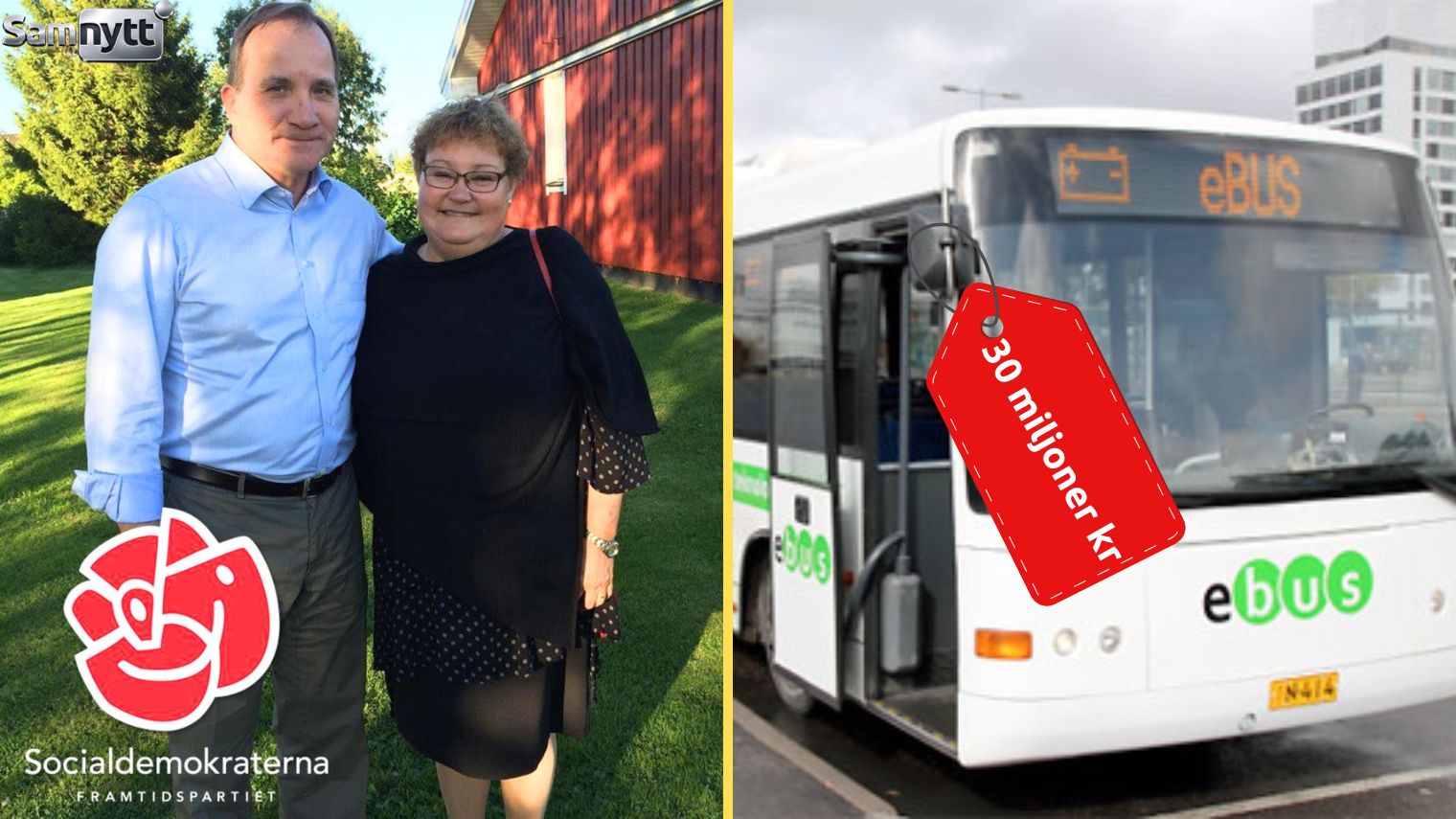
Since their delivery, the electric buses have cost the residents of Luleå Municipality tens of millions of kronor. After ongoing problems, they are now being scrapped. Despite the fiasco, authorities assure that the future is electric.
“Towards fossil-free operations by 2030,” reads in bold black letters on the website of Luleå Local Traffic, LLT.
“Taking public transport with LLT is better for the environment than driving by yourself, but even our traffic impacts the environment. Our goal is therefore to create public transport that affects the environment as little as possible. Join our journey towards fossil-free operations by 2030,” the statement continues.
LLT’s vehicle fleet consists of 81 buses, of which 52 run on diesel, 24 on biogas, and five on electricity “powered by green electricity from hydropower.” In 2025, the electric buses covered 21,790 kilometers. Since there is no combustion engine generating surplus heat to warm the cabin, an auxiliary diesel heater is required.
READ ALSO: Spectacular Fiasco for Electric Buses – Need Diesel to Operate
The electric buses were put into service in 2018 as part of an evaluation project aiming for a majority of the municipality’s buses to be electric in the future. However, they have since mostly been used as supplementary buses.
– We are immensely pleased and excited to offer Luleå residents an electric bus line, which is an important step in our sustainable development, said Karl-Johan Gramner, then CEO of LLT, in 2017.
While diesel and biogas buses ran smoothly, the electric vehicles faced far more issues, mainly concerning heating, charging, and ergonomics. Many drivers developed neck problems. The leasing contract runs until 2027, but the buses are now being sent to Estonia for scrapping. Since entering service, the buses have cost around 30 million kronor.
“Relieved to Get Rid of Them”
Ulf Nordin, head of production at LLT, is glad to see them go.
– I have to be honest and say that it’s quite a relief, actually, to get rid of them. It has been a project plagued by a lot of problems and challenges, he told national radio.
At the same time, he does not believe it will be the last time electric buses run on Luleå’s streets.
– Electric buses are the future, whether we want it or not, he adds. By the end of the 2030s, electric buses will account for 100 percent of buses on Luleå’s streets.
Social Democrats Politicians Praised the Investment
Already in 2024, it was reported that the electric buses had been withdrawn from service and were costing 50,000 kronor per month. According to an evaluation by LLT in 2023, the final bill for the project will land at 57 million kronor.
A key political figure in the decision to purchase the electric buses was then municipal commissioner Yvonne Stålnacke (S), who in 2016 presented the initiative as a project for the future. Back then, among other things, the plan was for Luleå to become a pioneer in electric public transport in cold climates. The cost at that time was 4.5 million kronor.
– Of course, it feels absolutely fantastic, said Stålnacke in 2016.
Yvonne Stålnacke’s then party colleague, who has since left politics, also supported the initiative and described it as an important step forward.
– We are very happy about the agreement with the electric buses. It is an important step in Luleå’s sustainable development. 2020 is pretty soon, and we need to work quickly, said Lenita Ericson (S), chairwoman of the city planning committee, in 2017.

Bankrupted
The electric buses were of the Finnish brand Linkker, which went bankrupt in 2024 with ten million kronor in debt. According to the company’s last CEO, Tom Granvik, they were ahead of their time when it came to technology.
– One big flaw was that the buses got cold while driving in winter. We didn’t have access to carefully tested and efficient heating systems. We also lacked the resources to have Linkker personnel onsite in Luleå for maintenance and repairs. That would have helped a lot, he told NSD in December 2024.
There were also problems with the charging stations from Polish company Ekoenergetyka.