The ongoing war in Iran is now beginning to hit Europe’s economy hard. The EU Commission is expected to soon lower its growth forecast, while inflation is projected to rise further. But despite soaring energy prices and growing concerns about economic stagnation, Brussels emphasizes that the crisis must not lead to increased demand for fossil fuels.
The background is the growing anxiety that the conflict in the Middle East has caused in the energy market. With the Strait of Hormuz still closed, the price of oil has remained above $100 per barrel, putting pressure on businesses and households throughout Europe.
Dombrovskis describes the situation as a so-called stagflation shock—a scenario where the economy slows down while prices continue to rise. This is a scenario that has long worried economists since it makes it more difficult for politicians and central banks to stimulate the economy without simultaneously fueling inflation.
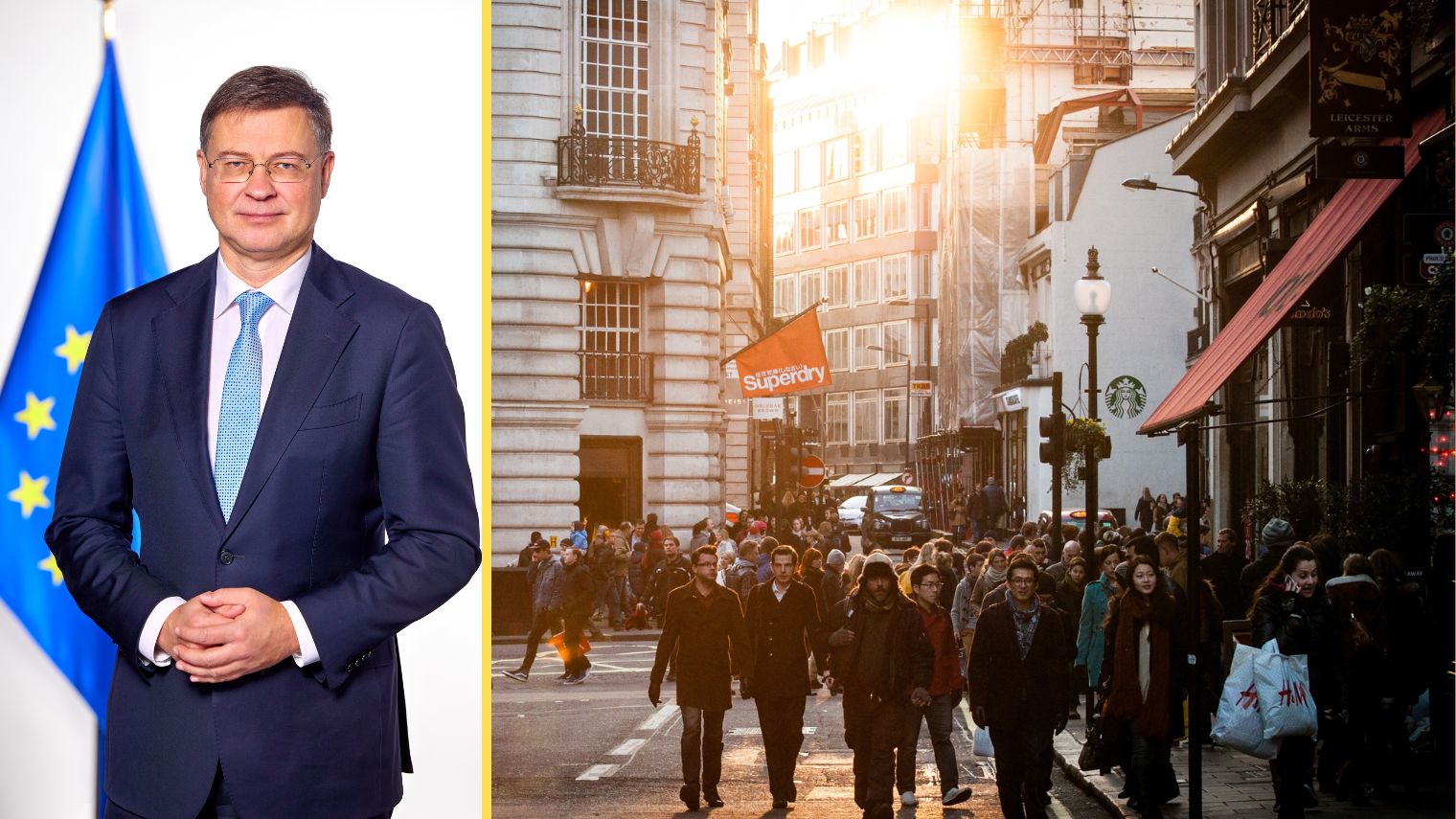
“We are facing a stagflation shock,” said EU Economic Commissioner Valdis Dombrovskis to CNBC.
The EU’s new spring forecast, which will be presented later this week, is thus expected to show lower growth than previously estimated. At the same time, inflation is projected to be higher than previously anticipated.
According to Dombrovskis, the possibilities to meet the crisis with large support packages are also more limited than during the pandemic. He argues that the EU must be cautious with measures that risk increasing dependence on fossil fuels even further.
READ ALSO: Expert warns: The oil chaos could be worse than the 1970s crisis
Meanwhile, concerns over energy shortages are growing. Several analysts have warned that the world’s oil stocks are decreasing rapidly and that inventories could remain strained for a long time ahead. The International Energy Agency has also sounded the alarm that :censored:6:cdd6bbaa89: reserves are dropping at a record pace, paving the way for new strong price increases.
READ ALSO: Sweden and EU agree: Promise to cover Ukraine’s economic needs
The EU has already started using parts of its strategic oil reserves to mitigate the effects of the crisis. But according to Dombrovskis, the risk of bottlenecks and shortages increases the longer the conflict lasts.
At the same time, he stresses that Europe’s response to the crisis must not lead to increased demand for fossil fuels, despite the acute situation on the energy market.