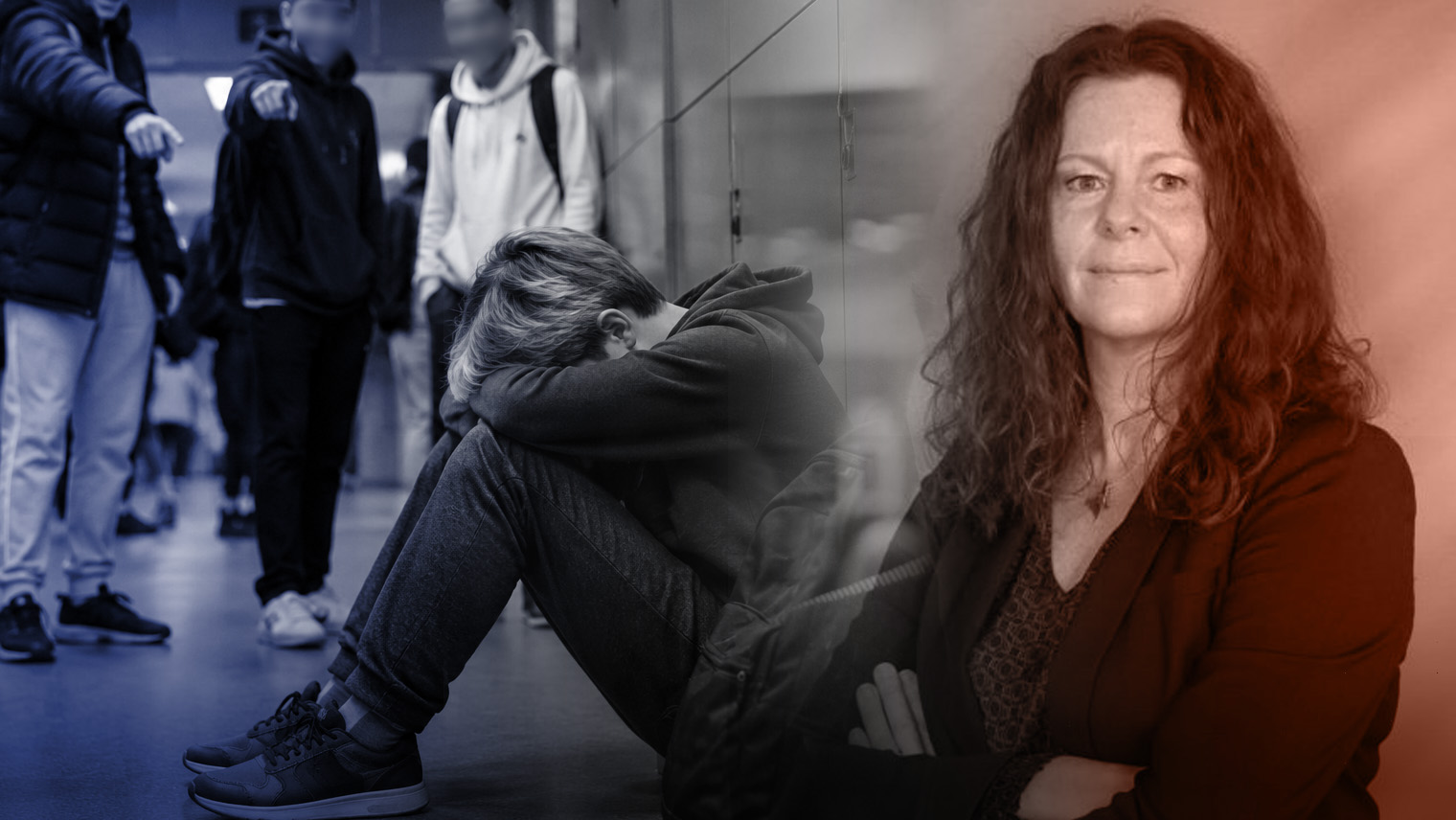
Swedish schools today are characterized by language problems, threats, dominance behaviors, and students who, according to some teachers, do not accept female authorities. At the same time, school administrations back down out of fear of conflicts and accusations of racism. This is according to secondary school teacher and Sweden Democrat politician Maria Liljedahl, who in an interview with Samnytt describes how, in her view, immigration has fundamentally changed the culture of schools.
In an interview with Samnytt, secondary school teacher and Sweden Democrat (SD) politician Maria Liljedahl in Köping describes how immigration has changed the culture in schools—not just linguistically and academically, but also socially and hierarchically.
– I believe a very large part has to do with immigration. It has incredibly changed the culture in schools, she says.
Liljedahl believes that respect for the teacher’s role has significantly deteriorated and that certain types of behavior have become much more common as the student composition has changed.
ALSO READ: Mass immigration, feminism, and chaos – how the Swedish school was crushed
– Something that was not experienced before, except perhaps with a few students, is this dominance behavior that exists now. And it’s almost at the point where our students are more exposed to it, she says.
She also believes that this dominance behavior is already visible in lower and middle school.
Are Swedish students the ones most exposed to this dominance behavior?
– Yes, it’s Swedish students, but also Christian students from other countries. They have created a hierarchy. For us, this is very strange.
ALSO READ: Report: Swedish students most exposed to threats and violence at school
Can you say this is a Muslim dominance behavior?
– Yes, exactly. But this doesn’t apply to everyone. It depends a bit on where people come from and what kind of families they are from. There are also many good Muslims who are trying to do their best and want to move forward.
I would probably say Somalia is the biggest problem.
Maria Liljedahl (SD), secondary school teacher
She describes gang formations and that these more moderate Muslims get pulled in—children and youths who probably wouldn’t have acted this way otherwise, she believes.
Many teachers describe being afraid of certain students and their families and clans—do you recognize this situation?
– There are a few here in Köping, but not as widespread as I’ve heard about in other places—and we have a higher proportion of immigrants here than in other municipalities.
ALSO READ: Parents outraged: Preschool forces children into Muslim celebration
Is it cultural that some students have trouble accepting orders from female teachers?
– Yes, exactly, but I would say Somalia is the biggest problem.
They could hang kids out the windows and shout “whore” and stuff like that at mothers coming to pick up their children. There’s simply no respect for women anywhere.
Maria Liljedahl (SD), secondary school teacher
According to Liljedahl, the problem is not that Swedish schools have many female teachers in themselves—but that schools now face student groups where female authority is questioned.
Do you think Swedish schools have become too feminized to meet this problem?
– This is a problem that shouldn’t be here. It shouldn’t have happened to the Swedes. It’s an imported problem. She continues:
– It doesn’t matter who is teaching you. If it’s a good teacher, then it’s a good teacher and also a teacher you need to obey, she says.
ALSO READ: Study: Muslim students experience vulnerability at school
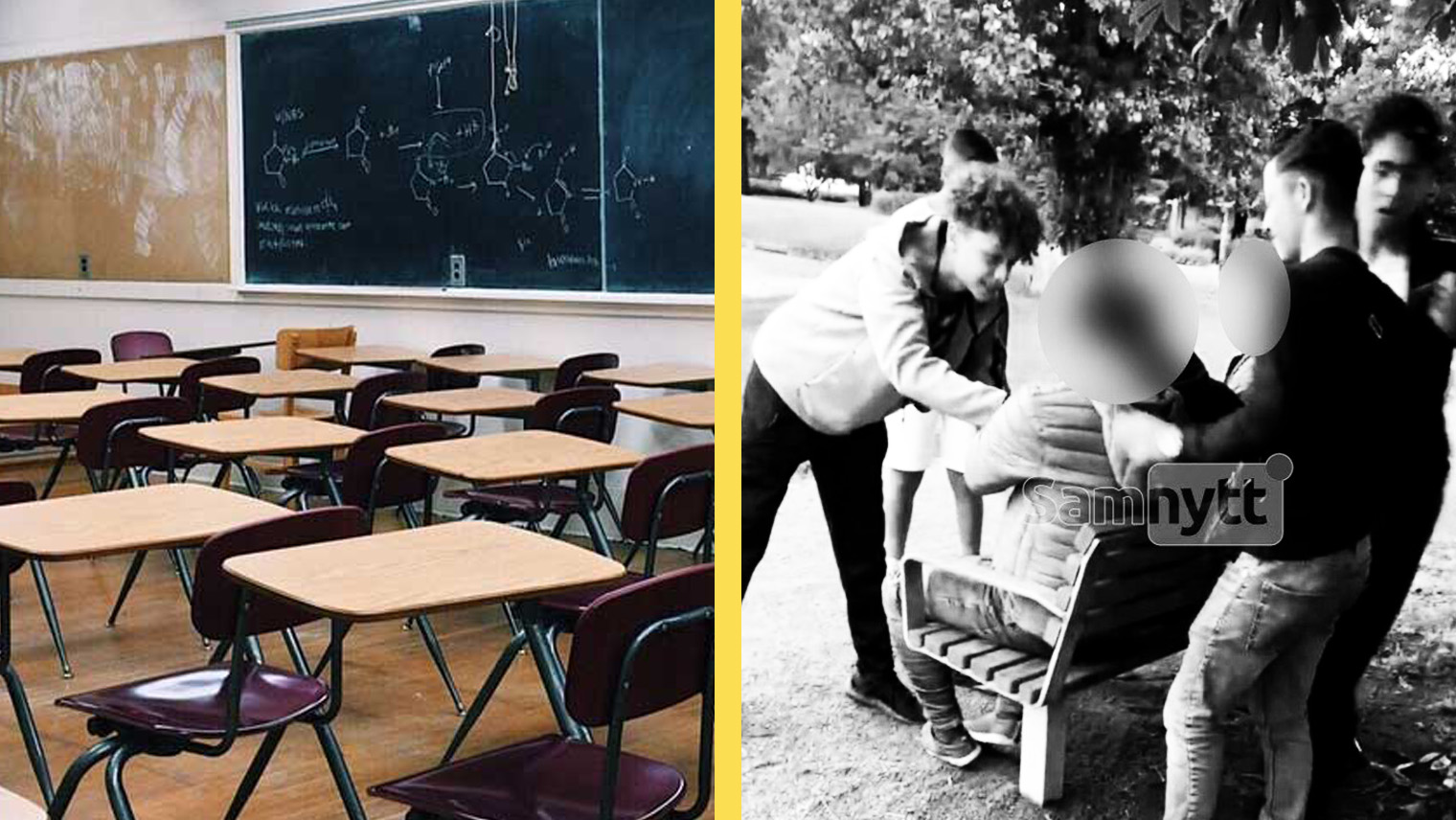
She also recounts incidents where women have been harassed near schools.
– They could hang kids out windows and yell “whore” and such things at mothers picking up their children. There’s simply no respect for women anywhere, she says.
If we had more male teachers in schools, do you think it would be easier to curb these problems?
– Maybe. But I’m not entirely sure, because they would still be Swedish teachers.
How would you comment on several male teachers being suspended after trying to stop aggression in the school environment?
– It’s cowardice from principals and headmasters—since the legislation is a bit different now, we have more authority to keep order and actually deal with students who disrupt.
“We simplify the language”
Liljedahl also describes how language problems affect teaching far more than many outside of schools realize. Not just in communication with parents, but in the actual acquisition of knowledge.
– You really have to think about how you express yourself so that it’s understandable for everyone. Sometimes you have to go down to a much lower level than you otherwise would have needed, she says.
ALSO READ: Language requirements in preschool: No one approved
As an example, she mentions how students lack basic frames of reference that previously were taken for granted.
– You can be completely sure that everyone knows what a hedgehog is. Or which flower you’re talking about. And then suddenly there are students who don’t understand, she says.
But you also have a mission in that you’re the one who decides in the classroom and if you start compromising too much and believe that this—what has been happening for many years—that it should be about student influence and such things, that student influence means students get to decide what happens in the classroom and how the environment is there and what the culture should be in there. Then you’re completely off track. You’re not supposed to be a buddy, just as little as you should just be friends with your parents.
Maria Liljedahl (SD), secondary school teacher
The consequence, according to her, is that teaching is simplified for the entire class—which also negatively affects Swedish students.
– Even if some are born here in Sweden, they can have an incredibly poor vocabulary. The teacher continues:
– We’re becoming simpler in language. And that’s not good. When we go down a level, it means we can’t challenge other students properly, she says and continues:
– It also means Swedish students get a poorer vocabulary—and they get worse at “reading between the lines.”
ALSO READ: Survey: Parents worry about threats and violence in school
She also describes how parent-teacher conferences and urgent situations become more complicated when parents don’t speak Swedish.
– If you have an incident and must call quickly, it’s a problem. We’re lucky to have Arabic-speaking staff who help us sometimes, but if a school doesn’t have those resources it’s much worse, she says.
Over the years, Samnytt has highlighted chaotic and violent situations in Swedish schools through several articles and video reports. Below is a video clip reported by Samnytt in 2023, showing a fight in a high school in Karlstad—in front of teachers and other students:
Are more gifted students held back from developing?
– Yes, it’s harder to challenge those who have better abilities, that’s just the way it is.
The conversation also touches on the growing debate about compulsory schooling versus compulsory education—where a major paradox becomes evident. Criticism against today’s schools comes from two very different directions.
Many Swedish parents react against what they perceive as an increasingly ideological school, characterized by value-based work, gender pedagogy, and political education rather than knowledge.
Therefore, support for greater freedom and various forms of compulsory education or homeschooling is growing. At the same time, just such a system could have the opposite effect in some immigrant environments, where children risk becoming even more isolated from the Swedish language, Swedish norms, and the surrounding society, and perhaps only be taught the Quran.
– That would be devastating, says Maria Liljedahl.
The result is a strange situation where the same solution appeals both to Swedish families wanting to escape ideological influence—and to groups wanting to reduce contact with Swedish society altogether.
Below follows another noted video clip showing when a teacher intervened against a student at Ringsjöskolan. The teacher, Paul Carlbark, was then working as a playground supervisor and reacted when an older student misbehaved towards other students at the school.
READ MORE: Teacher attacked by immigrant student—was fired
The incident attracted widespread attention and ended with Carlbark leaving his position. See the video:
“They’ve gotten very soft”
At the same time, Liljedahl criticizes how Swedish schools and principals handle disciplinary problems. She argues that many adults back down out of fear of conflicts, complaints, or aggressive parents.
– They’ve gotten very soft. I’ve seen it myself, she says.
ALSO READ: Dagerlind: Schools should foster knowledge—not ideology
She describes how the very same behavior can be treated differently depending on which student is involved.
– You know that if it had been another student who had done exactly the same thing, that student would really have been called out for it. But then it’s someone else who does it, and people go soft instead, she says.
According to Liljedahl, much clearer authority is needed in classrooms—and that teachers dare to stand their ground when students test boundaries.
– You really need to stand your ground. And it’s when you show you won’t give in that you actually get a good relationship with the students, she says.
Words like “racism” and “Islamophobia” used routinely
You’ve said that relationships in the classroom are important, but where is the line between relationship and authority? Has Swedish school lost respect for the teacher’s role?
– Yes, many probably have. I would say it’s really up to certain individual teachers who don’t realize you can have a relationship where you show you care for your students and that your job is to get them further in life and to make sure they learn things and that you treat it seriously as your task to ensure that if they’re open to learning things, you’ll work hard for them to do so. She continues:
– But you also have a mission in that you’re the one who decides in the classroom, and if you start compromising too much and believe that this, what’s been done for many years, should be about student influence and all these things. Liljedahl elaborates:
– That student influence means students get to decide what happens in the classroom and what the environment should be like there and what the culture should be inside. But then you’re completely off track. You’re not supposed to be a buddy, just as little as you should just be friends with your parents. The teacher continues:
– I think that’s where it goes wrong and I think many also don’t stand up when some students start with dominance behavior. You really need to stand your ground. And then you also need the support of the principal for that.
Right now, the students we have from the Middle East aren’t that incredibly criminal. So, we don’t have such big problems, unlike other secondary schools.
Maria Liljedahl (SD), secondary school teacher
Maria Liljedahl also brings up a concrete example from her own teaching experience to describe how accusations of racism can be used as a way to shift focus from student behavior. She tells of a student who disrupted and caused trouble in the classroom and eventually accused her of being racist.
When Liljedahl asked what the student actually meant by the word, it turned out, according to her, that “racist” in practice meant that an adult had gotten angry or told the student off after they did something wrong. At the same time, other students in the classroom directly defended the teacher.
For Liljedahl, the incident was an example of how terms like racism and Islamophobia are used routinely in the school environment—not as thoughtful accusations, but as a way to push back against authority or avoid responsibility for one’s own behavior.
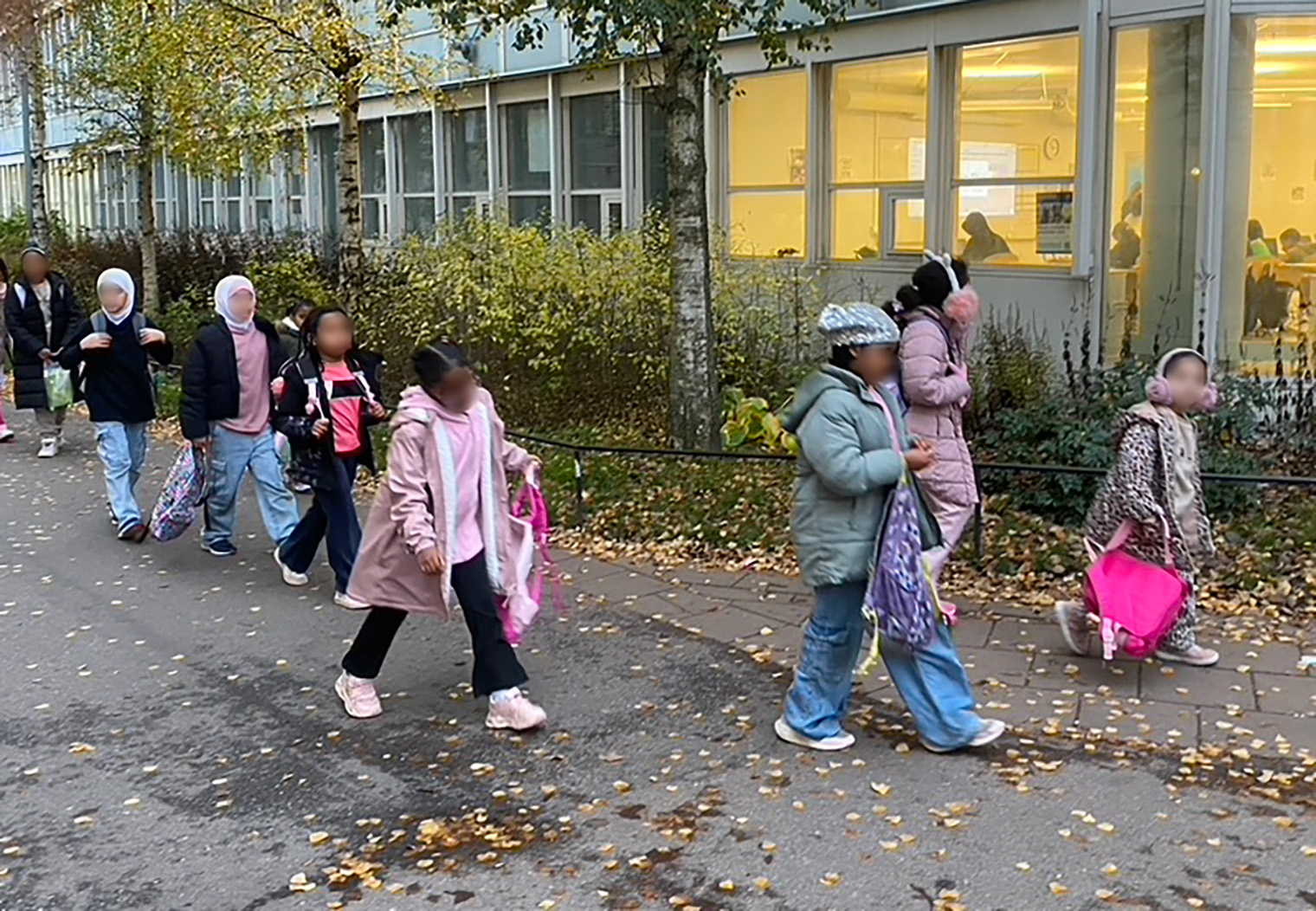
She further says that she is currently at a school with few Somali students and therefore the problem isn’t as big anymore.
– Right now the students we have from the Middle East aren’t that incredibly criminal. So, we don’t have such big problems, unlike other secondary schools.
You say they are not very criminal, what do you mean by that?
– Yes, it’s not as bad anymore…, so now if there are some who are a bit…, it’s a big difference from when drugs were sold at the school. I would say there are probably very few criminals at the school today.
“Boys need teacher-led instruction”
Liljedahl also argues that today’s curriculum disadvantages boys and rewards traits that girls generally develop earlier.
– It rewards traits that boys develop later. When you have to reason and do all those things. It’s not at all connected to knowledge in the same way, she says.
ALSO READ: National Audit Office: The school’s scientific basis at risk
She is critical of pedagogy where students are expected to work independently and organize their own learning.
– Boys need teacher-led instruction, she says.
She also describes the simple practice that lessons used to be signaled by a bell.
– It created a totally different dynamic in the school when students knew what to follow. It becomes more structured for the boys, who need it more militaristic. In other words, order and discipline. Today everything just floats, she says.
If she herself could change Swedish schools without regard to political correctness, she would focus on discipline, structure, and authority.
– I would first make sure to increase authority and bring back more teacher-led instruction, she says.
She ends with a comment on how far, in her opinion, the teacher’s role has drifted from its original mission.
– Teachers should be allowed to be teachers and not deal with that crap, says Maria Liljedahl.
ALSO READ: Mass immigration, feminism, and chaos – how the Swedish school was crushed
???? Together we make Samnytt grow
We are very grateful to all of you who read Samnytt every day. Your engagement makes our work possible.
If you are not already a subscriber—please consider joining and help us continue to grow, develop, and deliver important news and investigations.
Your support makes a difference.
123 083 33 50
Swish any amount
Thank you for reading and supporting ????