
NEWS COLUMN • Vivalla is referred to as a ‘particularly vulnerable area’. But it only took a few minutes on site before the body understood that the language refuses to acknowledge it. It wasn’t the area that was vulnerable – it was me. In Sweden, we have learned to speak softly about harsh realities, to use careful words to shift responsibility and power. This column is a personal account of how insecurity actually feels, how language is used to make it invisible – and why the truth eventually becomes the most uncomfortable of all.
There is a strange inversion in Sweden today. The more dangerous a place is, the softer the language becomes. Vivalla is called a ‘particularly vulnerable area’. It sounds like something that needs care and special attention. In practice, it means something entirely different.
I went there and felt vulnerable. At times, even particularly vulnerable.
READ MORE: ‘This is no longer Sweden’ – a tour of Vivalla
Not in any symbolic sense. But concrete. Physical. In the body. In how I moved, how I was looked at, how I stood out without doing anything at all. I didn’t need to say a word. Just being there was enough.
It is important to say this outright, because it is never said otherwise – it was me who was the deviation. Not the area. Not the norm. Me.
And this is where language steps in again – not to describe reality, but to protect it from having to be acknowledged. Because in Sweden, there is in practice a strange taboo. Racism against Swedes is considered not to exist. Not legally, not culturally, not linguistically.
In Vivalla, I noticed how this takes physical form. How someone perceived as Swedish moves with a different vigilance. How suddenly no longer part of the norm, but regarded as something foreign. Here one can really talk about xenophobia. And at the same time, we are expected to accept this as a non-issue, because our academically shredded language has already determined that it cannot be racism.
Jonas Andersson
One cannot be convicted of incitement against ethnic groups directed at Swedes, because the Swedish people – strangely enough – are not considered an ethnic group in the legal sense. At the same time, both religious identities and gender identities are considered protected ethnic groups. Transsexuals are considered an ethnic group. Muslims are considered an ethnic group. But Swedes – the majority population in their own country – fall outside.
READ ALSO: Kista: Here Sweden was to build the future – now companies and Swedes flee
The consequence is not theoretical. It is felt in the body in areas like Vivalla.
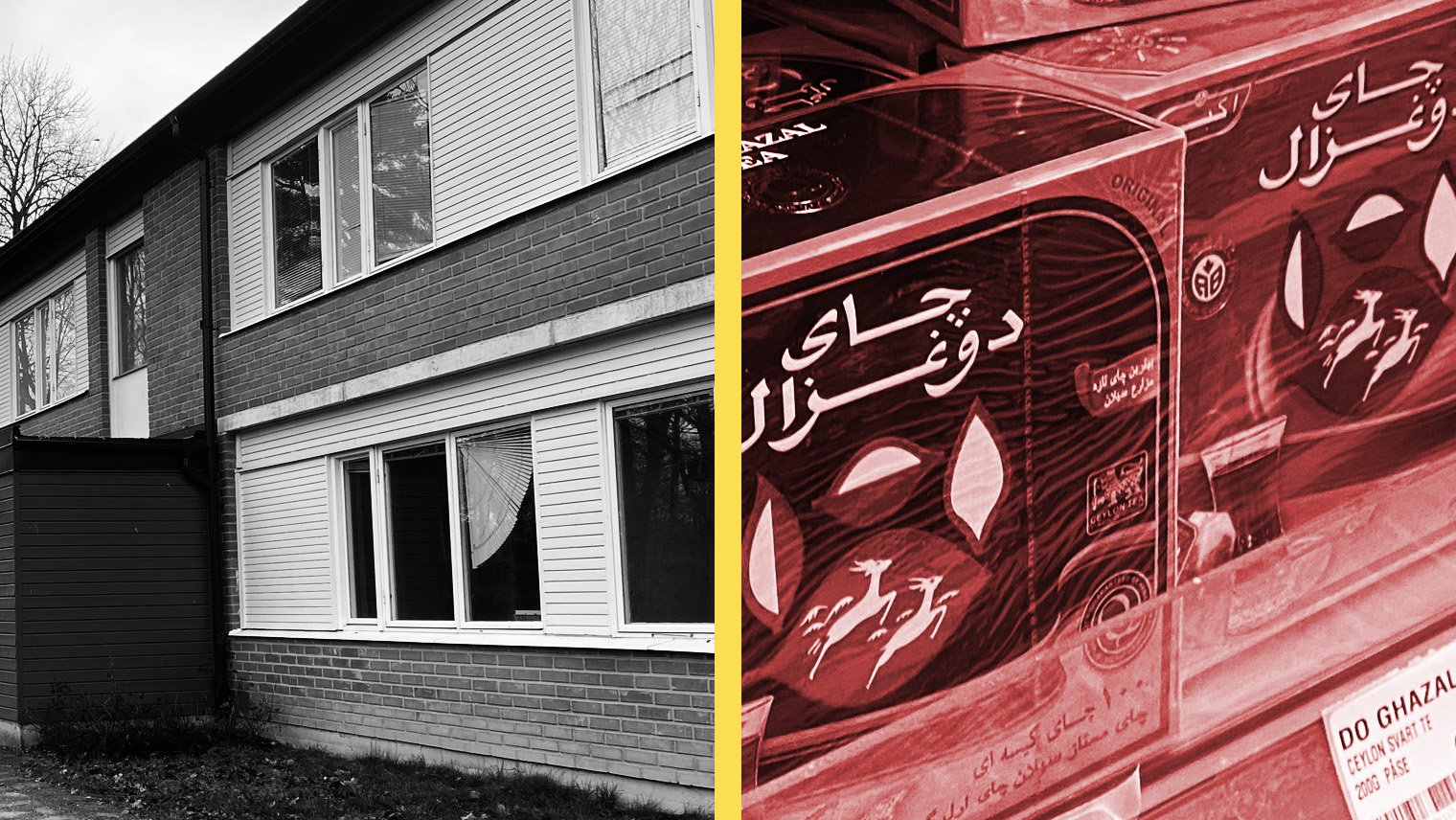
It is a vulnerability that cannot be measured, precisely because it arises before anything has actually happened. It resides in the muscles, in breathing, in how the gaze seeks exits. In how one suddenly begins to count seconds and distances, rather than taking in the surroundings. This kind of vulnerability lacks language in Sweden today – and therefore also lacks recognition.
When I stood outside the mosque in Vivalla, the attack on Bondi Beach had not yet occurred. But other images were already there. Other events. A long series of violent acts carried out in the name of Islam – in Europe, in Sweden, in the USA, on streets and squares that were previously considered ordinary and safe. It was these experiences, this collective memory, that lay as a silent backdrop to my vigilance.
Jonas Andersson
Because when language and the law signal that certain groups lack value, then everyday life also changes. Then it becomes entirely possible to speak disparagingly, threateningly, or aggressively about Swedes without it being considered racism – while any attempt to describe insecurity quickly can be labeled as racist.
It is a perfectly inverted order.
READ ALSO: The elite hides behind walls – the people pay the price for their multiculturalism
A society where vulnerability is felt – but not acknowledged
In Vivalla, I noticed how this takes physical form. How someone perceived as Swedish moves with a different vigilance. How suddenly no longer part of the norm, but regarded as something foreign. Here one can really talk about xenophobia. And at the same time, we are expected to accept this as a non-issue, because our academically shredded language has already determined that it cannot be racism.
Here, language does not function as a tool for understanding, but as a filter. It sorts out certain experiences before they have been formulated. What does not fit into the theory becomes invisible – and what becomes invisible soon ceases to be considered real.
Islam is present everywhere. Almost all women wear niqab or hijab, I also see a little girl sitting and drawing outside the library in a veil. When I photograph in a public place, against the houses and trees along the road, two black-clad women in hijab start shouting threateningly:
– You can’t take photos here!
– Now I’m getting angry!
READ ALSO: The giant mosque in Skärholmen: Secret financing, Islamist connections – and concern among residents
After that, they took out their phones and called someone or several people at the same time while glaring threateningly at me. I quickly walked away from there.
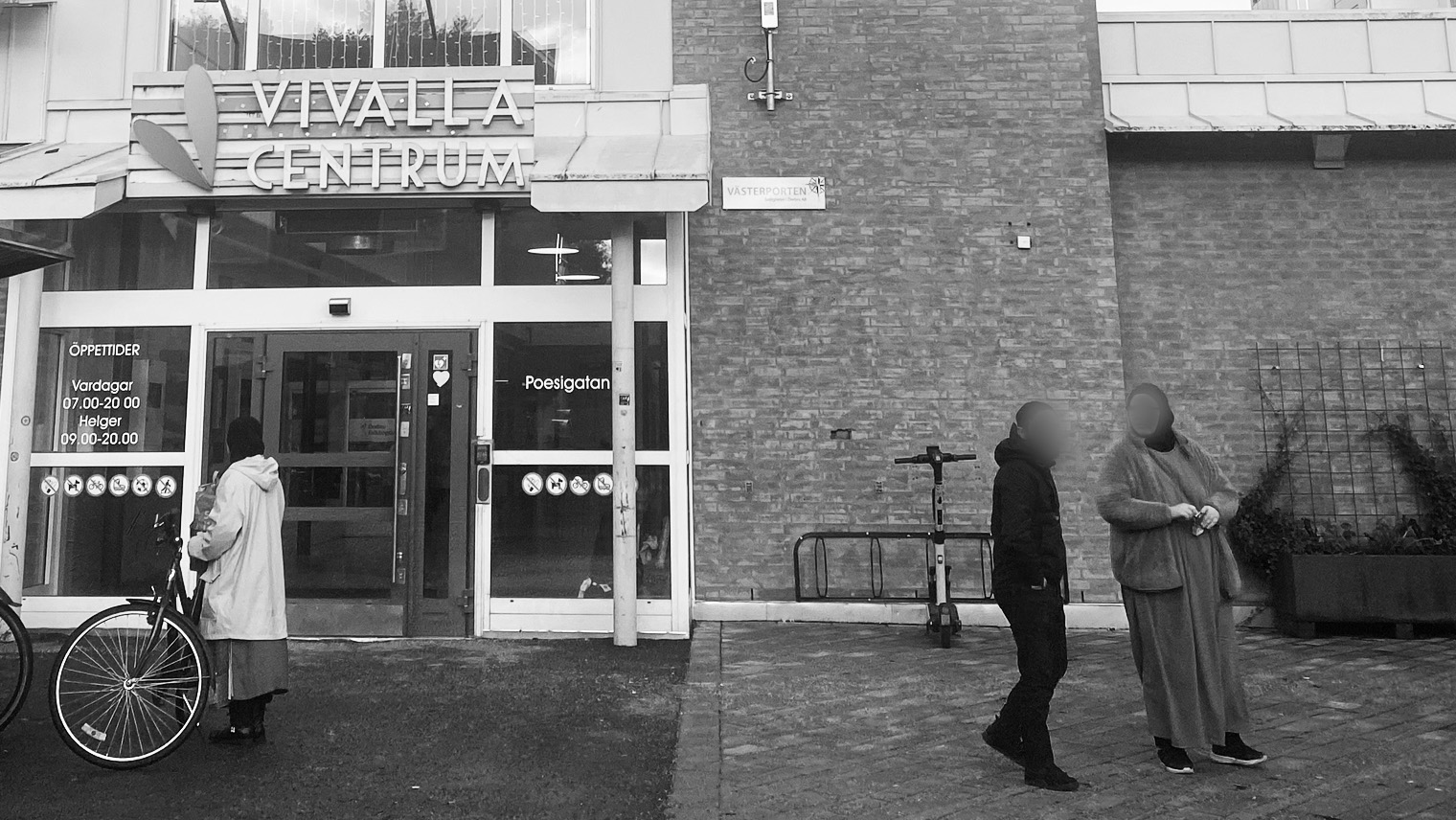
Almost only Muslim women and older non-European men are visible in Vivalla center, where several store premises are empty and the police station is permanently closed. I find the younger men outside the mosque, which is housed in a villa a few hundred meters away.
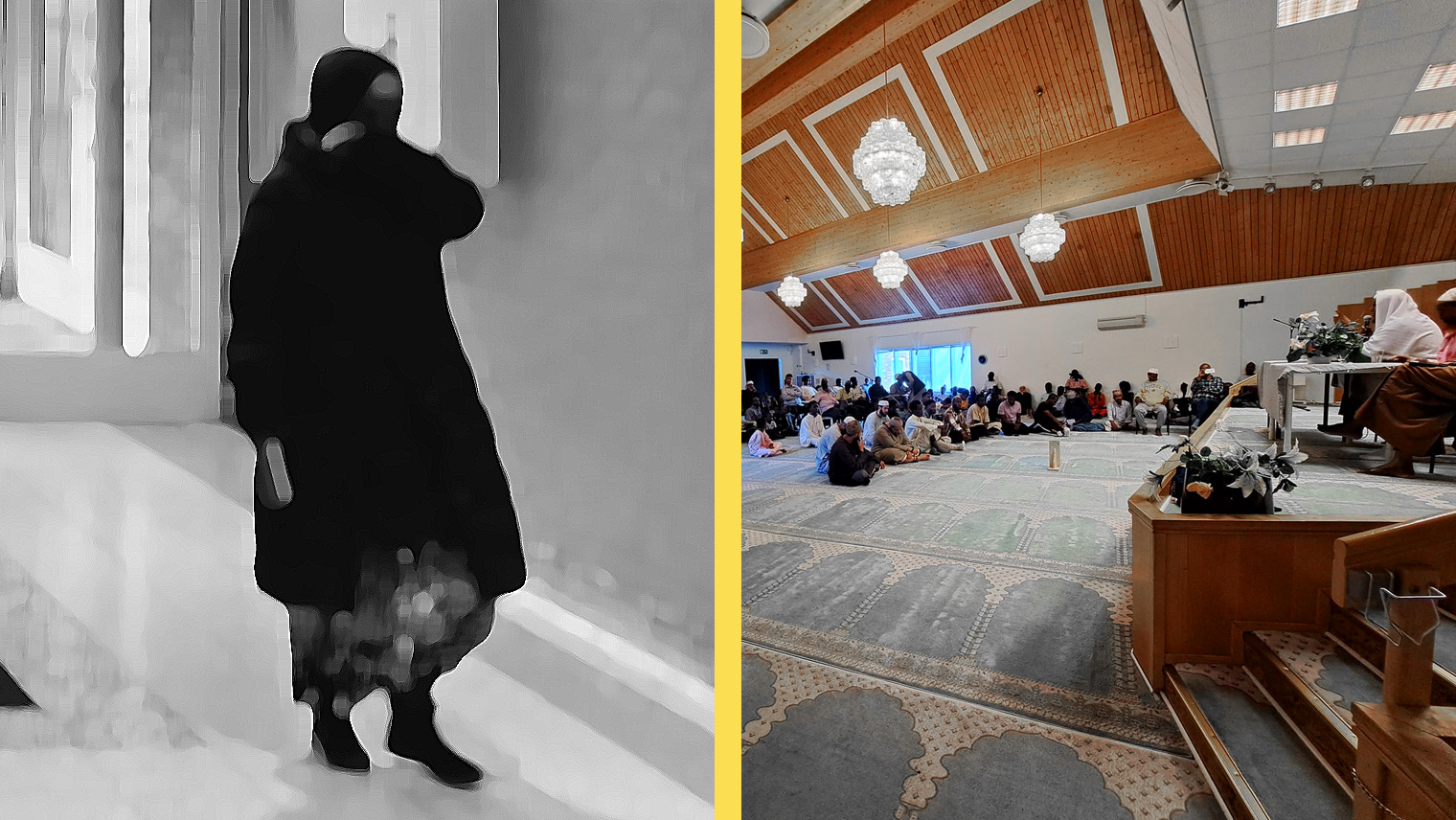
Here I see the men coming in a steady stream from the entrance, and as they pass me, their gazes are dark and suspicious. I dare not take out the camera in this environment, especially not when I stood in the very place where a person was shot earlier this fall.
When I stood outside the mosque in Vivalla, the attack on Bondi Beach had not yet occurred. But other images were already there. Other events. A long series of violent acts carried out in the name of Islam – in Europe, in Sweden, in the USA, on streets and squares that were previously considered ordinary and safe. It was these experiences, this collective memory, that lay as a silent backdrop to my vigilance.
READ ALSO: The lost districts: ‘You hardly see any Swedes here’
This becomes particularly clear when someone actually breaks this linguistic discipline. When Donald Trump and his administration speak plainly about the demographic, cultural, and security consequences of mass migration from the Middle East and Africa to Europe, it is not met with reasoned arguments – but with moralizing rage. The tone is condemned, while reality is left aside.
Jonas Andersson
When the attack on Bondi Beach then occurred – on a beach that for many symbolized the most relaxed and open in Western lifestyle – it became clear how rational that vigilance had been. How quickly places can transform. How little is required for everyday life to become the exception. And how dangerous it is to afterwards call vigilance fear, when it actually was about recognizing patterns.
Terrorattacken i Sydney
Den 14 december 2025 inträffade en terroristattack vid Bondi Beach i Sydney under firandet av den judiska högtiden chanukka. Två beväpnade män öppnade eld mot en folkmassa som deltog i ett offentligt evenemang. Händelsen har beskrivits som ett av de dödligaste terrordåden i Australien på decennier och har väckt starka reaktioner världen över.
Fakta om attacken:
- Minst 15–16 personer dödades, däribland barn.
- Omkring 40 personer skadades.
- Gärningsmän: Två beväpnade män.
- En gärningsman sköts ihjäl av polis på plats.
- Den andra gärningsmannen greps allvarligt skadad.
- Dådet betecknas som ett antisemitisk, islamistiskt terroristangrepp, riktat mot den judiska gemenskapen.
Attacken har väckt starka reaktioner både nationellt och internationellt, och myndigheter har intensifierat säkerhetsåtgärder vid offentliga evenemang efter händelsen.
I thought several times; What happens if something happens here? I understood something more fundamental – that I was in an area where the social order I take for granted no longer applied to me.
READ ALSO: Among the high-rises and concrete where Sweden fell apart
This is what ‘particularly vulnerable’ means in practice. Not that the place is a victim, but that certain people are. But it cannot be said outright, because the entire Swedish narrative would then collapse.
When plain speech is condemned – and denial is defended
We have created a society where language no longer protects people, but protects beliefs. Where words are used to conceal power shifts rather than describe them. Where the one who feels threatened is expected to remain silent, and the one who speaks out about the obvious risks becoming the problem themselves.
This becomes particularly clear when someone actually breaks this linguistic discipline. When Donald Trump and his administration speak plainly about the demographic, cultural, and security consequences of mass migration from the Middle East and Africa to Europe, it is not met with reasoned arguments – but with moralizing rage. The tone is condemned, while reality is left aside.
In Sweden, the so-called foreign policy elite leads this denial. Carl Bildt, once a statesman but now reduced to a constantly tweeting commentator without responsibility and without contact with reality, condemns Trump with a self-assurance that only someone who never has to answer for the consequences of their own policy can exhibit.
For Bildt and his ilk, migration is always an abstract project, always someone else’s problem, always far from the places where people actually live with the result.
It is a recurring pattern – in Sweden, words about reality are considered more dangerous than reality itself.
I left Vivalla with a clear insight. What is ‘particularly vulnerable’ in Sweden today is not certain residential areas.
It is the truth – when it hurts so much that it threatens the entire self-image, the entire language, and everything that is now called the Swedish condition.