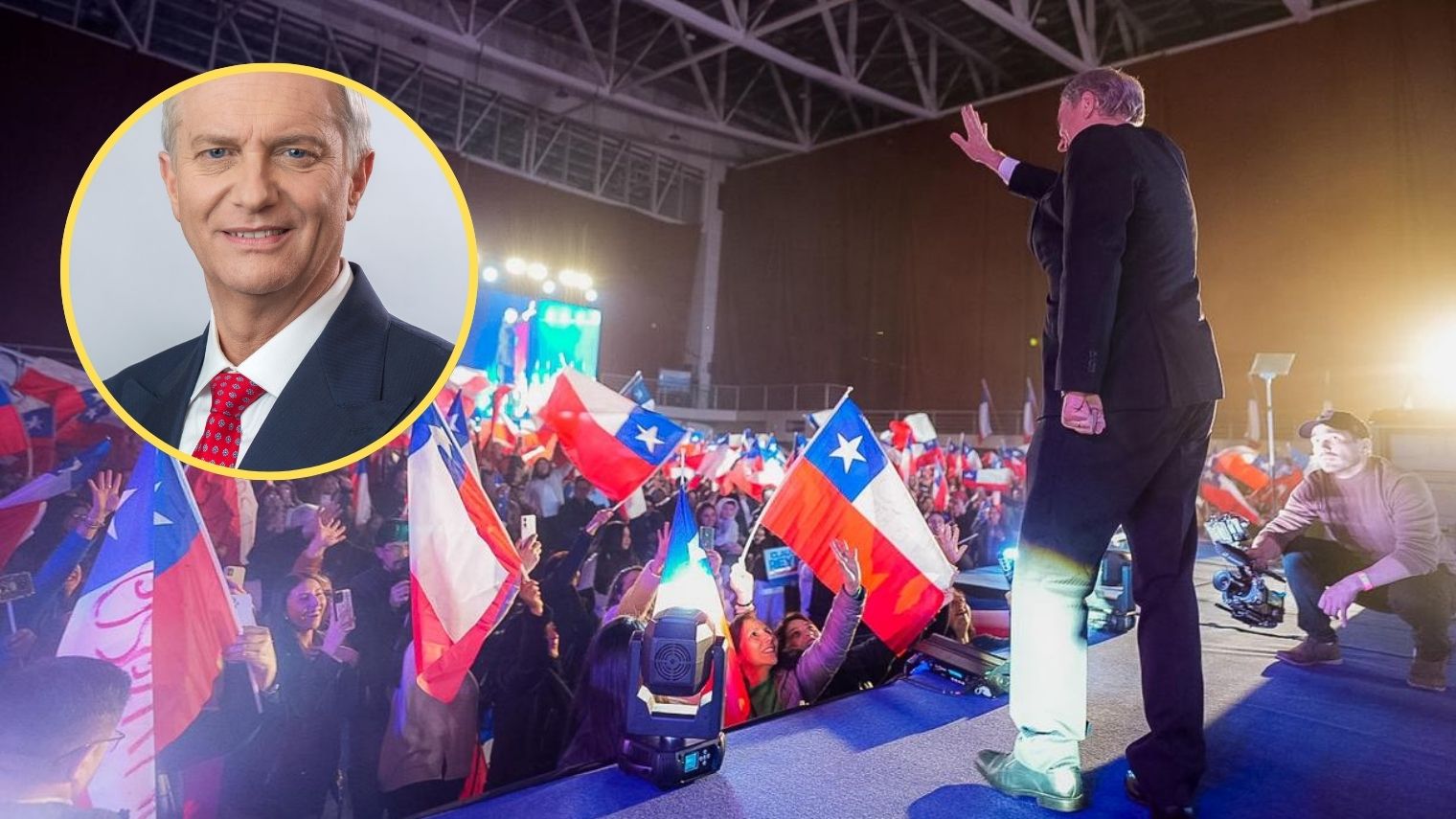
With almost all votes counted on Sunday, it is clear that the conservative candidate José Antonio Kast wins with almost 60 percent of the votes. He defeats the former Minister of Labor, Jeannette Jara, a communist representing the ruling center-left coalition.
Another Latin American country abandons socialism and communism. In the weekend’s presidential election in Chile, the support for German-descended José Antonio Kast lands at 58 percent. Previously, he has advocated for issues such as lower taxes, shrinking the state, anti-abortion policies, and combating illegal immigration.
When he ran in the presidential election in 2017, he barely received eight percent of the votes. This time, on his third attempt, he fared better and Kast becomes Chile’s 38th president.
Shortly after the polling stations closed, Jeanette Jara and her coalition conceded defeat.
READ ALSO: Argentina’s President Javier Milei Succeeded in the Midterm Election
“Democracy has spoken loud and clear. I have just spoken with the incoming president to wish him success for the good of Chile,” Jara wrote on social media.
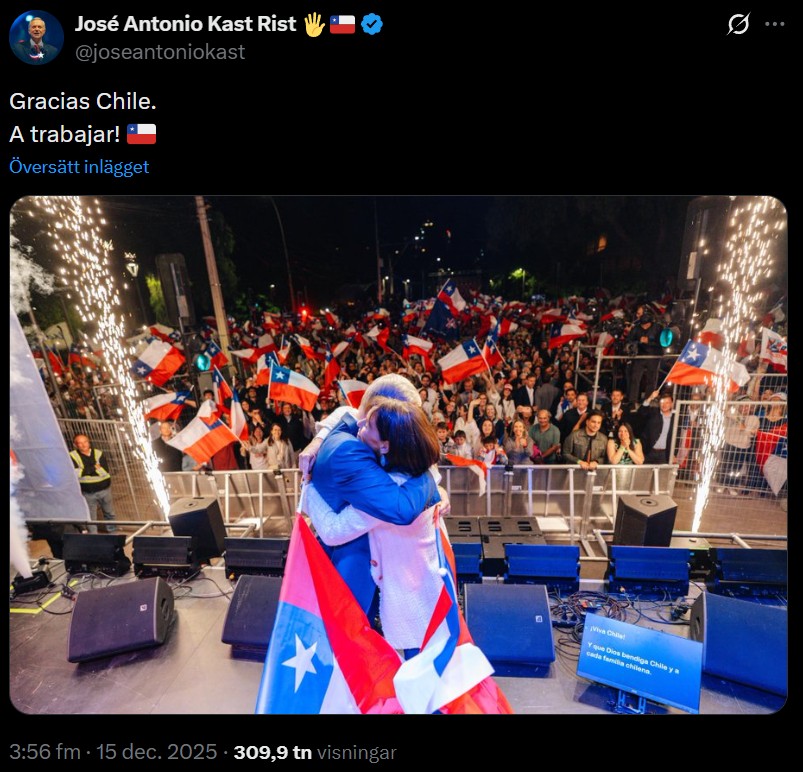
During his victory speech, Kast hailed the election result as a “broad mandate” to implement his political agenda.
“This is not a personal achievement, nor a party achievement. Chile won here, with hope of no longer living in fear, of a functioning Chile,” he said.
Mass Deportations
José Antonio Kast’s victory represents the latest conservative triumph in Latin America, where right-wing leaders once considered political outsiders have come to power in countries such as Argentina and Ecuador.
In opinion polls before the election, voters expressed frustration over the recent increase in crime and immigration, as well as a weakening of Chile’s economy. Kast campaigned on a promise of change and pledged to address voters’ concerns by cracking down on crime and immigration, including through a campaign for mass deportations, similar to what US President Donald Trump has done.
He also proposes stricter mandatory minimum sentences, more criminals being imprisoned in maximum-security facilities, and cartel leaders being placed in “total isolation” to cut them off from all communication with the outside world.
“Today, while criminals and drug traffickers roam the streets freely, committing crimes and frightening people, honest Chileans are locked in their homes, paralyzed by fear,” Kast writes in his security plan.
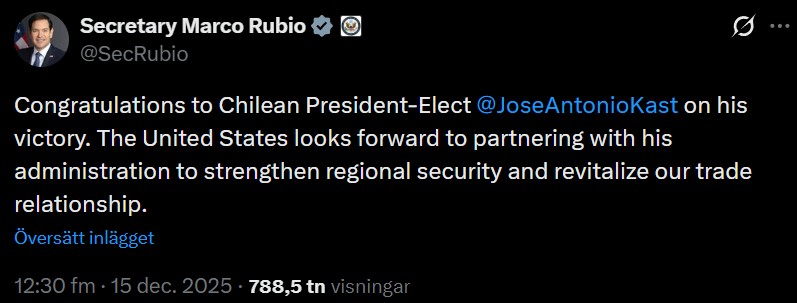
Congratulations have come from, among others, the US and Secretary of State Marco Rubio: