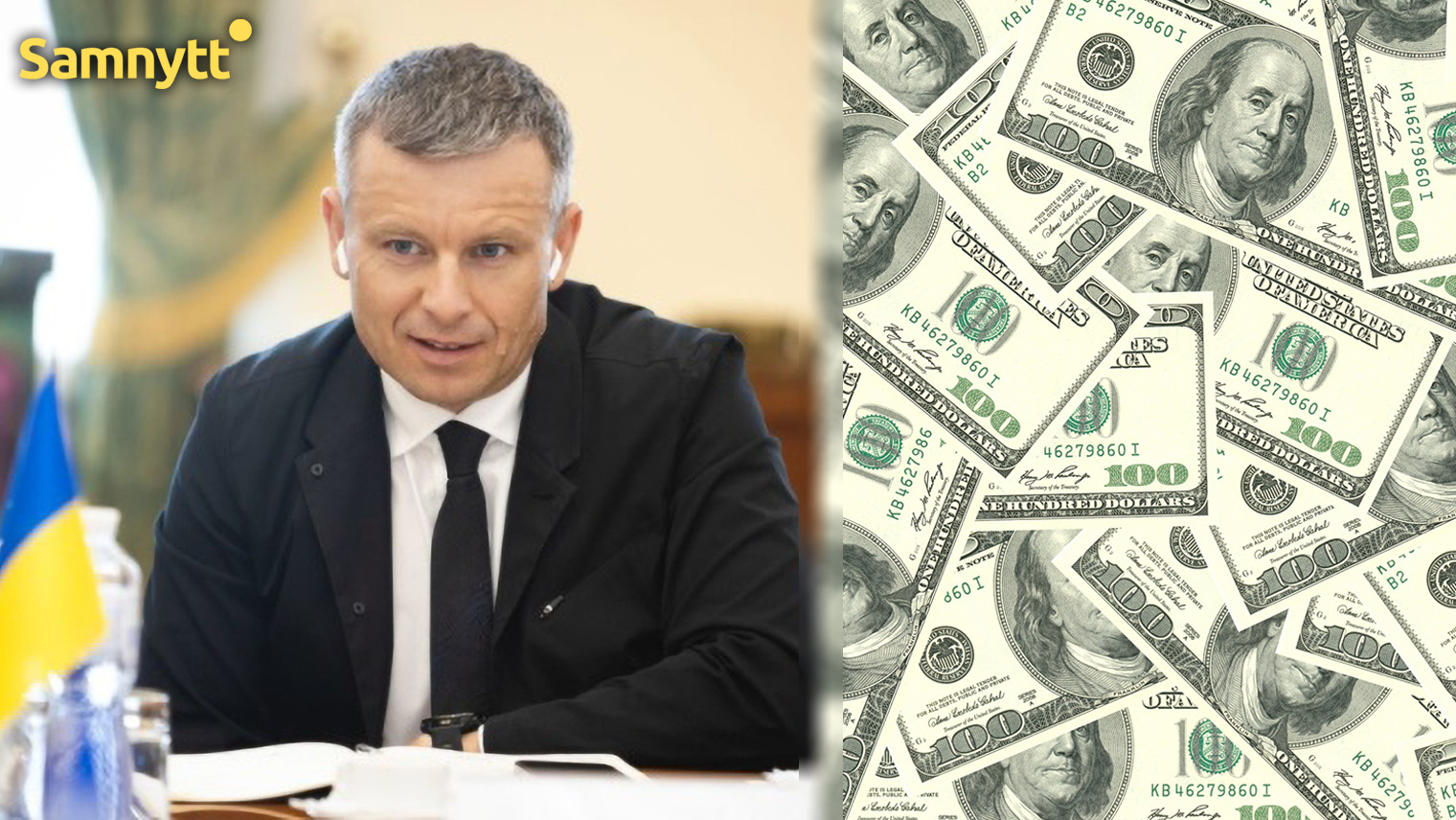
Despite the EU’s massive loan of 90 billion euros, the money secured so far is not enough if the war continues next year. Ukraine’s Finance Minister Serhiy Marchenko predicts an unfunded gap of 32.6 billion dollars in the 2027 state budget—equivalent to about 300 billion SEK. At the same time, he warns that the country is approaching its most difficult economic situation since the full-scale Russian invasion began in 2022.
The Ukrainian government is now working on next year’s state budget based on the assumption that the war with Russia will continue throughout 2027. Finance Minister Serhiy Marchenko states that the country’s basic need for external financing is about 50 billion dollars per year.
Of this, funding for 32.6 billion dollars is currently missing for next year. The amount corresponds, depending on the exchange rate, to about 300 billion Swedish kronor.
“We have not had a situation like this since 2022, when we really suffered from a lack of liquidity. Right now, we are coming dangerously close to the same scenario as we had in 2022,” says Marchenko in an interview with Euronews.
Warns of a ‘Very Difficult Winter’
According to the finance minister, the situation has further deteriorated due to the increased intensity of Russian attacks. He points, among other things, to attacks on Ukraine’s logistical infrastructure and expects a difficult winter.
“The war has intensified very rapidly. We realize that ourselves. It is a completely different reality compared to last month, with the recent attacks against our logistics. We expect a very difficult winter. The escalation means that we must find resources to survive it,” says Marchenko.
The problem is not just about the costs of the war itself. As defense spending and weapons purchases are prioritized, other parts of the state budget risk being neglected.
Marchenko states that the state has already begun to feel liquidity problems and that some civilian payments may need to be postponed if additional funds do not come in.
“We are already seeing some liquidity problems and expect some deficits in our budget. This means we may be forced to postpone certain payments that are not related to the war due to a lack of liquid assets. This will have consequences,” he says.
Received Massive Loan of 90 Billion Euros
The announcement comes despite the comprehensive funding package already decided by the EU. In April, EU countries agreed on the so-called Ukraine Support Loan totaling 90 billion euros for the years 2026 and 2027. This amounts to over 1,000 billion SEK.
ALSO READ: Despite the massive loan – Ukraine requests an additional 250 billion
Of the loan, about 60 billion euros are intended for military support and defense procurement, while 30 billion will be used as economic budget support. The money is financed through borrowing on the capital market with the EU budget as collateral.
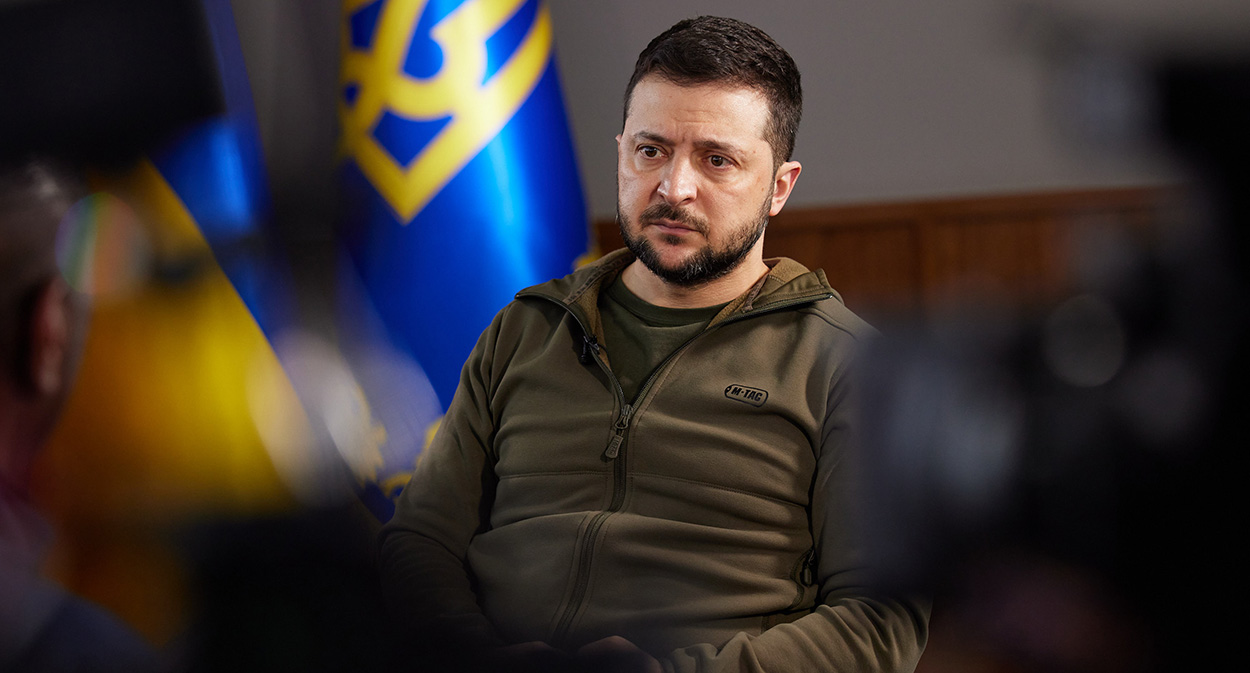
But even before Marchenko’s new announcement, Kyiv had stated that the approved funds would not be sufficient. President Volodymyr Zelenskyy said in August that Ukraine needed another approximately 27 billion dollars—about 250 billion SEK—to cover defense expenses for the current year. According to previous reports, the announcement surprised several European governments.
The new gap that Marchenko now describes concerns 2027. It should therefore not be confused with the 27 billion dollars that Ukraine has said it needs for this year’s defense expenses.
Over Half a Trillion in Two New Gaps
Taken together, the figures illustrate how quickly Ukraine’s financial needs are growing. First, an additional need of 27 billion dollars for 2026 was reported. Now, a further 32.6 billion dollars is estimated to be unfunded for 2027. Together, the two amounts add up to nearly 60 billion dollars, or roughly 550 billion SEK.
However, this does not mean that Ukraine is requesting a single new loan of this amount. These are financing gaps for two different budget years, while the already decided support and loans are disbursed gradually.
As recently as September 18, the Ukrainian government stated that the country had received an additional 3.3 billion euros from the EU loan. According to the prime minister, the money should, among other things, be used to purchase missiles and drones.
Wants Access to Frozen Russian Assets
Marchenko is now urging European governments to “think outside the box” to find financing. A central part of the Ukrainian plan is again attempting to use Russian state assets that were frozen after the invasion. In total, this concerns about 300 billion dollars in frozen Russian assets internationally, with a large share located within the EU.
ALSO READ: 800 million went to worthless Ukrainian shells – Estonia’s defense minister resigns after scandal
The issue has long been legally and politically sensitive. Belgium has been particularly cautious since large portions of the assets are managed by the Brussels-based financial institution Euroclear.
Ukraine has therefore presented a new plan which, according to Marchenko, contains “completely new elements” to reduce the legal risk for Belgium and Euroclear. Among other things, the idea is that the responsibility for any future legal disputes with Russia would no longer rest on Belgium alone.
“We want to discuss this. The plan creates new conditions in which it is not Belgium’s responsibility to face legal disputes with Russia, but a shared responsibility among the 27,” says Marchenko.
The EU Commission has meanwhile expressly reserved the possibility of using frozen Russian assets in the future to repay the large Ukraine loan, provided this can be done in accordance with EU law and international law.
Financing for 2027 Becomes the Next Major Issue
Ukraine’s finance department has since continued negotiations with EU countries and the International Monetary Fund. The department stated on September 21 that Ukraine has so far received 31.3 billion dollars in external financing during 2026, with the EU playing the largest role.
At the same time, the finance department has now specified the total external financing need for 2027 at 52.6 billion dollars. Even when already available financing, including remaining funds from the EU’s 90-billion-euro loan, is counted, a significant gap thus remains.
Marchenko emphasizes that the goal is not just to find money to cover a temporary shortfall. Ukraine wants long-term commitments that ensure the state can continue to function while a very large part of its own resources go to the war.
If the war continues through 2027, the question is not just how the already decided huge EU loans will be disbursed, but also where the hundreds of billions of kronor that are still missing will come from.