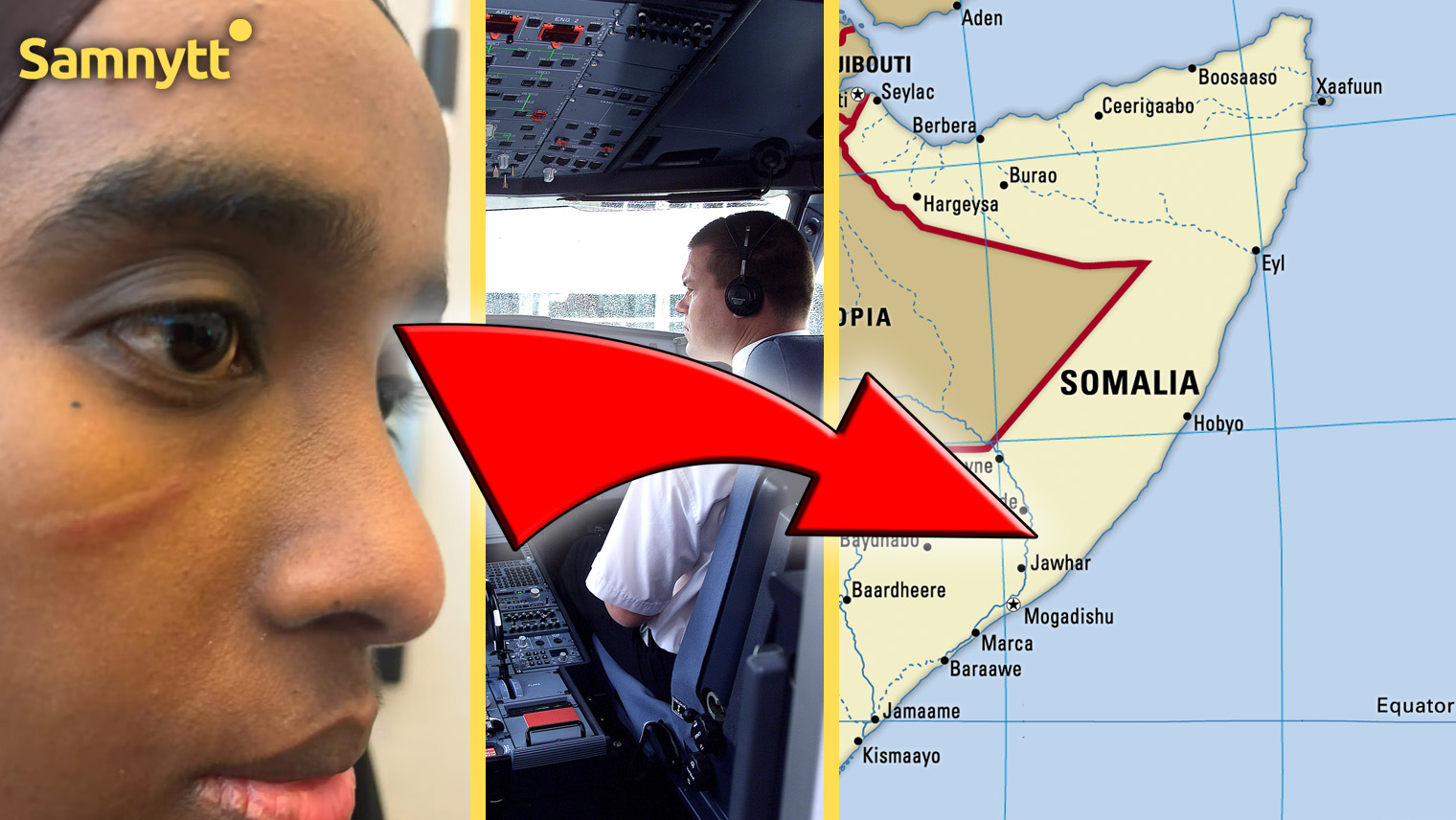
Two 22-year-old siblings were to be deported from Sweden to their home country Somalia via Turkey on Tuesday evening. But when they caused turmoil on board the plane, the pilot decided that the two could not travel. The deportation was aborted and the siblings were taken back to the Swedish Migration Agency’s detention center.
The 22-year-old twins Aliya and Najib had been taken from the Migration Agency’s detention in Märsta, north of Stockholm, to Arlanda Airport for their deportation order to be carried out. The journey was to be with a scheduled flight to Somalia, with a stopover in Turkey.
The siblings boarded the plane before other passengers and were accompanied by staff from, among others, the Prison and Probation Service and the police. Medical personnel were also present during the transport.
When the other passengers boarded, the two deportees became unruly and disruptive. Personnel were forced to intervene to restrain the siblings. One of them had to be handcuffed. This is reported by Aftonbladet.
The situation caused concern among the other travelers, several of whom stood up, began filming, and reacted to the disturbances. Some passengers, according to reports, also took down their hand luggage and protested against flying with the disruptive Somali siblings.
Eventually, the pilot decided that the siblings must leave the plane. They were then taken back to the detention center in Märsta, and the deportation could not be carried out as planned.
This is not the first time such an incident has occurred. It often happens that a deportation cannot be carried out after the person or persons being deported become violent on the plane.
The Pilot Has the Final Say
The Prison and Probation Service confirms that a planned deportation had to be aborted on Tuesday evening, but does not wish to comment on the specifics of the individual case. Fredrik Thorell, unit manager at the Prison and Probation Service’s transportation department, explains that the pilot has the ultimate authority when a deportation is carried out on a regular passenger flight.
“When using a scheduled flight, the pilot has the final mandate and sets the rules. If, for example, you cause significant trouble for other passengers — shouting, yelling, disturbing others — the pilot can decide: ‘No, you are not allowed on the plane.'”
According to Thorell, it is also not unique that a planned deportation has to be aborted in this way; it happens regularly. He does not think it is “so remarkable.”
Have Lived in Sweden on Mother’s Permit
Aliya and Najib arrived in Sweden from Somalia with their family when they were about twelve years old. Their mother has grounds for protection due to a stated fear of the Somali terror militia Al Shabaab and has, together with the now 22-year-old twins’ younger siblings, received permanent residence permits.
The twins, however, had residence permits based on their connection to their mother. When they became adults, they were no longer considered children under the migration laws and could not continue to receive residence based on the same grounds. They have not been granted permits on any other basis and therefore have an order of deportation to Somalia.
This is a consequence of the rules for family immigration. A child can receive a residence permit through connection to a parent who is permitted to stay in Sweden, but after turning eighteen, different conditions apply.
On October 1, new provisions come into force that expand the possibility for certain young adults who previously had residence permits as children to continue to obtain permits. For individuals between 18 and 21, special opportunities for extension will be introduced.
Even people aged 21 or older can, in some cases, continue to get permits, but then requirements such as shared household and a special dependency on the parent must be met.
Aliya and Najib turned 22 during the summer. Before the planned deportation, their representative reported impediments to enforcement, citing, among other things, the new rules. However, on Monday the Migration Agency decided not to stop the deportation, as the new rules had not yet come into force.
Placed in Detention Due to Risk of Absconding
The siblings have previously been placed in the Migration Agency’s detention for about six months. After their release, they were instead placed under supervision and required to regularly report to the police.
At such a reporting occasion last week, they were again taken by the border police and placed in detention. At that time, Somali authorities had issued travel documents and the police had prepared for transportation to Somalia. According to the police’s detention decision, Aliya had opposed returning, which was part of the reasoning for determining that supervision was no longer sufficient.
Even when the siblings were taken from detention to Arlanda on Tuesday, there were protests against the deportation from left-wing activists. About 20 people gathered outside the detention center and some tried, according to police, to illegally prevent the Prison and Probation Service’s bus from leaving the site. Police subsequently opened a preliminary investigation into sabotage and violation of the Public Order Act against these individuals.
After the aborted air transport, the deportation orders remain in force. The Prison and Probation Service notes that an aborted transport with a regular flight does not in itself mean that a deportation order ceases to apply. It is unclear when the next attempt to deport the Somali twins will take place.