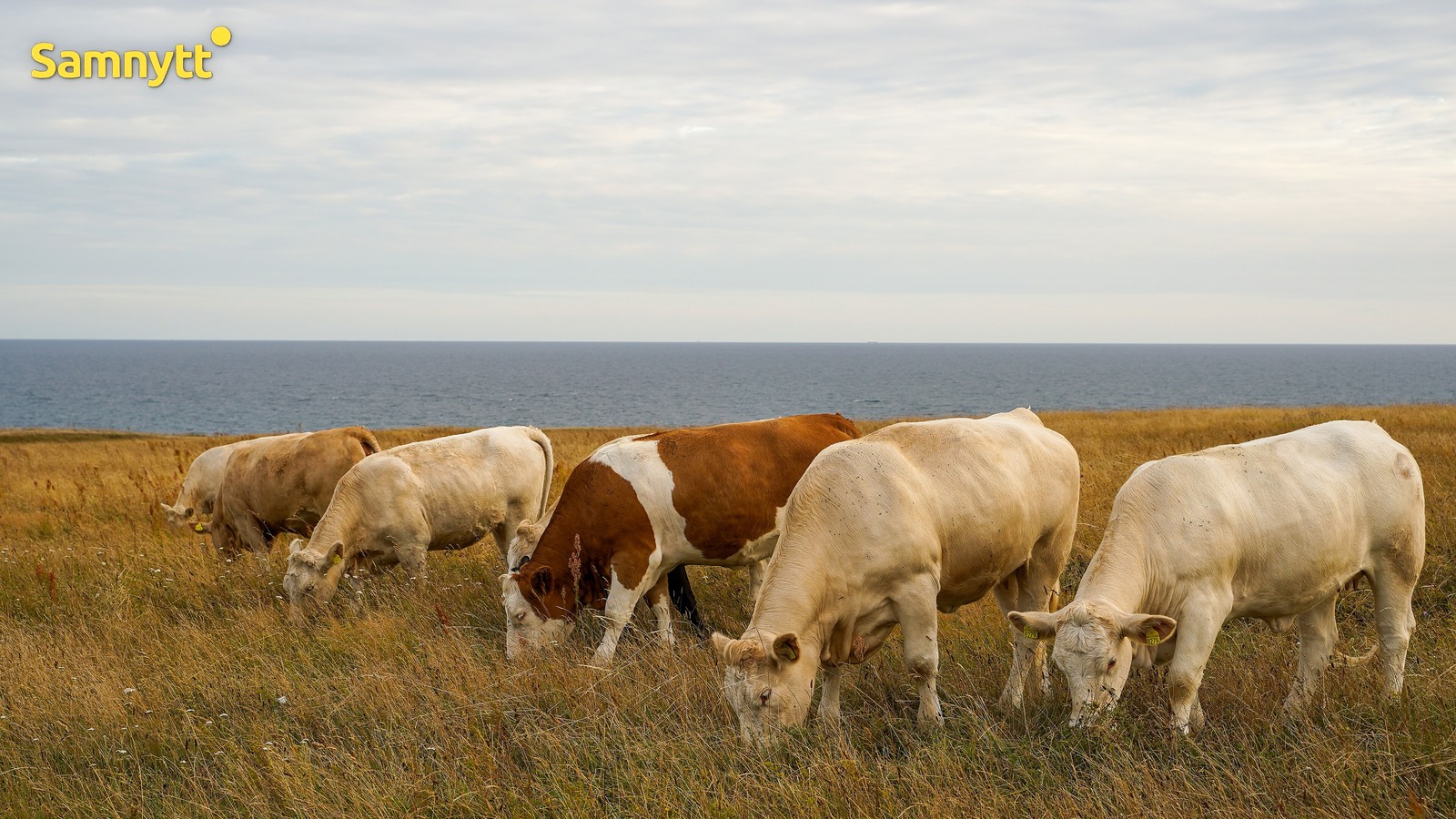
The number of cattle on Swedish farms has increased by over 25,000 in the past year, reaching 1,425,000 in June. According to the Swedish Board of Agriculture, the figure has not risen as much since the early 1990s. Just over half a year ago, the debate was marked by empty meat shelves and a shortage of Swedish beef. Now, the slaughterhouse industry hopes that supply will start to recover.
This is shown in the preliminary livestock census by the Swedish Board of Agriculture, which was published this week. The increase is seen at several stages of production. The number of dairy cows has increased by around 4,000, the number of suckler cows—that is, cows kept to raise calves for beef—by over 7,700, and the number of calves by 15,500. Heifers, bulls, and steers, however, have decreased by about 1,800 animals.
The number of dairy cows declined year after year from 2015 but has now increased two years in a row, according to the authority. The amount of milk delivered to dairies has also risen during the same period.
The increase is already noticeable at the slaughterhouses. In August, 32,000 cattle were slaughtered, and the total slaughter weight was just over 8 percent higher than the same month last year. Last year, the situation was worse. In 2025, the amount of beef from Swedish slaughterhouses decreased by 11,400 tons compared with the previous year.
Still a Long Way to Previous Levels
Despite the upturn, Swedish herds are significantly smaller than a quarter-century ago. In 2000, there were almost 1.7 million cattle in the country, about 260,000 more than today. The number of dairy cows has since dropped by 31 percent, while the number of suckler cows has increased by 22 percent. The Swedish Board of Agriculture notes that the total cattle population has declined over time, even though individual years may see an increase.
The decline continues among other livestock types. The number of sheep has dropped to 438,200, the lowest level since the early 2000s, and the number of pigs is largely unchanged compared to last year but is more than 30 percent lower than in 2000.
Slaughterhouse Sees Brighter Outlook After Shortage
Magnus Dafgård, CEO of Skövde Slakteri, warned just over a year ago that the beef shortage could last two to three years because too few calves were being born and profitability for beef producers was too poor. Now, the tone is different.
“It’s great and very positive that we’ve turned the curve,” he told Swedish Radio, adding that he believes the increase could mean more beef in the stores. How big the effect will be and whether it will affect prices is still unclear.