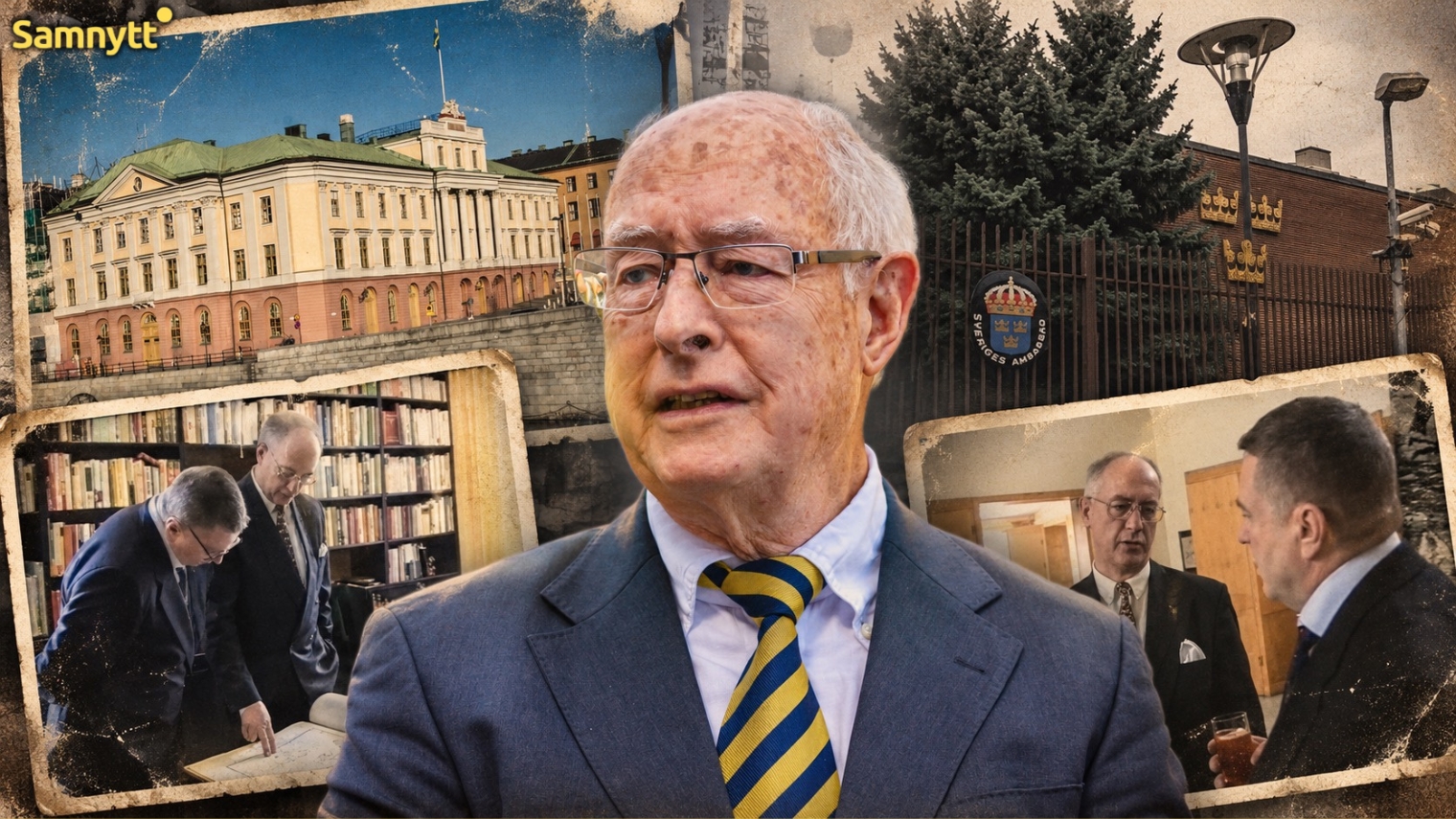
Sweden’s former top diplomat Sven Hirdman, who served as ambassador in Moscow and Tel Aviv as well as a diplomatic counselor in Beijing, has died at the age of 87. With decades of diplomatic experience at the Ministry for Foreign Affairs, and especially from his years in Russia, Hirdman was a wealth of knowledge and a outspoken voice in public debate who did not hesitate to present analyses and positions that challenged the prevailing Swedish opinion corridor. This also made him a target for harsh attacks from left-liberal media and loud opinion leaders, who would rather cast suspicion on his views and brand him as almost a Russian agent or Kremlin mouthpiece than address his arguments on their merits. Hirdman has now passed away after a period of illness, but his words and analyses live on.
Sven Hirdman was likely one of Sweden’s most experienced diplomats. During a career spanning several decades, he held a number of prominent positions within Swedish foreign service and became especially known for his deep knowledge of Russia and the relationship between Swedish governments and the Kremlin.
Hirdman was Sweden’s ambassador to Moscow between 1994 and 2004, a period marked by massive political and economic upheavals in Russia following the dissolution of the Soviet Union. During his final four years in the post, he was able to witness Vladimir Putin’s first years in power up close, after Putin became Russia’s president in 2000.
Prior to that, Hirdman served as Sweden’s ambassador to Israel, based in Tel Aviv, between 1983 and 1987. He also trained at the Swedish Armed Forces Language School, where he studied Russian.
His long career also included several key positions within Swedish government administration, such as State Secretary at the Ministry of Defence and head of department at the Ministry for Foreign Affairs.
He had also served as diplomatic counselor at Sweden’s embassy in Beijing and over the years built up extensive experience in both diplomacy and defense and security policy.
Alongside his diplomatic career, Hirdman was involved in security and foreign policy issues. In 1990, he was elected a member of the Royal Swedish Academy of War Sciences, where he remained a member for the rest of his life.
After his time as ambassador, Hirdman continued to participate in the foreign policy debate, especially on issues relating to Russia, Swedish security, and relations between East and West.
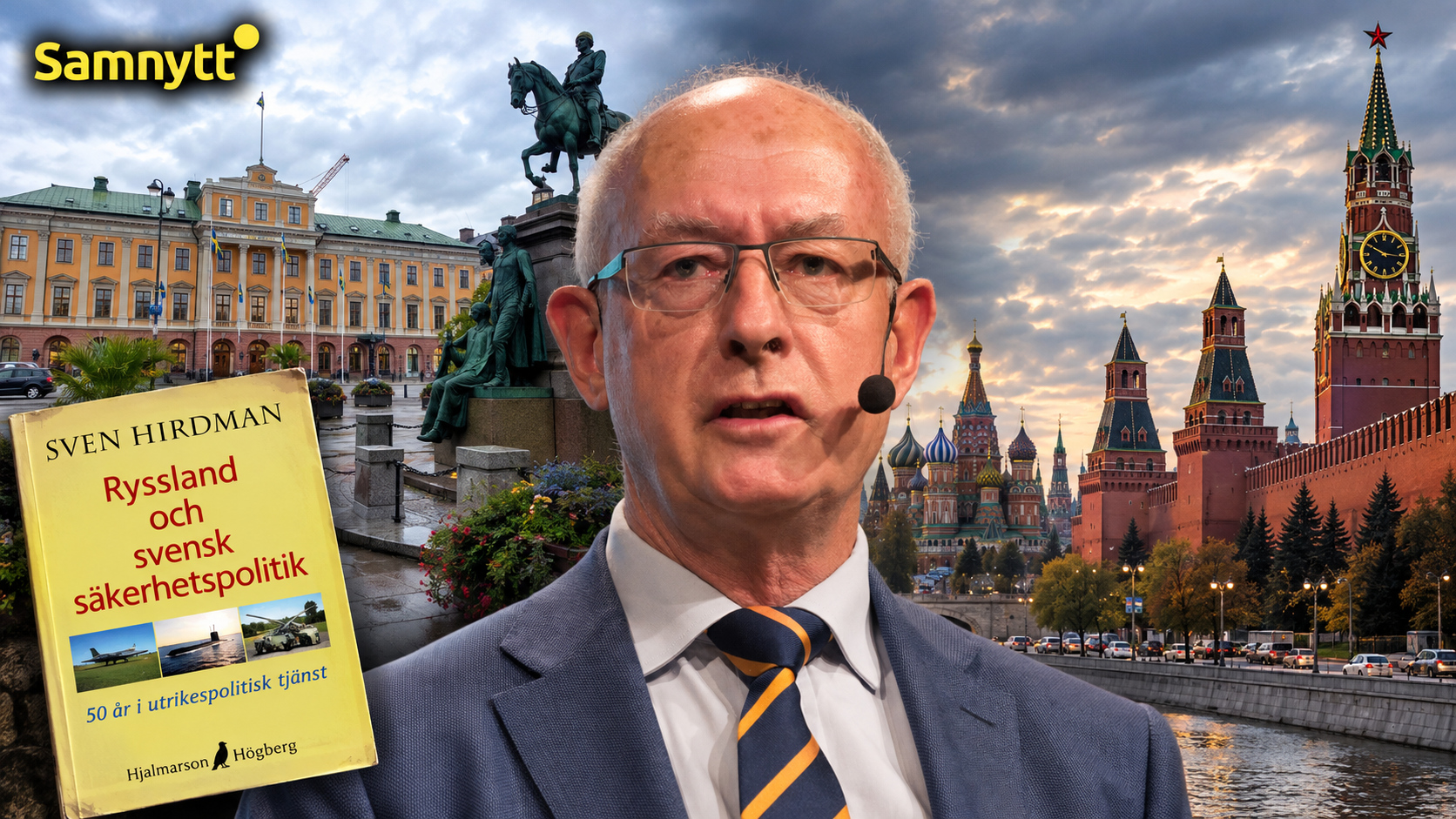
In 2015, he published the book “Russia and Swedish Security Policy: 50 Years in Foreign Policy Service,” where, based on his own experiences, he described developments in Russia and Swedish-Russian relations.
Condemned the war
Hirdman’s analyses and positions at times drew strong criticism from left-liberal establishment media, politicians, and other opinion-makers, especially when he expressed views that went against the established Swedish stance towards Russia.
His many years of diplomatic experience and deep knowledge of the country did not prevent him from being suspected when his conclusions fell outside the narrow boundaries of the Swedish opinion corridor.
When Russia began its invasion of Ukraine in February 2022, Hirdman was clear in his condemnation of the war. In Swedish Radio’s Sunday Interview he described the Russian invasion in harsh terms.
– This is an outdated, unnecessary, and horrific war that only brings misery to both Ukraine and Russia, he said.
Subjected to vilification and smear campaigns
At the same time, he rejected accusations that his contacts with Russian representatives after his ten years as ambassador in Moscow meant he was acting on behalf of the Kremlin.
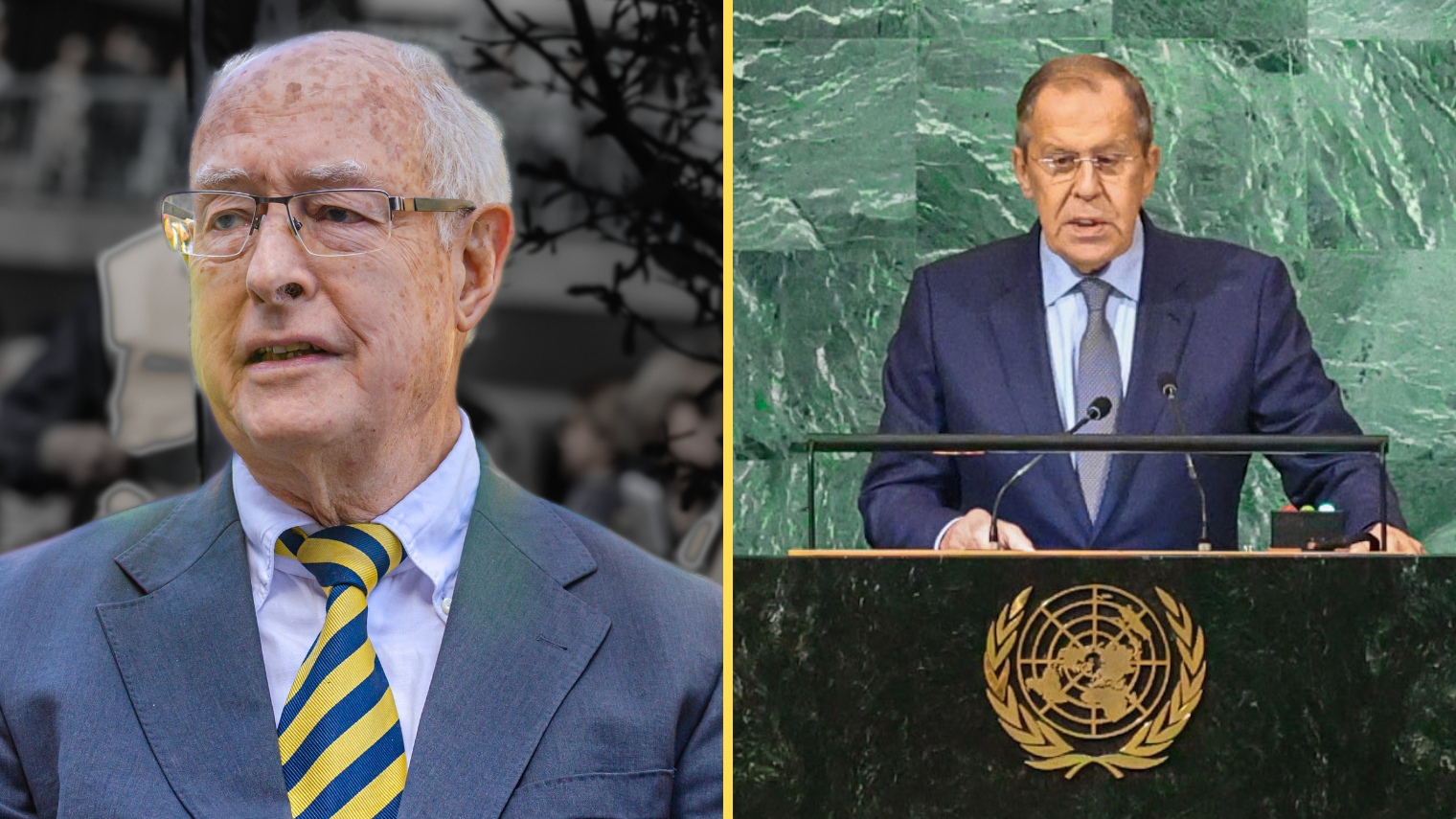
As early as 2015, Hirdman found himself in hot water after it came to light that he was on the board of the Moscow State Institute of International Relations, MGIMO, one of Russia’s most prestigious elite universities. The chairman of the same board was Russia’s Foreign Minister Sergei Lavrov.
Critics questioned his ties to the Russian power sphere and suggested that his involvement could affect his independence in matters relating to Russia.
Hirdman dismissed the criticism as an attempt to cast suspicion on him because of his Russian contacts, rather than addressing his arguments on substance.
– Russia is an emotional issue here in Sweden, so, a little bit to smear me and say, “well, he sits on a council chaired by Lavrov, so he’s obviously bought by the Russians.” That is guilt by association, said Hirdman in his defense to Expressen.
Hirdman had previously been awarded the Russian Order of Friendship for his efforts to develop relations between Sweden and Russia. An honor that Expressen implied was embarrassing for the former ambassador.
When Samnytt brought up the newspaper’s investigation and suspicion of him, Hirdman sighed at the campaign directed against him because of the honor.
– I don’t want to deal with that kind of nonsense, said Hirdman, and continued:
– I received it when I was ambassador. Only a handful of ambassadors have received it. There’s nothing strange about it. I’ve been an ambassador to Russia for ten years.
ALSO READ: Sven Hirdman on Expressen’s Russia Accusations: “Don’t want to deal with that kind of nonsense”
However, Hirdman is far from the only prominent Western representative to have received the Russian Order of Friendship. Other recipients include former UN Secretary-General Ban Ki-moon, European Central Bank chief Christine Lagarde, and former Finnish Social Democratic party leader Eero Heinäluoma.
free for the rest of the year!
Right now you get Plus completely free for the rest of 2026!
DONATE VIA SWISH
123 083 33 50
Samnytt’s interview with Hirdman
Hirdman continued to be engaged in foreign policy debate even after his retirement and was a recurring voice in discussions about Russia and European security.
Samnytt interviewed Sven Hirdman already shortly after Russia’s full-scale invasion of Ukraine in February 2022. We wanted to hear his analysis of a conflict that had been ongoing for many years, escalating with the Maidan Revolution in 2014 and Russia’s subsequent annexation of Crimea.
– I think it’s terrible that the Russians decided to attack Ukraine. I did not expect it. It’s a violation of international law and it should be heavily criticized, said Hirdman to Samnytt.
Subscribers can read the interview here: Former ambassador to Russia: THIS is why Putin WILL NOT attack Sweden
Hirdman had much to say about both the background of the conflict and the war’s development, but one of his clearest messages concerned the threat to Sweden.
Despite the serious security situation, the experienced diplomat stated that Russia would not attack Sweden. The war is now in its fifth year and nearing its sixth, but no Russian attack against Sweden has yet occurred.
– This is a Slavic conflict between Russians, Ukrainians, and Belarusians. I think it will stay within those borders, he told Samnytt, and continued:
– I don’t think the Russians have either the interest, desire, or capability to attack an EU country or a NATO country. NATO’s Article 5 clause is very powerful. Then the Americans will come, and they have reassured that more than ten times.
ALSO READ: Government: Sweden attacked first in a NATO-Russia war
Hirdman pointed out that Russia and Ukraine have a long shared history stretching back hundreds of years. To understand the conflict, one needs to know a bit about its background.
– They are two Slavic peoples, just as Sweden and Norway are two Scandinavian peoples. They have much in common in their language, culture, religion, family ties, and so on. For 300 years, from the mid-1600s, what we now call Ukraine was an integral part of Tsarist Russia and later the Soviet Union. Poltava, Kyiv, and Kharkiv were ordinary Russian counties, or oblasts as they are now called. It was only in 1991 that Ukraine became an independent state, Hirdman told Samnytt, and continued:
– That state consists of different parts. Of regular Russian territories, larger areas that once belonged to Austria-Hungary and that have been included in Poland, and so on. There are divisions and differences within Ukraine and tensions between different regions. And that makes the situation especially emotionally charged.
The author smears the diplomat
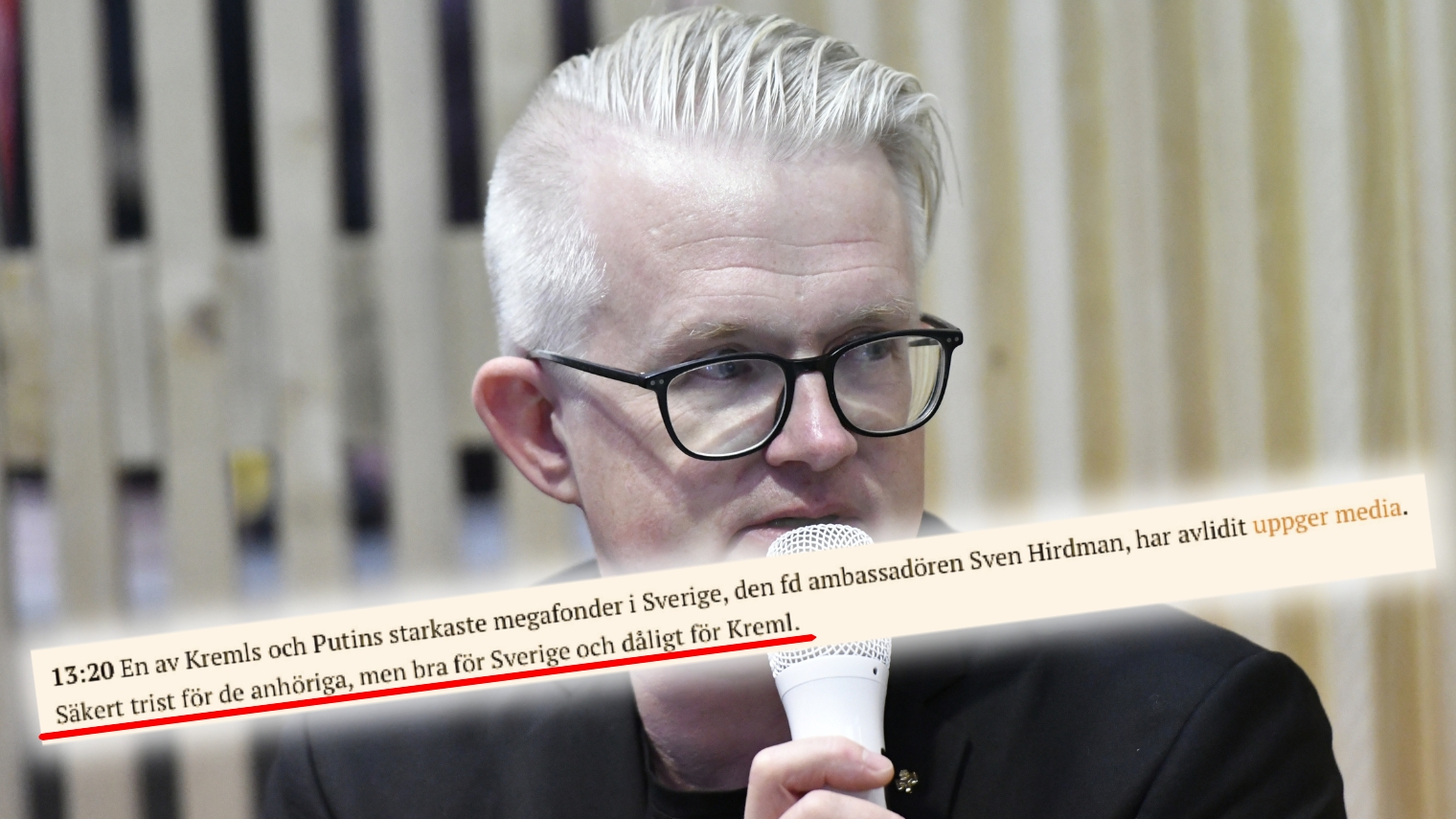
Hirdman’s passing has also caused reactions among some of his sharpest critics, including prominent supporters of Ukraine who have long accused the former top diplomat of being pro-Russian.
One of them is author Lars Wilderäng, who runs the blog Cornucopia and has gone so far as to welcome Hirdman’s death and describe him as a mouthpiece for Russian interests.
Wilderäng, known for his strong support for Ukraine, is not content with criticizing the late diplomat’s views. He also launches personal attacks in his writing and suggests that Hirdman might have been recruited by the Kremlin.
Not even after the diplomat’s death does he hesitate to describe him as a person with a “dried-up brain” and “a disgrace to the Royal Swedish Academy of War Sciences,” which he also accuses of engaging in “Russia-coddling.”
Long Interview with Hirdman
Samnytt had recently been in contact with Sven Hirdman to carry out a longer interview about the war in Ukraine and the development of relations between Russia and the Western world. However, the interview was never completed because of the illness that struck Hirdman before his death.
For those who want an insight into Sven Hirdman’s vast knowledge and analyses, there is among others his last interview, a two-hour conversation with the Dissidentklubben recorded last year.
There he spoke about his background and his experiences as ambassador in Moscow, but also discussed the ongoing war in Ukraine and relations between the Western world and Russia, with a special focus on Sweden’s role and actions.
free for the rest of the year!
Right now you get Plus completely free for the rest of 2026!
DONATE VIA SWISH
123 083 33 50