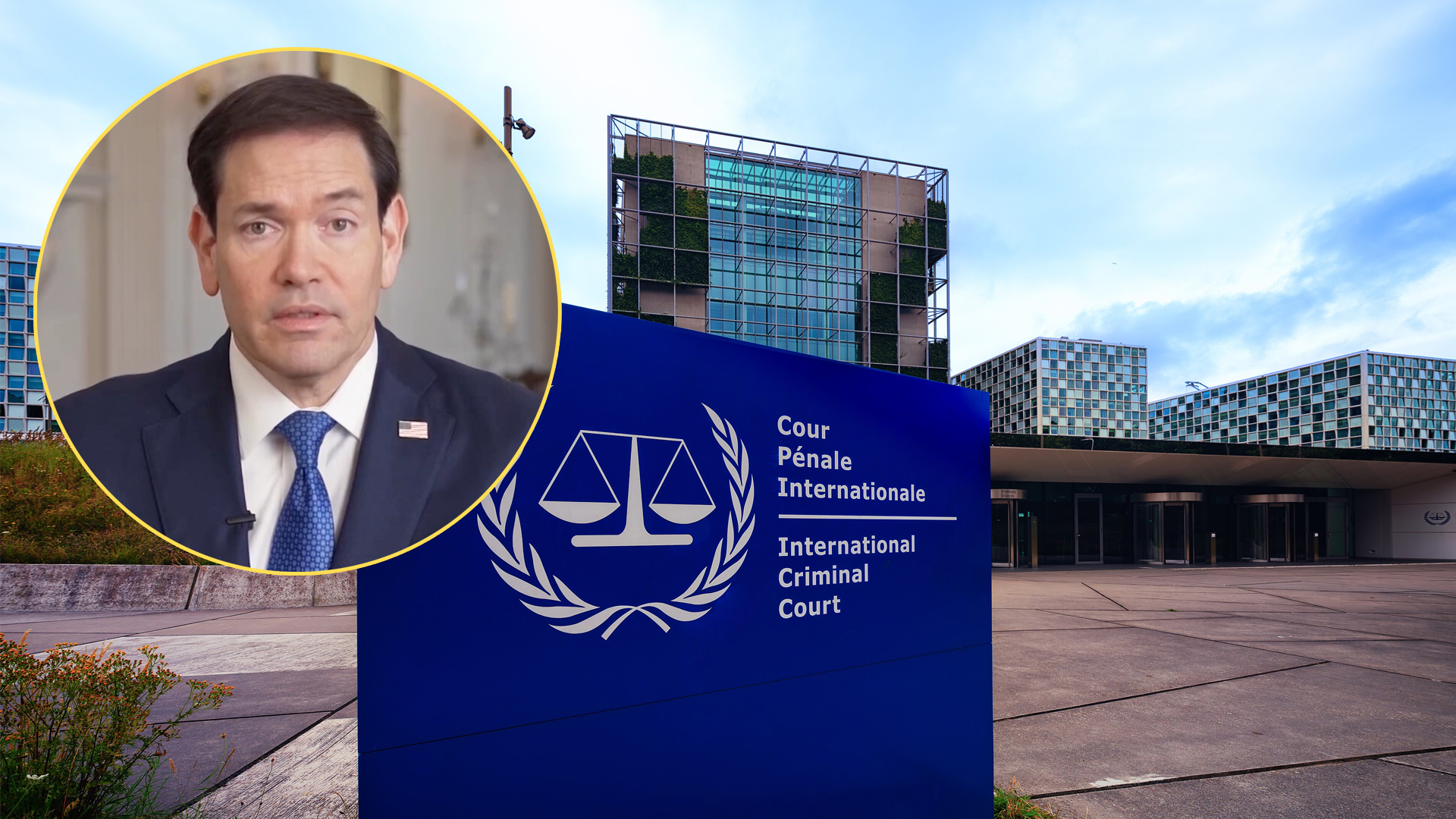
US President Donald Trump is dramatically escalating the fight against the International Criminal Court (ICC) by imposing extensive sanctions aimed directly at crippling the court’s operations. The decision comes after years of fierce criticism of the ICC’s actions, especially its controversial arrest warrants for Israel’s Prime Minister Benjamin Netanyahu and former Defense Minister Yoav Gallant.
The US government announced on Friday that the sanctions now target the entire ICC as an organization, not just individual judges and prosecutors. With this, the Trump administration is taking a much more far-reaching step than previously in its attempts to restrict the court’s activities.
According to Reuters, the measures mean that US companies are prohibited from doing business with the ICC. The aim is to cut the court off from crucial financial services and technical resources.
US Secretary of State Marco Rubio describes the ICC as a court that has exceeded its mandate and threatens American sovereignty.
– President Trump will never allow the International Criminal Court to prosecute Americans, Rubio declared in connection with the announcement.
Aimed at Undermining the Court’s Ability to Function
The new sanctions are much more extensive than previous US actions against ICC staff.
US-held assets belonging to the court can be frozen, and companies are given six months to wind down affected business relationships. As a result, the sanctions risk hindering the ICC’s access to international payment systems, American technology, and other services essential to the court.
Rubio has also signaled that Washington is prepared to go even further if the ICC continues to try to exercise jurisdiction over Americans.
The US has never joined the Rome Statute, the international treaty forming the legal basis for the ICC’s operations. Nevertheless, the court has investigated alleged crimes committed by US military personnel in the past. From the American perspective, this is seen as an unacceptable attempt by an international institution to assert legal authority over citizens of a country that has not accepted its jurisdiction.
Arrest Warrants for Israel’s Prime Minister
One of the ICC’s most controversial actions was its decision on November 21, 2024 to issue arrest warrants for Israel’s Prime Minister Benjamin Netanyahu and the country’s former Defense Minister Yoav Gallant.
The decision was taken while Israel was at war with the terrorist organization Hamas following the massacre of October 7, 2023, when about 1,200 people were killed in Israel and hundreds were taken hostage.
The ICC judges found there were reasonable grounds to suspect Netanyahu and Gallant of war crimes and crimes against humanity, including by using starvation as a method of warfare and depriving the civilian population of essential supplies.
Israel rejected the accusations and claimed the court was politicizing international law and attacking the country’s right to defend itself against terrorism. Despite numerous allegations, Israel has consistently provided its enemy with food, water, electricity, fuel, and medicine. For example, two million tons of food have been delivered since Gaza started the war in 2023.
The ICC’s decision also sparked widespread criticism because Israel, like the US, is not a party to the ICC’s founding statute. Nevertheless, the court claims jurisdiction over alleged crimes in Palestinian territory since Palestine has joined the statute. Israel disputes this jurisdiction and questions whether Palestine’s status can provide a legal basis for prosecuting Israeli citizens.
Investigations Against American Soldiers
The conflict between Washington and the ICC dates back further than the war between Israel and Hamas.
The court’s earlier investigation into Afghanistan included suspected war crimes by US military and intelligence personnel.
Already during Trump’s first term as president, the US imposed sanctions against ICC officials. These were later lifted by President Joe Biden, before Trump reinstated the sanction policy after returning to the White House in 2025.
Thus, the American objection is not only about individual legal cases, but about the fundamental question of whether international judges should be able to take action against representatives of states that have not recognized the court’s authority.
ICC Outraged by the Announcement
The new sanctions were immediately met with strong protests from the ICC. The court described the measures as an attack on the rule of law and the international legal order. The ICC is calling on its 125 member countries to defend the institution’s independence and to guarantee that its work can continue.
Several European governments have also opposed the US actions, emphasizing that the ICC plays an important role in prosecuting war crimes and crimes against humanity.
The Trump administration nevertheless shows no signs of backing down.