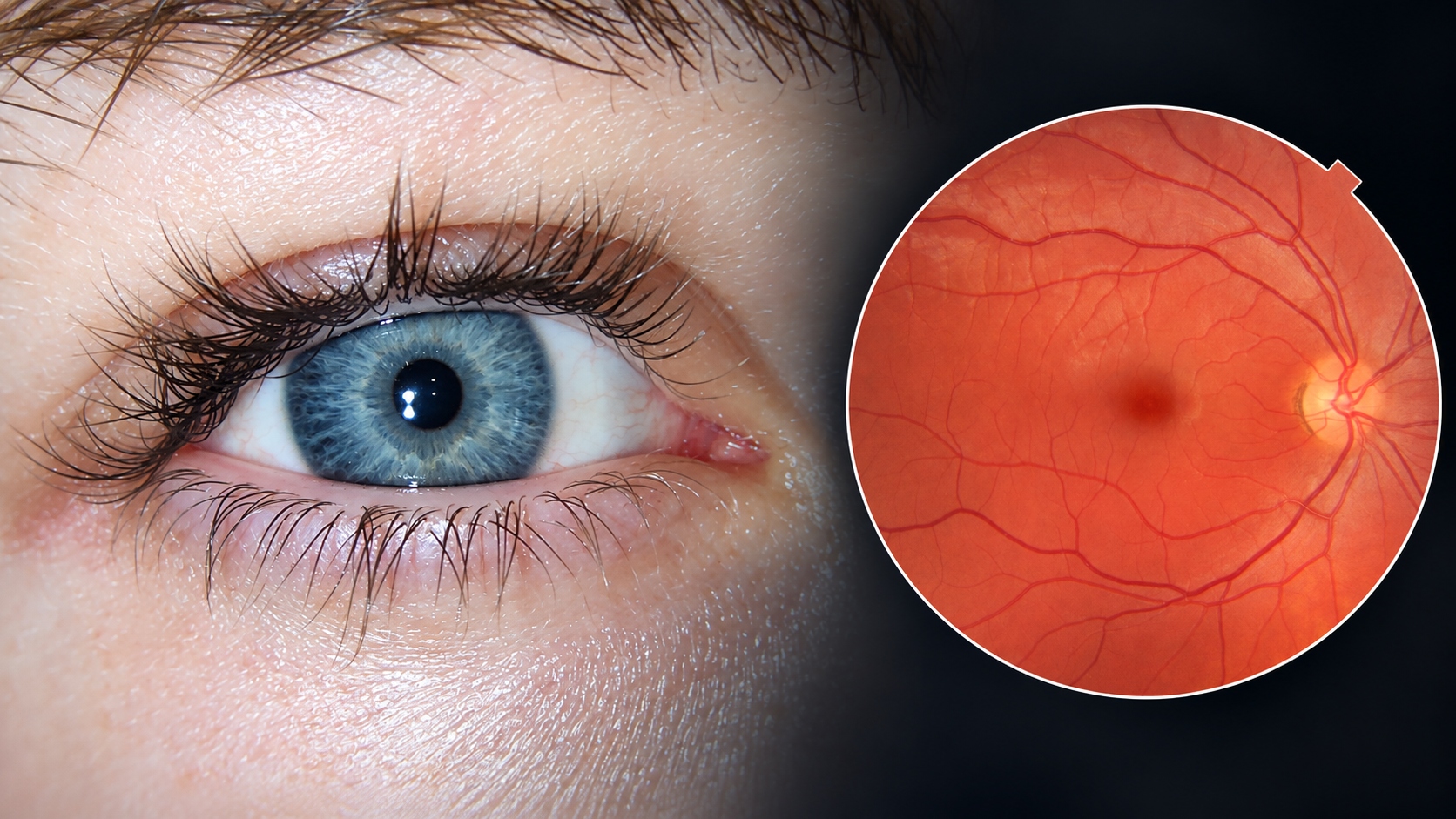
An experimental treatment has improved vision in several people who were almost completely blind. Six out of ten participants experienced a clinically significant improvement in their light sensitivity after researchers made residual cells in the eye responsive to light.
The treatment was tested on ten people with advanced retinitis pigmentosa, a group of hereditary eye diseases in which the light-sensitive cells in the retina are gradually destroyed. In advanced cases, the disease can lead to near-total blindness.
In the new study, published in the New England Journal of Medicine, all participants received a one-time injection in the eye with the worst vision.
The method is based on optogenetics. In a healthy eye, the retina’s photoreceptors react to light, but in people with advanced retinitis pigmentosa, much of these cells have been destroyed.
Therefore, the researchers tried to bypass them by introducing a gene into remaining ganglion cells in the retina. The gene makes the cells produce the light-sensitive protein ChrimsonR.
The patients then use special glasses that record the environment and send light signals to the modified cells.
Six out of ten showed clear improvement
In seven of the ten participants, light sensitivity increased after the treatment. Six people reached the level that the researchers defined as a clinically significant improvement.
The degree of change varied greatly between patients. For those who responded to the treatment, light sensitivity increased from about two times up to just over 60 times.
However, this does not mean that normal vision was restored. The goal is instead to give those with very advanced vision loss the ability to once again perceive certain shapes, objects, and movements.
The University of Pittsburgh, where one of the study’s principal researchers works, describes the results as early signs that parts of vision can be restored in people with advanced retinitis pigmentosa.
May work regardless of the gene causing the disease
A potential advantage is that the technique does not attempt to repair the original genetic mutation. Retinitis pigmentosa can be caused by changes in many different genes, which makes conventional gene therapy complicated.
The optogenetic method instead tries to use nerve cells that still remain in the retina after the photoreceptors have been destroyed. This approach could therefore eventually become beneficial for more patients than treatments that only work against a specific genetic mutation.
Still a very small trial
However, the results should be interpreted cautiously. The study included only ten people, lacked a control group, and was primarily designed to assess safety.
A total of 34 eye-related side effects were recorded among nine of the participants. Most were mild or moderate. One serious incident occurred when blood flow in the retina’s central artery was temporarily blocked after the injection, but the condition was reversed within a few minutes of treatment.
Much larger studies will therefore be required before it is possible to determine how effective and safe the treatment is in the long term.