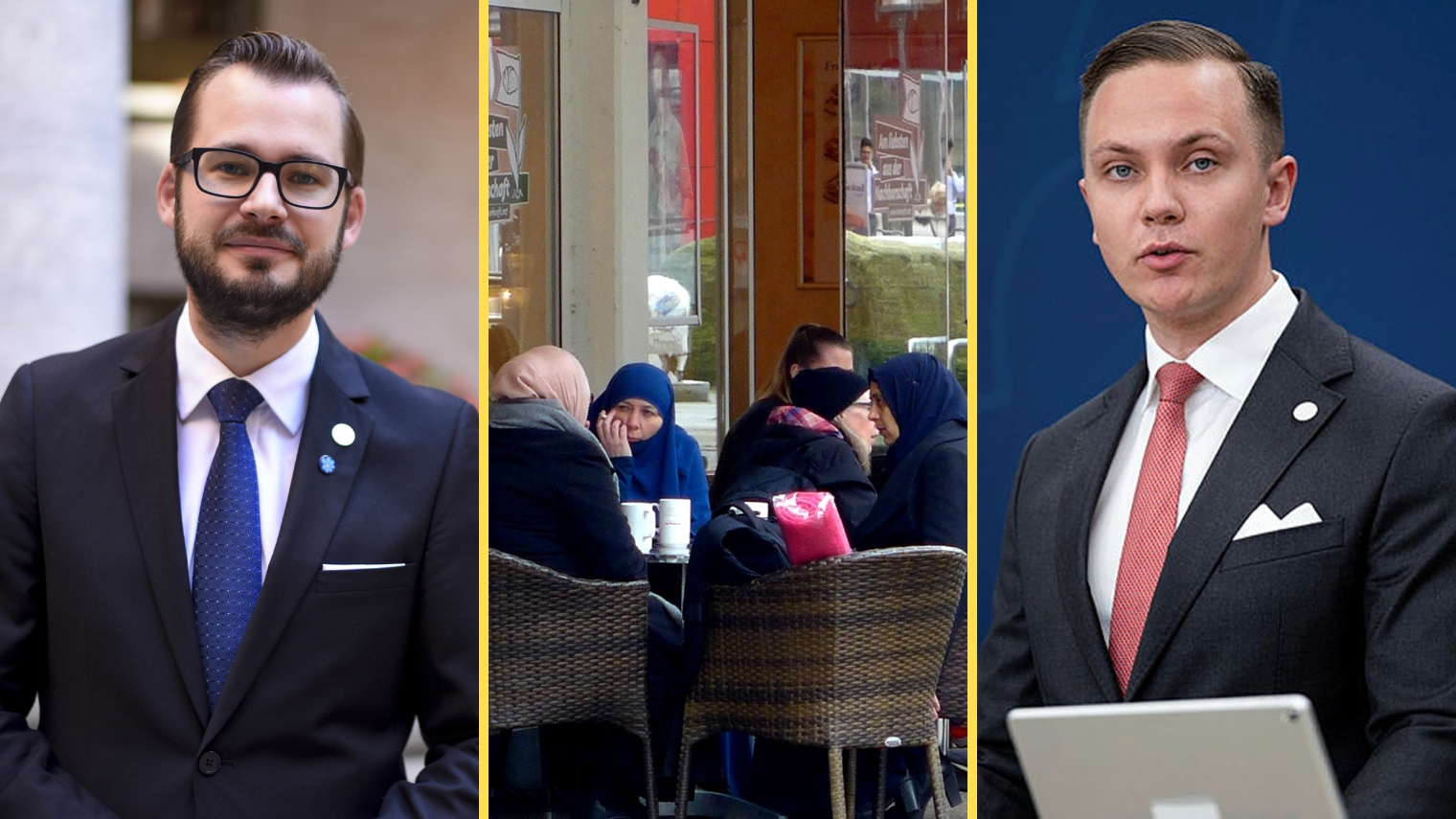
The Sweden Democrats’ proposal for a general ban on hijabs is now facing criticism from several of the party’s top representatives. Both party secretary Mattias Bäckström Johansson and MP Tobias Andersson believe the move went too far or was poorly considered—at the same time as the party tries to understand why it lost nearly 150,000 voters in the parliamentary election.
After the Sweden Democrats’ first decline in a parliamentary election, debate over the party’s campaign strategy has intensified. SD lost about three percentage points in the September 13 election and has now launched a post-election analysis to investigate the causes.
One issue that several leading party figures highlight is the party’s proposal to ban Muslim veils in public spaces. The proposal was launched during the campaign but now receives criticism from both the party secretary and other prominent SD politicians.
In Ekot’s Saturday interview, Mattias Bäckström Johansson is asked whether the party’s proposal for a total veil ban was excessive.
He replies that, in his personal view, it risked missing the main purpose of the policy, namely to fight honor-based oppression and prevent children from being forced to wear religious garments.
– It is my personal opinion that it maybe misses the main goal a bit, he says.
Bäckström Johansson instead emphasizes that measures should have been aimed at younger children and at the use of religious garments within certain professions where employers require a uniform dress code.
He believes the focus should be on countering religious coercion—not on generally banning adult women from wearing the hijab.
– We must work against honor culture, and that is really where the focus should have been, he says.
The party secretary also stresses that this is his personal view and not a new formal party decision.
Tobias Andersson: Cost Us Young Voters
Similar criticism comes from MP Tobias Andersson, the former chair of Young Swedes. In an interview with SVT, Andersson specifically points to the veil ban as a reason why the Sweden Democrats lost support among young voters.
According to SVT’s exit polling, SD’s support among the youngest voters dropped from 22 to 15 percent.
– The veil ban announcement lacked nuance, explanation and a basis for argument, says Andersson.
He believes the proposal was far too broad and that it became especially problematic among younger voters who otherwise sympathize with the Sweden Democrats’ policies.
– It’s one thing with the burqa and niqab. But the hijab is so common in Sweden today, he says.
Andersson argues that many young people are critical of the consequences of immigration but don’t see Muslim girls wearing headscarves as a problem.
– They might have issues with rowdy immigrant boys, but not with the girl wearing a hijab.
According to Andersson, the veil issue has also been discussed internally after the election. He describes broad dissatisfaction with how much attention it received during the campaign.
– I don’t think there was a single district chair who didn’t think the hijab debate took up too much focus.
The criticism thus concerns both the content of the proposal and the fact that the issue came to dominate a campaign where, according to Andersson, the party should have prioritized other political messages.
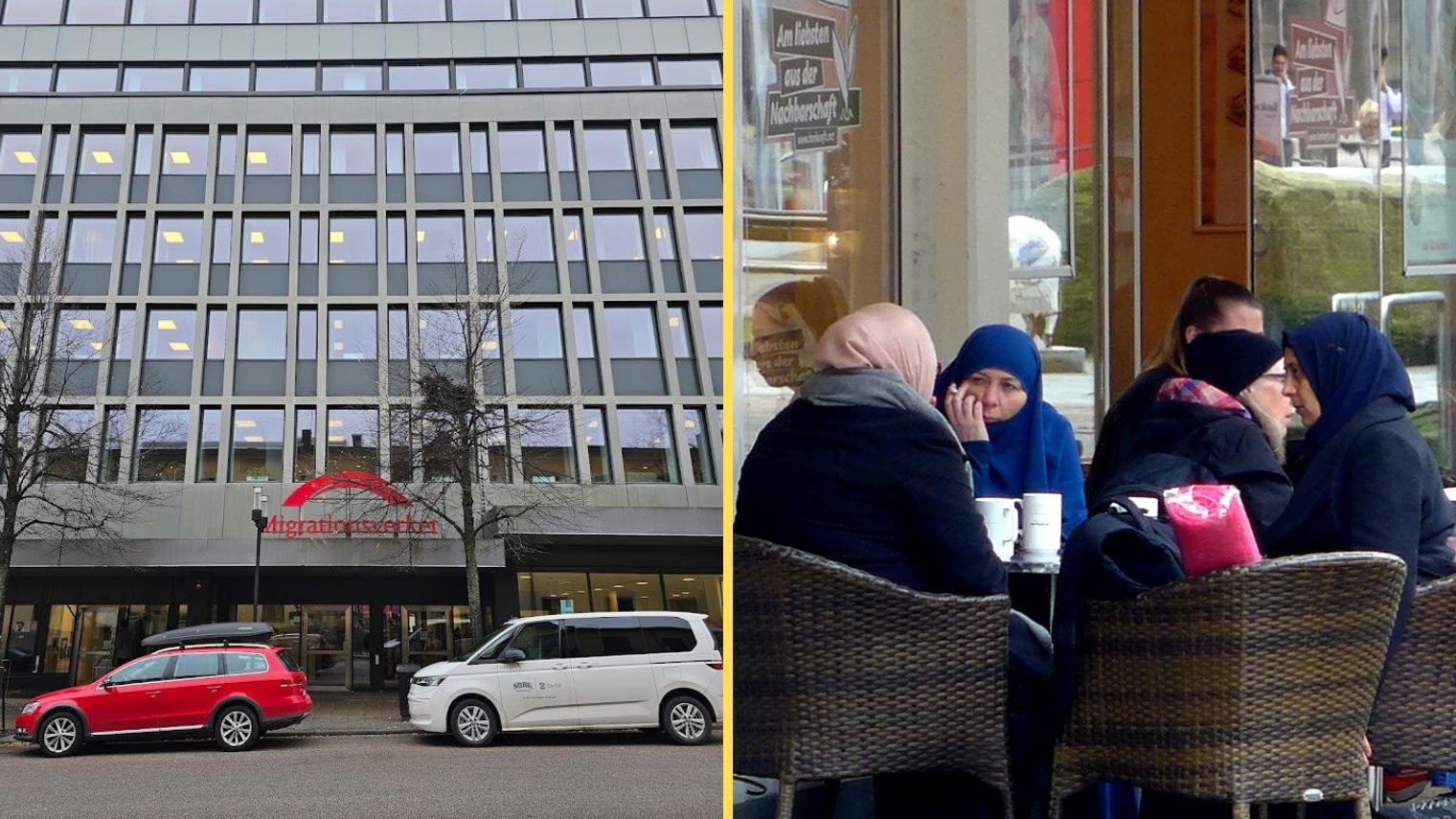
Warns That Harsh Tone Scared Off Immigrant Voters
The broader rhetoric around migration policy is also being discussed within the Sweden Democrats after the election loss.
In Ekot’s interview, Bäckström Johansson is asked about Vice Party Chair Henrik Vinge’s analysis that the harsh tone against Muslims and the debate about teenage deportations may have harmed the party.
According to this reasoning, SD may have mobilized voters on the left while scaring off voters of foreign background who otherwise share the party’s conservative values.
– I absolutely think there may be something to that, replies Bäckström Johansson.
However, he does not want to draw any definitive conclusions before the party’s post-election analysis is complete.
He also believes that other parties have contributed to spreading a misleading image of the Sweden Democrats’ migration policy.
According to Bäckström Johansson, there were claims during the campaign that people risked deportation if SD came to power, regardless of whether they worked, obeyed the law, and had settled in Sweden. He argues that such messages make it harder for the party to reach voters with an immigrant background.
The party secretary does admit that the debate over the deportation of teenagers may have made it harder for voters to understand what the party actually wants to achieve.
– That kind of situation destroys the image, he says about cases where people who have followed the rules may still face deportation.
He emphasizes that SD’s goal is not to affect law-abiding people who work, learn Swedish, and want to become part of society.
Distancing from the Theory
The interview also raises questions about the analysis advanced after the election by, among others, Tobias Andersson and Kent Ekeroth—that the large number of new Swedish citizens of immigrant background has affected the outcome in favor of the left.
Bäckström Johansson says he does not fully share that analysis. He agrees that immigration and the voting behaviors of new citizens influence the election outcome but rejects the idea that the Social Democrats have intentionally pursued extensive immigration policy to create more voters for themselves in the long term.
– That’s more of a speculation, he says.
The party secretary describes such a strategy as both costly and uncertain. At the same time, he notes that immigration from non-European countries has changed the electorate and that in his view, this has impacted the election result.
However, he does not believe that SD’s election loss can mainly be explained by changes in the composition of the electorate over the last term.
Points to Suspected Clan Voting
Bäckström Johansson instead raises suspicions of undue influence among voters in some immigrant-dense areas. He points out that there are electoral districts where up to 95–97 percent of votes go to one political side, which he believes warrants closer scrutiny.
– Of course, it is obvious that there has been, if you want to call it clan voting or vote-buying, and so on, he says.
When host Johar Bendjelloul objects that this is still under investigation rather than a proven fact, Bäckström Johansson admits the matter is under review.
He refers to the police and the Election Review Board and says that suspected irregularities must be investigated to maintain confidence in democracy. However, the uneven election results in individual districts are not in themselves proof of vote-buying or organized clan voting.
At the same time, Bäckström Johansson says it is positive that people are using their right to vote. He believes SD needs to get better at winning trust even in areas where the party has traditionally had weak support.
SD Risks Losing Its Political Distinctiveness
Beyond criticism of individual campaign issues, Bäckström Johansson highlights a larger strategic challenge for the Sweden Democrats. After four years as a cooperation partner in the Tidö government, SD has achieved significant parts of its policy, notably in migration and criminal policy. But, according to the party secretary, these successes have come at a cost.
As the Moderates, Christian Democrats, and Liberals have moved closer to the Sweden Democrats in several policy areas, differences between the parties have become less clear to voters.
Bäckström Johansson notes, for example, that the Moderates have overtaken SD in public trust when it comes to law and order. He also believes that the party’s policy development has suffered when so much energy has been devoted to implementing the Tidö Agreement.
– Of course you lose a bit of your identity when you have that kind of cooperation, he says.
The party secretary notes that SD ran with government responsibility for the first time and that some voters who migrated from the non-socialist parties to SD may now have returned to their old parties.
Despite the election loss, he emphasizes that the Sweden Democrats had their second best parliamentary result ever.

Wants to Broaden Policy Towards Welfare Issues
To win back voters, Bäckström Johansson sees a need to develop the Sweden Democrats’ policies in more areas. He particularly points to schools, care, and other welfare issues, where he sees potential for the party to grow.
– I think we have great potential to build trust in some of these areas, he says.
He highlights the dental care reform for the elderly as an example, saying SD should have promoted it more clearly.
The party secretary describes a possible period in opposition as a chance to spend more time on policy development after four years of negotiations, compromises, and implementation of joint government policies. He calls it a fresh start.
Tobias Andersson also criticizes the party’s overall election strategy, saying SD lacked a clear overarching theme in the campaign.
– We could have been better at finding a theme, a handful of issues to communicate about more persistently, Andersson tells SVT.
Ousted SD Top Criticizes Election Strategy
Andersson’s comments come at the same time as he has lost his former position as chair of the Riksdag’s business committee. After the party’s reshuffle, he has instead been placed as second in the education committee, a change he admits he did not wish for.
– I haven’t wanted to be in the education committee. I enjoyed the business committee. But the education committee has many important issues, he tells SVT.
Andersson understands why the move has been described as a demotion, while party leader Jimmie Åkesson has denied claims that anyone has been demoted. However, there is nothing in the available interviews to indicate that the change in Andersson’s assignment is linked to his criticism of the hijab proposal.