
During the past parliamentary term, the Tidö government has granted hundreds of thousands of new citizenships. Here, we detail where these individuals came from and how the pace of approved citizenships has changed over the term.
The Tidö government took over on October 17, 2022. Therefore, we count Tidö as responsible starting from November 2022.
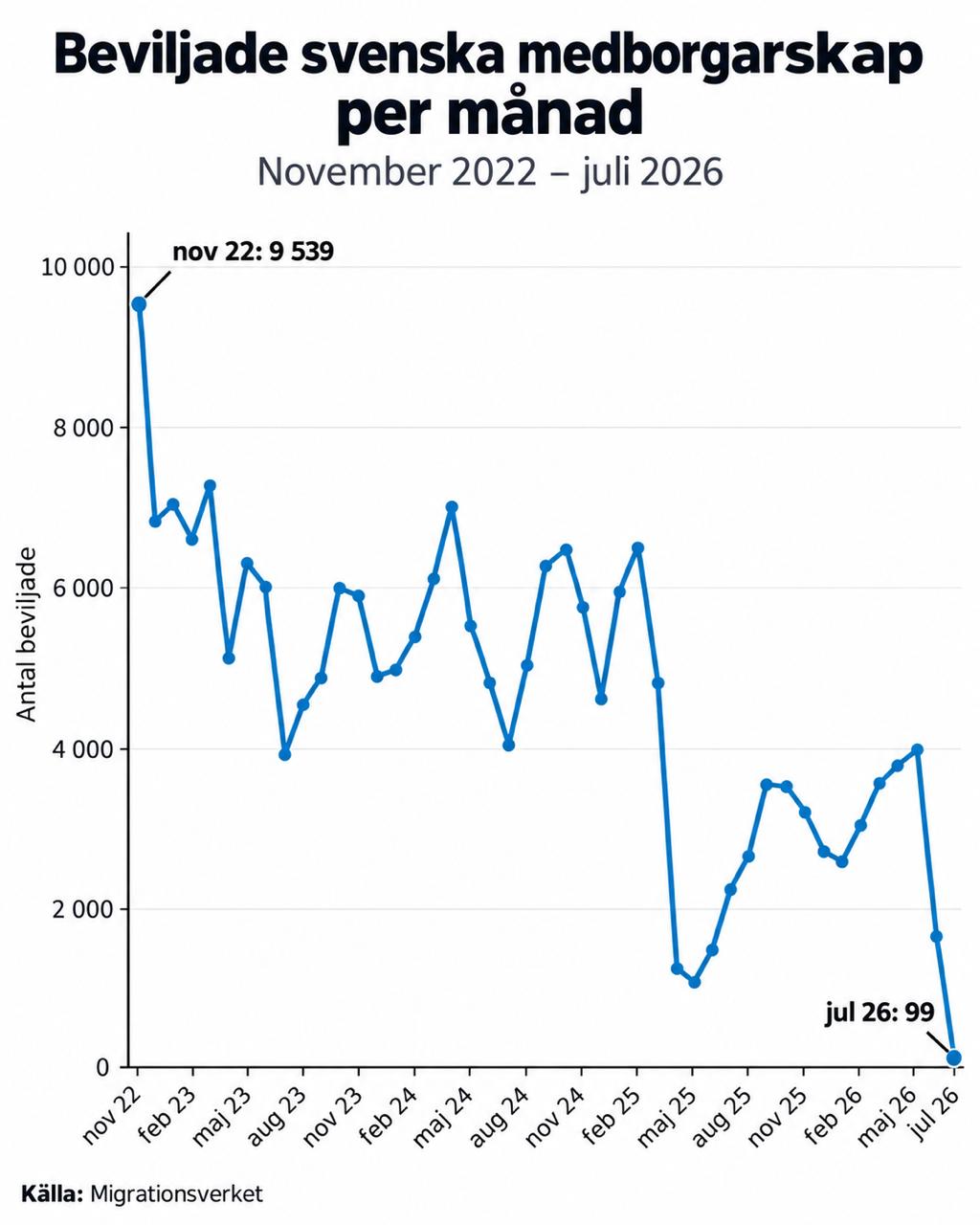
The Migration Agency has not yet reported figures for August, so the last month in our calculation is July 2026. Based on this, here is what the recent mandate period looked like, month by month, in newly approved citizenships:
As you can see, Tidö managed to curb citizenship approvals, with a record low of 98 citizenships granted in July, but this only happened towards the end of the term.
The Nationalities
So which nationalities did Sweden grant citizenship to the most? Here’s the top ten list:
| Rank | Previous Citizenship | Number |
|---|---|---|
| 1 | Syria | 29 441 |
| 2 | Eritrea | 19 623 |
| 3 | Afghanistan | 15 766 |
| 4 | India | 9 008 |
| 5 | Somalia | 8 226 |
| 6 | Poland | 8 154 |
| 7 | Iraq | 6 673 |
| 8 | Germany | 4 041 |
| 9 | Romania | 3 916 |
| 10 | Turkey | 3 729 |
Broken down by region, the numbers look like this:
| Region | Number | Share |
|---|---|---|
| Middle East/Africa | 88 816 | 42.8 % |
| Europe | 57 753 | 27.8 % |
| Other Asia | 42 521 | 20.5 % |
| North America, Central America and the Caribbean | 3 721 | 1.8 % |
| South America | 3 459 | 1.7 % |
| Oceania | 557 | 0.3 % |
| Stateless/unknown/under investigation | 10 673 | 5.1 % |
| Total | 207 500 | 100 % |
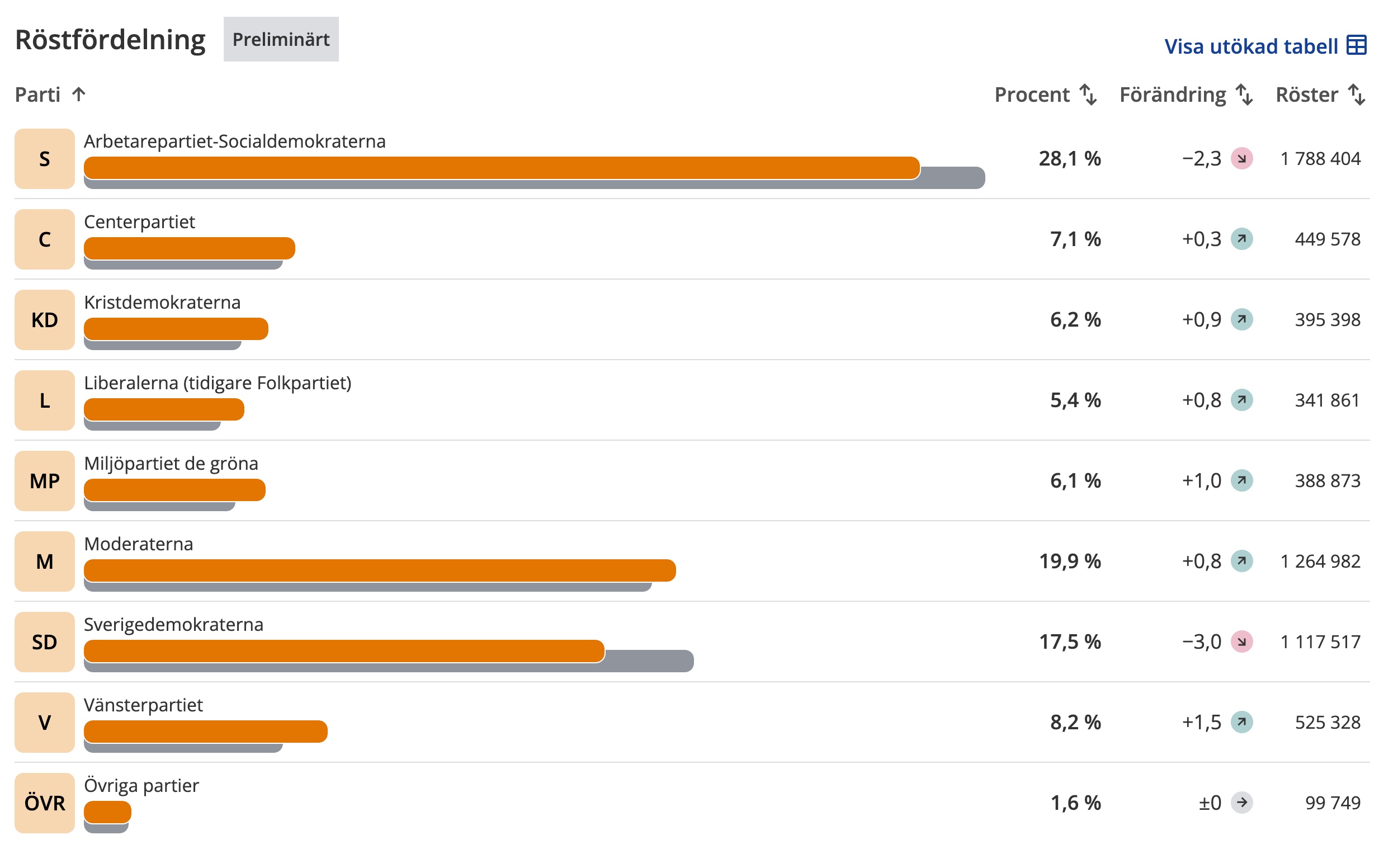
At the time of writing (September 14th, 15:55), the difference between the blocs is 32,425 votes in favor of S–V–MP–C (0.5 percent).
According to a calculation previously published on Samnytt, the granted citizenships during this parliamentary term have brought around 46,000 additional votes to the left-wing bloc. Assuming an even higher turnout among this group in this year’s election, which all signs indicate, that number could rise to 50–60,000 extra votes.
Without these new citizens, the Tidö parties would have won yesterday’s election by roughly 20–30,000 votes.
READ MORE: Ekeroth: 217,000 new citizens—The right’s historic own goal?