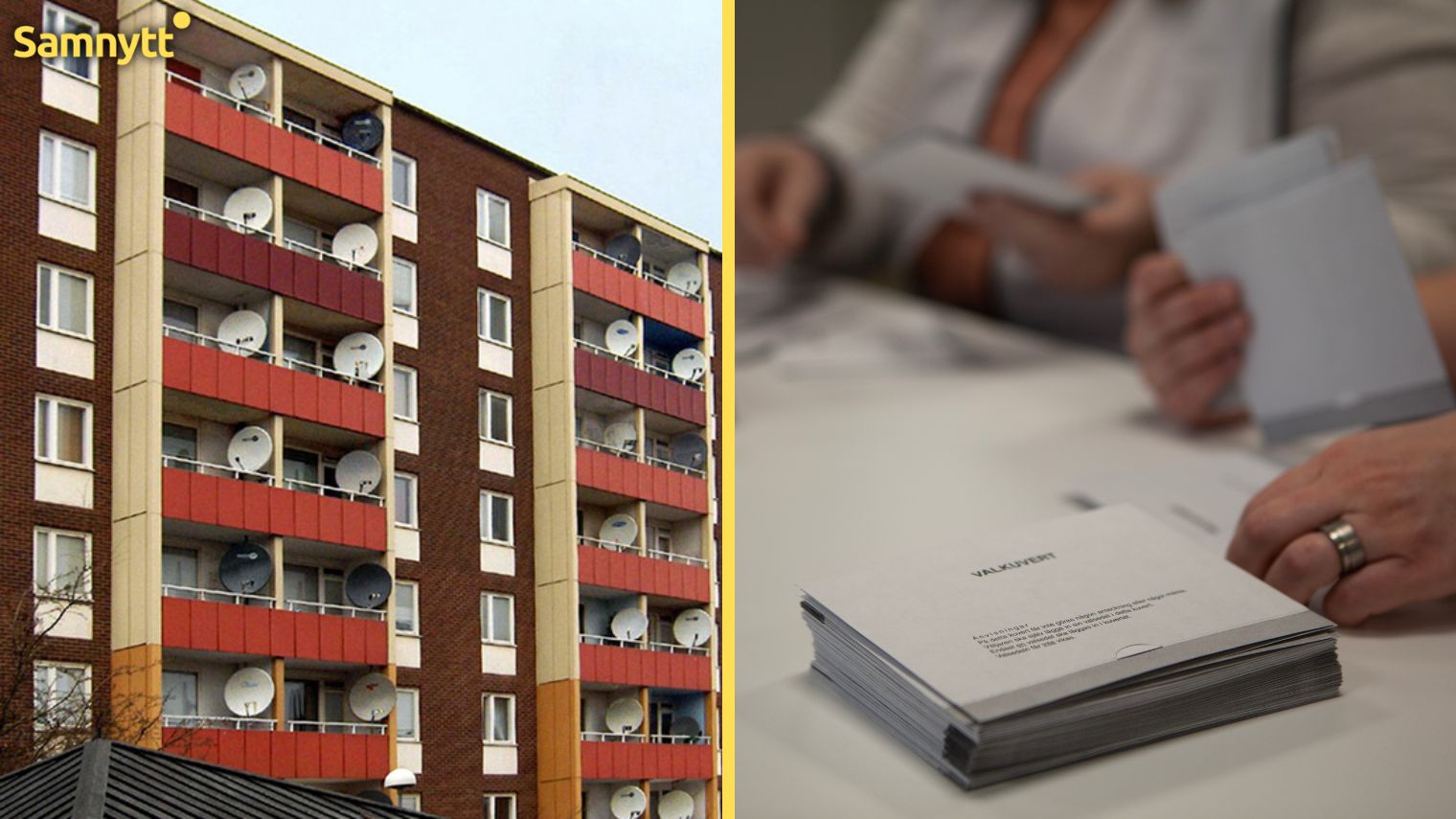
Before the election, many had feared and warned that it might become impossible for the right to win elections in the future, as the number of immigrants—who largely vote for the left—has grown so much. That may have now come to pass.
The 2026 Swedish parliamentary election became an extremely tight power struggle between Magdalena Andersson’s red-green opposition and Ulf Kristersson’s Tidö parties. When about 95 percent of the votes had been counted, the opposition was at around 49.5 percent, compared to 49.1 percent for the government side. This corresponded to 176 seats versus 173.
The preliminary result thus points to Andersson potentially reclaiming the prime ministerial post, but the margin is so slim that the final vote count and government negotiations will be decisive.
For Magdalena Andersson (S), the result is both a success and a warning sign. The Social Democrats are still the largest party and her bloc appears poised to win in terms of mandates, but the party is simultaneously making its worst election performance in a very long time, with support below 28 percent.
READ ALSO: Disinformation in Parallel Election Campaigns in Arabic – Party Secretaries Called to Crisis Meeting
During the election campaign, Andersson largely tried to make the election about government power and warned of a Sweden where the Sweden Democrats would receive ministerial positions. In the final phase of the campaign, she said, among other things, that voters could wake up with 12–14 SD ministers after the election.
At the same time, Andersson has been cautious about committing to exactly which parties should be included in a potential government. Ahead of the election, she said that the important thing was for voters to know what policies she wanted to pursue and that she was prepared to work with any parties willing to participate.
The problem after a possible victory is that the red-green coalition is politically fragmented, not least between S and V and on the question of government formation.
SD Losing Support
For Ulf Kristersson (M), the election result is significantly tougher. His government appears preliminarily to be losing power, even though the Tidö parties together almost match the opposition. During the campaign, Kristersson defended the partnership with SD and argued that a continued right-wing government was needed to, among other things, combat gang crime, strengthen security, and continue the current economic policy. Before the election, he described a left-wing government alternative as a potential “chaos government.”
The major political drama is at the same time the situation for SD. The Sweden Democrats appear to be losing ground, thus relinquishing their previous position as the second-largest party. This is particularly important for Kristersson since SD has been crucial for the Tidö government’s parliamentary support during the term and, ahead of the election, had also demanded a greater role in government.
Kristersson, on the other hand, has downplayed claims that SD would get a large number of ministerial posts, saying that it doesn’t happen automatically.
Bourgeois Majority in Parliament
Despite Magdalena Andersson’s red-green bloc appearing poised to take over government power, there is still a bourgeois majority in parliament if the Centre Party is counted. However, C has stated that the party does not wish to revive a bourgeois government cooperation and primarily wants to see a government led by the Social Democrats.
This means that Andersson could get support from a majority in parliament, but that the political map is more complicated than a traditional left–right division: the bourgeois parties are still more numerous than the red-greens, while the Centre Party stands closer to S on government issues than to M, KD, and L.
Immigrants Decided the Outcome
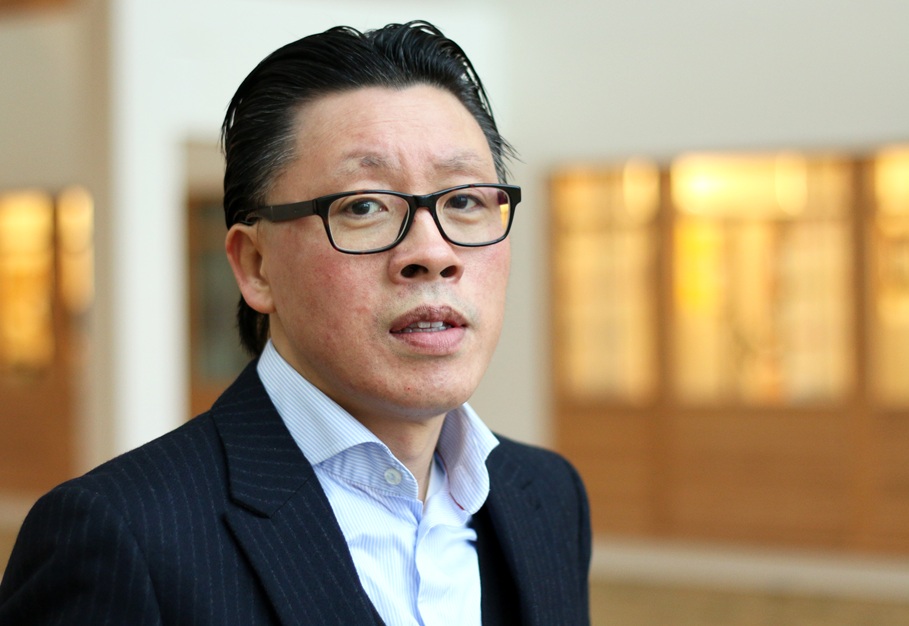
As expected, the left-wing parties received strong support in immigrant-dense areas, and despite numerous scandals within the Left Party, support increased. According to left-radical researcher Tobias Hübinette, it was voters of non-European background who caused both the Social Democrats’ decline and the Left Party’s rise and who also ensured the opposition’s potential victory.
Hübinette notes that since the previous election, an additional 200,000 citizenships have been granted to people, the majority of whom are of non-European background, and on Sunday, they were able to vote in a Swedish parliamentary election for the first time.
At the same time, it appears that the left parties’ parallel campaigns in Arabic and Somali have paid off as voter turnout increased in many of these areas. He believes that the Left Party’s rise is specifically due to the issue of Palestine.
A Quarter of the Electorate
Voters with foreign and non-European backgrounds now make up a quarter of the electorate, and according to SVT’s voter survey, 70 percent of them voted for the opposition. If only Swedes and Nordic and European immigrants had voted, the Tidö government would probably have secured a relatively easy victory.
At the same time, Hübinette predicts that in the next election, it will become even harder—if not impossible—for the right to win:
Thus, the Tidö parties’ and SD’s worst nightmare has come true, and given that voters of non-European background will make up an even larger share of the electorate in the 2030 election, the right now fears that they may never again be able to win an election due to the already existing and rapidly increasing (super)diversity within the Swedish population composition.
READ ALSO: Vote Counting: SD COLLAPSES – But It’s Close Between the Blocs