The established parties continue to dominate this year’s election, but at the municipal level, a few smaller challengers still manage to make their mark. In Stockholm, Gothenburg, and Malmö, the major balances of power seem likely to persist, with the red-green bloc set to govern all three major cities.
In Stockholm, the Social Democrats, Green Party, and Left Party appear able to continue governing together. The three parties together garner around 52.7 percent of the vote, and thus look set to retain their majority in the Stockholm City Council. The Green Party is making gains and emerges as the big winner on the red-green side.
In Gothenburg as well, the results point to continued red-green governance. The Social Democrats, Left Party, and Green Party seem on track to secure a majority in the municipal council, which would give Jonas Attenius and his coalition partners a much easier situation than during the previous term.
READ ALSO: Did non-European immigrants give the opposition the victory?
It will also remain red-green in Malmö. The Social Democrats are the largest party and, together with the Left Party and Green Party, the red-green bloc has around 55 percent of the votes in the preliminary count. Therefore, no change of power is in sight.
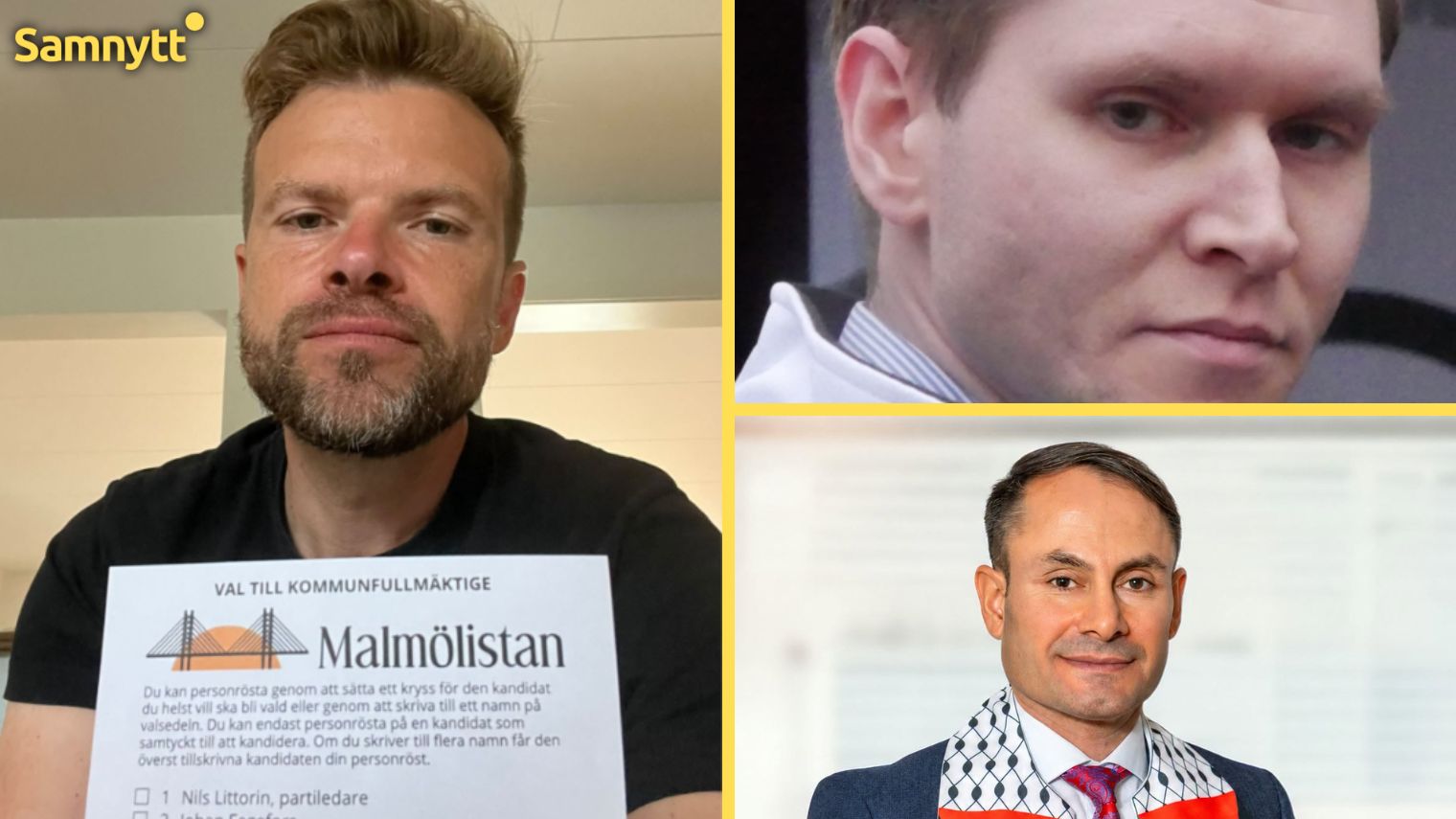
But Malmö also offers one of the election’s clearest successes for a local party. Malmölistan appears poised to enter the municipal council after receiving about 3.9 percent of the votes when nearly all districts have been counted. This equals about three seats and is a strong boost from the 2022 election when the party had only 0.8 percent.
Party leader Nils Littorin has, during the campaign, positioned Malmölistan as an alternative to the established parties and has harshly criticized the city’s long-standing Social Democratic rule. Now the party will, for the first time, have a seat in the council and the chance to influence local politics from the inside.
Allard Far from Parliament
In Örebro, however, there was no parliamentary upset for Örebropartiet. Markus Allard had banked on the special opportunity to enter parliament by securing at least 12 percent of the vote in Örebro county. This rule allows a party that does not meet the national four percent threshold to still get a parliamentary seat if it obtains at least twelve percent in a parliamentary constituency.
When most votes had been counted, however, the “other parties” category—which includes Örebropartiet—stood at around five percent in Örebro county. Thus, Allard’s parliamentary dream appears to have fallen short. Locally, however, things are going significantly better. Örebropartiet looks set to become the second largest party in Örebro municipality, increasing its seats from five to eleven in the municipal council.
Nyans Collapses
Another party struggling is Nyans. The party made a major breakthrough in 2022 by winning three municipal seats, but this year’s election appears to be a severe setback. In Malmö, Nyans is at about 0.1 percent in the preliminary count, with the party not regaining its strong position from four years ago.
The election night also took a dramatic turn for party leader Mikail Yüksel, who announced he is stepping down as leader of Nyans. He said he would remain in the role until the next party congress, working in the meantime to find a successor and a new party board. Yüksel added that he really should have resigned after the 2022 election already.
Visionpartiet, which uses the label “Vi,” also sought to establish a local presence by standing in Stockholm, Gothenburg, Malmö, and Landskrona, among other places. The party has its roots in defectors from Nyans and has thus tried to take over parts of the voter base Nyans had built. However, the election does not seem to bring any major breakthrough for them this year.
READ ALSO: Dagerlind: With population replacement policy, Sweden exemplifies the democratic paradox