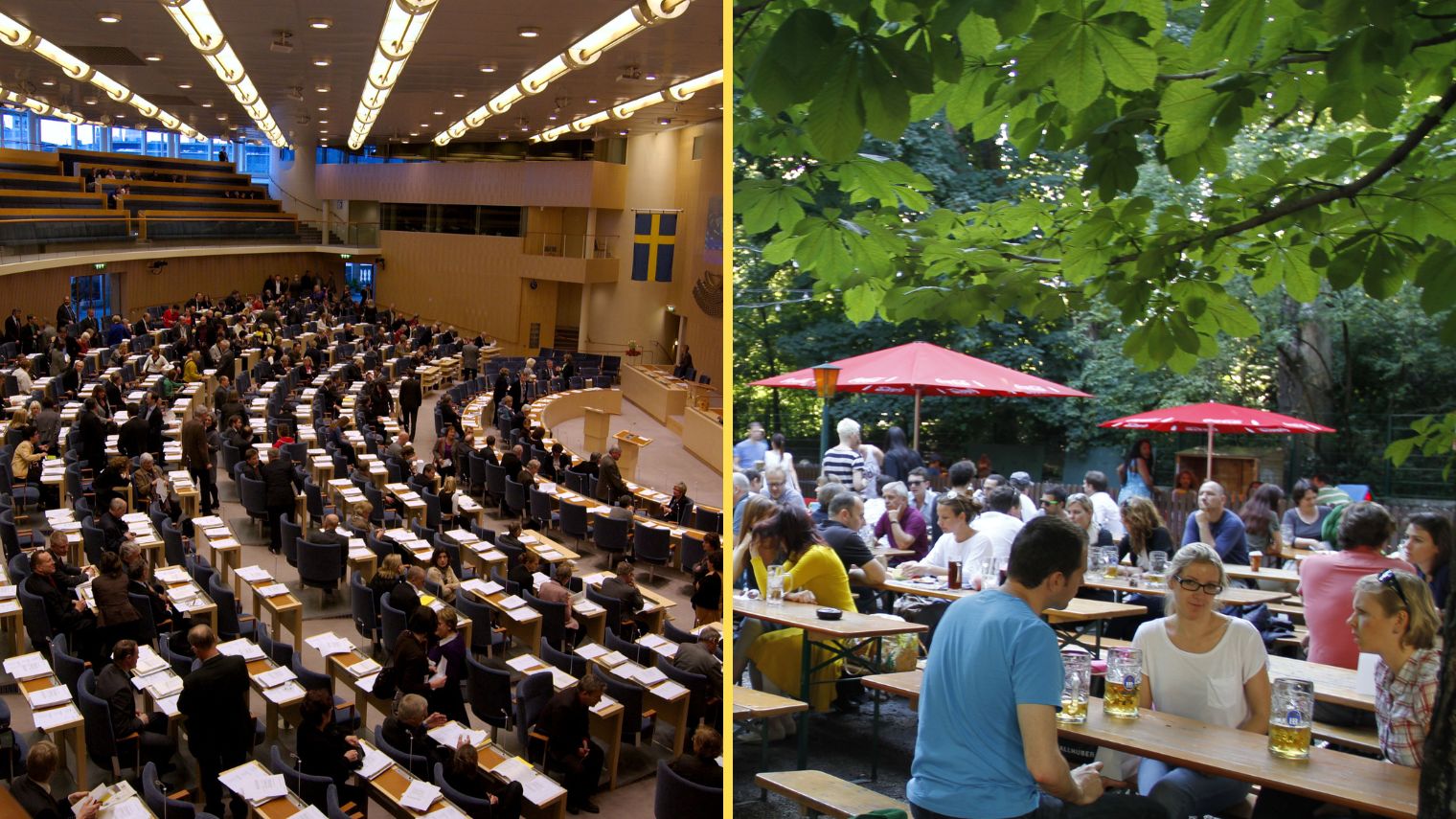
From June 1, the regulations for alcohol licenses in Sweden will change, paving the way for more types of serving establishments. As the requirement for having an in-house kitchen is removed, new concepts such as wine bars, beach bars, and biergartens are expected to have greater opportunities to establish themselves.
Following a government proposal, parliament has decided that restaurants will no longer be required to offer prepared food from their own kitchen in order to serve alcohol. At the same time, the rules requiring seating at the bar counter have also been abolished.
During the debate ahead of the vote, the Christian Democrats emphasized the importance of a more vibrant nightlife, arguing that this change could help make both Stockholm and other Swedish cities more attractive and lively. The proposal was supported by a broad majority in parliament.
According to assessments, the reform could lead to a sharp increase in businesses where beverages, rather than food, are the main focus. The number of pubs, sports bars, and similar establishments is expected to grow significantly faster than before, with around 85 new nightlife-focused venues per year and an additional approximately 190 restaurants in other categories.
Minister of Finance Elisabeth Svantesson (M) and Minister for Health Care Elisabeth Lann (KD) have previously described that the legal change could create opportunities for concepts already common in several European countries, such as small wine bars, biergartens, and smaller salons. Some observers also believe that beach bars may become more common.
Red-Greens Critical
Not everyone is positive about the reform, however. Several referral bodies have expressed concern about how the changes may impact public health. The government expects that total alcohol consumption will rise slightly. According to their estimate, the change could contribute to about a 0.22 percent increase in alcohol consumption, which in the long run is judged to potentially lead to around eleven additional alcohol-related deaths per year, according to news agency TT.
The Social Democrats, Left Party, and Green Party consider that the consequences have not been analyzed thoroughly enough. The parties are mainly opposed to the part of the proposal allowing catering companies to obtain permanent serving licenses without having their own kitchens.