A new report shows how organized crime is no longer acting outside society – but operates at its very heart. And politics is no exception.
Swedish politics has long been marked by an ambition to reflect the country’s ethnic diversity and open the doors for immigrant groups to participate in democratic processes. But the same openness has created vulnerabilities.
A new comprehensive report shows that hundreds of individuals with links to organized and predominantly immigration-related crime have had and still hold political positions – and that these roles can provide access to influence, networks, and legitimacy.
READ ALSO: Green Party politician convicted – laundered money from fraud
The question is no longer whether crime affects society – but how deeply it has already penetrated it.
The Downside of Openness
For a long time, Swedish parties have actively worked to broaden representation. More voices, more backgrounds, and more experiences were believed to strengthen democracy in a society where ethnic diversity has exploded over just a few decades.
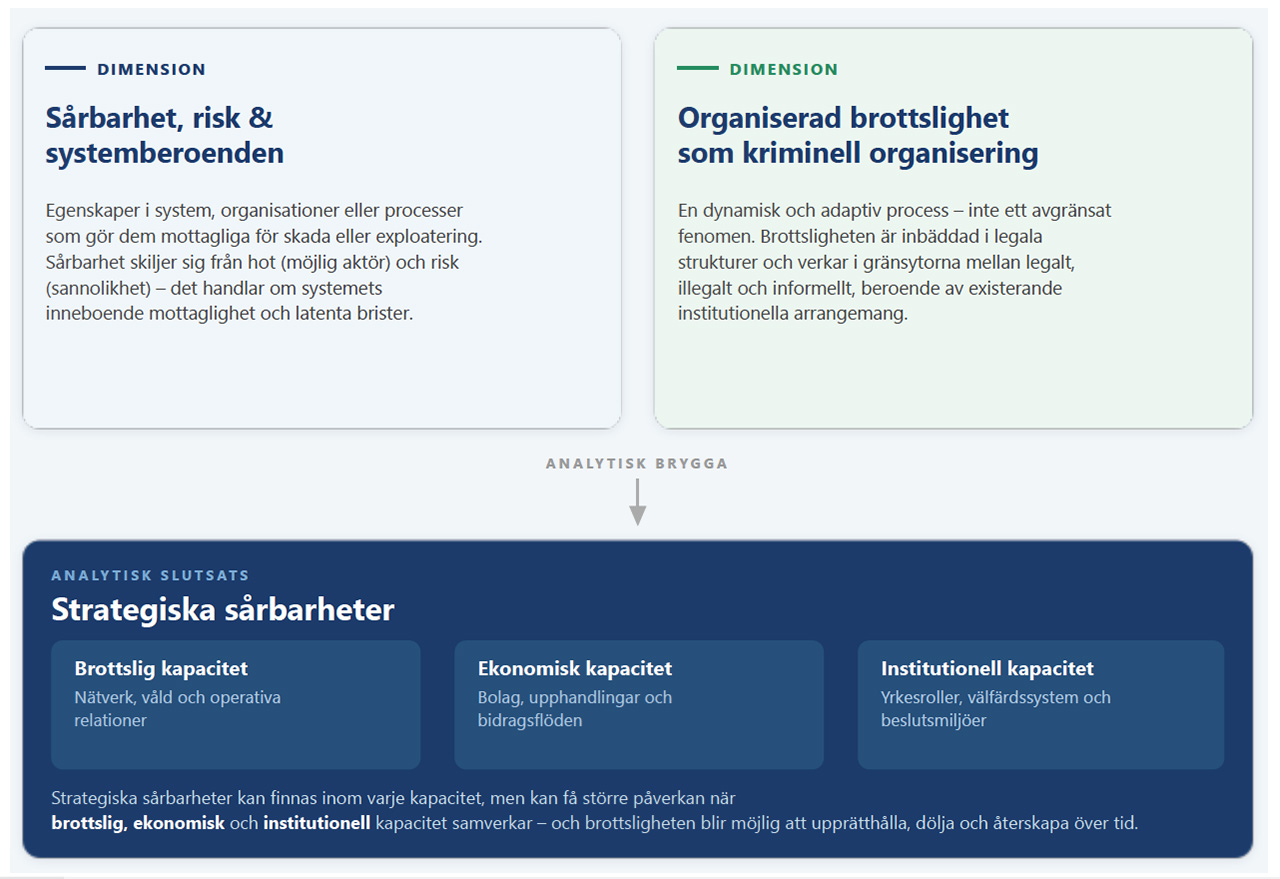
But in a system where the barriers are low and oversight is limited, risks also arise. The new situation report on organized crime points precisely to such “strategic vulnerabilities” – places where criminal actors can gain access to resources, information, and influence. Politics is one of these vulnerable environments.
313 Politicians With Criminal Connections
The most notable figure in the report is that 313 people with links to organized crime have held political positions at the local level. Of these, 73 were still active when the election cycle began in 2022. Around these key actors is an assisting network of several hundred close suspects and several thousand board members in a wider circle.
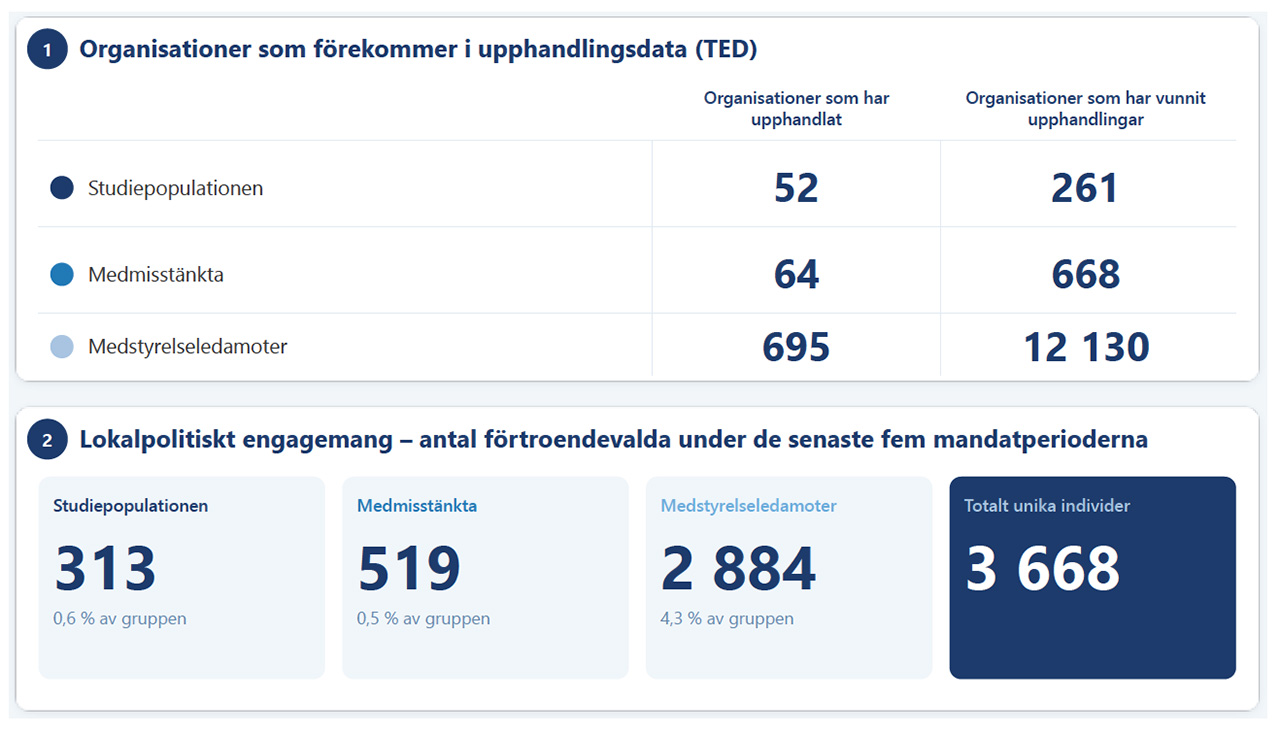
It’s not just about peripheral connections. The study focuses on people at or near the core of organized crime – a network estimated to comprise over 50,000 individuals.
“That the number was so high is surprising,” national debt collector Fredrik Rosengren told SvD after being taken aback by the steep statistics.
At the same time, the researchers’ goal wasn’t for the material to identify specific individuals or parties. The analysis is performed at the so-called aggregate level, where only the researchers themselves know which politicians in which parties have been bought by criminal gangs.
Politics as a Strategic Position
The perhaps most important conclusion of the report is not how many – but why it matters. Local political posts provide insight into decisions, access to networks, the chance to influence procurement, and institutional legitimacy.
This makes politics a strategic node in what is described as a “relational and system-embedded” criminal setup – where crime and legal structures overlap. The vulnerability lies not only in the fact that people with connections are present, but in what these positions can enable.
A System, Not Individual Actors
A central point in the report is that organized crime can no longer be understood as isolated groups or crimes.
Instead, it is described as a system linked to businesses (over 20,000 companies at its core), present in the labor market, integrated into the welfare system, and with contacts in public tenders.
READ ALSO: Police raid on city hall: Social Democratic politicians suspected of serious embezzlement
When the surrounding networks are also counted, the organized criminal structure encompasses more than 224,000 individuals and can be linked to about 40 percent of all criminal suspicions in Sweden. It is in this broader context that politics must be understood, according to the report’s authors.
The Money – And The Power
The report also shows how the criminal economy flows through legal systems. This involves around 27 billion SEK in benefits and compensations to the core group, and up to 178 billion SEK when including the networks.
At the same time, actors with criminal connections are involved in public tenders – both as suppliers and in organizations making decisions. This means that the same networks can operate in companies winning contracts, in systems disbursing funds, and in the political bodies setting the framework.
Not Total Infiltration – But Bad Enough
The authors emphasize that the document should not be read as showing that politicians in Sweden are systematically controlled by criminal (immigrant) gangs. The majority of the country’s elected officials are not currently compromised.
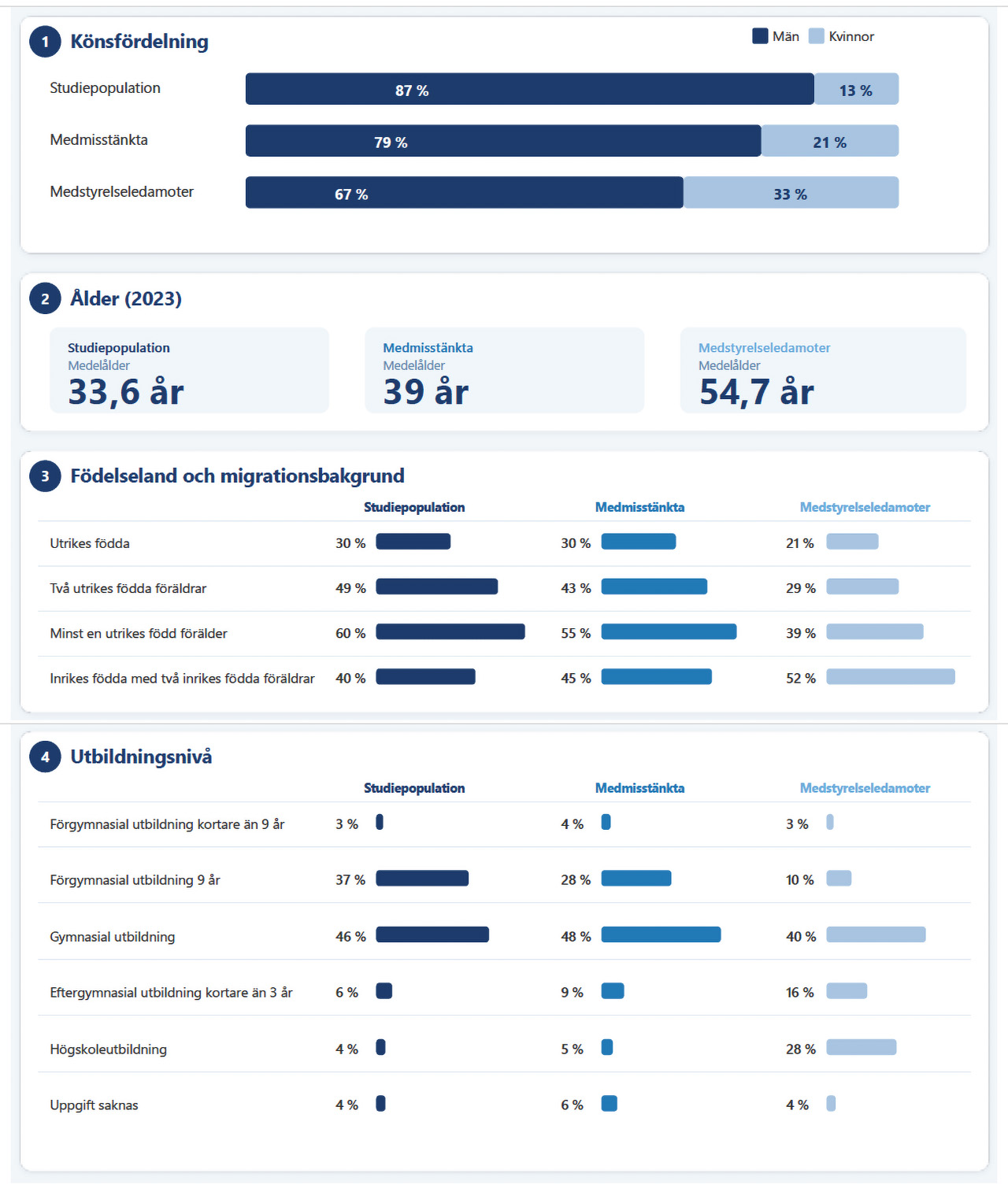
Still, what it shows is deeply alarming: that the line between legal and illegal is being blurred. That individuals can move between several worlds and hold multiple posts. That the system’s openness and prioritizing of diversity over more traditional merit can be exploited.
A Broader Social Problem
Politics is only part of the picture. The report highlights similar points of contact in healthcare, social work, the financial sector, and public administration.
It is – at least so far – not a matter of these sectors being “taken over” by the gangs, but that they contain functions which are exploited – especially where oversight is lacking.
An Uncomfortable Conclusion
Perhaps the most uncomfortable finding the authors make is that the problem is not just crime itself – but how well it manages to integrate into society’s own structures.
When criminal capacity is combined with economic and institutional capacity, what the report describes as the most critical vulnerabilities emerge. And then it’s no longer enough to just combat individual crimes.
Sweden is not facing a situation where politics has been entirely taken over by criminal (immigrant) gangs. But the report shows that the door is ajar – and that some from that world have already stepped in. What is truly worrying is not the number – but the direction, the authors argue.
Read the full report HERE.