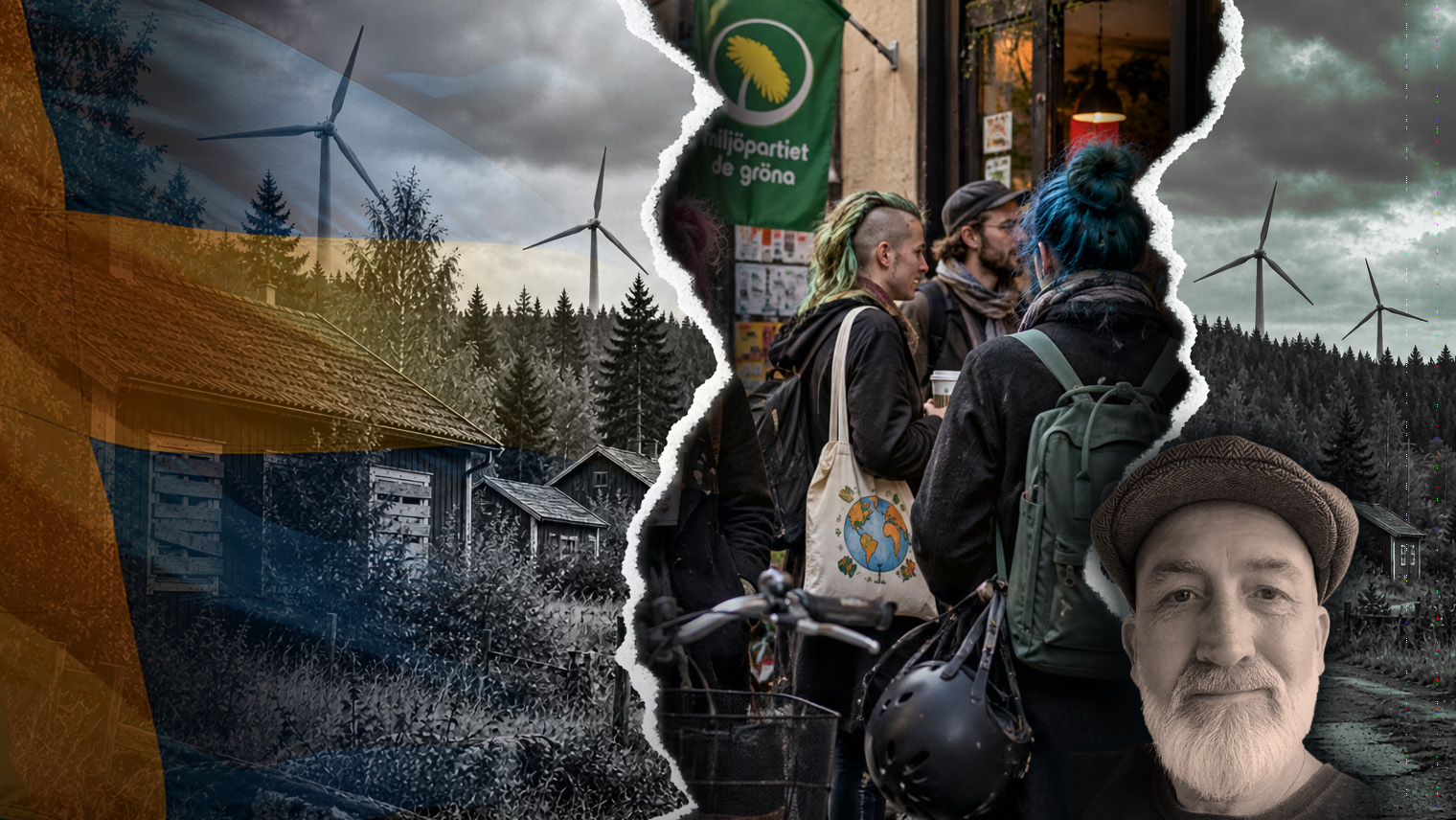
COLUMN • Wind turbines rising above small villages, shadowy billion-kronor projects requiring state support, and Northvolt ending in bankruptcy. Sweden has already gotten an expensive preview of what happens when politicians start treating the entire national economy as a climate policy experiment. Yet, the Green Party’s message for the next parliamentary term is that the green transition should be ‘kickstarted’ again.
Over the years, I have written numerous articles about wind power. The more I have investigated the issue, the more fascinated I have become by the gulf between the political vision and the reality for those who actually have to live in the midst of it.
At a seminar in Stockholm, wind power is just a graph of installed capacity. For the family whose house suddenly ends up next to an industrial area with turbines 200 or 300 meters high, it is a catastrophe—both for their health and their finances.
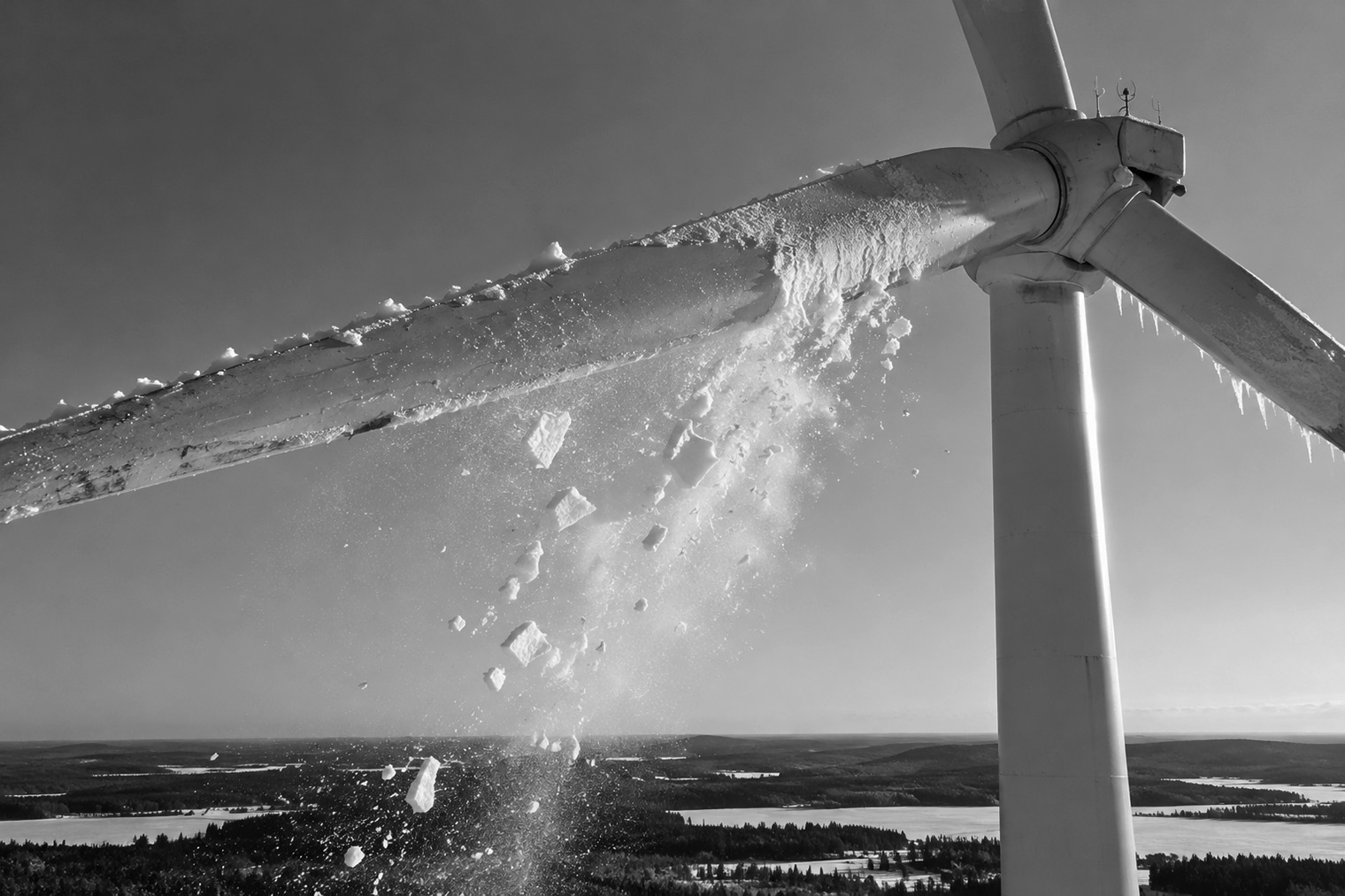
It’s about blinking obstruction lights across the night sky, altered landscapes, noise, and worries about ice throw from the blades – and properties that have become significantly harder to sell. The politicians who made these decisions almost never live in these places themselves.
In my recent investigation, real estate agents in the Västervik area talked about properties where wind power installations had very concrete economic consequences.
A house is not just a view from the kitchen window—for most people, it is the biggest investment of their lives. And the economic damage is especially insidious.
It doesn’t show up on the municipality’s maps of wind power areas, nor in the calculations of produced megawatt-hours. It isn’t discovered until the day the family wants to sell their house and the prospective buyers see the turbines, hear the noise, or learn that the night sky blinks red.
The politicians can move on to the next climate goal. The homeowner is stuck with the bill.
ALSO READ: Almost Half the Value of the House Disappeared – When the ‘Green Transition’ Came to the Village
The Green Party’s utopians and civilization wreckers—the ones pushing hardest for massive expansion—usually live safely in Södermalm in downtown Stockholm or Majorna in Gothenburg, well out of reach from wind parks.

When I recently interviewed Peter Jangeby, who lives about 1.3 kilometers from the 200-meter-high wind turbines in Lervik, he reacted to the use of the word ‘park.’
–They use that damn word park. They don’t even know what it means. A park is an area for enjoyment and recreation. They only use it to make it sound nice.
Yes, Peter was angry, and I understand him. His own suggestion was far less idyllic:
–Instead, they should call it an environmentally hazardous electricity operation, or an electricity industry, because that’s what it is.
ALSO READ: Five Wind Turbine Giants Around Kjell-Åke’s Family Farm: ‘A Damn Catastrophe’
When Politics Starts Playing Venture Capitalist
The same mentality reappears in the so-called green industrialization. Politicians identify the industry they believe we should live on in 20 years, taxpayers’ money and the state balance sheet are used to reduce the risks—and then the market is expected to do the rest.
But then reality caught up. And neither the wind power industry’s lobby organization Public Service (SVT, SR, and UR), nor the confused politicians who thought they would ‘bathe in gold,’ understood anything.
Jonas Andersson
Northvolt has become a monument to the senselessness of this way of thinking. The company is now bankrupt. The Swedish Parliament’s Committee on the Constitution has determined that the AP funds’ joint investment of six billion kronor was lost. Meanwhile, Northvolt’s debts reportedly amount to about 60 billion kronor.
This was not a small garage company some venture capitalists took a chance on. Northvolt became a symbol of an entire political era. The battery factories were supposed to show the world the way. Politicians, pension capital, and business were to create the future together.
But then reality caught up. And neither the wind power and green steel lobby organization Public Service (SVT, SR, and UR), nor the confused politicians who thought they’d ‘bathe in gold,’ understood anything.
And Now Stegra Is Next
The same questions must be asked of Stegra, formerly H2 Green Steel, although it would be wrong to describe Stegra as a new Northvolt—at least not yet. The project is still alive (albeit on borrowed time, it seems) and as recently as June completed a funding round of 1.4 billion euros.
ALSO READ: AP Fund Invests Billions in Stegra—Despite Massive Loss in Northvolt
But here too the state is in the background. The National Debt Office has decided on a state credit guarantee for loans to Stegra totaling 1.2 billion euros. So we are not talking about pocket money here.
And this is where my objection to the green transition really begins. I have nothing against new technology. On the contrary. If an entrepreneur invents a battery that is twice as good for half the price, builds the world’s best fossil-free steel plant, or manages to produce cheap electricity without emissions, that’s excellent.
In its budget motion, the party also argues for a special investment framework for the green transition. The justification is explicit – private capital is insufficient for investments of the size and risk required, which is why state-shared risk is ‘crucial’, according to the Green Party.
Jonas Andersson
But if the business idea is so brilliant—why must the state always stand by with its wallet?
ALSO READ: New Information: Stegra Needs At Least Ten Billion More
Now the Madness Is to Be “Kickstarted”
This is the context in which one should read the Green Party’s latest message. The party itself uses the term. The next government is to ‘kickstart the green transition again.’
The Green Party is demanding, among other things, a re-established Ministry of the Environment, a special climate cabinet under the Prime Minister, and a long-term climate fund to give the state greater opportunities to finance climate investments. And that’s not all.
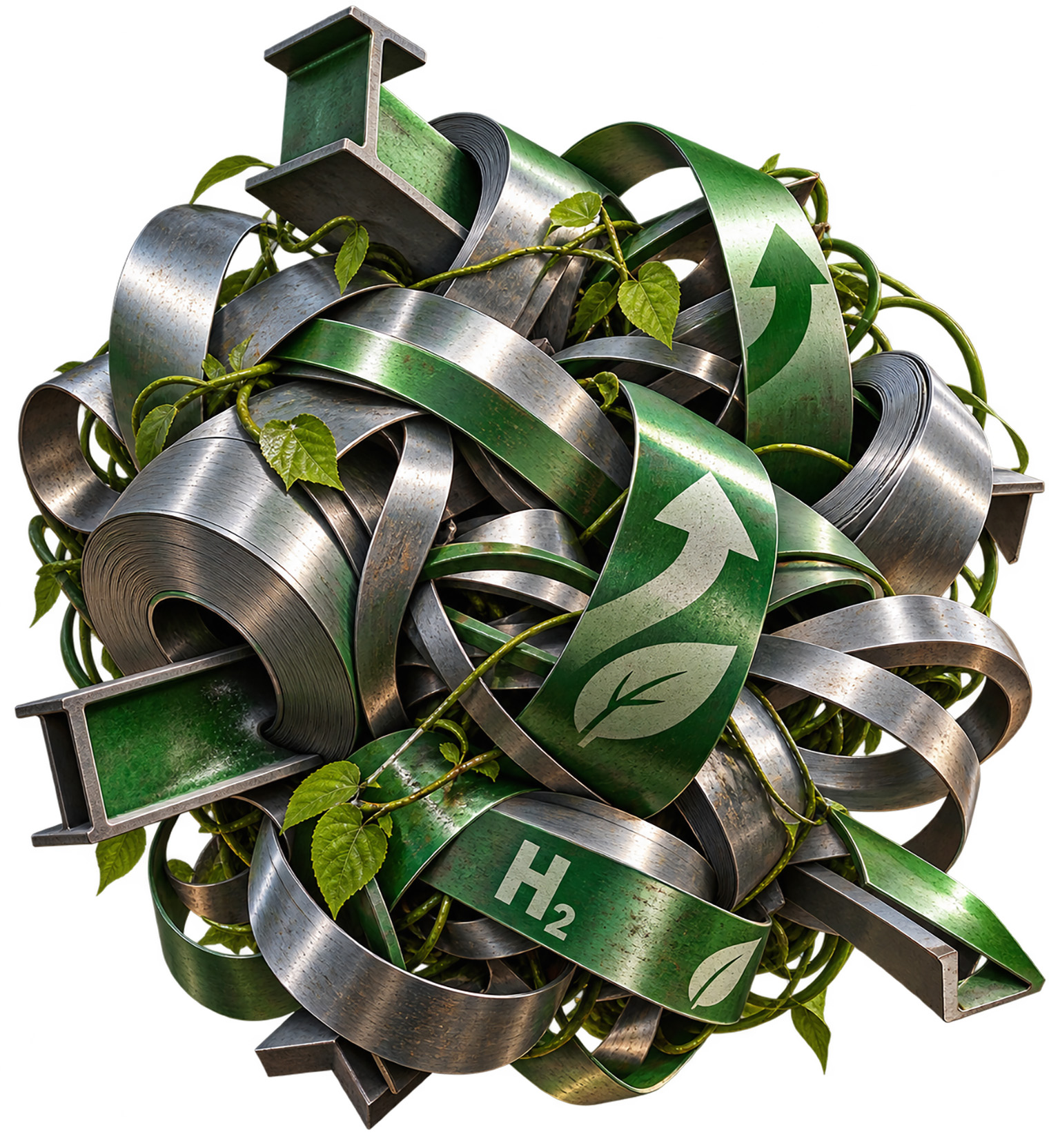
The Green Party’s economic policy includes proposals for green tax credits for large industrial investments. For certain large investments, the tax credit could amount to 25 percent of the eligible costs and a maximum of 1.6 billion kronor, within an annual limit of 4.5 billion kronor.
ALSO READ: Green Party: Wind Power, Sure – But Not In Our Backyard
In its budget motion, the party also argues for a special investment space for the green transition. The reasoning is explicit – private capital is insufficient for investments of the size and risk required, which is why, according to the Green Party, state co-risk is ‘crucial.’
Read that sentence again. Private capital is insufficient. Therefore, the state must share the risk. That is exactly where it starts to get really scary.
Somebody Else Pays
For politicians, ‘the state takes the risk’ means something abstract. The state is almost depicted as a rich uncle sitting on a sack of money who just needs to be persuaded to open it. But the state has no money of its own.
The money comes from people who work, run businesses, and pay taxes. And if the state borrows the money, the bill is simply passed on to the same people in the future.
Then people who happen to live in the affected area are expected to accept the consequences because the project is said to be important for the climate, Sweden, or even the planet. Those who protest are condescendingly called ‘climate deniers’—a term as tiresomely overused and deceptive as ‘racist’ or ‘right-wing extremist.’
Jonas Andersson
This is why the green transition is never just a discussion about climate. It is also about who bears the risk when politicians pick tomorrow’s winners.
ALSO READ: The Green Party’s War on Prosperity – Do You Want to Be Poorer?
The venture capitalist who bets wrong loses his own money. The politician who bets wrong holds a press conference, notes that ‘important lessons’ have been learned, and moves on to the next project. The taxpayer is left to pay.
That’s also why my many stories about wind power really belong together with Northvolt and Stegra. The scale is different, but the mechanism is familiar. Someone has decided that a certain technical solution is necessary for a broader political goal.
Then the people who just happen to live in the area are expected to accept the consequences, as the project is said to be important for the climate, for Sweden, or even for the planet. Those who protest are patronizingly labeled ‘climate deniers’—a term as tired, clichéd, and deceptive as ‘racist’ or ‘right-wing extremist.’
When a homeowner worries about the value of the biggest investment in their life, he becomes a special interest—but when the state risks billions, it becomes industrial policy. That’s the green transition’s political logic in a nutshell—profits are counted collectively, losses left to individuals or taxpayers.
It’s the Next Government I’m Worried About
And that’s why I’m significantly more worried about the upcoming parliamentary term than about any single wind turbine. The Green Party makes no secret of its ambitions.
According to the party, climate policy should not just be one among many policy areas, but permeate the economy, energy policy, transportation, and major investment decisions.
The party also expressly says it is ‘absolutely necessary’ for the Green Party to be part of the next government. Imagine then a red-green government where the Green Party gets climate and energy policy as an entry ticket to Rosenbad—and where the Centre Party can do even more damage, along with communists and Islamists in Andersson’s government.
Maybe we should first ask ourselves where the previous journey actually went—and how many billions, businesses, homeowners, and functioning parts of Sweden have to be thrown under the bus before the Green Party is allowed to turn the key again.
Jonas Andersson
It’s hard to imagine worse conditions for Sweden when Europe is at the same time becoming ever more uncertain and unpredictable.
A new Ministry of Environment, a climate cabinet, a climate fund. Green tax credits, state risk-taking, new energy projects, more wind power, and perhaps stalled nuclear expansion.
And diesel at 35, 40, or 50 kronor a liter—with a price shock rippling through the entire economy—transport, food, and other goods quickly becoming much more expensive, inflation surging, and electricity bills at risk of exploding.
New industrial prestige projects that no one has even thought of yet. And always the same argument: we must dare to invest!
ALSO READ: Green Corruption and a Poorer Europe After Stegra?
But note who this “we” actually is. It is not the politicians who are risking their personal fortunes when the billions roll—it’s the taxpayers who are expected to cover both the investment and the loss. Meanwhile, politicians shamelessly increase their own salaries significantly every year.
On the contrary, I think Sweden after Northvolt should dare to do something which, in the context of modern climate politics and massive propaganda from establishment media, seems almost revolutionary.
– We have to dare to say no.
No to politicians playing venture capitalists with taxpayers’ money. No to functional energy systems being rebuilt according to political buzzwords. No to the countryside being industrialized so city politicians can show off more green megawatts in their PowerPoint presentations.
And above all, no to the notion that every project automatically becomes wise just because you put the word ‘green’ in front of it. We’ve already kickstarted the green transition once.
Maybe we should first ask ourselves where the previous journey actually went—and how many billions, businesses, homeowners, and functioning parts of Sweden have to be thrown under the bus before the Green Party is allowed to turn the key again.