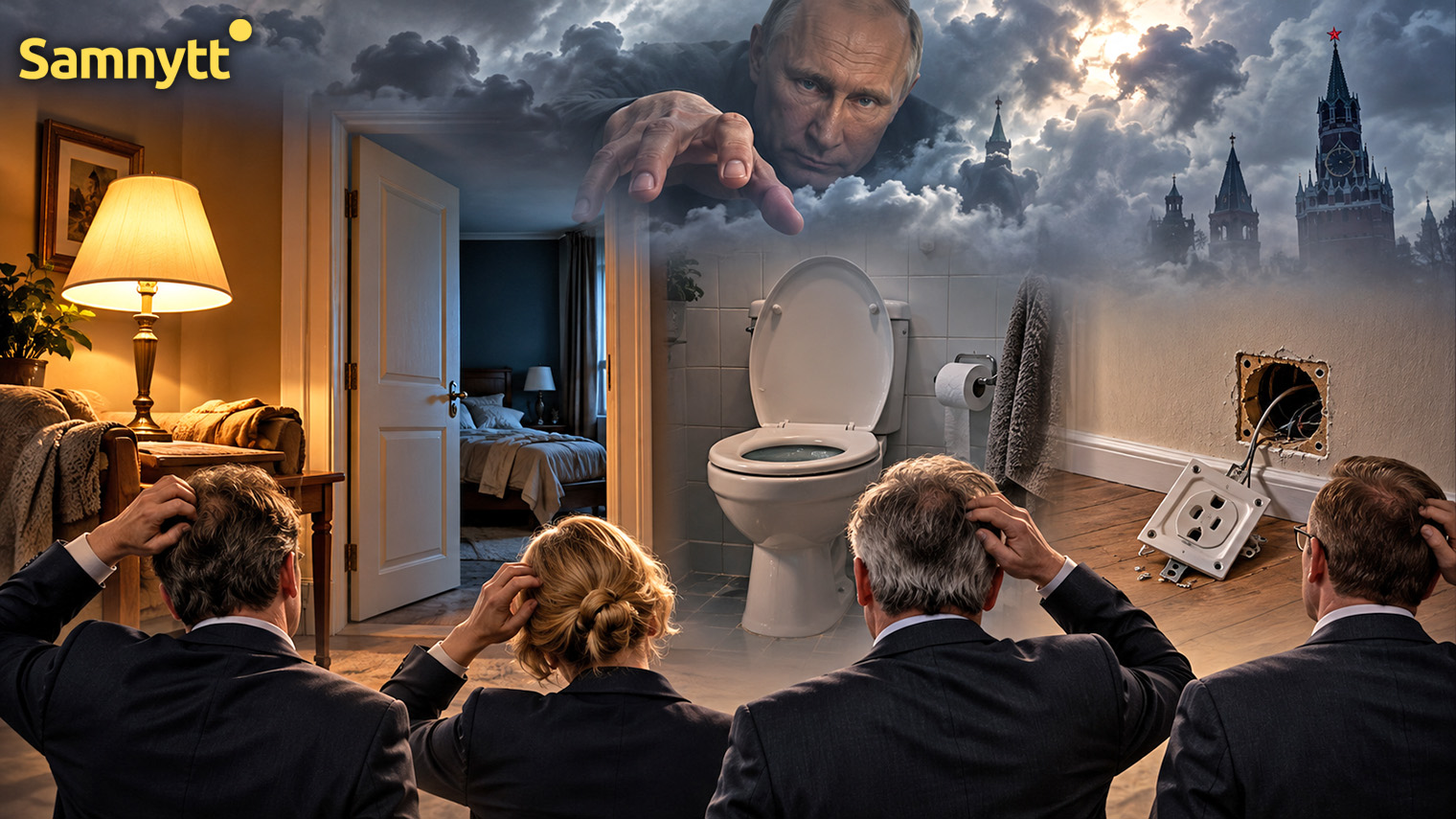
A light left on, an unflushed toilet, and an electrical socket lying on the floor. These are some of the oddities that have now raised suspicions about a major Russian spy operation targeting the homes of Finnish members of parliament. Although there are no signs of forced entry, the events have triggered a major security policy response. In Swedish media, these far-fetched suspicions have, in some cases, already turned into statements of confirmed break-ins.
It began when the Speaker of the Finnish Parliament, Jussi Halla-aho, announced on October 1 that a significant number of MPs were suspected of having unauthorized visitors in their homes. According to Finnish media reports, there have been just over 20 such cases in the past year. Other sources put the number at as many as 50.
The suspicions, however, were not provoked by broken doors, smashed windows, or missing valuables. No such signs have been reported. Instead, the clues have been much more subtle.
A lamp that was found on when the resident returned home, despite being sure it was off. Doors believed to be closed left open, and in at least one case, a toilet that the MP could have sworn was flushed, found unflushed on returning. One MP also reported that an outlet had fallen to the floor and a piece of trim from a kitchen cabinet was in the wrong place.
READ ALSO: Russian Fear in the Forest: The Tourist with a Map Could Be a Spy
Given the current security policy climate, suspicions quickly turned toward Russia, rather than the explanation suggested by Occam’s razor – that people simply forgot to turn off the light, flush the toilet, close the bedroom door, or that the socket fell because it wasn’t properly screwed in.
Lack of Signs of Break-In Raises Suspicions
Finnish Prime Minister Petteri Orpo has said it is quite possible that a foreign power is behind the incidents. He claims that similar methods are known from Russian intelligence operations. President Alexander Stubb has emphasized that an attack on an MP in the form of a lit lamp or unflushed toilet is also an attack on democracy.
Helsinki police have launched a preliminary investigation, and Finland’s security police, Suojelupoliisi (SUPO), are said to be involved as well. The absence of clear signs of a break-in is thought to reinforce suspicions rather than weaken them.
According to a report by Sveriges Radio, these kinds of operations require unique skills and expertise found mainly among intelligence services. Johan Matz, a researcher in intelligence analysis at Lund University, describes the suspected incidents as a clear escalation.
– I am not aware of any similar case where there is reason to believe a foreign power entered or conducted this kind of operation against individual members of a parliament.
The fact that no broken locks or other clear signs of intrusion have been found could, according to Matz, indicate the presence of highly skilled agents. The report refers to this as an escalation.
Hypothesis: The Spies Wanted to Be Discovered
Another peculiarity in the theory is that the suspected agents, despite their ability to enter homes without leaving any traces, are also assumed to have wanted to reveal their presence. The hypothesis is that it’s a form of psychological warfare.
By, for example, turning on a light or leaving a toilet unflushed, the agents supposedly wanted to signal to the politicians that they can access their private homes whenever and however they want.
– I think the motive doesn’t have to be any more complicated than wanting to show that they’re there, that they’re present, and capable of this kind of operation, Johan Matz told Sveriges Radio.
Unflushed Toilet Brings Back Memories from Moscow
The suspected intrusions are also discussed in a recent episode of Sveriges Radio’s Europapodden. Host Therese Rosenvinge initially describes how disturbing it would be to come home and discover lights on, an unflushed toilet, and a socket on the floor.
Brussels correspondent Andreas Liljeheden agrees the experience would be disturbing, especially if one suspected Russia was behind it. The program also features Lieutenant Colonel Johan Huovinen, a teacher at the Swedish Defence University and former Swedish defense attaché in Moscow.
He describes that the same thing happened to Finnish diplomatic colleagues in Moscow around 2007–2008. On one occasion, someone came home and found the toilet unflushed, even though they were sure they had flushed after using it last.
– This unflushed toilet is very unsophisticated, but the pattern is familiar, says Huovinen.
He describes these events as a way for Russian authorities to signal that they are monitoring foreign diplomats and have access to their residences.
In Europapodden, correspondent Felicia Hassan points out that it is still unknown who or what is behind the suspected intrusions, or if any such incidents even took place. The discussion nonetheless proceeds on the assumption that break-ins have in fact occurred and are likely part of Russian psychological warfare.
From Suspicion to Established Fact
When Dagens Nyheter reported on the issue on October 8, the uncertainty had already disappeared in the lead. The paper wrote: “Dozens of Finnish MPs have suffered break-ins.”
Further down the article, it is stated somewhat more cautiously in an obscure spot that several MPs are ‘suspected’ of being subjected to intrusion. But the narrative soon returns to treating the break-ins as facts.
The newspaper claims that lit lamps, unflushed toilets, and open doors unmistakably point to Russian intrusions. At the same time, they concede that no locks have been broken and that other evidence of a break-in is also lacking.
No new forensic evidence is presented that could clarify why DN has elevated suspicions to confirmed break-ins. Instead, security expert Henri Vanhanen elaborates on why he thinks Russia is behind it.
– We will not get a smoking gun showing that Putin himself ordered the operation. But we have strong reasons to believe Russia is behind, he says.
Vanhanen points to historical examples of similar Russian intelligence operations, describing the method as intimidation tactics. However, he admits that it cannot be established whether Russia or any other state actor is actually behind the incidents. He also notes that sophisticated intelligence operations rarely leave obvious traces of this kind.
Security Measures Under Discussion
In Finland, the reports have led to concrete consequences. Parliament’s security group has been called for a meeting, and there are discussions about whether MPs’ homes need additional security technology. The option of searching residences for hidden listening devices has also been raised.
Several politicians are reportedly worried and uneasy at the thought that someone unauthorized may have been in their homes. Russia conducts intelligence operations and influence campaigns against European countries. There is therefore reason to investigate suspicious incidents thoroughly.
However, opinions differ as to whether a lit lamp or unflushed toilet qualifies for such suspicions. An unflushed toilet is not proof that a Russian agent used it. An outlet on the floor doesn’t have to mean someone from Russian intelligence unscrewed it. And the absence of a forced entry cannot on its own be used as evidence that someone broke in with exceptional skill.
Russian intelligence services may have engaged in these kinds of pranks – but Finnish MPs, like anyone else, can sometimes forget to turn off a lamp or flush a toilet.
READ ALSO: EXCLUSIVE: He is the “Russian agent” who allegedly steals speed cameras for Putin