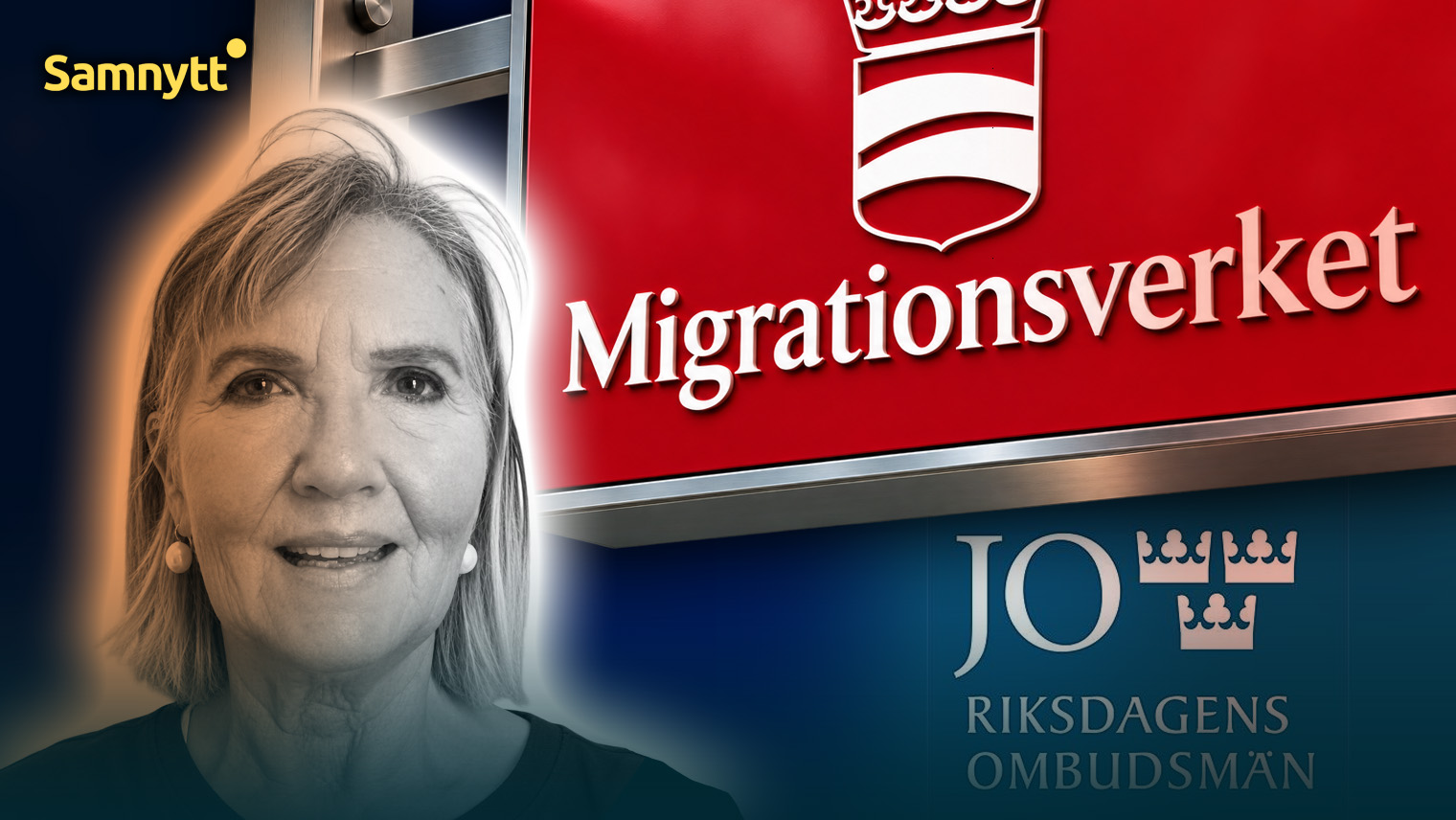
Samnytt’s investigation into the events surrounding newly elected Left Party member Mohamed Abdukardir Ali’s Swedish citizenship is now being followed up by the Parliamentary Ombudsman. After reading about the revelations, 72-year-old Lena Palm submitted a complaint against the Migration Agency to the Parliamentary Ombudsman (JO), demanding that the agency’s checks and processing be investigated.
In Samnytt’s previous investigation, Marita Welin, 64, recounted her extensive digging into the circumstances of Mohamed Abdukardir Ali’s Swedish citizenship. Central to the story were, among other things, his debts and the question of what checks the Migration Agency performed before granting citizenship to the newly elected Left Party member.
One person who reacted strongly after the publication was Lena Palm from Västra Frölunda. She didn’t settle for becoming upset after reading the article – she sat down and wrote a complaint to the Parliamentary Ombudsman.
– It cannot be allowed that proper background checks aren’t done. I think that is very serious. Granting someone citizenship is an incredibly important step, she says.
“I’m doing what little I can”
Lena is 72 years old, a licensed health and medical care counselor, and describes herself as highly interested in politics. She has long been critical of Swedish migration policy and believes Swedish citizenships have been granted too generously and with too low demands for a long time.
At the same time, she describes her criticism as coming from a strong sense of care for Swedish society. Sweden should be able to remain a humanistic country, she reasons, but she sees a contradiction when resources are insufficient for the elderly, healthcare, and other sectors of the welfare system.
– Citizenship is something very significant. And it has great symbolic value, she says.
Lena says she wants to see much tougher requirements for anyone wishing to become a Swedish citizen, including Swedish language skills and knowledge about Swedish society.
I refuse to accept being powerless. There’s a lot we can’t do anything about, but I do what I can. For me, I only get more exhausted when I stay passive. Taking action gives me a good feeling that I have done what I could. I have contributed what I could. No one can do everything, but everyone can do something.
Lena Palm, 72, licensed healthcare counselor
For her, it’s also about assimilation – about ensuring that those who gain citizenship truly become part of society. She was impressed by Marita’s work.
– I really recognize so much of myself in that. I’m like a badger that latches onto certain things, says Lena.
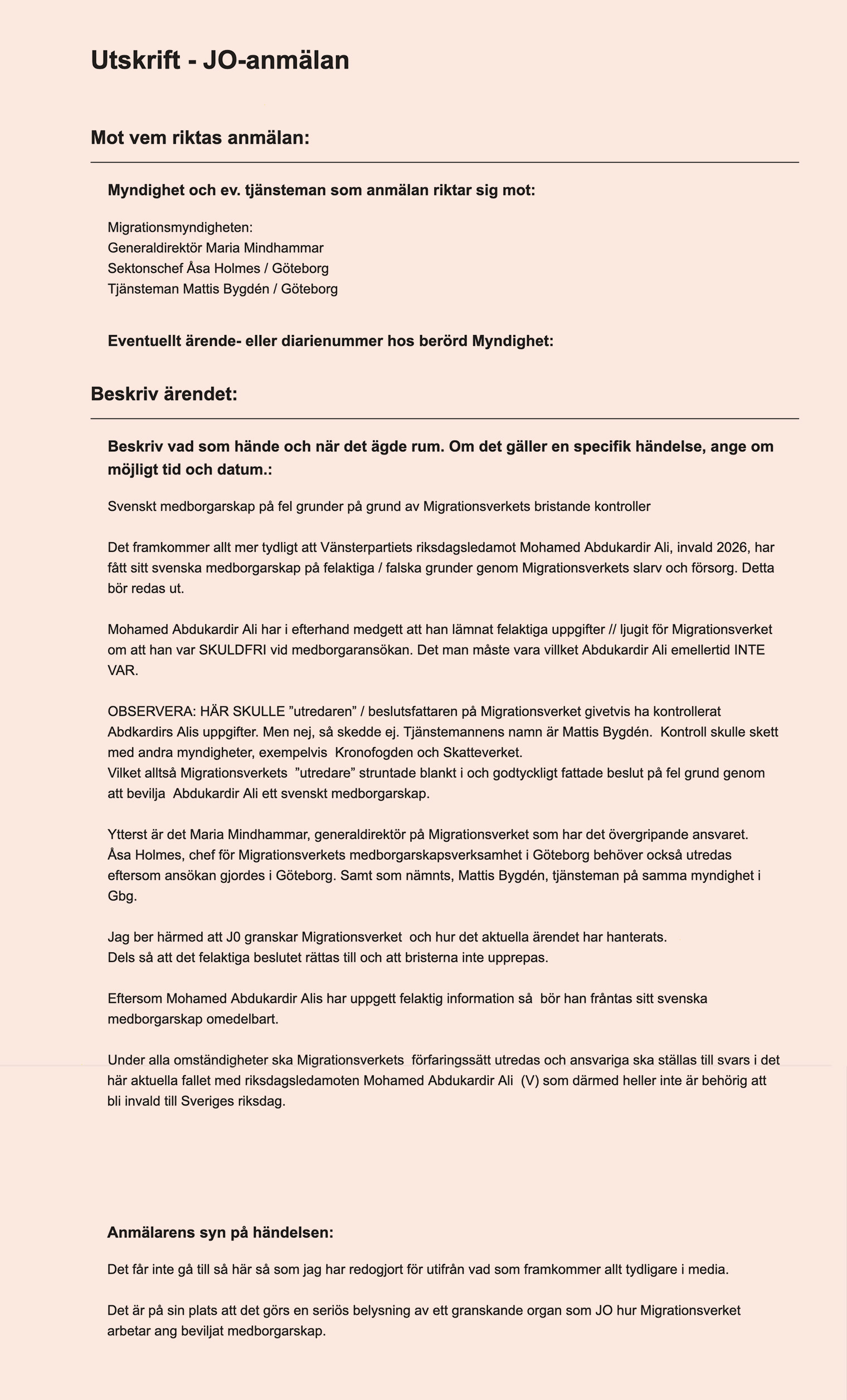
Refuses to accept powerlessness
A recurring sentiment among people who contact the editorial office is a sense of powerlessness toward authorities and policy decisions. Lena recognizes this feeling – but she has chosen to respond differently.
Many people I talk to feel very powerless about this. Is that something you relate to? And if so, what is it that makes you move from feeling powerless to actually taking action?
– I refuse to accept being powerless. There’s a lot we can’t do anything about, but I do what I can. For me, I only get more exhausted when I stay passive.
Writing, filing complaints, and contacting those in charge actually energizes her, she says.
– It gives me a good feeling that I’ve done what I could. I’ve contributed what I could. No one can do everything, but everyone can do something.
READ ALSO: After suspected election fraud: The Left-Somali has reported in sick – dodges police questioning
She encourages more people to use the opportunities that do exist. According to Lena, it doesn’t have to start with a complaint to the Parliamentary Ombudsman – it can be enough to send an email, a text, or a message to a politician.
– People should take advantage of the rights and opportunities they have.
Lena’s actions are also part of a pattern where individual citizens no longer settle for merely expressing dissatisfaction. Through complaints to the Ombudsman, appeals, contacting authorities, and conducting their own investigations, they’re instead trying to make use of the tools actually available to citizens.
Wants the Migration Agency investigated
In her complaint, Lena Palm directs criticism at the Migration Agency and names both Director-General Maria Mindhammar and managers and officials whom she believes should be included in the investigation.
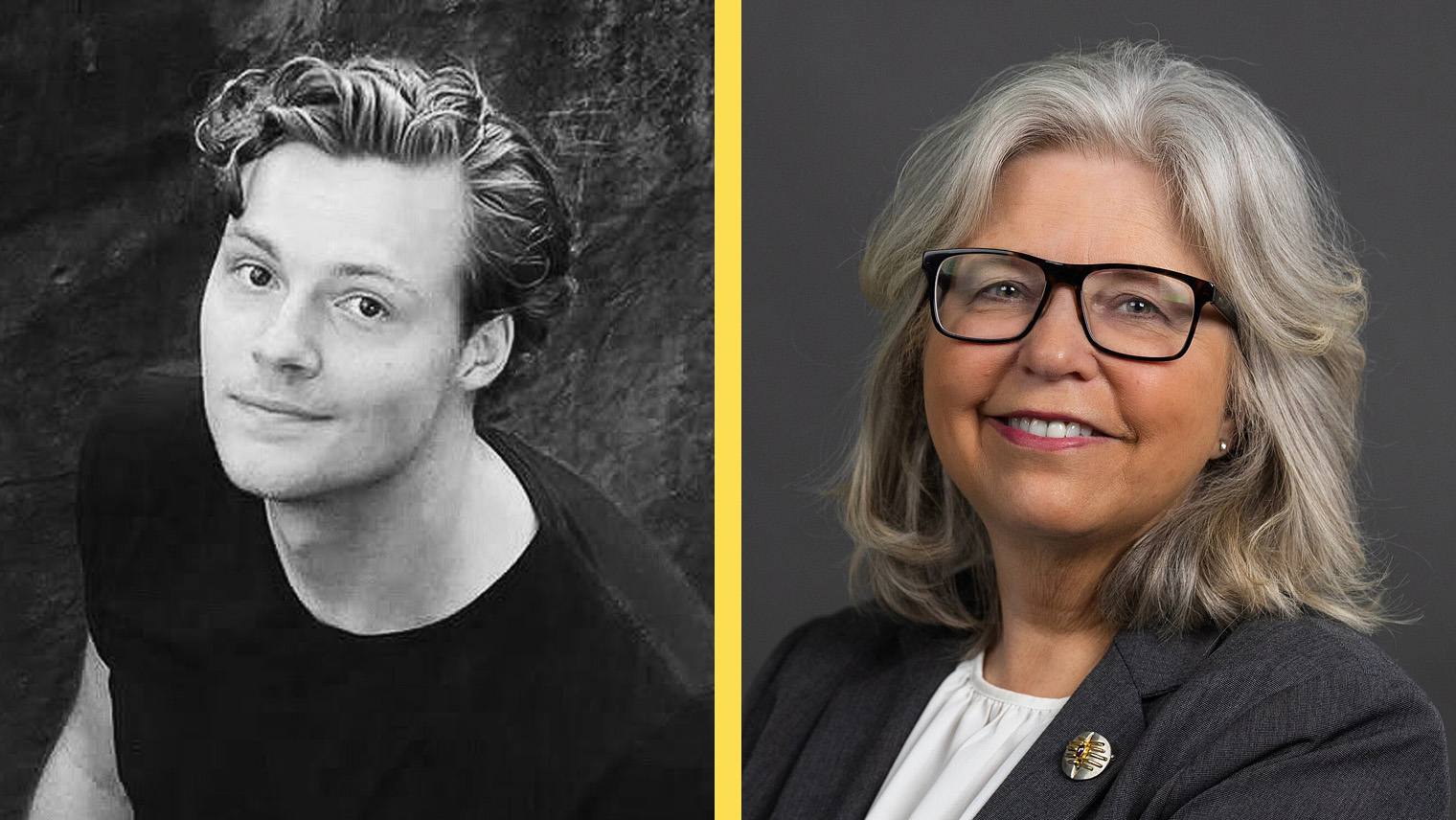
The core of the complaint is the question of what background checks were performed before Mohamed Abdukardir Ali was granted Swedish citizenship, and how information about his financial circumstances was handled.
Lena distinguishes between her broader criticism of migration policy and the concrete issue that she now wants the Ombudsman to review.
– How did the Migration Agency act? That must be clarified. It must be investigated.
She believes that any errors carry particular weight since Ali has subsequently been elected to the Swedish Parliament. The question of his citizenship and the possible consequences of incorrect information is, according to her, a separate issue – while the main purpose of the complaint is to have the agency’s conduct scrutinized.
You write that Ali should be able to lose his Swedish citizenship if it turns out it was granted on false grounds. Why do you think that principle is so important?
– Citizenship is something very significant. And it has great symbolic value.
Here Lena returns to her migration criticism. She believes that Swedish decision-makers have been too naive for far too long, while resources for welfare have grown increasingly strained.
She points, among other things, to elderly people with slim margins and a healthcare system which, given her professional background, she says is on its knees.
– I’m passionate about people having a good life. But our psychiatric care is absolutely on its knees. And then you see how money is wasted.
For Lena, the issue is bigger than an individual citizenship matter. She argues that perceived failures by authorities risk eroding something even more fundamental – people’s trust in the state and in each other.
– It’s the lack of trust. The lack of social glue. That we care, that we help each other, that we want to pay taxes and do the right thing.
The demand to the Director-General
Lena now wants the Ombudsman to review what actually happened in the handling. But she also has a clear message directly to the Migration Agency’s top manager.
She cannot compromise on quality just because there is no money. Then it has to take the years it takes. Because it is so extremely important that citizenships are granted on the right grounds. If this is true, then a person has become a member of parliament with incorrect information and will then vote on our laws …
Lena Palm, 72, licensed healthcare counselor
What would you like to say directly to the Migration Agency’s Director-General Maria Mindhammar?
– She must get to the bottom of this. All the way. She must conduct a thorough review at every level.
If workload or lack of resources is behind any errors, Lena says that is no excuse for lowering the quality.
– Do they have too much to do? Then it should take longer. It must not be rushed. There mustn’t be such stress levels that they’re expected to process a certain number of cases. She believes it’s better to have longer processing times than insufficient checks.
– She cannot compromise on quality just because there is no money. Then it has to take the years it takes. Because it is so extremely important that citizenships are granted on the right grounds.
And particularly in Ali’s case, Lena thinks the consequences show why the checks must work.
– If this is indeed true, then a person has become a member of parliament based on incorrect information and will then vote on our laws …
She does not know how many other cases there might be. But that is also why she wants more people to start digging – and taking action.
– How many other cases are there?
READ ALSO: Inside the Migration Agency: Clans, Swedes in the minority, and a culture of silence