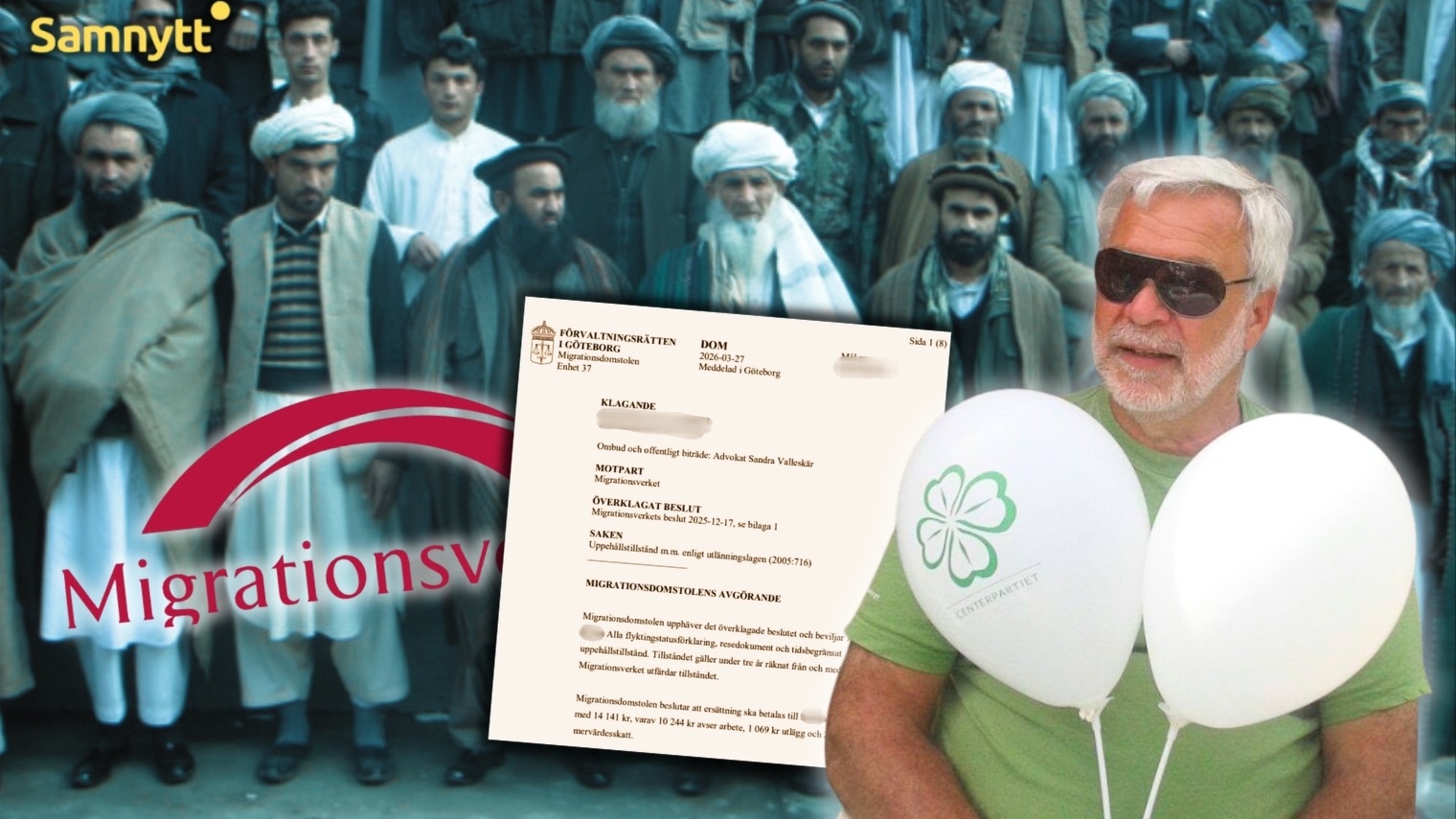
Afghans with cognitive disabilities have the right to asylum in Sweden. This is because disabilities in Afghanistan can be perceived as God’s will, and people with disabilities risk being seen as deviant in their home country. This was the unanimous opinion of the migration court in Gothenburg, where Strömstad politician Morgan Gutke was one of the lay judges. Gutke now wants voters to support him—and highlights his experience as a lay judge as a merit.
A now 32-year-old Afghan man applied for asylum in January 2025, after a previous expulsion order from an earlier asylum process had expired without the man leaving the country.
Before the Swedish Migration Agency in 2025, the man presented numerous reasons why he should be granted asylum. Among other things, he wished to be granted asylum because he is Hazara, claimed to have a land dispute with his uncle, stated that he had been tortured by the Taliban, and referred to having “been influenced by foreign values” during his time in Sweden.
The Migration Agency’s investigation also mentions two more unusual reasons put forward by the man:
You have also previously been in conflict with a Taliban after taking a tractor from him. In addition, the Taliban have been to your home and found a green work suit from Iran, which they believed was a uniform belonging to the former national police in Afghanistan.
Despite the multitude of reasons given by the man, the Migration Agency decided once again on expulsion, after which the man appealed the decision to the Migration Court in Gothenburg.
Too Impaired to Be Deported?
The court ignored the man’s stories about tractor thefts, land disputes, and green work suits, and instead mainly focused on his health and cognitive abilities.
According to an older medical certificate from 2022, the man suffers from:
skull defect, blindness in the left eye, impaired vision in the right eye, chronic headache of severe intensity, severe insomnia, depression, PTSD, moderate cognitive impairment, severe impairment on the left side, and sensory disturbance on the left side of the face.
In the current legal proceedings, the man was also said to have developed sciatica and epilepsy.
Disability—God’s Will?
In order to determine if statements from the asylum seeker should constitute grounds for asylum, migration courts use the Migration Agency’s “country information system.” This is a collection of documents produced by various organizations with information about which groups are considered “vulnerable” in different countries.
The judging panel in the Gothenburg Migration Court found such a document, which they used to motivate their decision. The verdict states:
According to country information, people with mental or physical disabilities are often stigmatized in Afghanistan. Their condition is sometimes considered related to “God’s will.” These people are sometimes badly treated by society.
READ ALSO: Afghans with Hepatitis B HAVE the RIGHT to Asylum
Because the disabled man, due to his disabilities, risks being “perceived as deviant” and “drawing negative attention” in his homeland, he is granted refugee status by a unanimous migration court. The court writes that it also considered the man’s ethnicity, religion, and long stay in Europe in its decision.
The verdict was issued by judge Hanna Nilo and lay judges Katarina Alfredsson, Roger Karlsson, and Morgan Gutke.
Super-Competent Lay Judge Wants to Be Elected
Morgan Gutke wants to be elected for the Centre Party in the Strömstad municipal election this autumn. As his main argument for why people should vote for him, Gutke highlights his many years of experience as a lay judge.
On his campaign page on the Centre Party’s website, he writes among other things: “After many years as a lay judge, I bring with me broad experience of the Swedish legal system!” He also writes that his motto is “See the possibilities first!”
READ ALSO: Court: Afghanistan’s Women HAVE the RIGHT to Divorce Asylum