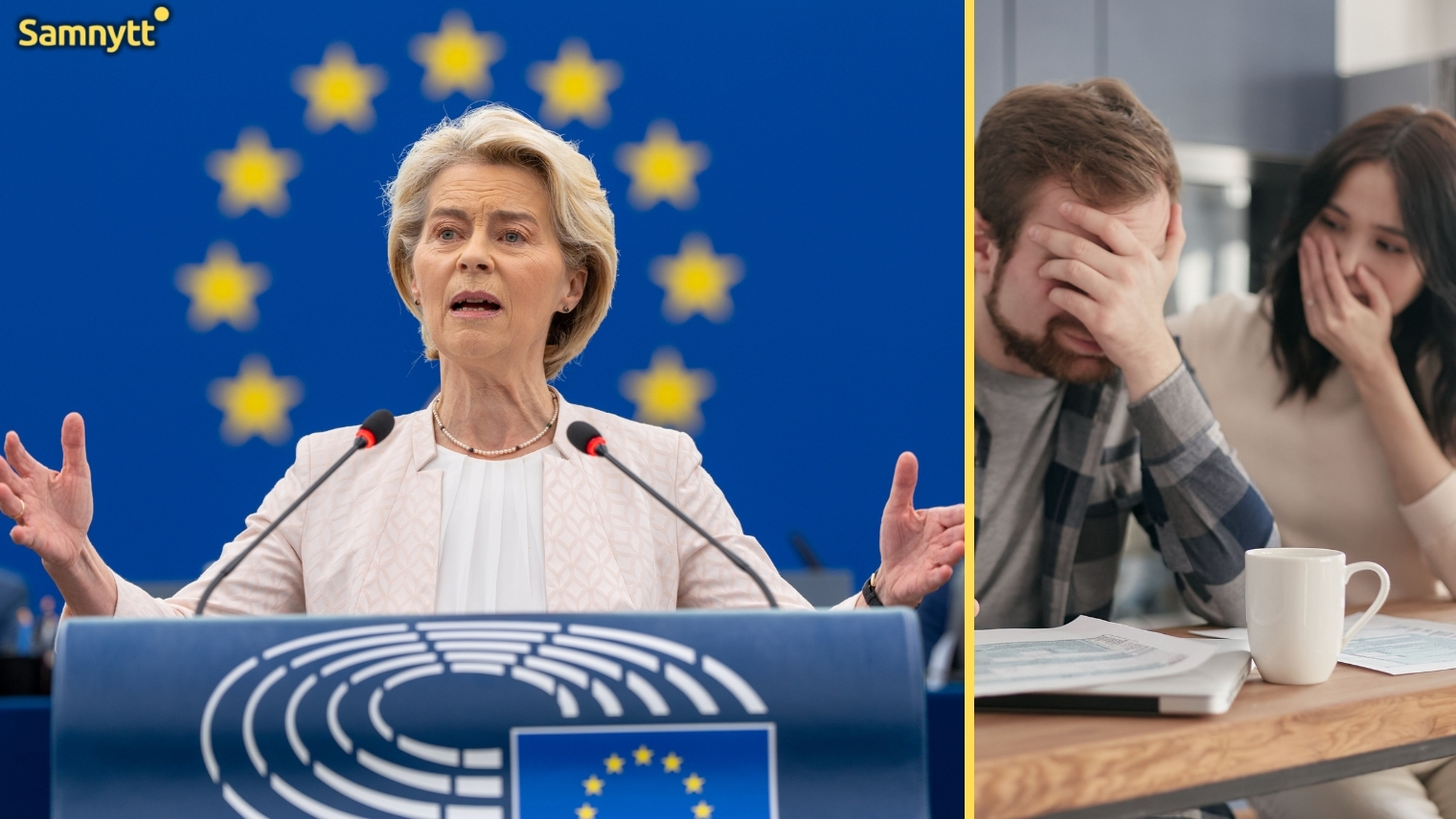
€10 trillion. That is the value of household savings that, according to European Commission President Ursula von der Leyen, is sitting in bank accounts across the union. Now, Brussels wants to put a larger share of this money to work by channeling it into European companies and investments.
In a speech to French business leaders in Paris on Thursday, Ursula von der Leyen highlighted Europe’s vast savings as one of the assets that could be used to strengthen the European economy. At the same time, she noted that much of Europe’s capital is currently being invested outside the continent.
“Europe has savings. And unfortunately, those savings are lying unused,” said the EU chief.
Brussels Wants to Put Savings to Work
This is what the European Commission now wants to change through the so-called savings and investment union. The idea is to make it easier for capital from savers and investors to reach European companies that need money to grow and invest.
READ ALSO: EU Top Official: Europeans Must Be Willing to Pay the Price of Supporting Ukraine
According to von der Leyen, Europe today does not lack either technology or capital. The problem is rather that European companies struggle to access sufficient financing when aiming to grow. She pointed out, among other things, that in some cases companies seek capital outside Europe, relocate parts of their operations, or are acquired by foreign actors.
The European Commission has therefore put forward several proposals, including securitization and investments from banks and insurance companies. The Commission estimates that these measures together could free up to €470 billion in additional investments.
Savers Themselves Bear the Risk
The proposals do not mean that the EU would take control of household bank accounts or that savers would be forced to invest their money. However, the ambition is clear – a greater share of the capital currently held by European households should be able to be used to finance companies and investments within the EU. How this should be done in practice, however, remains less clear.
This is also where von der Leyen’s description of savings as “unused” can be debated. Money in a bank account is not necessarily economically inactive. Bank deposits play an important role for households by providing liquidity and security, while banks use deposits as part of their own financing.
Encouraging more Europeans to invest also means that more capital will be subject to market risk. For those saving in a bank account, the risk and return is different from those who invest in stocks, funds, or other investments.
At the same time, there is an obvious economic problem behind the EU initiative. For several years, Europe has found it more difficult than the US to nurture large, growing companies in new tech sectors. The EU also wants to increase investments in areas such as artificial intelligence, semiconductors, energy supply, and industrial production.
Von der Leyen argues that Europe must become better at utilizing the capital already present on the continent. In her speech, the large private savings are portrayed as an opportunity to reduce Europe’s dependency on capital from other parts of the world.
“Now Europe needs to put these savings to work for its companies,” she said.
That is also the aim of the European savings and investment union, according to the Commission President. By making capital markets function better and facilitating cross-border investments, the EU hopes to ensure that more of the continent’s savings remain within the union.
READ ALSO: Sweden and EU Agree: Promise to Cover Ukraine’s Economic Needs
The proposals will now be negotiated among the member states, with the aim of reaching an agreement before the end of the year. At the same time, von der Leyen has signaled that work can continue with willing countries even if all 27 member states do not participate.
It therefore remains to be seen how the EU’s ambition to make household savings work more for the European economy will be implemented in practice – and how much of the risk will ultimately fall on the savers.
READ ALSO: Prime Minister: EU on the Brink of an ‘Existential Crisis’