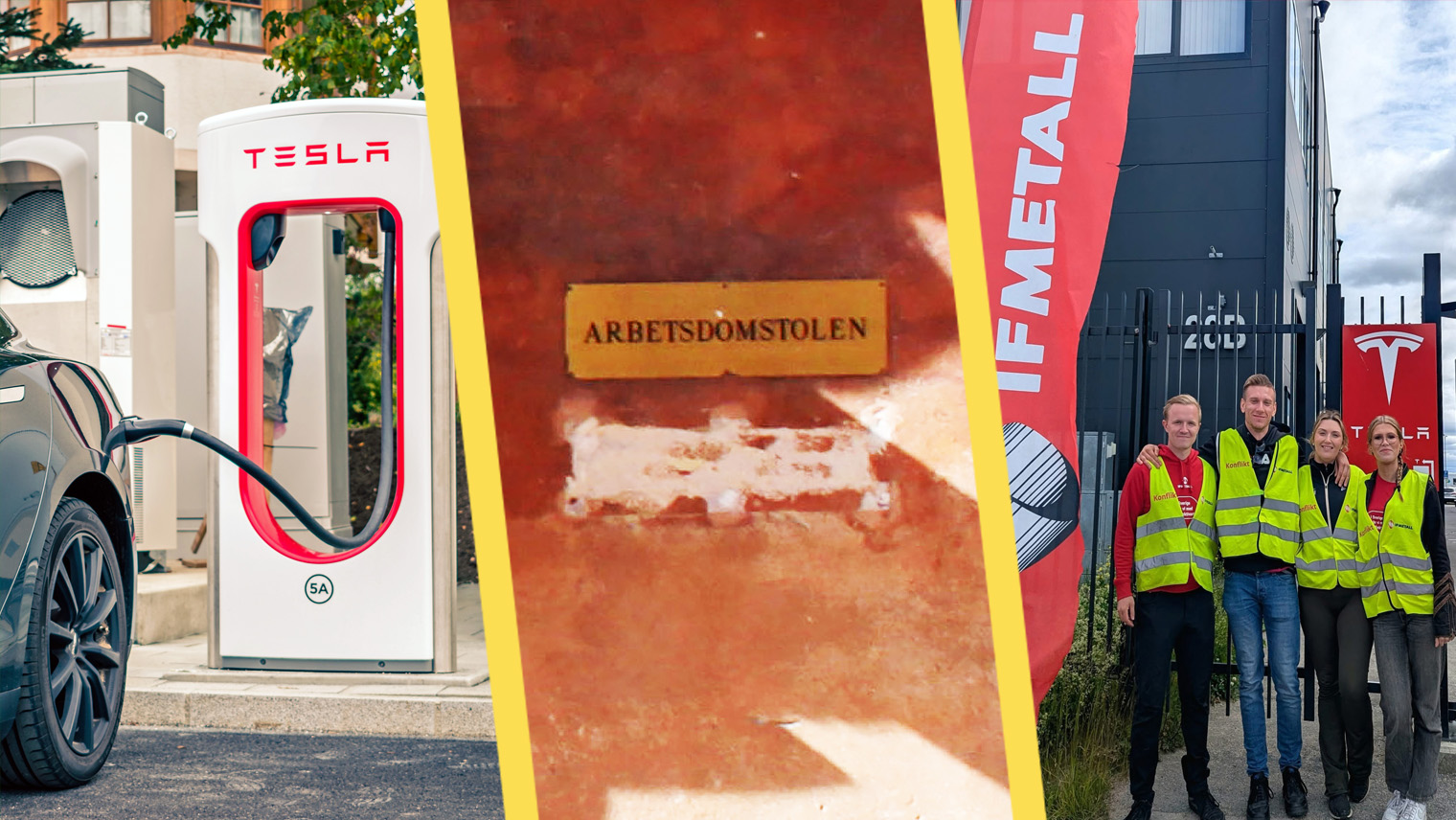
The first of several legal proceedings between Tesla and IF Metall regarding alleged violations of the Co-Determination Act (MBL) has now been settled – ending in a clear victory for the electric vehicle manufacturer. The ruling could have repercussions for the other similar cases the union has pursued on the same basis.
The Labour Court has now reviewed the first of three cases where IF Metall accused Tesla of violating the Co-Determination Act (MBL). The union’s position was that the company had not provided sufficient information about operations at its workshop in Malmö.
The court notes that Tesla did not share information during a seven-month period in 2024. However, it also holds that IF Metall has not demonstrated any concrete incident that affected members and thereby triggered any obligation to provide information under the MBL. This was first reported by Lag och Avtal.

The conclusion was therefore that no law had been broken – and the union’s claim was dismissed in its entirety. Instead, IF Metall has been ordered to pay part of Tesla’s legal costs, amounting to just over 300,000 kronor.
Similar cases await – could follow the same path
The two remaining cases, which concern equivalent alleged MBL violations at Tesla’s facilities in Umeå and Uppsala, are expected to be heard this spring.
Since these cases are based on essentially identical circumstances – the same type of alleged lack of information but without evidence that any concrete incident triggered such an obligation – it appears likely that they too may have the same outcome.
The ruling could thus become a precedent in practice and significantly weaken IF Metall’s strategy of pursuing the issue legally.
Criticized strategy – “lawfare” against Tesla
The union’s repeated complaints have been described by critics as a form of “lawfare” – where legal processes are used as leverage rather than to address actual legal violations.

ALSO READ: Tesla strike: Members desert the IF Metall union
The background to the conflict is IF Metall’s discontent with Tesla’s refusal to sign a collective agreement in Sweden. At the same time, reports have shown that a majority of employees are not participating in the strike, which has further called into question the reasonableness of the union’s position.
Pressure tactics beyond the courtroom
In addition to legal proceedings, the conflict has been marked by other controversial methods. IF Metall has used its union power to apply pressure on companies Tesla relies on, for example through sympathy strikes and blockades in the supply chain.
Such measures have been criticized for their broad impact, affecting third parties rather than targeting only the employer in dispute.
Surveillance and threatening rhetoric
There have also been reports of more far-reaching methods. At a Tesla facility in Stockholm, documents were found where strike guards recorded information about visitors and deliveries, including license plate numbers and company names.
ALSO READ: Photo reveals: Union gathering data at Tesla
In another noted case, a union representative is said to have, according to a covert recording, expressed support for sabotage and violent actions against Tesla – something that has further increased criticism over the tone of the conflict.
Attacks and escalating conflict
Parallel to the union conflict, Tesla has also faced attacks from left-wing activist groups. Stores have been vandalized in what are described as coordinated actions, with political messages aimed at the company and its leadership.

SEE VIDEO: Climate extremists vandalized Tesla stores – “Smash fascism”
Even financial actors have taken sides in the conflict, for example by selling investments in Tesla citing the labour dispute, in contrast to the usual financial assessments regarding return.
A conflict far from over
The ruling from the Labour Court marks a clear setback for IF Metall – and could have consequences well beyond this individual case.
With two similar cases yet to be resolved and an ongoing contentious conflict over collective agreements, it remains to be seen whether the strategy will change – or if more legal defeats will follow.
Read the full ruling from the Labour Court HERE.