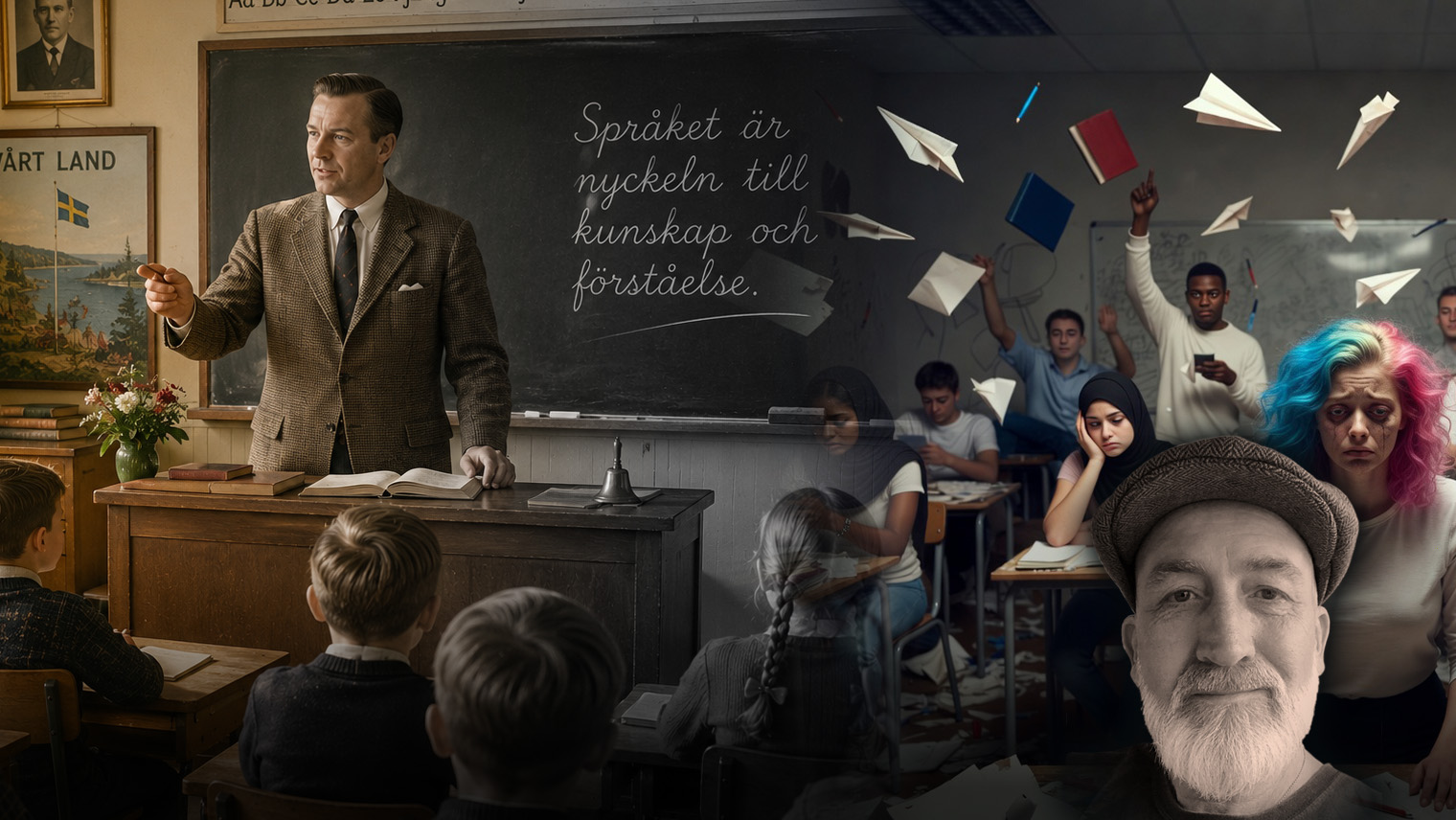
COLUMN • The crisis in Swedish schools is often discussed as if it were a mystery. Politicians commission investigations, authorities produce new strategy documents, and educational experts talk about “challenges,” “inclusion,” and “values-based work.” Meanwhile, results continue to fall, teachers are fleeing the profession, and classrooms are becoming increasingly difficult to control—not least as a result of reckless mass immigration.
For those who actually listen to teachers, the development does not appear particularly enigmatic. They do not just describe a school with knowledge problems. They describe a system where the adult world has gradually abdicated—and where aggression, dominance behavior, and violence have become more common.
And when a growing proportion of immigrant children and youth from the Muslim world do not show respect for women, the problem becomes unmanageable in a Swedish school system entirely dominated by female teachers and principals.
SEE ALSO: Report: Swedish Students Most Exposed to Threats and Violence in School
Teachers today are not primarily expected to be conveyors of knowledge. They are supposed to be social workers, therapists, conflict-resolvers, administrators, integration coordinators, and at the same time carriers of an ever-growing package of politically defined values to be implemented in teaching.
In Sweden, we now have several high-profile cases where teachers have ended up in legal proceedings after intervening against disruptive or aggressive students. The signal to the teaching profession is clear—authority is risky. The safest thing is often to back off, act low-affect, be defensive and yielding, fill out forms, and hope the situation calms down. It’s hard to imagine a more destructive signal in a classroom. At the same time, large parts of official Sweden continue to talk about the school crisis as if it were mainly about “resources” or “pedagogical methods.”
Jonas Andersson
This is about so-called norm criticism, values documents, equality plans, gender pedagogy, feminism, inclusion objectives, climate activism, and LGBTQ nonsense, as well as a bureaucratic machinery that grows with every year. And there is no doubt that the “values” pumped into children rest on a socialist foundation.
SEE ALSO: Preschool Children Taught LGBTQ Issues During Pride Week
Boys to the Right, Girls to the Left
Swedish boys are today significantly more right-leaning politically than girls—which may be one explanation for why they receive lower grades in all subjects, including physical education. But maybe being good at sports is a sign of “right-wing extremism,” which naturally must lower the grade.
At the same time, many teachers face pupils who have barely been brought up at home. Children who have never learned basic respect for adults. Students who scream, threaten, throw things, disrupt lessons, and in some cases subject teachers to outright harassment.
Teachers testify to how it is now normal to have to interrupt lessons to deal with outbursts, conflicts, or outright violent situations. And even questioning the behavior of a student with a background other than Swedish almost guarantees accusations of “racism” and “Islamophobia”—with an extended family or clan often standing behind the student.
SEE ALSO: Teacher Wrestled Down Rowdy Student – Convicted for Assault
And yet teachers are expected to keep the classroom together with a smile. Because if a teacher puts their foot down too hard, the next problem arises—reports, investigations, and workplace legal proceedings.
SEE ALSO: Female Teacher Wanted “Order and Discipline” in Class – CONVICTED for Assault
In Sweden, we now have several high-profile cases where teachers have ended up in legal proceedings after intervening against disruptive or aggressive students. The signal to the teaching profession is clear—authority is risky. The safest thing is often to back off, act low-affect, be defensive and yielding, fill out forms, and hope the situation calms down.
SEE ALSO: VIDEO: Teacher Attacked by Immigrant Student – Got Fired
It’s hard to imagine a more destructive signal in a classroom. At the same time, large parts of official Sweden continue to talk about the school crisis as if it were mainly about “resources” or “pedagogical methods.”
As if yet another reorganization or even more administrative projects would solve the problems. But the reality is far more uncomfortable than that.
SEE ALSO: Teacher Told Off Immigrant Student in the Classroom – CONVICTED for Assault
The Swedish Language Is Disappearing
Swedish students haven’t suddenly become genetically less gifted over two generations. Of course, there are broader civilizational problems today—mobile phones, social media, shorter attention spans, a culture where people read less and scroll more. That naturally affects children and young people as well.
But that doesn’t explain the whole decline. The truly sensitive subject is almost never allowed to be discussed openly—that a school system is based on certain fundamental cultural and social conditions.
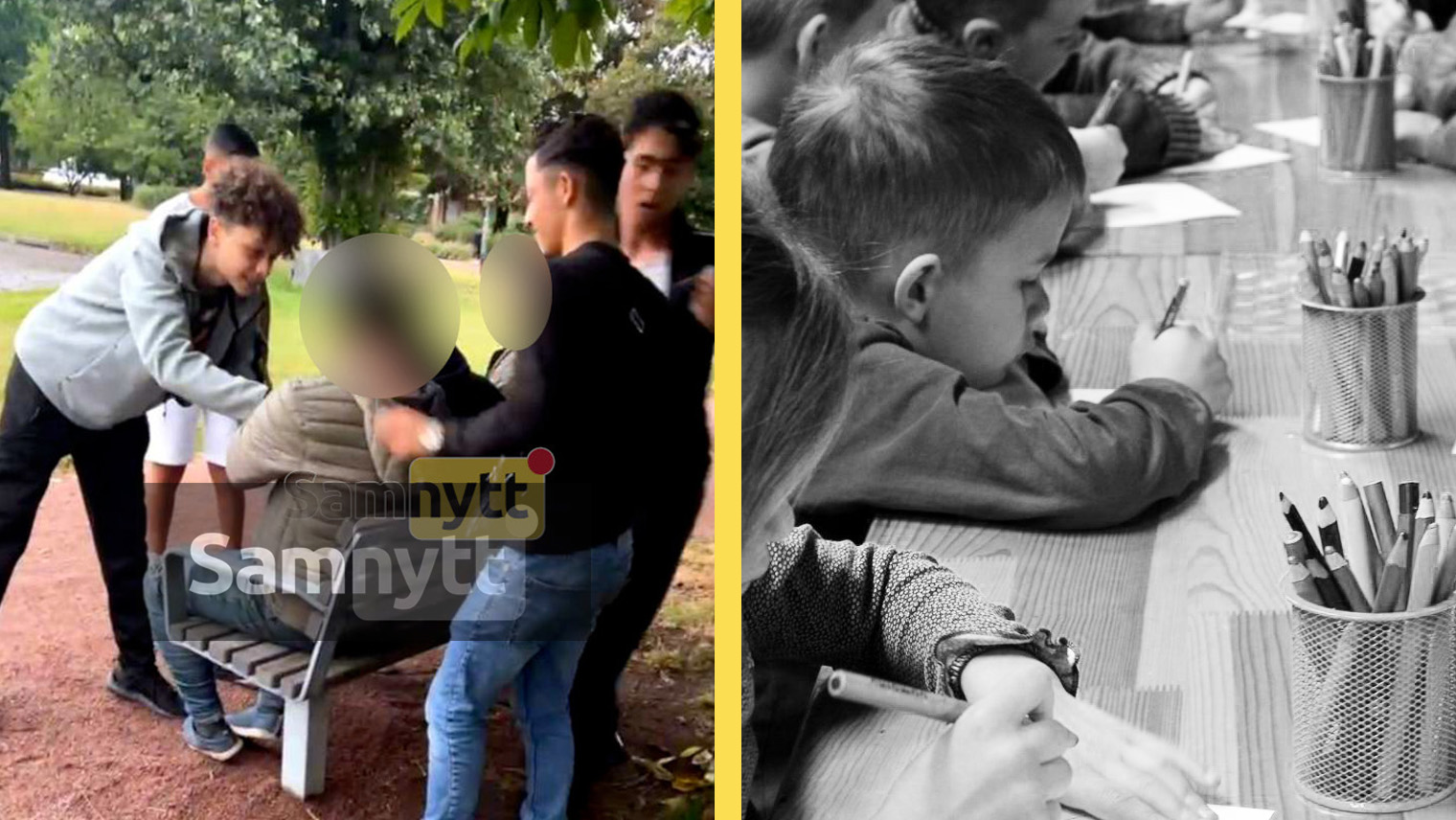
It requires language understanding, discipline, trust in the teacher, and parents who function as an extension of the school’s authority—not its opponents. When these conditions are weakened, the whole system is affected.
SEE ALSO: Top School’s University Test Requirement Reduced Diversity – Removed
This is especially noticeable during parent-teacher conferences. Teachers today talk about situations where communication with homes has collapsed in practice because the parents themselves do not speak Swedish.
Who can forget Annie Lööf’s (C) infamous statement when she was open to 30–40 million immigrants coming to Sweden: “Everyone speaks Swedish.” That must be some kind of record in cluelessness.
Jonas Andersson
Conversations that previously could be about the student’s performance, responsibility, and future are reduced to fragmented meetings where basic information barely comes across. How can a school function when the shared linguistic and cultural platform is eroding?
These are issues that have long been buried under meaningless slogans such as “the equal value of all people” and that every problem is basically about socioeconomics or lack of resources.
Who can forget Annie Lööf’s (C) now-famous statement in SVT when she was open to 30–40 million immigrants coming to Sweden: “Everyone speaks Swedish.” That must be some kind of record in cluelessness.
But reality doesn’t care about political dogmas or pathological fantasies. If large groups of students come from environments where education, discipline, or language skills function differently, that will of course affect the classroom.
If schools are filled with students with extensive support needs, neuropsychiatric diagnoses, and weak language skills all while teachers’ authority is dismantled, then the entire school environment collapses.
Meanwhile, men have almost disappeared from schools. In many schools, students can go year after year without a single male teacher. This is no accident. For a long time, the school world has been shaped by a feminist ideology where traditional male behavior and male authority are often seen as problematic.
Jonas Andersson
This shouldn’t be controversial to say. It is simply a description of reality—and in the midst of all this stand the teachers. People who once entered the profession because they loved knowledge, literature, history, mathematics, or science—but who today are often forced to spend most of their energy on conflict management, administration, and social dissolution.
SEE ALSO: Teacher Dan Took a Stand Against Illegals in School – Met With Harassment and Hate
Many can no longer bear it—and perhaps the most tragic is that Sweden still seems unable to draw the obvious conclusion, that a school cannot function if the adult world no longer dares to be the adults.
The Invisible Man
Meanwhile, men have almost disappeared from schools. In many schools, students can go years without a single male teacher. This is no accident. For a long time, the school world has been shaped by a feminist ideology where traditional male behavior and male authority are often seen as problematic.
At the same time, the profession has become increasingly filled with emotion pedagogy, values work, and social education, while discipline and order have been devalued. Many men have simply left—or never sought the profession to begin with. The consequences are plain to see, especially among boys.
They grow up in school environments where male authority is almost absent, while many already lack male role models at home, or in popular culture for that matter.
SEE ALSO: Ideologically Uncomfortable Success – When Successful Boys Become a Problem
And when the school is also characterized by disorder, conflict aversion, and fear of setting limits, you get exactly the society we are now beginning to see emerging.
No civilization can raise its children by dismantling discipline, eroding authority, and pretending that culture, language, and social cohesion are irrelevant. Sooner or later, the system begins to fall apart. That is what we are seeing now.
But reality has a tendency to correct ideological experiments. And what for a long time has been viewed with suspicion—masculinity and manhood (which, incidentally, have never been “toxic”)—will return. Not because anyone decides it, but because societies eventually need it to survive.
SEE ALSO: SD Teacher Maria Goes Against the Union – Thinks Duty to Inform Is Good