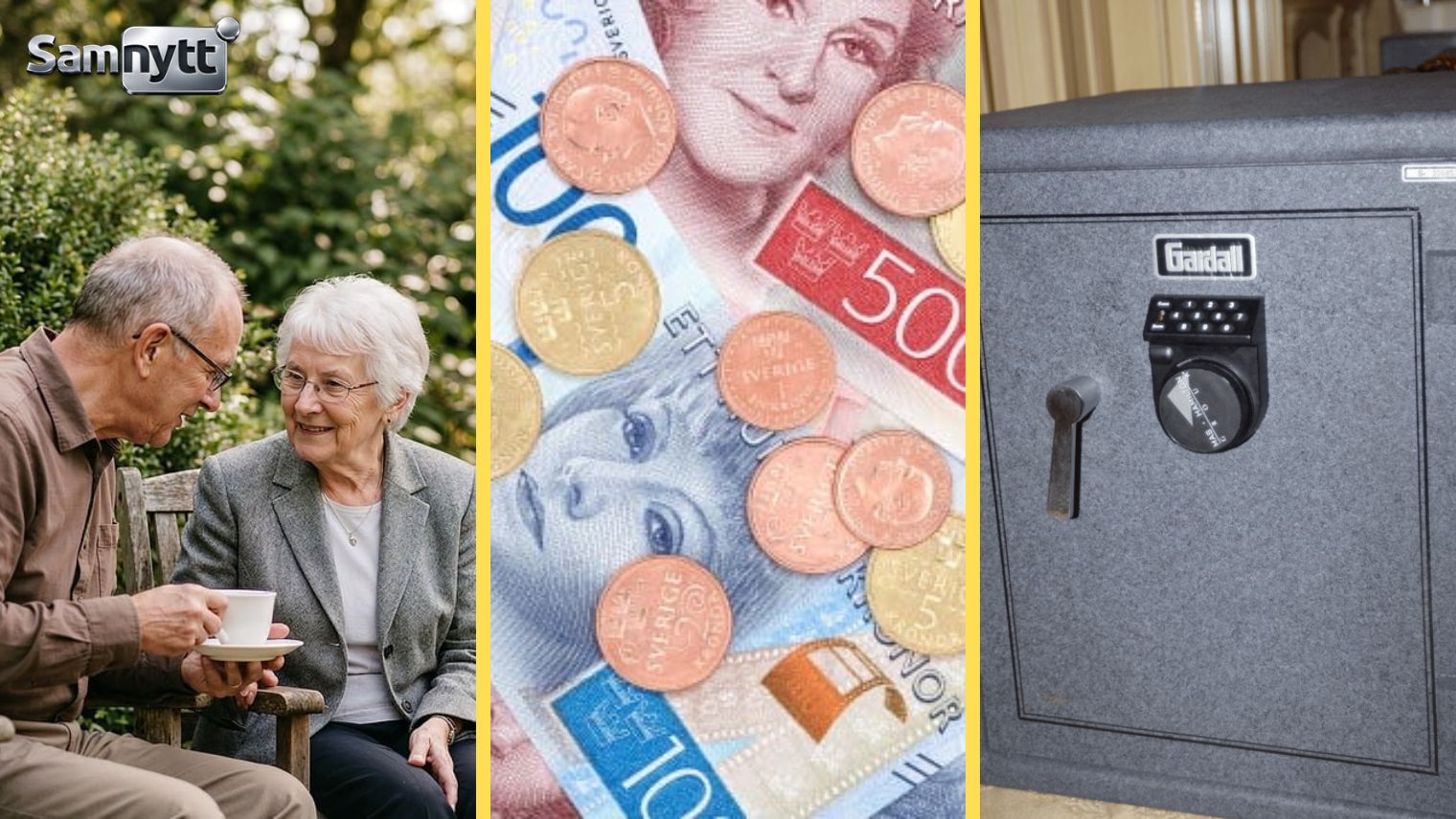
A new survey shows that a majority of Sweden’s pensioners would rather spend their money while they can. At the same time, capital transfers between generations are expected to be very large in the coming decades.
SBAB asked just over 1,000 pensioners how they view inheritances. A full 52 percent responded that they primarily want to spend the money themselves. A significant share, 45 percent, still want to leave money behind if possible.
– We live in a country where one of the basic ideas is that each generation should have the opportunity to stand on their own feet. You shouldn’t be dependent on inherited money but have the chance to be financially independent yourself. From that perspective, it’s reasonable—and perhaps not that surprising—that more pensioners want to spend their money than to leave an inheritance, says SBAB’s private and housing economist Linda Hasselvik.
The main reason for wanting to leave money behind is to help children and grandchildren, something 66 percent state. Twelve percent say the money is tied up in a home, and ten percent say they want to leave money behind because they do not need it themselves.
– Even though the intention is for people to be independent, it’s tough for many in the younger generation considering how the housing market looks today, especially in the big cities. If the goal is to help children and grandchildren, you can consider who actually needs help the most, and when in life. Since life expectancy is high today, your children will be relatively old at the time of inheritance. A child in their 60s may not have the same need for money as a grandchild who is looking to buy a home and is at the stage of starting a family. If you want, it is possible to give money directly to the grandchildren as a gift or later through a will, says Linda Hasselvik.

A breeding ground for conflict
Over the coming decades, capital transfers are expected to be very large due to many people born in the 1940s having made significant profits on real estate. An analysis recently conducted by the Mäklarsamfundet (the association of real estate agents) shows that fortunes tied up in property, corresponding to a value of 1,790 billion SEK, will be passed from one generation to another in the next 20 years. At the same time, money and inheritance disputes can become some of the most toxic conflicts within a family.
– Few things can split families like inheritance disputes. For those who want to leave money to future generations, there are some important things to keep in mind. Be clear about how you want the money to be distributed. Document larger gifts and clarify whether they are to be considered gifts or advances on inheritance. Write a clear will for what isn’t given away during your lifetime. If you want the gift or inheritance to be considered separate property, that should also be documented, says Linda Hasselvik.
Advice for those who want to leave money behind
1. Document larger gifts you give during your life
Write down when you give a large gift and state whether it should be considered a gift, i.e., one that does not affect the future inheritance, or an advance on inheritance, and therefore to be deducted when the estate is finally divided. Without documentation, gifts to direct heirs are assumed to be advances on inheritance.
2. Write a clear and formal will
For what you do not give away during your lifetime, the will is decisive. For it to be valid, it needs to be in writing, signed by you, and witnessed and signed by two witnesses present at the same time who are not affected by its content. Remember that direct heirs are legally entitled to a portion of the inheritance, the so-called ‘laglott.’ The ‘laglott’ corresponds to half of their legal share.
3. Specify if gifts and/or inheritance should be separate property
Separate property means that the gift or inheritance cannot be subject to division in case of a possible separation or divorce of the recipient. If you want something to be separate property, it needs to be in writing, e.g., in a gift letter or will.
4. Store important documents so they can be found
Keep wills, gift letters, and other important documents in a safe place and preferably tell your relatives or administrator where they are. Documents that cannot be found may, in practice, become invalid.
READ ALSO: How Swedish millionaires invest their money