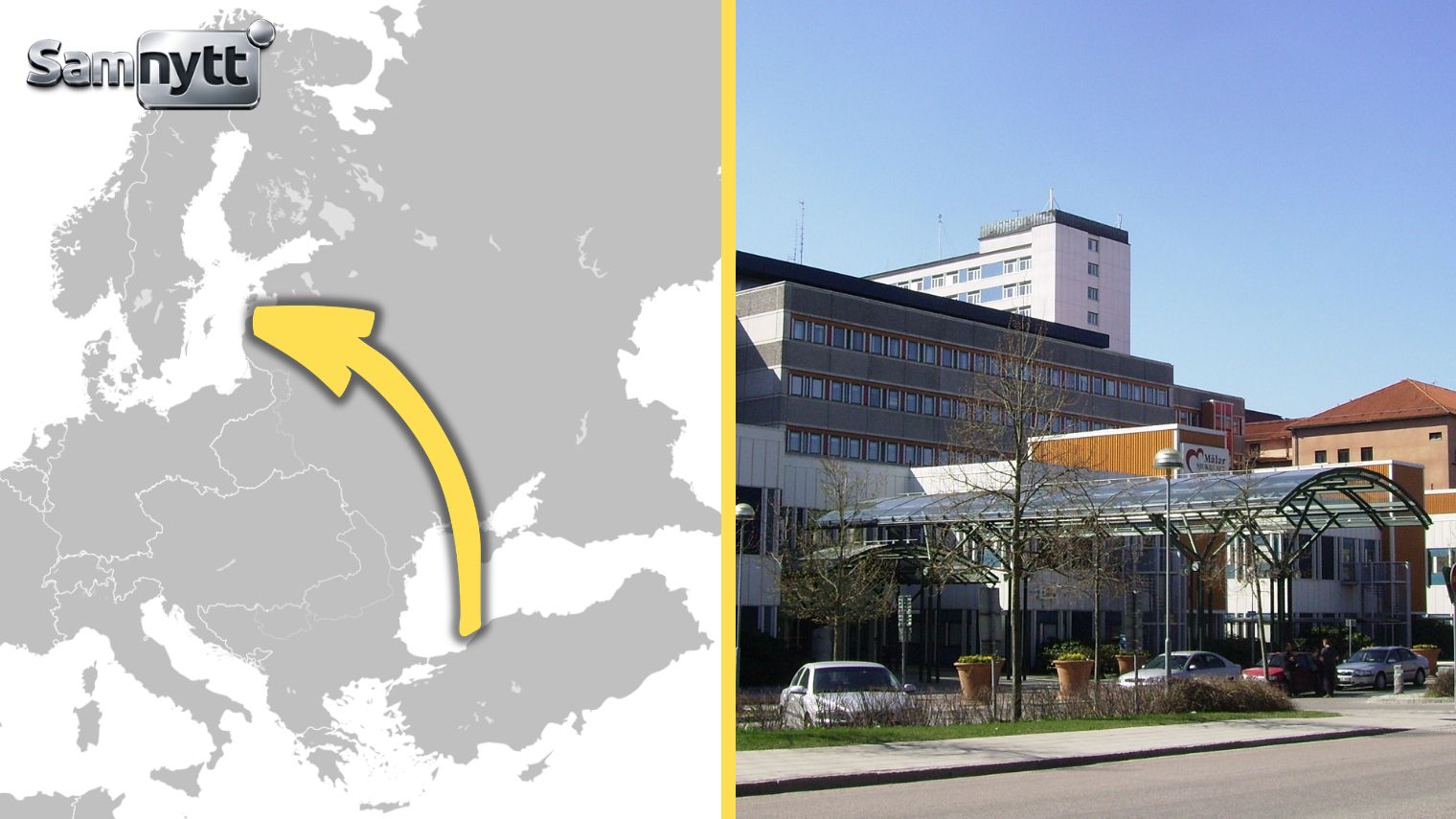
Instead of initially searching in culturally closer countries, Region Sörmland went directly to recruiting healthcare staff in Turkey and Iran. Several other regions are interested in doing the same.
Nurses are in short supply and are forecast by the regions to be the healthcare profession that will be the hardest to recruit in the future. At the same time, they make up only a tiny fraction of all labor immigrants in Sweden.
Currently, there are just over 7,000 people born outside the EU-EEA in Sweden who have or are waiting for a Swedish work permit. Of these, only 200 work in healthcare. In April, 23 nurses had work permits or ongoing applications.
READ ALSO: Healthcare staff tried to feed a dead person
In Region Sörmland, they chose to turn to the Middle East instead of Europe, and more may follow—the autumn saw the start of a network with several regions interested in doing the same.
“In order to meet the growing need for staff, we need a broader recruitment base. Foreign-born individuals play an important role in this,” says Helena Ossmark, who works with recruitment and labor market issues in the region, to DN.

Specialists from Iran
Not all managers have been positive about solving staffing issues with nurses from other countries. According to the head of the nephrology department, Elsa Backberg-Dahlén, who speaks Swedish with a French accent, the recruitments have improved both staffing and the work environment, making it easier to attract new personnel.
Something that is said to be especially hard to find is specialist nurses in surgery and anesthesia, and for a period, the central operating ward at Mälarsjukhuset had no applicants at all for open positions. However, over the past two years, nine new specialists have been hired—all from Iran.
However, international recruitment is not the answer to the healthcare sector’s staffing problems, the SNS Economic Policy Council concludes in a new report on staffing in the welfare sector. Despite Sweden having a generous system for labor immigration since 2008, it has not benefited the healthcare sector, the report notes.
READ ALSO: Cares for the municipality’s elderly – cannot speak Swedish and lacks medical competence