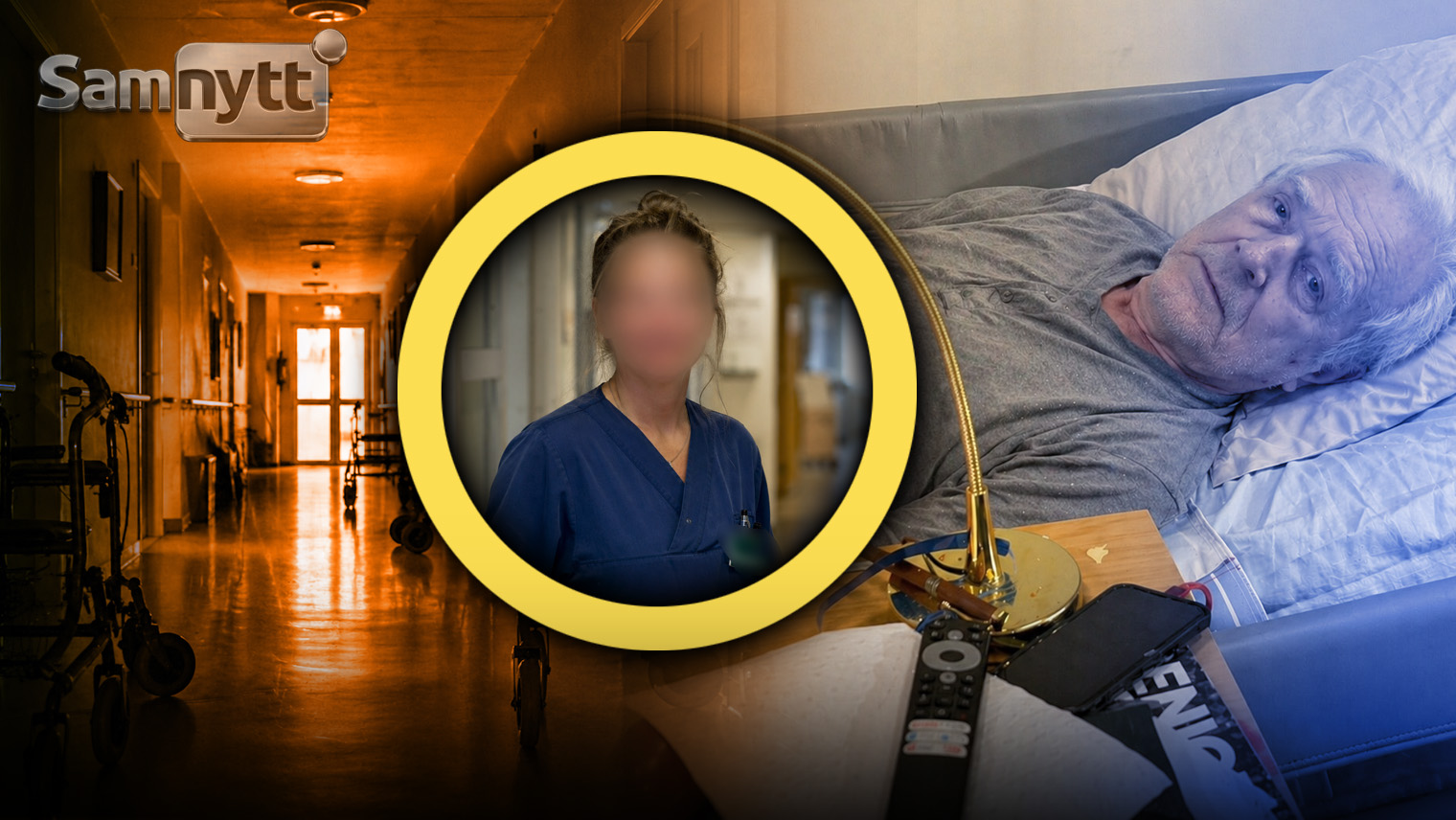
Official figures show recurring deficiencies in routines within home care – but they say little about what actually happens behind closed doors. What does it really mean in practice when an emergency call goes unanswered, when a visit is missed, or when responsibility falls between the cracks? Samnytt has spoken with two employees who, independently, paint a consistent picture of a sector where silence, fear, and a lack of follow-up have become part of daily life. Their testimonies point to situations where elderly people are left without help – sometimes for hours, sometimes longer – and where incidents rarely go beyond internal notes.
Last year, 31 deaths were reported within home care to the Health and Social Care Inspectorate (IVO), according to Sveriges Radio. In almost a third of these cases, protocols were not followed when clients failed to answer or open the door – situations where staff are supposed to act according to guidelines. But the numbers don’t tell the whole story.
Behind the statistics is a reality that is seldom fully documented – and even less often becomes public knowledge.
READ ALSO: REVEALED: Yusuf Rahimi plundered pensioners – sentenced to prison but is now rehired in elderly care
A notable case in Gällivare shows how severe the consequences can be when routines fail. A home care client had his food hung on the door handle – without staff ensuring it was actually received.
The person didn’t open the door, and follow-up did not take place in time. When the situation was finally discovered, it was too late. Similar incidents have recurred in the municipality, where in other cases it has emerged that clients were left without food for several days or that services were not delivered despite repeated signals that something was wrong.
It’s way too easy to get a job in elderly care. Anyone can get a job there – it doesn’t seem to matter if you’ve murdered someone or not. It’s a circus.
Linnea, assistant nurse in training, elderly care
Another case from Nyköping shows how long it can take before anyone reacts – despite clear warning signs. An 83-year-old was left lying on the floor in their home for several days after a fall, with home care staff taking no action.
During this time, the person could not get up, take in fluids, or call for help. When the situation was finally discovered, the condition was critical. The incident led to a lex Sarah report and again raises questions about how alarms and deviations can go unaddressed – despite clear procedures in theory.
READ ALSO: INTERVIEW: Sweden Democrats want life sentences for rapes against the elderly
Similar patterns have been identified in previous reviews, where people have been left for days without intervention.
Samnytt has today spoken with a 24-year-old woman, whom we’ll call “Linnea,” who has worked in elderly care in western Stockholm. She wishes to remain anonymous out of fear of consequences.
Why do you want to be anonymous?
– I’m on my last internship now, finishing up as an assistant nurse in about two or three months. Even though I don’t work at the same place as before, I’m still within the same company, so to speak. She continues:
– As soon as they know it’s me who said something… that’s it, “thank you and goodbye.” You’re blacklisted and lose your job, she says.
“He had been lying there for eight hours”
One of the first night shifts was something Linnea says she’ll never forget.
– I go in to a client [a Swedish pensioner, Ed.] and he says, “No one has changed me. I’ve been lying in my feces for eight hours.”
She describes how the man’s skin was red, with sores.
– He said he had called for help and was told to stay put and be quiet. That really got to me. We are there to do what’s best for them in the time they have left.
I will never put my mom and dad in a care home, not after I’ve worked in elderly care myself and seen how the elderly are treated. No, they’ll have to live with me instead.
Linnea, assistant nurse in training, elderly care
She and a colleague filed a report and took it to their manager. She continues:
– A week later I get the feedback – it’s not true. We’re said to be lying.
READ ALSO: Elderly person forced to lie with dried feces over their entire body
Soon after, she was let go from her job.
You lost your job?
– Yes, I lost my job because I chose not to stay silent.
One thing that stands out in the interview is that the care home manager didn’t seem to care that Linnea still had her work keys after she was dismissed.
– I asked, when should I come by to return my work keys? She didn’t answer. And I think that, too, is a safety issue. Linnea continues:
– Anyone could then have access to all areas. Someone could steal a bunch of medication, or maybe someone unstable could do something weird. I think it’s strange behavior, not to care about getting the work keys back.
READ ALSO: Christer, 76, on life at the care home: “If you criticize, you’re called xenophobic”
In the interview, she describes a recurring situation which she says is both undignified and deeply concerning. Residents, according to her, have been left in their own urine overnight, despite sounding the alarm for help multiple times.
She says the alarms can sometimes go off again and again without anyone coming, and in practice that means elderly people are left in situations they can’t get out of for hours on end.

These are situations she says are not always reported further up the chain.
– A lot is being hushed up. You only know about it if you work there.
“I will never put my parents in a care home”
Linnea tells Samnytt what she told her own mother and father:
– I will never put them in a care home, not after I’ve worked in elderly care and seen how the old are treated. No, they’ll have to live with me instead.
What would you like to say to the politicians responsible for this?
– I think they should take greater responsibility. It’s far too easy to get a job in elderly care. Anyone can get a job there, it doesn’t seem to matter if you’ve murdered someone or not. It’s a circus. She continues:
– There have also been many incidents where the elderly have had their valuables stolen – money and gold have disappeared. But the managers did nothing about it.
READ ALSO: Home care Syrian tormented 99-year-old woman – Court: Not assault
Is there a fear of being called a racist if you raise these issues?
– That’s how I feel. My former boss wasn’t Swedish – and those who worked there when the man was left in his feces for eight hours also weren’t Swedish. She continues:
– The moment I say something, I’ll probably be called a racist. For telling the truth. There’s a culture of silence, you’re supposed to stay quiet and cover for each other. Linnea goes on:
– I noticed it when I filed my report. No one wanted to talk to me, everyone turned against me. After that, I was never assigned work again.
READ ALSO: 82-year-old left by home care in own excrement – had to have leg amputated
If you’re completely honest, how safe is elderly care in Sweden for the most vulnerable today?
– There’s no safety at all. It’s awful.
How would the public react, do you think, if people knew what it was really like?
– I think everyone would be shocked – this is not how it’s supposed to be. Many would never want to put their parents in a home if they knew.
She also describes how the picture can change when relatives are present.
– When someone comes to visit – then everyone steps up. But otherwise you can sound the alarm as much as you want, you won’t get help.
READ ALSO: Home care employee raped 80-year-old woman – wasn’t reported to police for weeks
The assistant nurse: “Untrained and poor-language staff are being hired”
After 41 years in health and social care, assistant nurse Johnny Johansson tells Samnytt he’s seen a shift from a clear value base to what he perceives as a system that’s been hollowed out.
A third of those working here shouldn’t be here at all – and maybe that applies to some of the others as well. Those responsible must be careful about these things.
Johnny Johansson, 66, assistant nurse in elderly care
When he started, the job was defined by the principle that people should not be “punished” for illness or disability but given a life with dignity.
Today, he says, a lot of that has been replaced by “empty talk,” with decision-makers far removed from the actual work, and quality sacrificed for speed, efficiency, and integration.
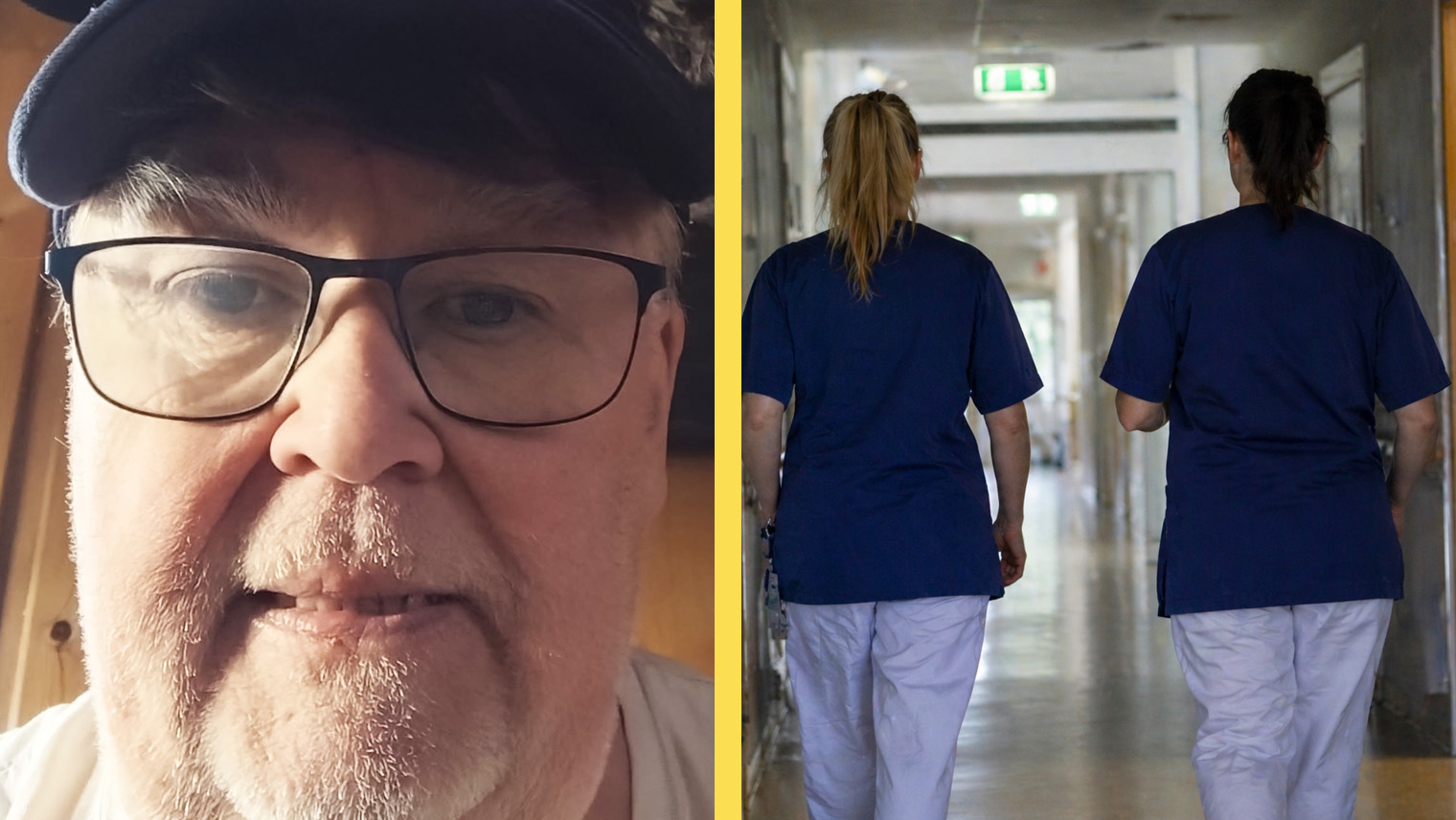
He highlights concrete changes – from freshly cooked meals to ready-made ones, from continuity to ever-changing staff and large workgroups where the elderly constantly meet new faces.
There’s about one case a week where elderly Swedish women are subjected to abuse in care. How do you comment?
– A third of those working here shouldn’t be here at all – and maybe that applies to others as well. The people in charge need to be careful about this.
In that environment, he says, language, routines, and continuity are crucial – but also lacking. Johansson describes vast differences in Swedish proficiency among staff.
READ ALSO: Home care in Örebro hired gang criminal Syrian – abused and tortured many elderly
Some staff are good, he emphasizes, but a significant group lacks sufficient Swedish, which can result in elderly people – especially those with cognitive impairment – not being understood. “If I, who am perfectly healthy, can’t understand – how is the elderly person supposed to?” he says.
He is also highly critical of what he sees as a political policy where elderly care has partly been used as an integration tool, leading to the hiring of untrained or non-fluent staff.
This can cut costs, but risks harming the most vulnerable. He calls for greater responsibility from municipalities and authorities and says this development has been ongoing for a long time. “The weakest in society are the ones that should be cared for. It has to be qualified people,” he says.
The stories emerging are not isolated incidents but part of a recurring pattern where responsibility, follow-up, and basic care are lacking – even though rules and routines are in place.
READ ALSO: When imagined virtue trumps responsibility – and the elderly pay the price
Both Linnea and Johnny Johansson describe a sector where few dare to sound the alarm openly, and where the distance between decision and reality is perceived as huge.
Testimonies from within the sector indicate that these are not isolated cases. The question remains whether the signals now coming – from staff, from relatives, and from investigations – will lead to real change, or remain just another set of complaints in the statistics.