The Swedish Migration Agency mounts a strong offensive against those scrutinizing the authority’s handling of cases, accusing critics of commenting on issues they “don’t have a clue about.” But when Samnytt seeks out section head Sarah Sjudin for clarification on her statements, the editors encounter a closed door—the agency refers to the need for a power of attorney. Meanwhile, citizen investigator Marita Welin states that documents she obtained show no contact with the Enforcement Authority prior to the decision to grant citizenship to Left Party politician Mohamed Abdukardir Ali, despite his previous rejection on the grounds of his debts.
The background involves the developments surrounding newly elected Left Party politician Mohamed Abdukardir Ali’s Swedish citizenship. Ali was denied citizenship in 2024 due to debts but had his application approved two years later, even though he still had debts. This has now been reported by Dagens Nyheter as well.
The case has raised questions about which checks the Migration Agency actually carried out before the decision. When an image of Ali’s citizenship certificate later spread on social media, the names of the case officers were also visible on the document. This prompted a reaction from the Migration Agency.
“Not a clue”
In an internal circular, the agency says it takes “a serious view on being called out on social media” in relation to a “case of media interest.”
At the same time, the Migration Agency asserts that, in citizenship cases, there are “thorough checks and a comprehensive investigation” conducted to ensure that applicants meet the legal requirements.
Sarah Sjudin, section head for Region West, which handles citizenship cases, takes her criticism even further in an interview with DN.
– Of course one can have opinions, but many lack the full picture. It’s very easy to sit and write on social media about something you actually don’t have a clue about, she says.
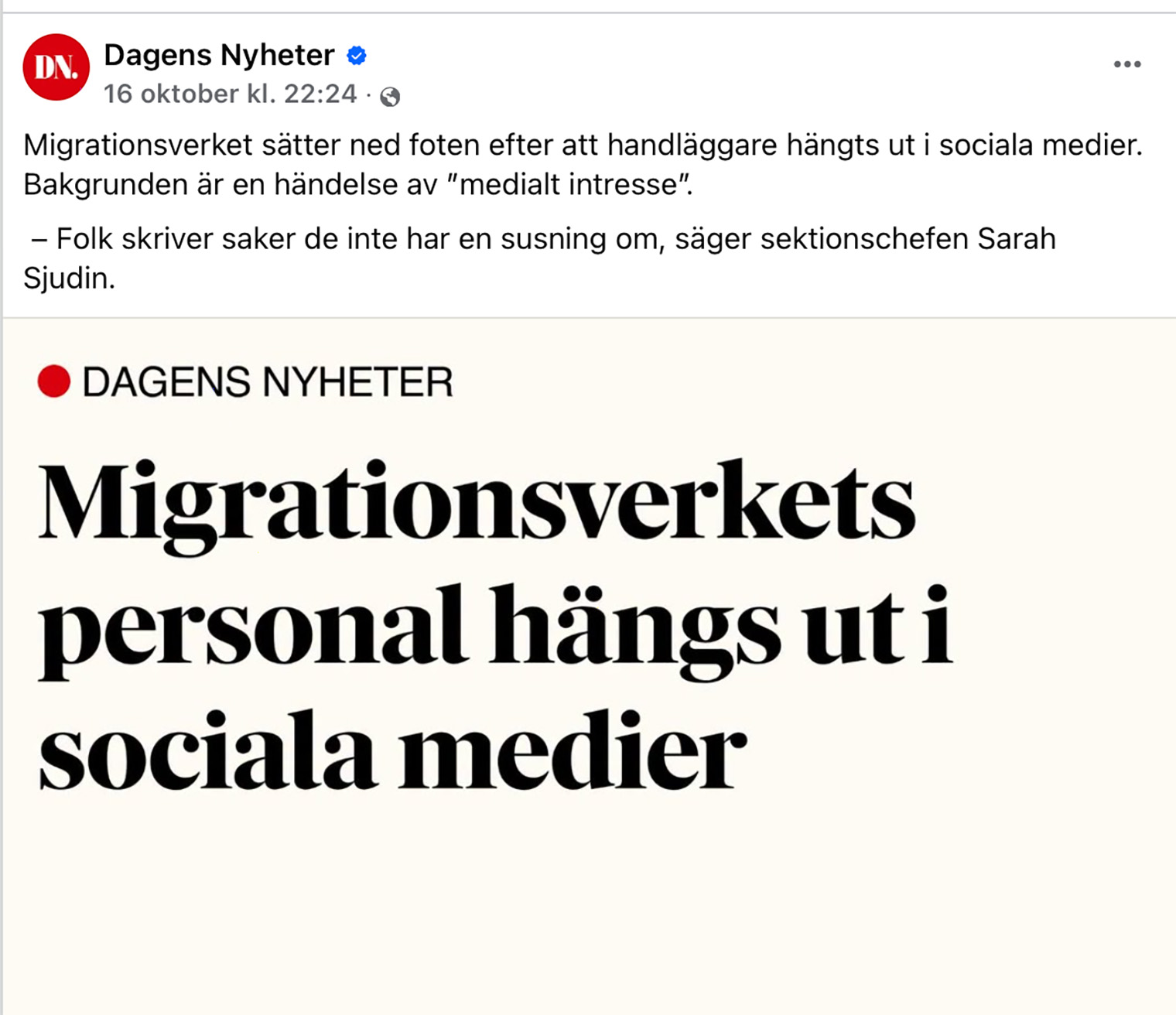
She describes the scrutiny as “a bit of amateur case handling” and compares it to assessing police work herself:
– It’s as if I were to sit here and judge how the Police Authority investigates crimes. I simply don’t have that competence.
The statements raise questions. The criticism against the handling of Ali’s citizenship did not arise in a vacuum, but is partly based on documents requested from the agency by investigators.
Marita Welin and Lena Palm
One of those who have long scrutinized the case is Marita Welin. She has previously reviewed documents related to both Ali’s debts and his citizenship applications.
After recently receiving additional diary sheets from the Migration Agency, she commented on X about what she claims is not documented in the material.
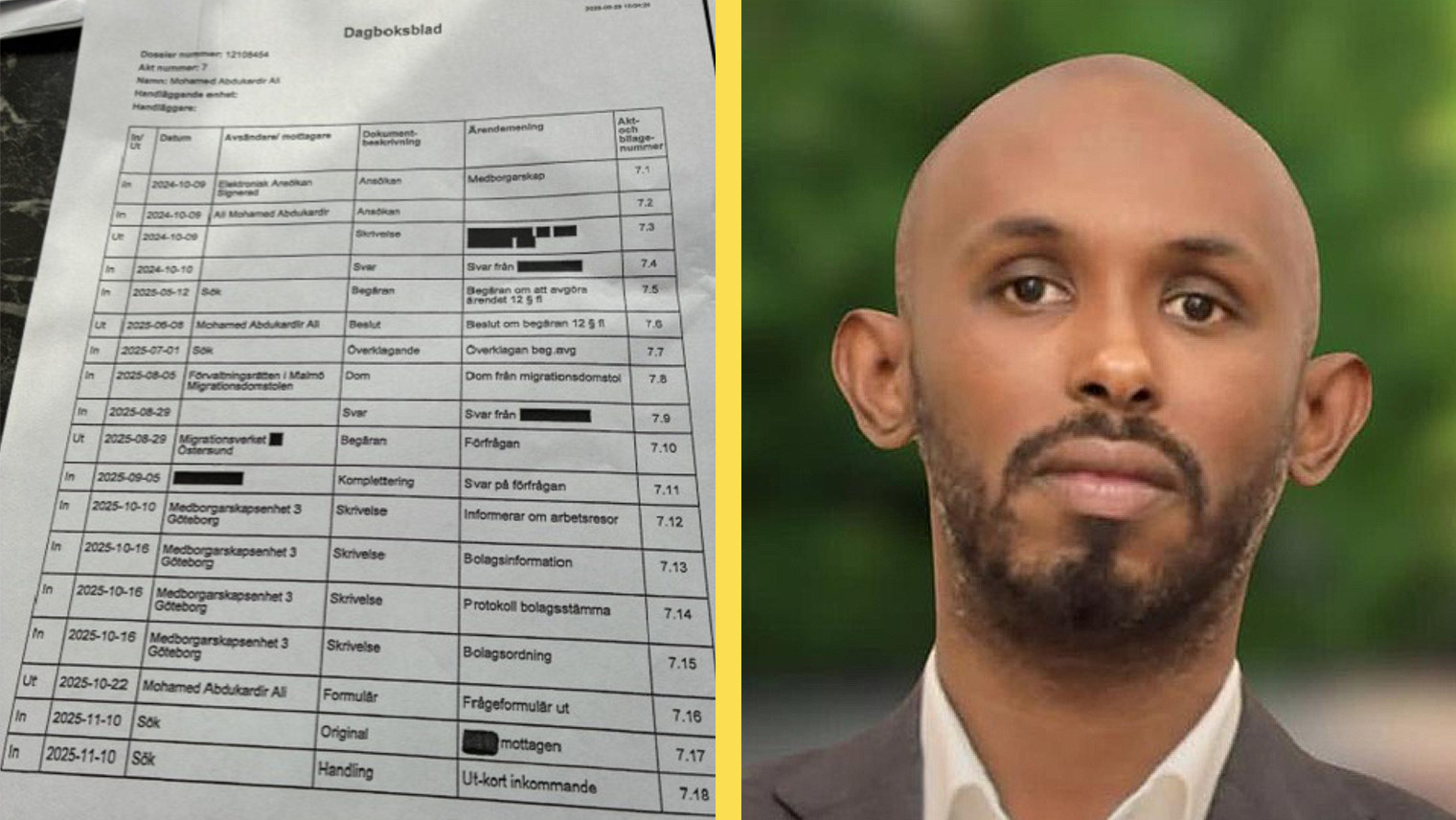
Welin writes that she is “simply stunned” and claims she cannot find any note indicating the Migration Agency contacted the Enforcement Authority to check data for the most recent application.
According to her, the documents she presents are what’s registered regarding the application after the previous one was rejected.
This does not, in itself, guarantee that no such check ever took place. But the claim raises the question of what, in fact, the Migration Agency checked and documented before Ali was granted Swedish citizenship—especially in light of the authority’s own assurances of “thorough checks and a comprehensive investigation.”
The scrutiny also extended beyond the newsroom. After 72-year-old Lena Palm read Samnytt’s article about Marita Welin’s investigation, she reacted to the information regarding how Mohamed Abdukardir Ali’s citizenship case was handled and filed a complaint herself with the Parliamentary Ombudsman (JO) against the Migration Agency.
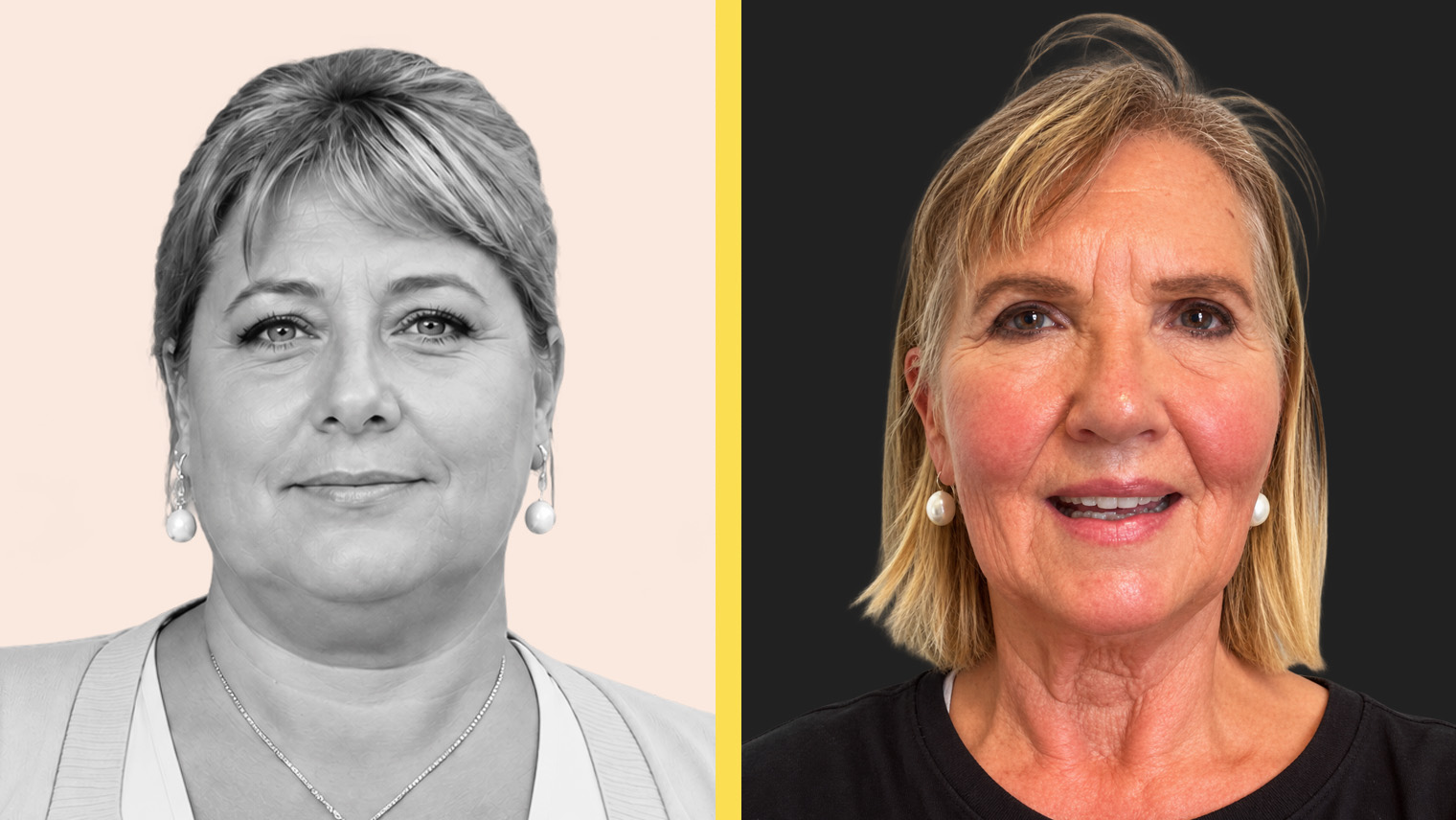
Palm wanted the authority’s controls and case handling to be scrutinized, and pointed among other things to issues regarding Ali’s debts. For her, it was also about the principle underpinning Swedish citizenship.
– Citizenship is something very significant, she told Samnytt.
This means that the revelations have also led a citizen to make use of one of the formal avenues for requesting review of an authority’s actions—by lodging a complaint with the Parliamentary Ombudsman.
SEE ALSO: Lena, 72, Read the Exposé—Now She Files an Ombudsman Complaint Against the Migration Agency
Criticizes Lack of Full Picture – But Closes the Door
This is where Sjudin’s criticism becomes problematic. If, according to her, people “lack the full picture,” the natural follow-up is how journalists and the public are meant to obtain that full picture.
At the same time, the Migration Agency restricts access to information in specific cases, citing confidentiality. The newspaper has therefore sought Sjudin for an interview to try to clarify what exactly she means by her statements in DN and where the agency draws the line between legitimate scrutiny of official authority and what it deems as “calling out.”
Among other things, Samnytt wanted to know which concrete errors Sjudin referred to when saying people “don’t have a clue,” and how journalists and the public are expected to gain the full picture she says is needed when parts of the material are inaccessible.
We also asked if the Migration Agency considers simply publishing the name of a civil servant who made or handled a government decision that raises questions as, in itself, “calling out”—when the name appears on the relevant document and anyone can request it.
No interview with Sjudin has taken place. Instead, the Migration Agency press office sent a brief email:
“We are happy to answer specific cases, but then a power of attorney is required.”
The reference to a power of attorney thereby closes the door to questions about details in Ali’s case. But it doesn’t explain why the Migration Agency at the same time leaves principle-based questions unanswered—questions that don’t require access to any confidential details about Ali.
For example, what does the agency mean by “calling out”? Is publishing the name of a decision-making official in itself problematic? How are outsiders supposed to get the “full picture” Sjudin is calling for?
Demanded Correction—Of Information Provided by the Authority Itself
This is not the first time Samnytt has encountered such a stance from the Migration Agency. In a previous review, the agency demanded that information in an article be corrected.
SEE ALSO: Migration Agency Source to Samnytt: “Sweden Still Doesn’t Understand How Clan Societies Work”
The problem was that the information in question had been provided in writing by the Migration Agency itself. When Samnytt then offered the agency an interview to clarify why its own written information would suddenly be changed, the Migration Agency was unwilling to participate.
When given the chance to explain on the record what went wrong and why before an interview, the correction was no longer as pressing. The demand was not pursued further.
Samnytt also raised this in the questions to Sjudin—how does such behavior square with her current criticism of outsiders not having the whole picture? Nor was that question answered.
Harassment Is Not the Same as Scrutiny
There is good reason to keep two things apart: threats and harassment against government officials are unacceptable. But a journalist calling an official on a private number to ask questions about a decision is not the same as harassment—especially when the official is difficult to reach via ordinary channels.
Sjudin told DN that employees had been contacted privately, and that in some cases harassment had occurred. DN also reports that the Migration Agency has made no police reports in connection with these events.
SEE ALSO: Migration Agency Source Testifies to the Pressure to Approve: “The System Favors Granting”
The question Samnytt has tried to get the agency to answer is therefore where it draws the line between harassment and legitimate scrutiny—seeking responsible officials, requesting documents, and asking about how decisions have been made.
Here the same problem recurs. The Migration Agency criticizes the public for not having the full picture, while at the same time restricting access to parts of the materials. When the agency is then asked about its own criticism, it refers to a power of attorney and leaves the principle-based questions unanswered.
The “full picture” that Sjudin calls for thus appears much easier to demand of critics than to help them obtain.
free for the rest of the year!
Right now, you get Plus completely free for the rest of 2026!
DONATE VIA SWISH
123 083 33 50