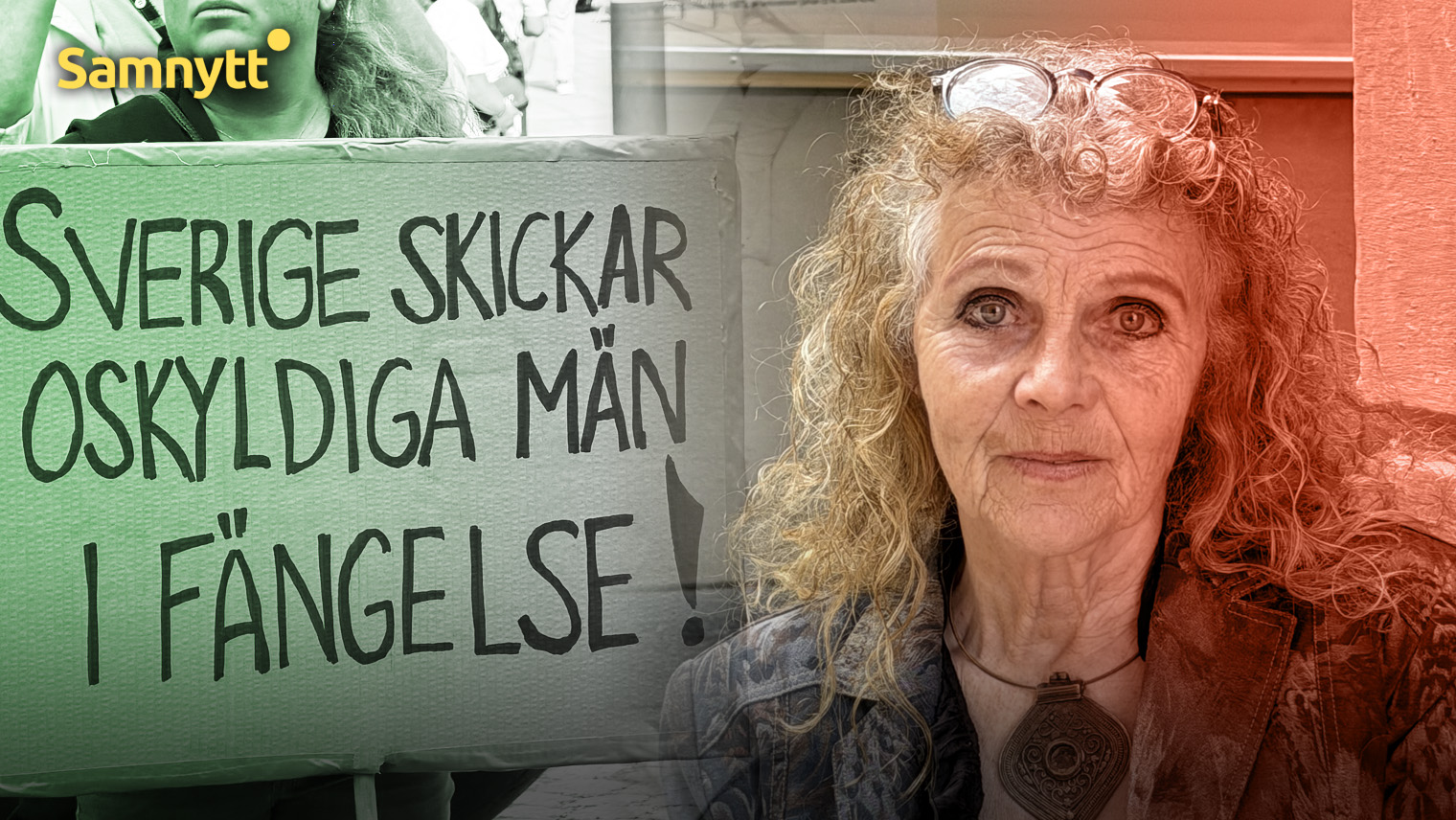
It was not only criticism of the consent law that was in the spotlight when Mannaminne once again gathered demonstrators in Stockholm. Behind the placards, speeches, and testimonies lies a much broader project today—to try to establish the idea that Sweden is in the midst of a legal certainty crisis where retrial cases, sexual crime cases, and court procedures need renewed examination.
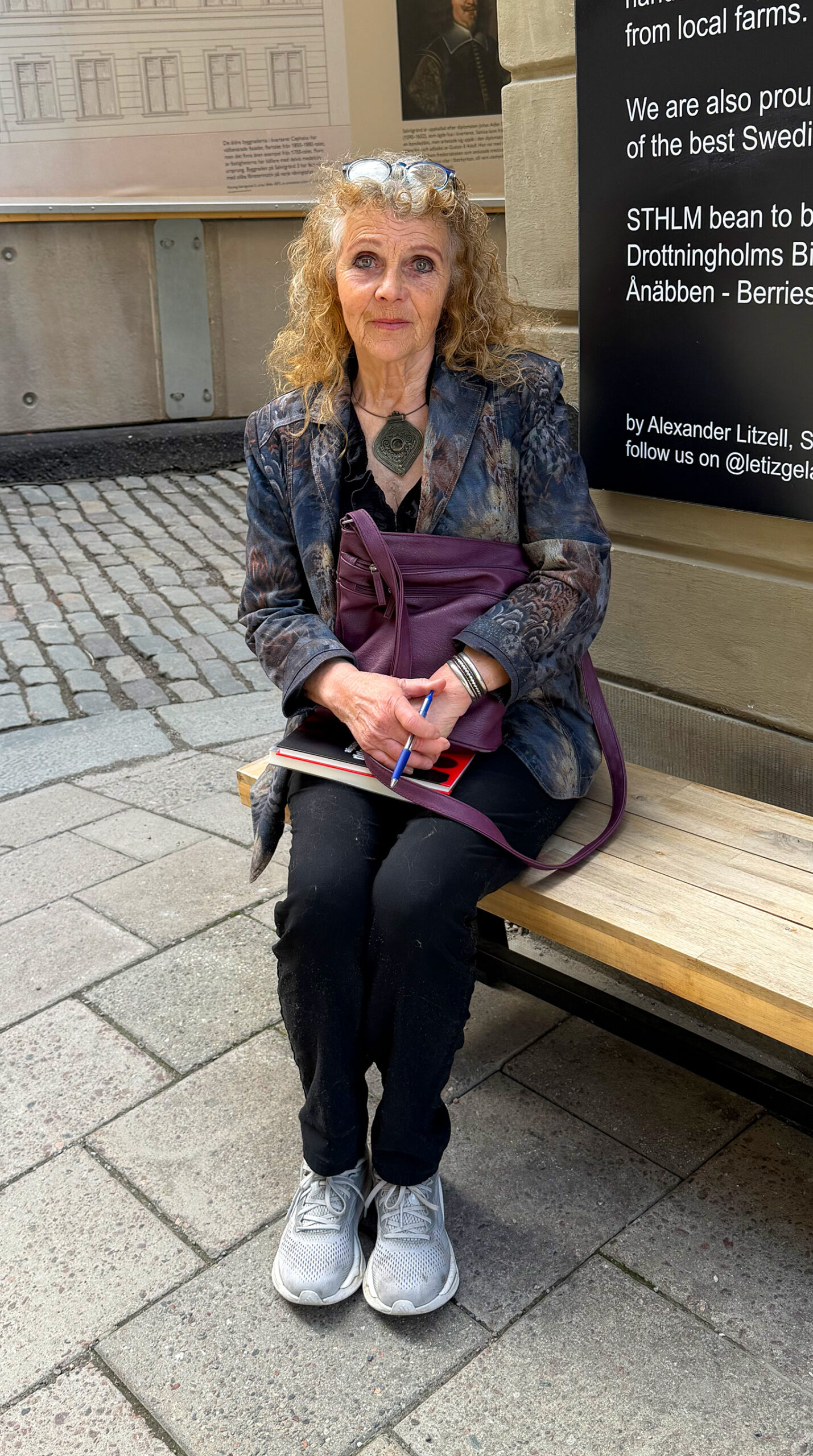
One of the key driving figures in the network is Thérèse Juel. For several years, she has been involved in high-profile sexual crime cases and worked with families where young men have been convicted on insufficient grounds. In the interview with Samnytt, she repeatedly returns to the same point—lack of independent scrutiny.
– No one is reviewing these retrial cases; they just sit there with the lid on, she says.
READ ALSO: The Mannaminne Network Leads Protests Against Rule of Law Breakdown
Wants a New “Bergwall Commission”
Juel now wants to see something far greater than changes to individual laws. She calls for a special commission to scrutinize how Swedish courts and the Supreme Court handle retrial applications in criminal cases.
She refers to the so-called Bergwall Commission, appointed after the Thomas Quick scandal to review the high-profile murder convictions.
– Perhaps a retrial commission should be set up, she says.
READ ALSO: Wanted to teach the man a lesson and accused him of rape – now the woman is convicted
According to Juel, retrial applications are now rejected despite new circumstances and new evidence being presented.
– There needs to be a review of the Supreme Court, which rejects retrial application after retrial application even when new circumstances are presented, she says.
She particularly points out that much of the new information presented never receives any new legal examination. During the interview, Juel also refers to the Chancellor of Justice’s report Wrongly Convicted from 2006, where several previously acquitted criminal cases were retrospectively examined.
According to the report’s conclusions, several of the retrial cases should have been granted at the very first application, she believes.
For Mannaminne, this has become central—not just about individual verdicts, but about a system where wrongful judgments risk becoming permanent because the justice system lacks mechanisms for self-correction.
In recent years, the network has grown around precisely these issues. Relatives, activists, and commentators have rallied around cases where they believe young men have been convicted of sexual crimes despite weak evidence, contradictory accounts, or new circumstances that later emerged.
READ ALSO: Legal Scandal in Silence: Young Men Convicted of Rape Without Evidence
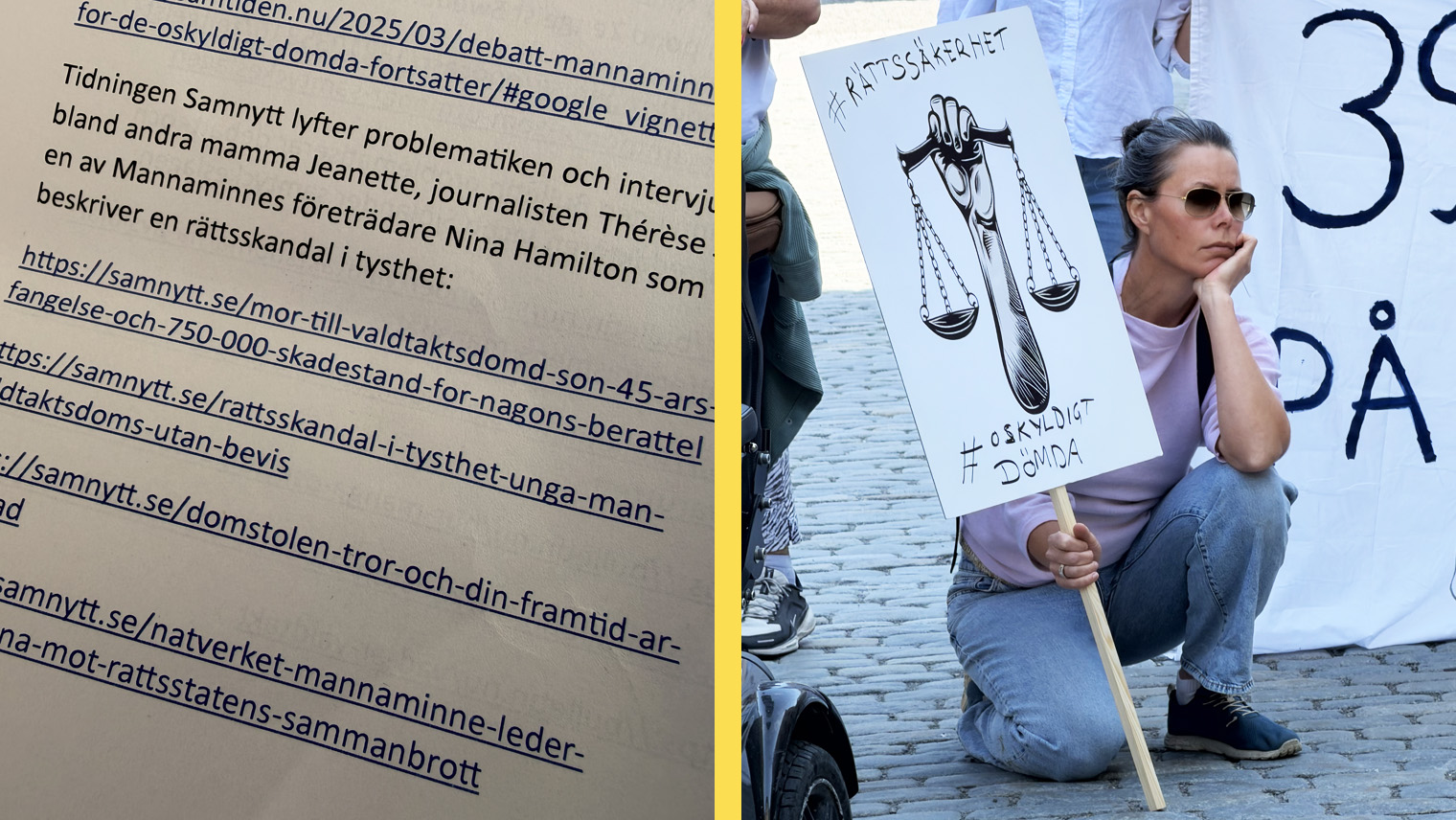
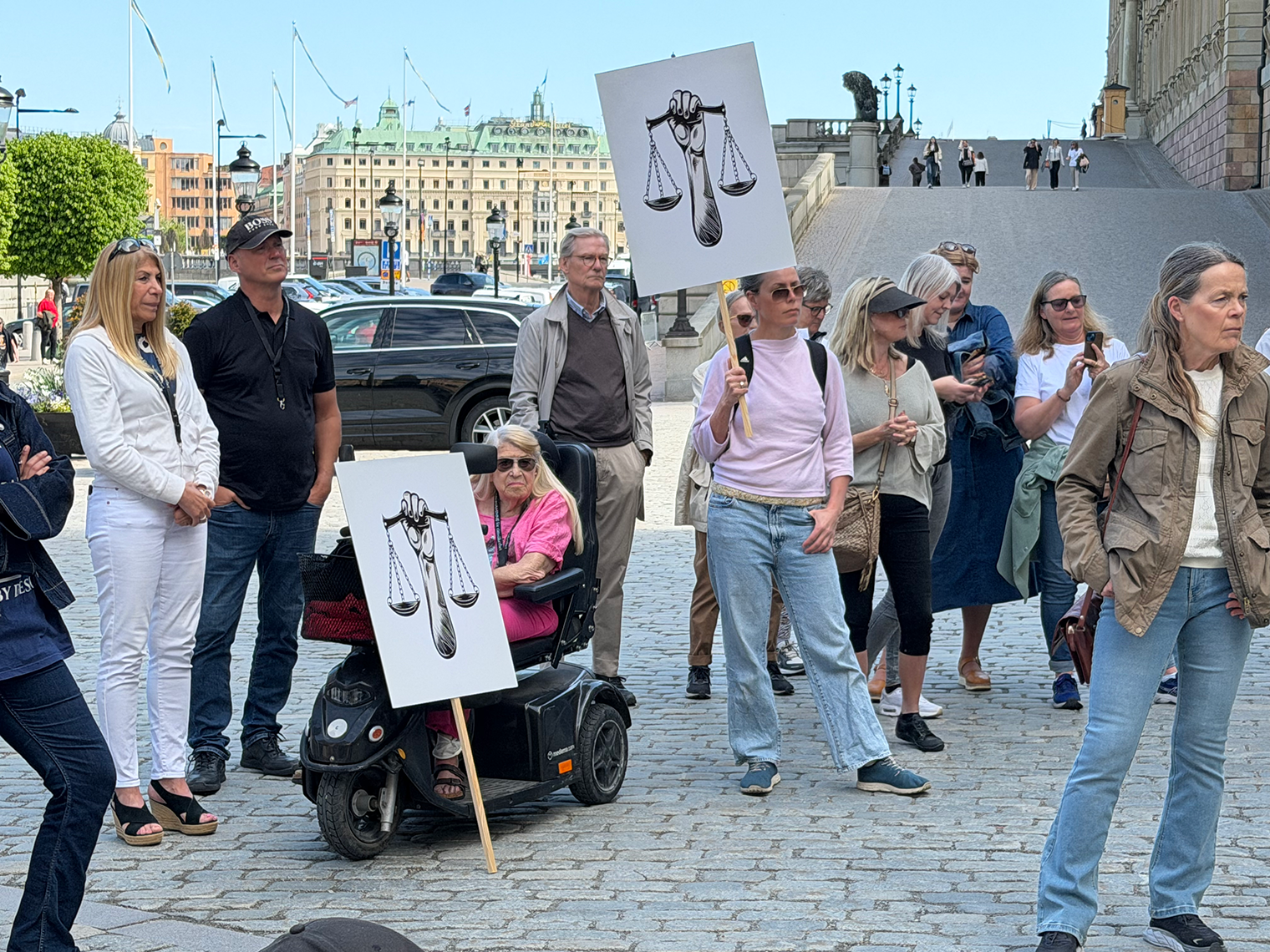
Samnytt has previously reported on the demonstration at Mynttorget, where several speakers described the development as a growing legal scandal.
Criticism of How the Concept of Rape is Used
A central part of the criticism concerns how sexual crime legislation has changed in recent years. Juel argues that more and more situations today are classified as rape even though, according to her, these cases differ greatly from traditional assault rapes.
– It’s wrong because we call everything rape, she says.
READ ALSO: Christian Democrats Want to Castrate Rapists – What Happens When the Convictions Are Wrong?
She describes how people often think of violent assaults when the word rape is used, while today’s legal practice, according to her, also covers situations where consent, communication, and after-the-fact assessments have become crucial parts of the process.
In the interview, she repeatedly returns to what she describes as a growing gap between the public’s perception of sexual crimes and the legal definitions used in today’s courts.
Acquitted in the Court of Appeal
Samnytt also interviewed Susanne, one of the mothers affected, who gave an emotional account at Mynttorget to an audience of about a hundred, many holding signs and placards. She wishes to remain anonymous to protect her son’s privacy.
When the verdict came, a multitude of young people from our town reached out and all said, ‘This isn’t right; the girl has lied.’ Yes, they had had sex, and he had asked her beforehand—and she had replied affirmatively.
Susanne, mother of a 19-year-old accused of rape
Can you tell us what happened to your son?
– It started when my son went off to work and then disappeared. Then we found out that the police had called one of his colleagues and said that he wouldn’t be coming to work. He was 19 at the time. She continues:
– After a day, the police call and say that my son is in custody for a serious crime. Then we heard nothing more. He was of legal age, so as a parent, you lose all right to know anything. Susanne goes on:
– After that, a lawyer was appointed who was on parental leave and on vacation—and who had never before handled sexual crime cases. He had to sit for six weeks under full restrictions, locked up for 23 hours a day.
Was he convicted?
– After much ado, he was convicted in district court—three years and four months in prison and 180,000 SEK in damages for premeditated rape. She goes on:
– When that verdict came, a multitude of young people from our town reached out and all said, ‘This isn’t right; the girl has lied.’ Yes, they had had sex, and he had asked her beforehand—and she had replied affirmatively.
Susanne continues, saying they then realized they needed a better lawyer, which they arranged. At that point, her 19-year-old son had been in pretrial detention for five months.
– The new lawyer crushed the indictment in the court of appeal. He was acquitted. We had proof from phones, TikTok clips, videos—and a host of character witnesses.
READ ALSO: Here Are the Women Who Lie About Rape – “They Want Money”
How is your son doing today?
– He’s hanging in there, has just gotten a permanent job from his boss, but he suffers from PTSD [Post Traumatic Stress Disorder, ed. note]. He’s traumatized after five months in detention for a rape that never happened. Susanne continues:
– He can’t bear to pass by the police station in town.
When it turned out your son was innocent, what happened to the girl? Was she convicted?
– No, nothing like that. Then we’d have to take action, but after going through something like this, you just want peace and quiet.
READ ALSO: Men Discouraged from Reporting Violence – and a Justice System That Doesn’t Want to Listen
Samnytt has previously reported on the 16-year-old girl who was convicted of false accusation after wrongly accusing a 17-year-old boy of rape in a shopping mall restroom.
READ ALSO: Claimed She Was Dragged Into a Restroom and Raped – Now the 16-Year-Old Girl Is Convicted Herself
The author, artist, and commentator Alexander Bard comments on the case and describes it as an example of how young men can quickly be drawn into extensive sexual crime investigations before facts have been clarified.
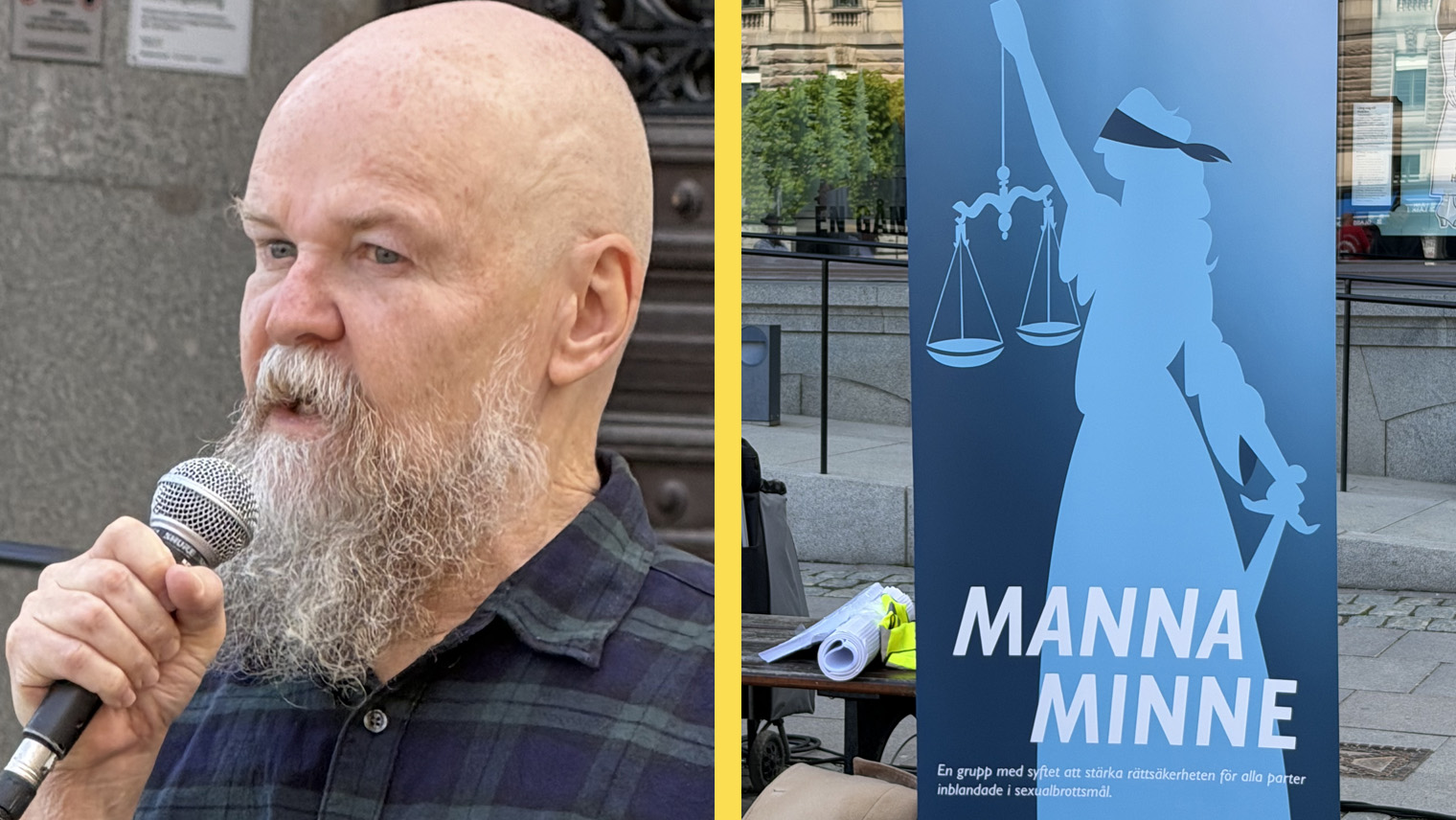
Bard believes that such cases contribute to the growing mistrust of the justice system that Mannaminne seeks to highlight, and at the same time, he believes the consequences for false accusations are often limited when the claims later prove false.
“There Is a Lot of Fear”
Bard also said that Sweden may in the future look back on today’s legal developments with shame. Juel shares this view. At the same time, she says the topic remains marginalized in most mainstream media.
She mentions that smaller and alternative media have more frequently addressed the subject, including Samnytt, Bulletin, and Epoch Times.
Writers like Jakob Sjölander have, in several articles on the consent law, legal certainty, and sexual crime cases, argued that public debate has long been unwilling to discuss the risks of legally insecure processes and how legal definitions have changed over time. During the demonstration, Sjölander said he is now writing a book about the cases he has investigated.
Several people Samnytt speaks with say that fear of accusations has affected dating culture among young men. They claim that more and more nowadays record or document dates so they can later prove that sexual encounters were voluntary.
Many say this development is a sign of growing uncertainty around the consent law and how sexual crime cases are handled in court.
The situation is described as “very tragic,” as young people have become more and more afraid of ending up in legal proceedings after relationships or sexual encounters.
READ ALSO: The Court Believes—And Your Future Is Lost
Both Juel and Bard say that young men today are increasingly unsure about what actions can lead to legal consequences.
– There is a lot of fear, says Thérèse Juel, while also describing the development as culturally paradoxical—while sexuality has become more public and commercialized, she feels that social interaction has become more juridified and moralized.
For Mannaminne, the issue is therefore no longer just about individual verdicts or legal technicalities.
According to the network, the issue ultimately concerns public confidence in the entire legal system—and whether Sweden in the future risks looking back at current sexual crime cases as another period when ideology and public opinion outweighed legal certainty.
???? Together, We Make Samnytt Grow
We are very grateful to all of you who read Samnytt every day. Your engagement makes our work possible.
If you are not already a subscriber – please consider becoming one and help us continue to grow, develop, and deliver important news and investigations.
Your support makes a difference.
123 083 33 50
Swish any amount
Thank you for reading and supporting ????