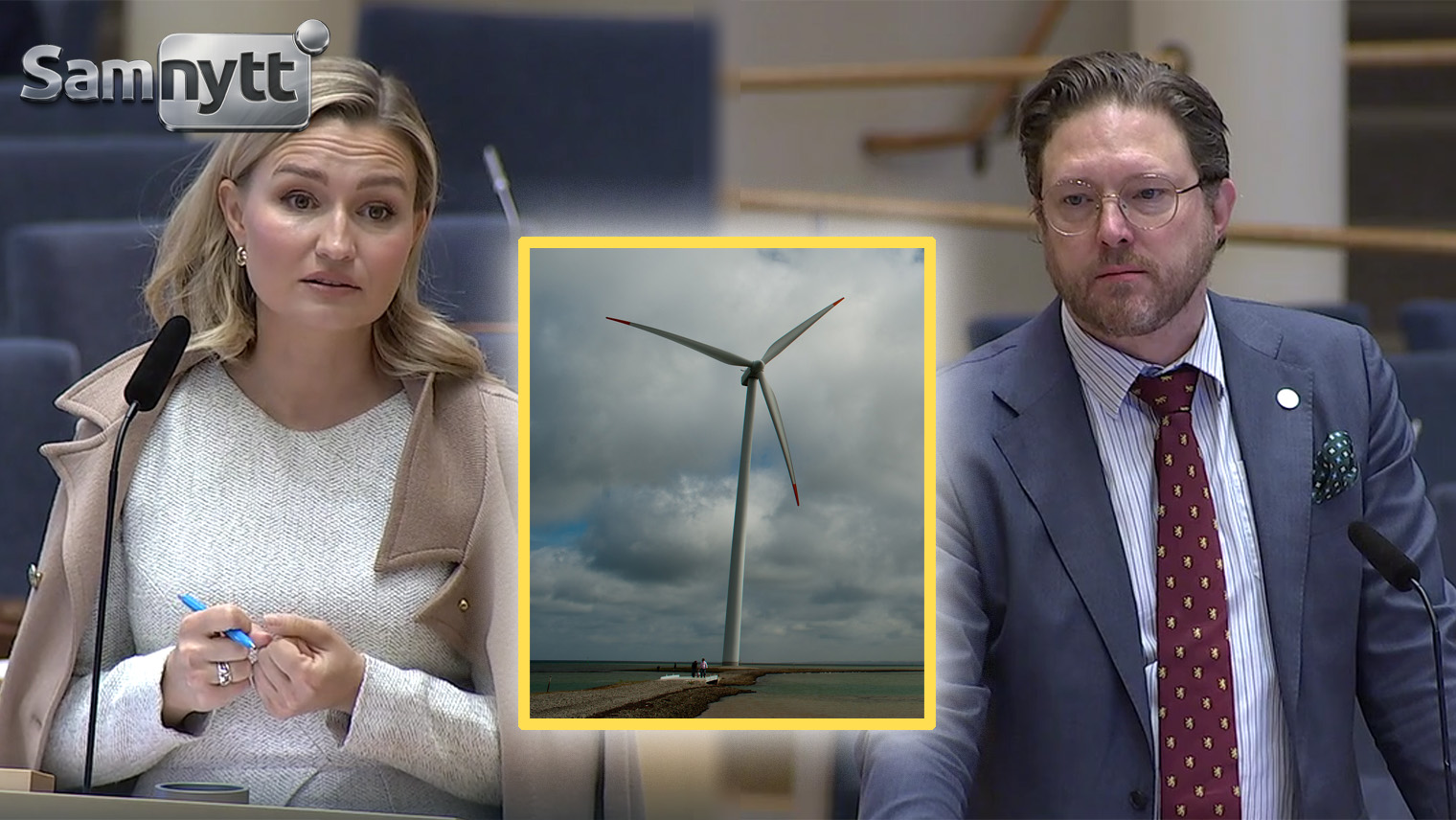
Sweden Democrat Josef Fransson, Member of Parliament and member of the Industry Committee, put Energy and Business Minister Ebba Busch on the spot after claims that criticism of wind power is included in Russian disinformation environments. In parliament, he demanded clarity on whether the government plans to reconsider its energy policy – but Busch replied that the course remains unchanged.
The background is WindEurope’s report Wind Energy Dis- and Misinformation, which according to Fransson has had significant impact on Sveriges Radio. In his interpellation, he objected to the fact that critical arguments about wind power’s economics, environmental impact, local opposition, and technical limitations are described as false narratives linked to, among others, pro-Russian groups, fossil interests, politicians, and alternative media.
Fransson posed the question ironically and wondered if he himself, after more than 15 years of criticism against wind power, ‘had been part of a Russian disinformation campaign.’ He brought up falling property values, impact on nature and living environments, wind power’s dependence on weather, the need for backup, and increased grid costs as examples of real issues he believes cannot be dismissed as propaganda.
Busch: Government is not changing course
Ebba Busch rejected the notion that the report would affect the government’s energy policy line.
– The government’s policy change and long-term direction for energy policy remain firm, she said.
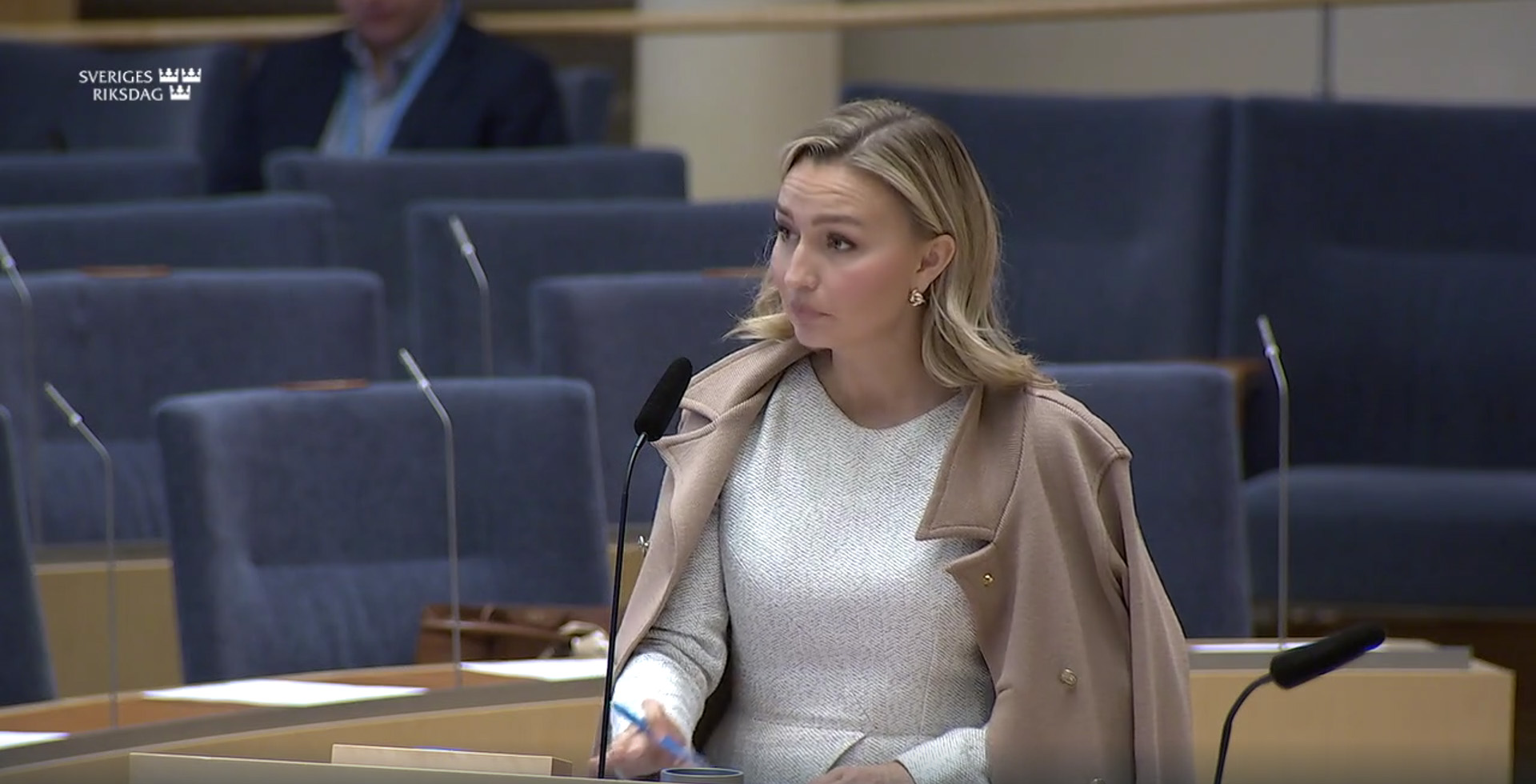
She emphasized that the government wants a robust, cost-effective, and fossil-free electricity system where all fossil-free energy sources can contribute – but with the right characteristics and in the right place. Wind power is needed in the short term, but must contribute more to a reliable electricity system, according to Busch.
Minister also critical of the report
Busch also criticized how she herself was portrayed in WindEurope’s report. She said her statement about weather-dependent electricity systems being a ‘dead end’ referred to countries that rely solely on such production, not to all wind power.
– It’s simple physics; it’s not politics. Wind power is weather-dependent, while for instance nuclear and hydropower are classified as baseload power, said Busch.
She described the report’s phrasing about her as a distortion and claimed it had contributed to increased polarization.
Fransson: The report itself is disinformation
Fransson strongly criticized both WindEurope and Sveriges Radio. He called the report arrogant and claimed that it in practice labels almost all criticism of wind power as disinformation.
– The report that is supposed to warn of disinformation is, if anything, the real disinformation, he said.
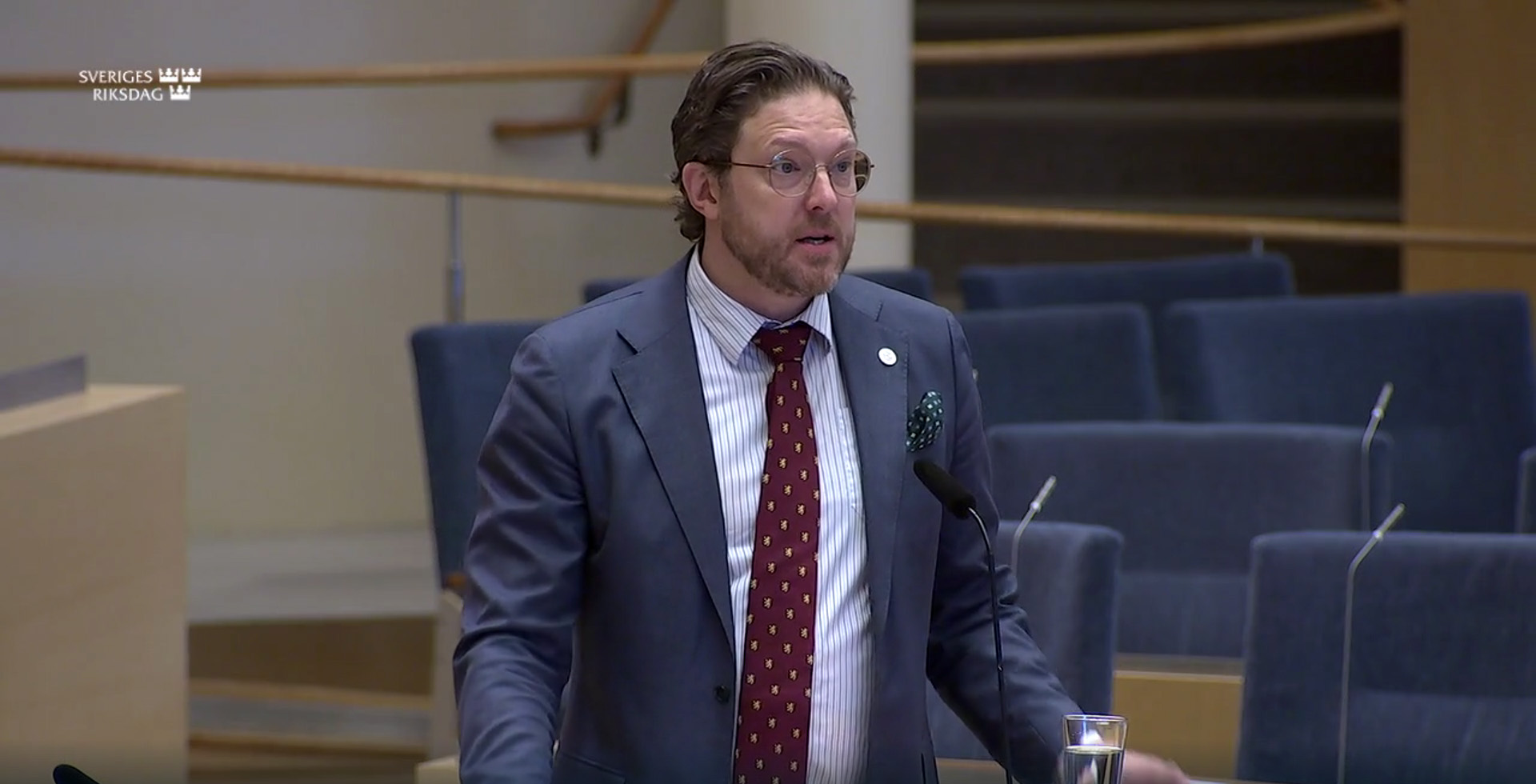
He accused public service of uncritically adopting the wind power industry’s narrative and claimed that critics, residents, and those affected had not been given a voice. The attached supporting documents emphasize the same view: that wind power critics see these accusations as a way to shift the focus from substantive issues such as economics, nature, local democracy, noise, property values, and energy security.
Busch did not want to get into media criticism
However, Busch objected to using the interpellation debate as a forum for broad criticism of public service.
– I am less satisfied with being used in some sort of general discussion about public service or casting suspicion on the media in the run-up to the election, she said.
At the same time, she admitted that it is difficult to achieve nuanced media coverage on complex issues like climate and energy.
SD’s main point: Wind power does not solve Sweden’s energy problem
At the end of the debate, Fransson sharpened his criticism of wind power’s role in the electricity system. He claimed that wind power in practice drives exports rather than strengthens Sweden’s power supply, and pointed to a correlation between increased wind power production and increased net exports.
– We need wind power about as much as a fish needs a bicycle, he said.
Busch replied that Sweden’s big problem is the lack of baseload power, pointing to the government’s focus on nuclear power, hydropower, combined heat and power, and district heating. At the same time, she opened for wind power in smart solutions where, for instance, the electricity is converted into hydrogen.
READ ALSO: Dagerlind: When facts become uncomfortable, the wind power lobby plays the Russia card
The debate thus ended with a clear divide: SD is pressing the government to take a clearer stance against the wind power industry’s arguments, while Busch is sticking to the government’s broader policy – more baseload power, but not a no to all wind power.
The full debate can be seen below: